

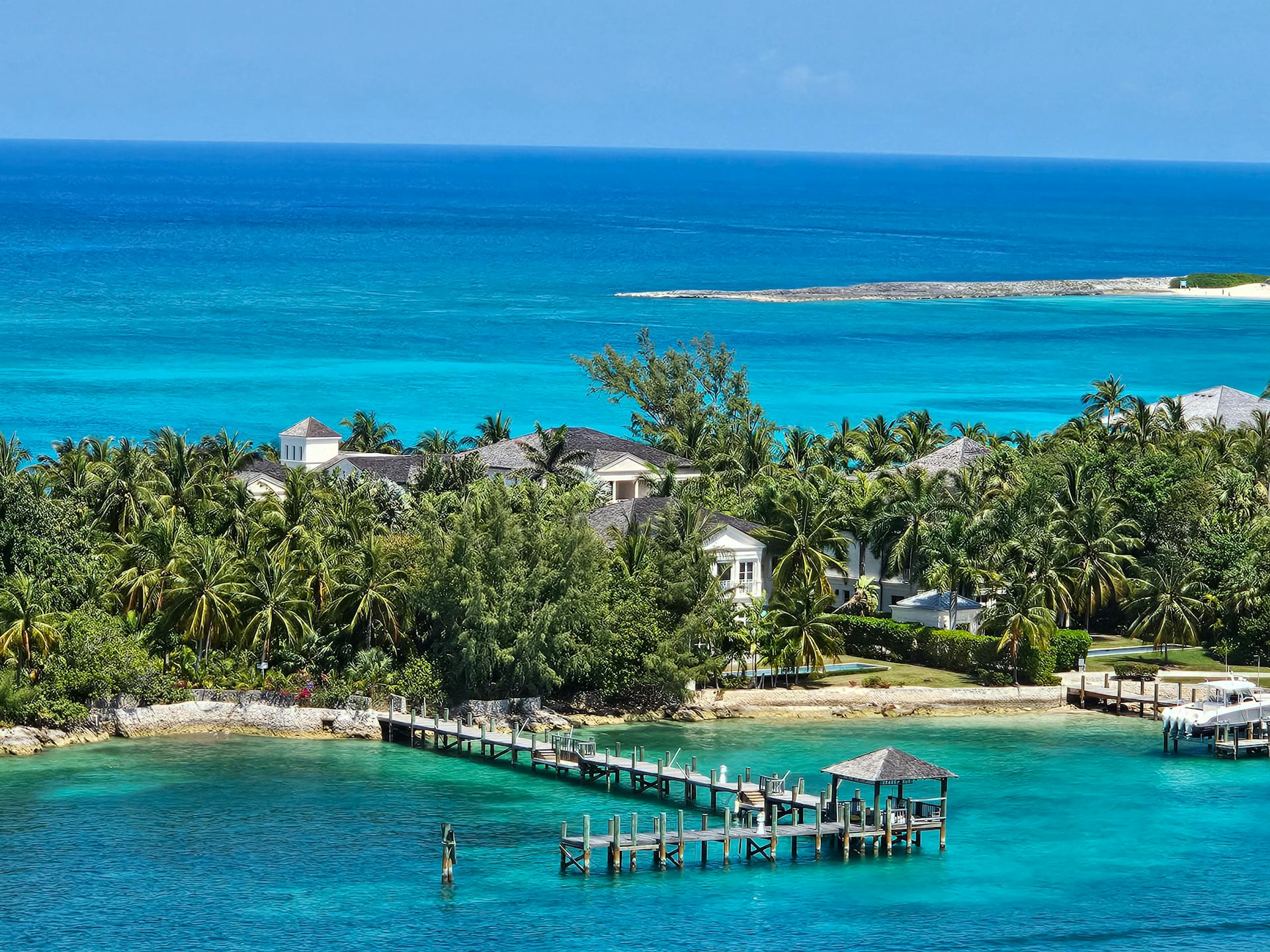
Nassau sits on New Providence, the most populated island, and carries the full weight of Bahamian history in its architecture. Bay Street runs along the waterfront past pastel-painted colonial buildings, conch stalls, and the Straw Market—a covered craft bazaar where vendors have worked the same spots for generations.
The Queen’s Staircase—66 steps carved by hand from limestone in the 1790s by enslaved people—leads up to Fort Fincastle above the city. From the top, the harbour spreads out in both directions, cruise ships on one side, the Nassau lighthouse on the other.
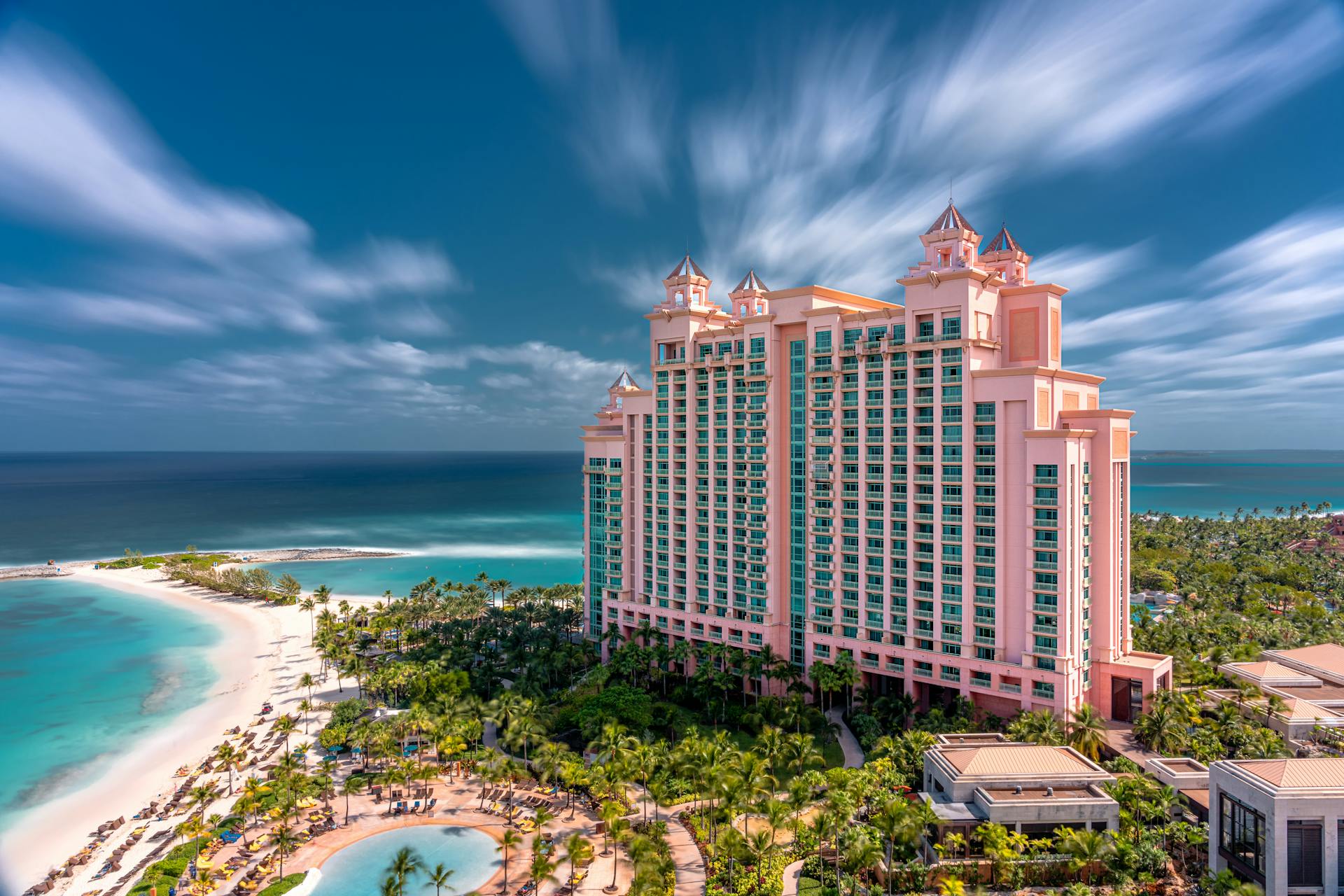
Paradise Island connects to Nassau via a short bridge. The Atlantis resort dominates it—a US$800 million complex of towers, the Aquaventure water park, and the Dig (an enormous aquarium built around a faux Atlantean ruin). It is loud, expensive, and relentlessly popular with families. Outside its gates, Cabbage Beach runs 2km of calm white sand with far fewer people.
Arawak Cay, known locally as Fish Fry, is where Nassau residents eat. Conch fritters, cracked conch, conch salad, grilled fish, Kalik beer. The portions are generous and the atmosphere is entirely local. It is one of the most honest meals you can have in the Bahamas.
Accommodation in Nassau runs from guesthouses at around US$80 per night to the full Atlantis experience at US$400–800. The cable beach strip has mid-range all-inclusive options. Most independent travellers base themselves on Nassau and fly or ferry to the Out Islands from there.
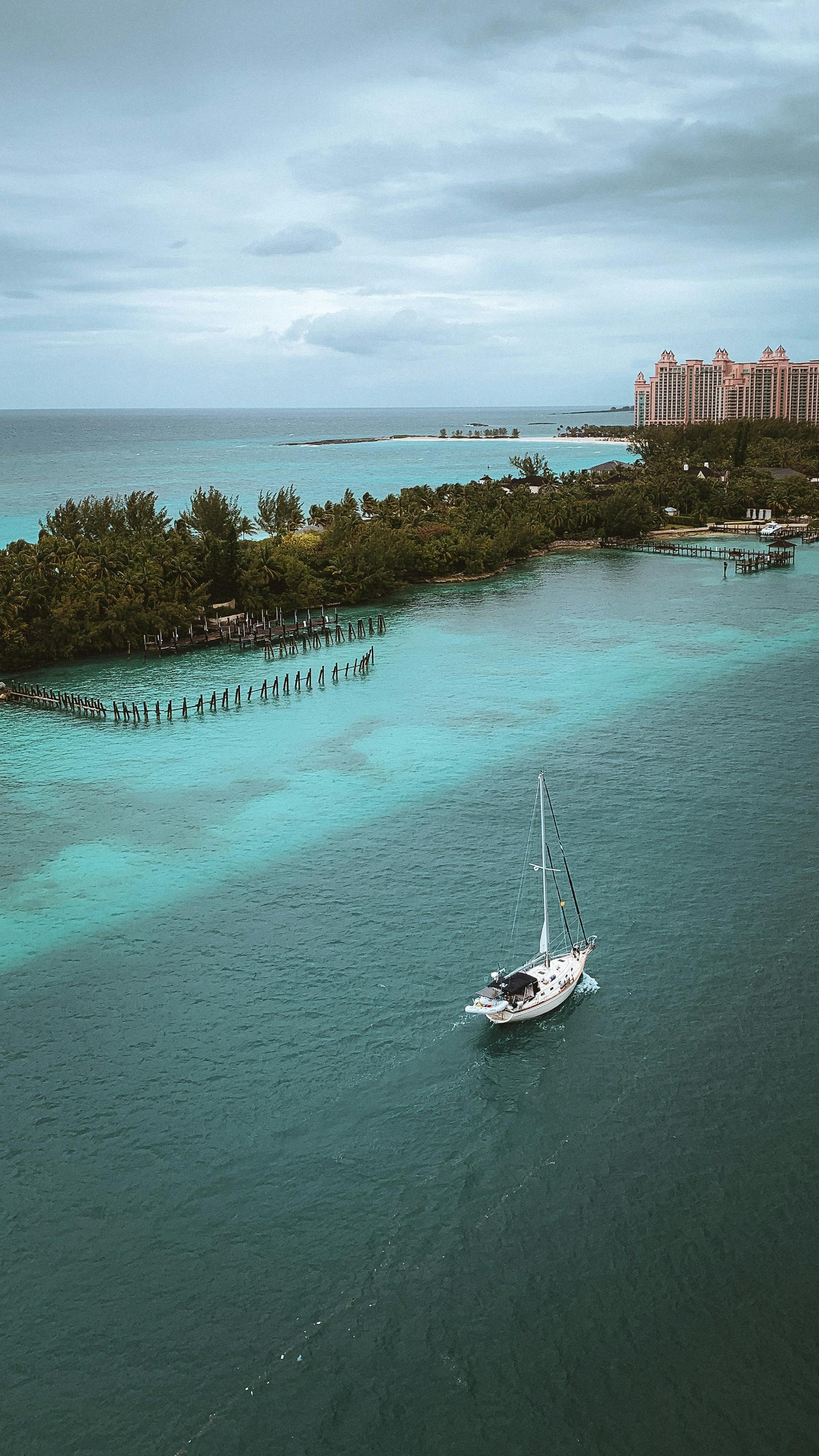
The Exuma Cays stretch 150km through some of the clearest water in the Atlantic. From the air, the sandbars appear and disappear with the tide, and the sea runs every shade between white and deep teal. George Town on Great Exuma is the hub: small, unhurried, organised around a harbour where sailing yachts outnumber powerboats.
Pig Beach—officially Big Major Spot—is home to a colony of feral pigs that swim out to meet boats. How they got there is disputed (shipwreck? sailors who never returned?). The pigs are real, photogenic, and occasionally aggressive about snacks. Boat tours from George Town or Staniel Cay take around 20 minutes.
The Exuma Cays Land and Sea Park covers 453 square kilometres of protected reef and island. No fishing, no collecting, no motorised watersports inside the boundary. The result is reef visibility that consistently reaches 30 metres and coral formations largely undamaged since the 1950s.
Staniel Cay Yacht Club is the informal social hub of the central Exumas—a small bar and dock where cruising sailors, bonefishermen, and day-trippers from Nassau all end up eventually. The Thunderball Grotto nearby, a sea cave used in two James Bond films, can be snorkelled at low tide.
Getting to Exuma: Bahamasair and American fly daily from Nassau (40 minutes) and Miami. A private water taxi from Nassau costs around US$250 per person. Once there, you rent a golf cart to get around George Town or join a boat charter for the cays.
Harbour Island lies off the northeast tip of Eleuthera, a 7-minute water taxi from North Eleuthera airport. It measures 5km by 1.5km. The pink sand beach on its Atlantic side runs the full length of the island and is consistently listed among the finest beaches in the world—the colour comes from crushed coral and shell fragments mixed with white quartz sand.
Dunmore Town, the island’s only settlement, has been here since the 1780s. It has kept its scale: narrow lanes, clapboard houses painted in faded blues and yellows, bougainvillea over garden walls. Golf carts are the primary transport. There are no traffic lights and no chain restaurants.
The Bahamas has a growing number of quietly expensive small hotels—Harbour Island concentrates them. The Rock House, Coral Sands, Pink Sands Hotel: all are small, stylish, expensive (US$400–900 per night), and fully booked through winter. Reservations 6–12 months out are standard for December through April.
Beyond Nassau, Exuma, and Harbour Island, the Out Islands reward patience and planning. Andros is the largest island, largely undeveloped, known for the world’s third-largest barrier reef and the blue holes—inland vertical caves that drop through limestone into underground ocean. Abaco has marinas and sailing infrastructure that draws the eastern seaboard’s sailing community each summer.
The best time to visit the Bahamas is December through April—dry, 24–27°C, and the clearest water. Hurricane season runs June through November. Prices drop 30–40% in summer, and the islands outside Nassau are genuinely quieter.
Junkanoo is the Bahamas’ defining cultural event: a street parade held on Boxing Day (26 December) and New Year’s Day, starting at 2am and running through dawn on Bay Street in Nassau. Groups of 500–1,000 performers spend months constructing elaborate costumes from crepe paper and cardboard, and the competition between groups—Valley Boys, Saxon Superstars, One Family—is serious and long-running.
The music is cowbells, goatskin drums, brass horns, and whistles—a specific, dense wall of sound that is unlike anything else in the Caribbean. The crowds on the sidewalks are ten deep, and the atmosphere by 4am is unlike most things that happen at 4am anywhere in the world.
Conch is the culinary backbone of the Bahamas. It shows up in fritters (chopped, battered, fried), cracked (pounded, breaded, pan-fried), in salad (raw, diced with lime, onion, pepper), in chowder, in burgers. The Queen Conch is now protected in US waters but still harvested in the Bahamas under regulation. The best conch salad in Nassau is sold fresh from roadside stalls at Arawak Cay.
Rake and scrape—a traditional Bahamian music style built around the saw, goatskin drum, and accordion—survives in the Out Islands where it originated. The Cat Island Rake & Scrape Festival held each June is one of the more authentic cultural events in the entire Caribbean region.
Graycliff, Nassau’s most decorated restaurant, operates out of an 18th-century Georgian mansion and has held its wine cellar—one of the largest in the hemisphere—for over five decades. It is expensive and worth it for the setting alone. Down the road, the Graycliff Chocolatier runs chocolate-making workshops that draw visitors more interested in the process than the prices.