This is your destination guide for Santorini
📍 Part of GreeceCaldera cliffs, black volcanic beaches, basket-grown wine — and the most crowded sunset in Greece.
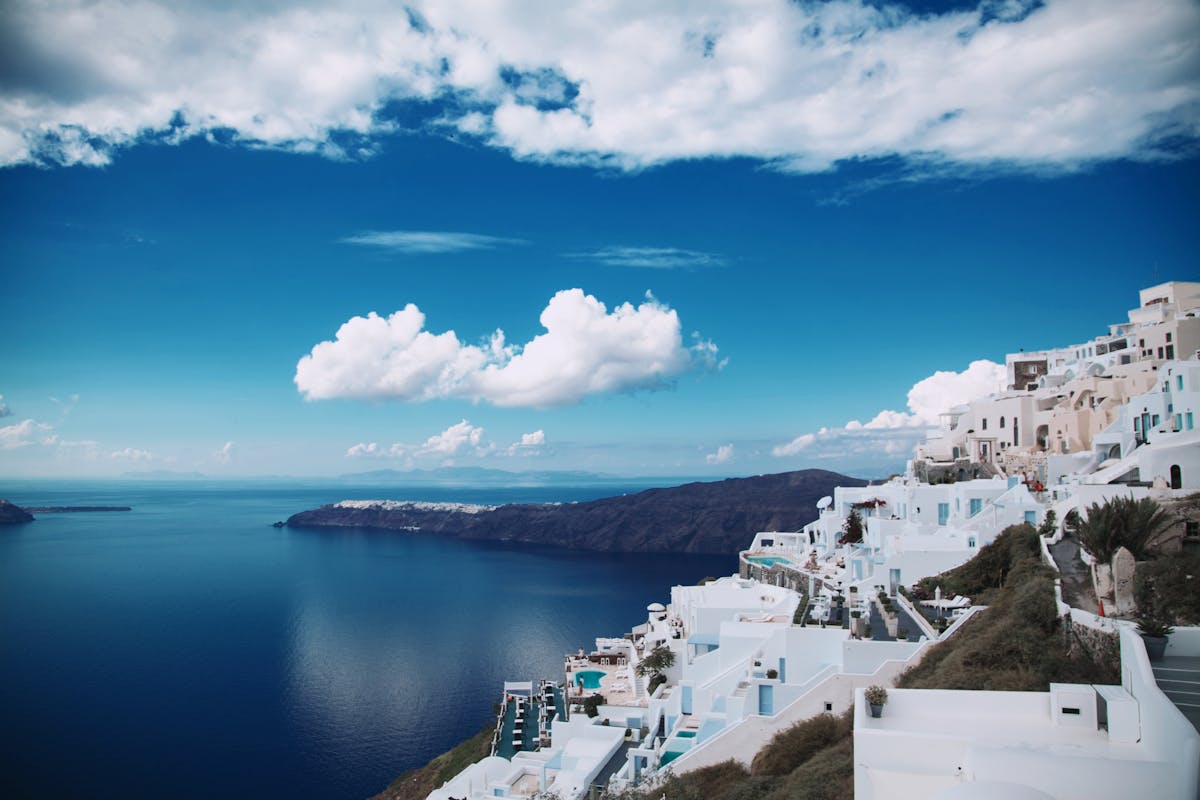

The reality: It's 8pm in Oia, and you're standing shoulder to shoulder with four hundred strangers on a castle ruin, all pointing the same phone at the same sun. Someone applauds when it drops. Then four hundred people try to leave down one marble lane at once. This is the picture that sold you the island — and it's real. It's just not the whole island.
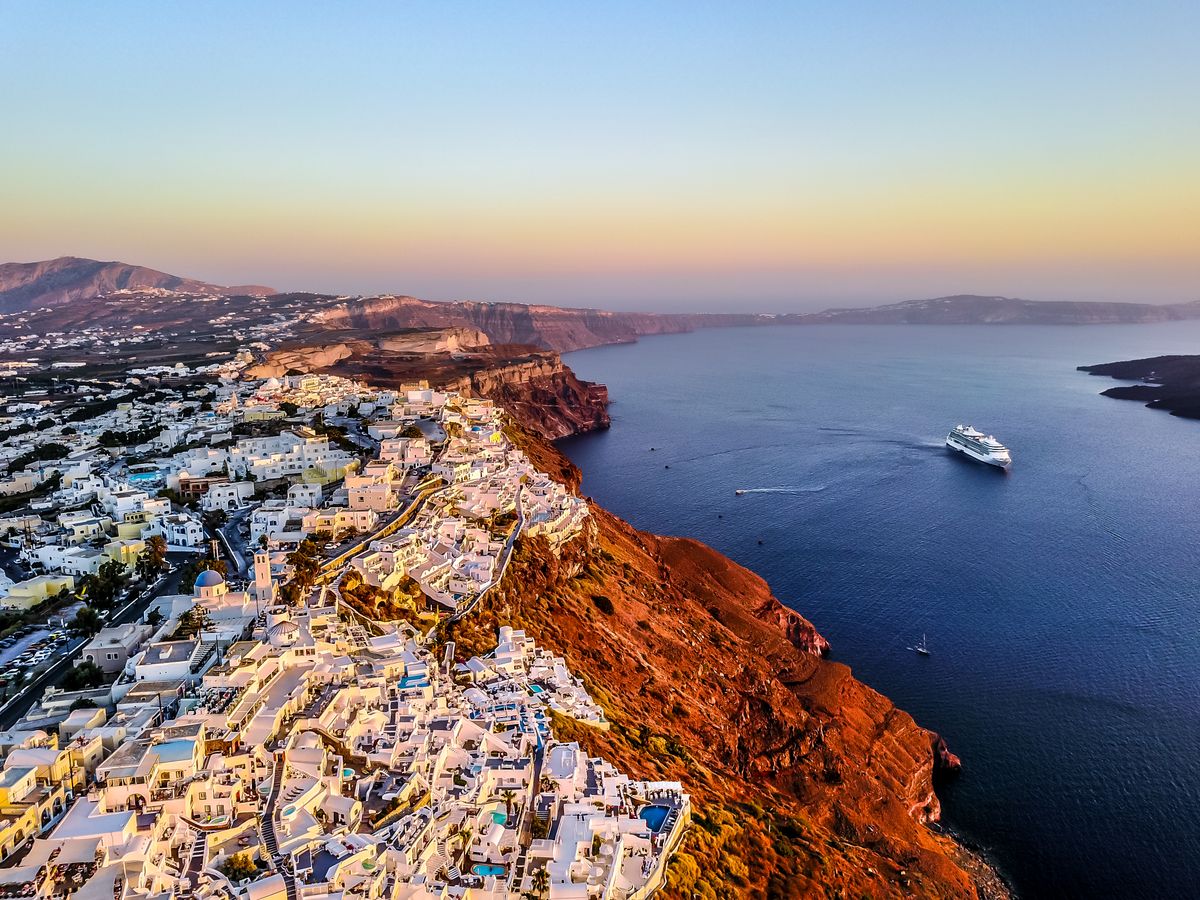
Santorini is tiny: 76 square kilometres, fewer than 16,000 residents, around 3.4 million visitors a year. The famous cliff villages cling to the western rim of a flooded volcanic crater — that rim is maybe a tenth of the place. The rest is flat, sun-baked, and quietly getting on with life: vineyards, a Bronze Age city under volcanic ash, old villages with no caldera view and no crowd. And since early 2025, the volcano underneath all of it has reminded everyone it's still awake.
So come — but come in May or October, sleep somewhere other than the photo spot, and see the famous things at 7am before the cruise tenders land. Drink the wine. Eat the fava. Take the boat out to the crater. Watch one sunset from somewhere nobody else is filming.
Forget the brochure beaches. Santorini sits on a volcano, so the sand is black, red, or grey — and it stores heat like a frying pan. Bring something for your feet.
Perissa & Perivolos — the long black-sand stretch on the south-east coast, well away from the cliffs. Sunbeds, tavernas, calm shallow water. Where you go for an actual beach day, not a viewpoint.
Kamari — black sand again, below the hulk of Mesa Vouno. Organised, family-friendly, a little more built up than Perissa. The cliff at the end hides the path up to Ancient Thera.
Vlychada — the strangest one. Wind has carved the pale cliffs into something lunar. Quiet, slightly eerie, the best "I didn't know Santorini looked like this" beach.
Red Beach (Kokkini Paralia) — a cove backed by rust-red volcanic cliffs near Akrotiri. The colour is genuinely unusual. The cliffs also shed rocks, so much of it is roped off and signed.
White Beach — reachable mainly by water taxi from Red Beach. Pretty, small, more a boat-trip stop than a day out.
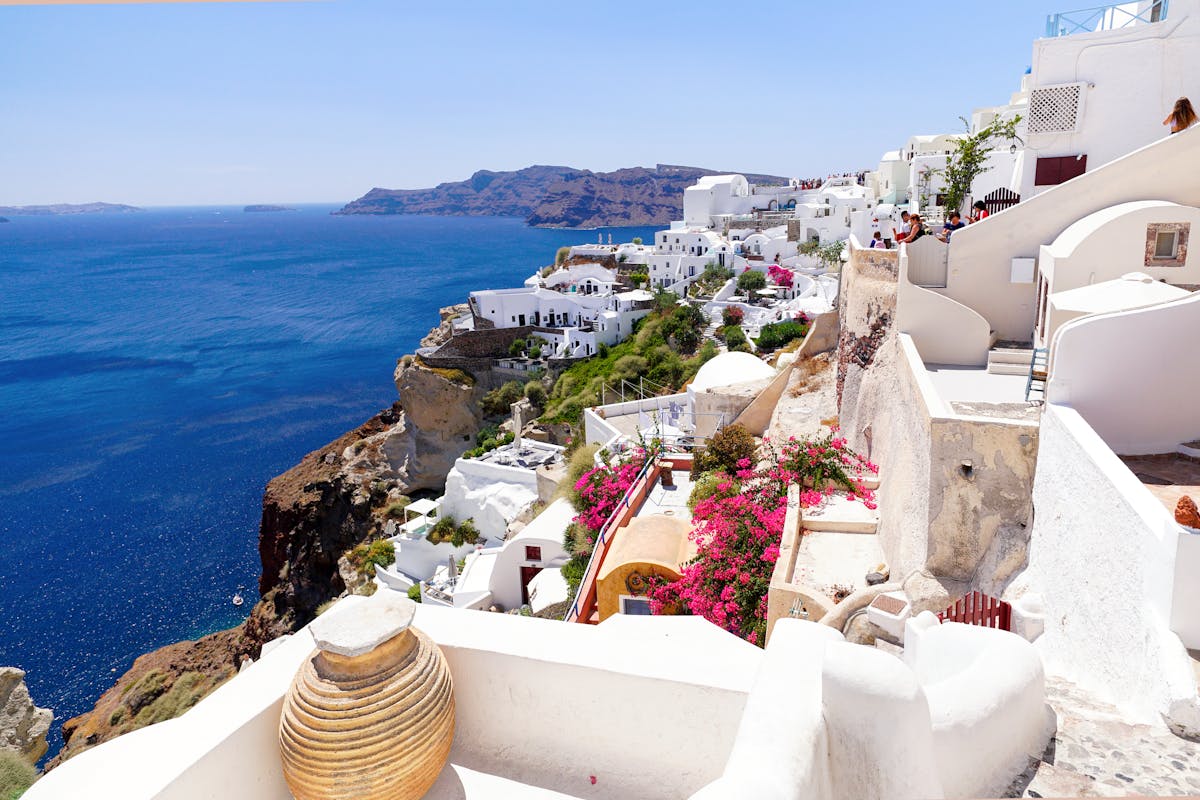
Caldera-side swims — there's no real beach beneath the cliff villages, but boat trips drop anchor for a swim off the volcano islets, including the warm sulphur springs at Palea Kameni.
Santorini doesn't really do towns. It does cliff villages strung along the rim, and quiet inland ones most visitors never reach. Pick well and you see the best of both in three days.
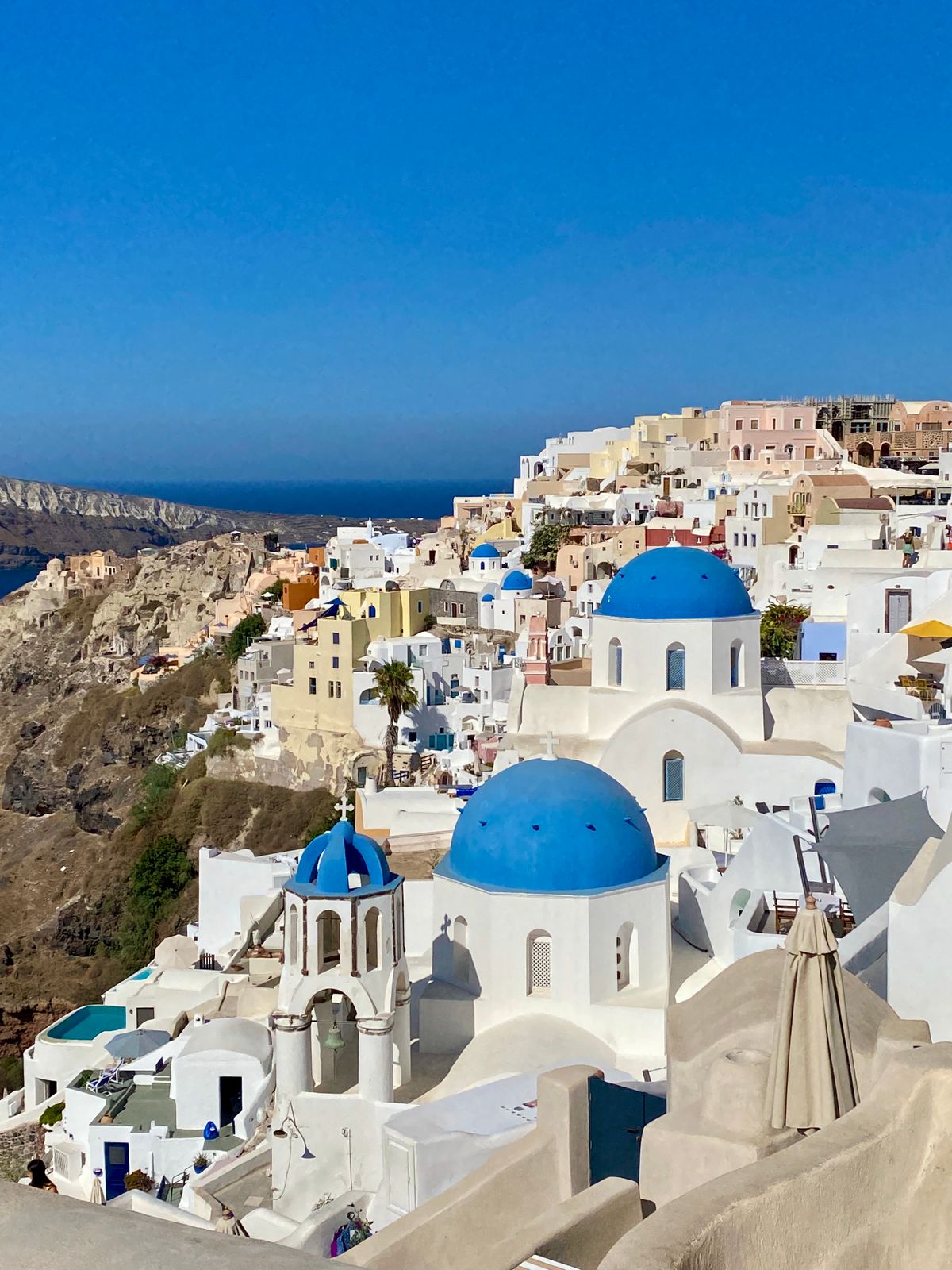
Oia — the famous one. White cubes, blue domes, the sunset. Worth seeing at 7am, when it's just you, the cats, and someone sweeping a terrace. By afternoon it's a slow-moving river of people.
Fira — the capital, busier and brasher than Oia, with the cable car down to the old port and most of the nightlife and shops. A useful base, less romantic.
Imerovigli — the "balcony of the Aegean," on the highest part of the rim. Same caldera view, half the crowd, the start of the cliff walk, with Skaros Rock jutting out below.
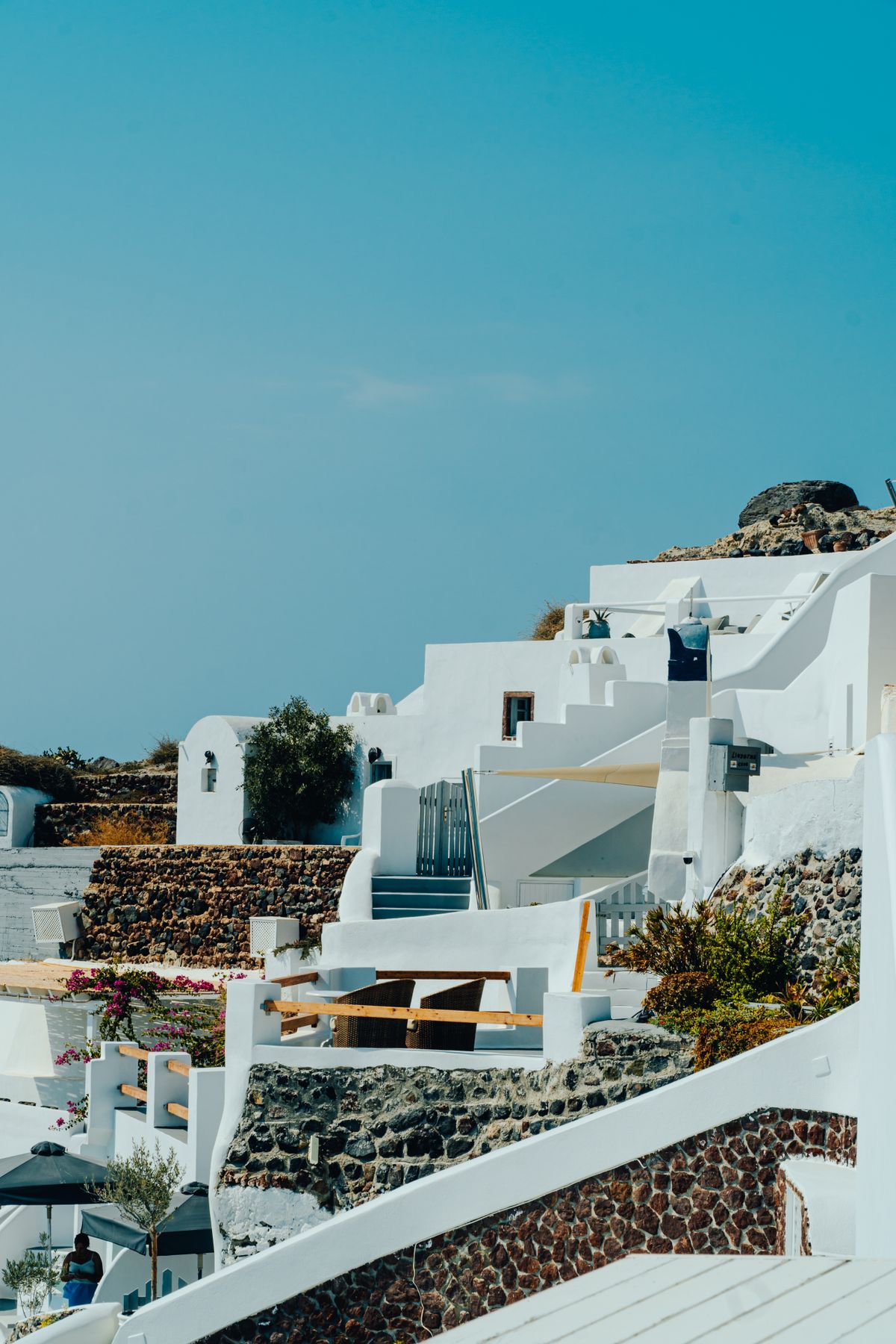
Firostefani — a 10-minute walk from Fira but quieter, with the same view for less money. An underrated base.
Pyrgos — inland and uphill, the old island capital. A maze of lanes climbing to a Venetian castle with a 360° view of both coasts and the sunset, minus the Oia mob. Come for dinner.
Megalochori & Emporio — wine country and a medieval kasteli, the fortified warren built to hide from pirates. Real villages where people live. Get lost in Emporio's old quarter on purpose.
For people who want more than a sunbed and a sunset.
The island is small but volcanic, which makes "active" here mean lava fields, ancient ruins, and vineyards more than gyms and bike lanes. Almost none of it needs to be hard.
Santorini's volcanic soil makes its produce tiny and intense, and its wine unlike anywhere else in Greece.

Fava — a silky purée of the local yellow split peas, topped with onion, capers, and oil. The island's comfort food. Order it everywhere and compare.
Tomatokeftedes — fritters made from Santorini's intense little cherry tomatoes, herbs, and onion. The dish that proves the soil does something special.
White aubergine & caper leaves — the aubergines here are pale and sweet; the caper leaves get pickled and put on everything. Both are island-specific.
Chloro — fresh, soft, slightly sour goat's cheese. The everyday plate, good with tomato and bread.
The wine is the real surprise. The signature grape is Assyrtiko — bone-dry, mineral, citrus-sharp. The vines are trained into low coiled baskets called kouloura that shelter the grapes from the wind and pull moisture from the sea mist; nowhere else grows wine quite like it. Don't miss Vinsanto, the amber sun-dried dessert wine.
Where to taste: Santo Wines for the easy introduction and the postcard caldera terrace, Venetsanos for the cliff-edge architecture, and Domaine Sigalas, Estate Argyros, or Gaia for serious bottles. Half a day, €15–30 per flight.
May, June, late September, October are the months. 22–27°C, sea warm enough from June, restaurants open, the cliff walk comfortable, crowds present but not crushing. This is where you want to be.
July and August — hot, very crowded, and the most expensive Greek island gets more so. Cruise days pack the caldera (arrivals are now capped, but it's still a lot of people in a small place). Caldera-view hotels can quadruple in price.
November to April — many caldera hotels and restaurants close, ferries get rough, and the famous villages feel half-shuttered. Atmospheric and cheap, but not what you came for.
The volcano, honestly: in early 2025 a weeks-long earthquake swarm rattled the island and dented the season. Activity calmed by that summer and the island reopened fully. As of spring 2026, authorities have precautionary measures in place — port traffic controls, a no-stay zone at the upper old port of Fira, and one closed trail — expected to run into 2027 while scientists monitor. Day to day the island operates normally; this is monitoring and crowd-safety, not danger. If a restless volcano would sit at the back of your mind all week, that's a real reason to choose elsewhere. If it sounds like part of the appeal, you'll be fine.
ATV / quad or a small car. The island is small enough to cross in under an hour, but the cliff roads are narrow and parking near Oia and Fira is a blood sport in summer. A quad is fun and parks anywhere; a small car is saner for two-plus people and luggage. Book ahead in peak season.
Buses run from Fira to most villages and beaches — cheap and frequent in summer, sparse off-season. Fine if you're not in a hurry and don't mind changing in Fira.
The cable car links Fira to the old port, where boat tenders land. Quick, cheap, and the humane alternative to the donkey path. Expect a queue when a ship is in.
Port note: since 2025, traffic at the main ferry port (Athinios) and the old port area is being actively managed for safety, so transfers can take longer than the map suggests. Build in buffer time around ferry and cruise arrivals.
Pick your base by what you're optimising for. The view costs money; the quiet and the beaches don't.
Oia — the dream shot and the highest prices. Romantic, walkable, busiest by day.
Imerovigli or Firostefani — the same caldera view, calmer, a notch cheaper. The smart middle.
Fira — central, lively, best connected. Less serene but easiest for getting around.
Pyrgos or Megalochori — inland, quiet, real-village character, good food, far better value. Best with a car.
Kamari or Perissa — the east-coast beach bases. Cheapest stays, black sand at the door, no caldera view.
Santorini is the most expensive Greek island, by some distance. Off-season is roughly half-price; July and August reach Mykonos levels — and a caldera-view room is its own price tier entirely.
Prices in 2026 euros. Off-season knocks 40–50% off most of this; a caldera view in August is the single biggest line on any Santorini budget.
Go if you want cliffside drama, volcanic wine, and a sunset worth the crowd — and you'll happily slip away to Pyrgos, Akrotiri, and a boat on the crater to find the quiet half. Skip if you came for soft sandy beaches, solitude, a tight budget, or if a twitchy volcano would haunt the whole week.
Found this useful? Share it.
Still planning?
We don't stop at "here's the country." Real places to stay, what to do, apps that matter, even how to find someone to travel with — plus guides for whatever vibe you're after, from beach days to wine country to slow weekends. All up top. Spin for somewhere new when you're done with this one.