This is your destination guide for Rhodes
📍 Part of GreeceA lived-in medieval walled town, Lindos on its cliff, and a history of Knights, Ottomans and Italians.
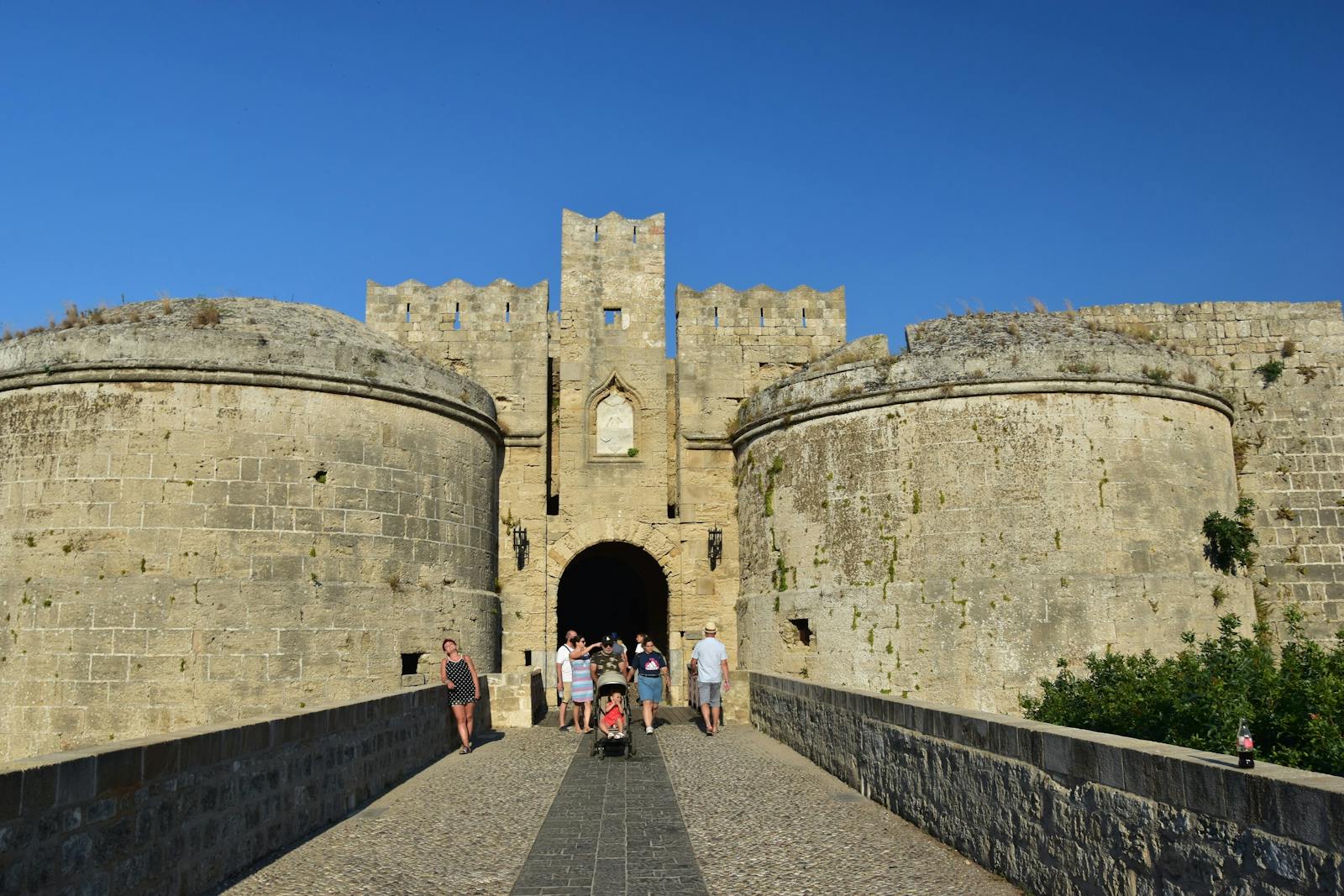

The reality: You walk in through a stone gate in a wall that's stood for six hundred years, and you're not in a museum — people live here. Washing hangs between the towers, a moped weaves down the Street of the Knights, and a taverna table sits where a Crusader once tied his horse. Rhodes Old Town is the largest inhabited medieval town in Europe, and it's the reason the island is different from its Cycladic cousins.
Rhodes has been Greek, then ruled by the Knights of St John, then Ottoman, then Italian (right up to 1947) — and you can read all of it on a single street: a Gothic gateway, a minaret, an Art Deco façade from the 1930s. Out on the island, the two coasts split: the east is sandy, calm, and lined with resorts; the west is windy, pebbly, and where the kitesurfers go.
So treat the Old Town early or late, when the cruise crowds aren't filling it. Drive south to Lindos and its acropolis. Pick the east coast if you want beaches. And give the island credit for being more than the Faliraki strip it's sometimes reduced to.
The golden rule on Rhodes: east for sand and calm water, west for wind and pebbles. Most of the good swimming is on the sheltered eastern side.
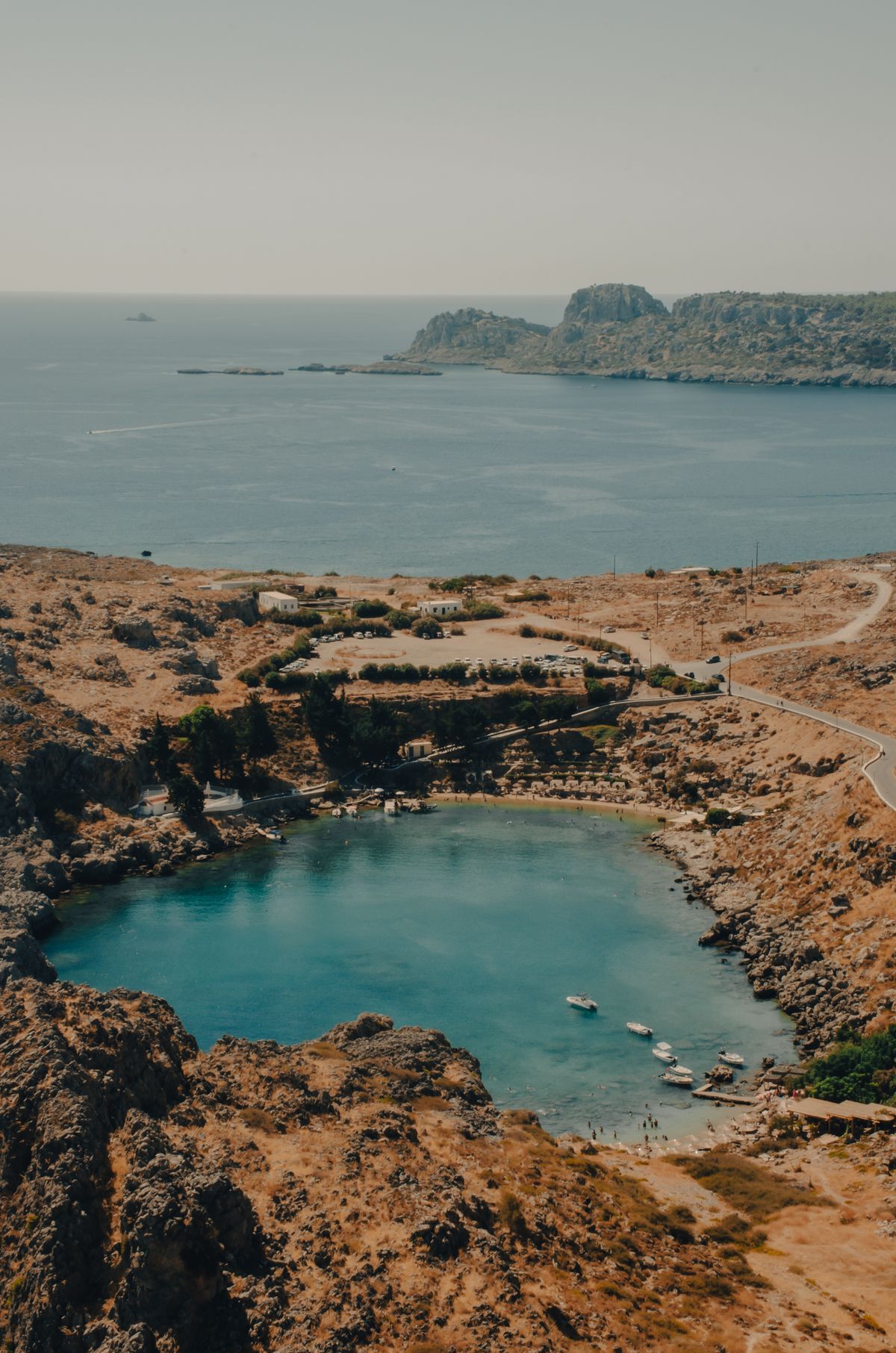
St Paul's Bay (Lindos) — a near-enclosed circle of turquoise under the acropolis. Small, gorgeous, and busy by mid-morning. Go early.
Anthony Quinn Bay — a rocky cove near Faliraki, named after the Guns of Navarone star who fell for it. Clear water, good snorkelling, no sand.
Tsambika — a long, shallow golden-sand beach below a hilltop monastery. The east coast's most family-friendly stretch.
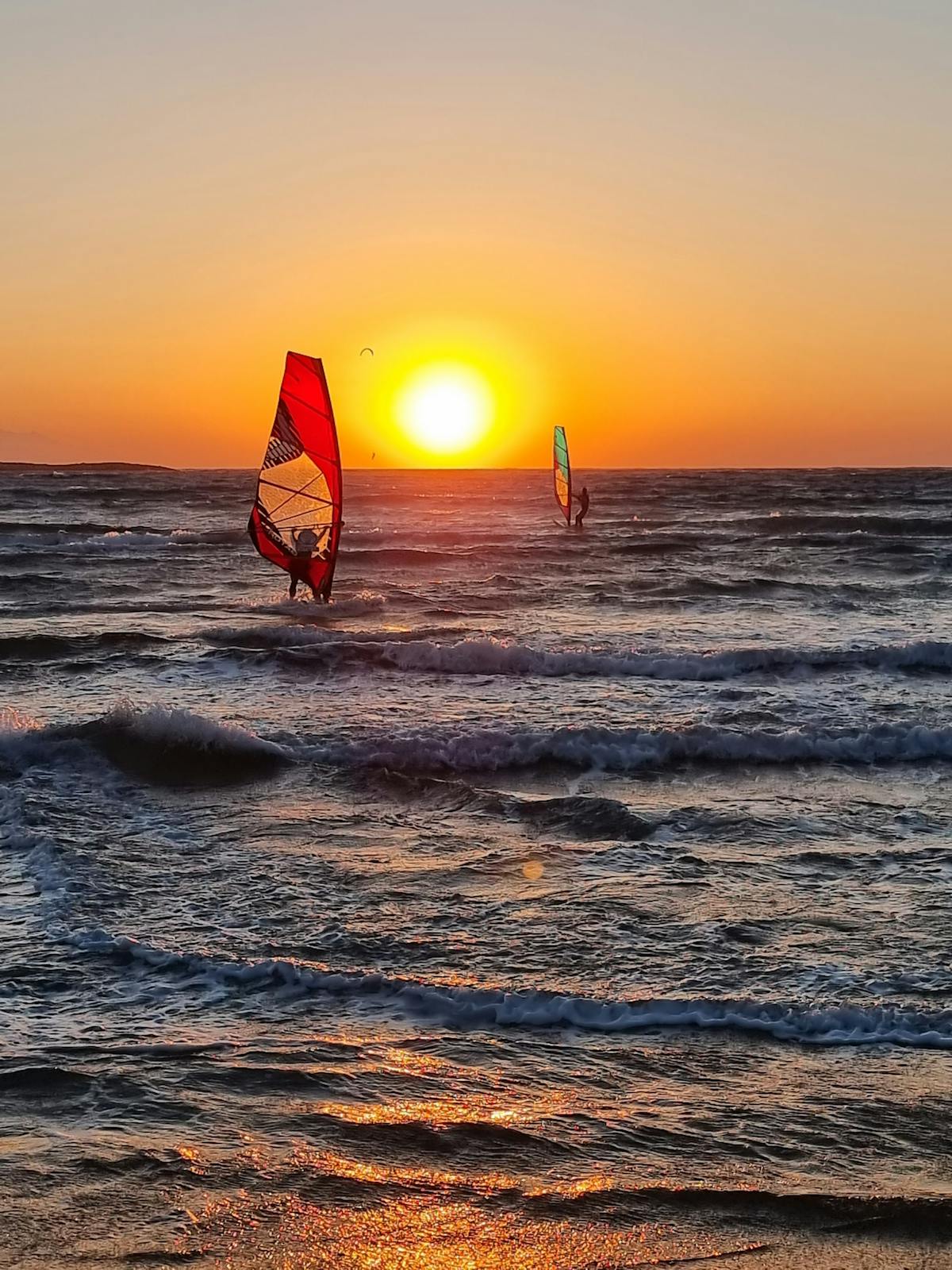
Prasonisi — the island's southern tip, a sandbar where the Aegean meets the Mediterranean. Flat water one side, waves the other — kitesurf and windsurf central.
Elli (Rhodes Town) — the town beach, walkable from the Old Town, with the old Italian-era diving platform and bathhouse still in use.
Ladiko — the calmer cove just over the headland from Anthony Quinn Bay, when the famous one fills up.
Rhodes's real draw is built, not natural. One medieval city, one cliffside village, and a scatter of inland towns most visitors never reach.

Rhodes Old Town — walled, cobbled, and still lived in. The Street of the Knights runs uphill to the Palace of the Grand Master; side lanes hide hammams, courtyards, and quiet squares the day-trippers miss. Walk it at 8am or after dinner — the middle of the day belongs to the cruise ships.
The New Town (Mandraki) — the harbour where the Colossus is said to have stood, ringed by grand 1920s–30s Italian buildings. A whole layer of architecture you won't find on other Greek islands.
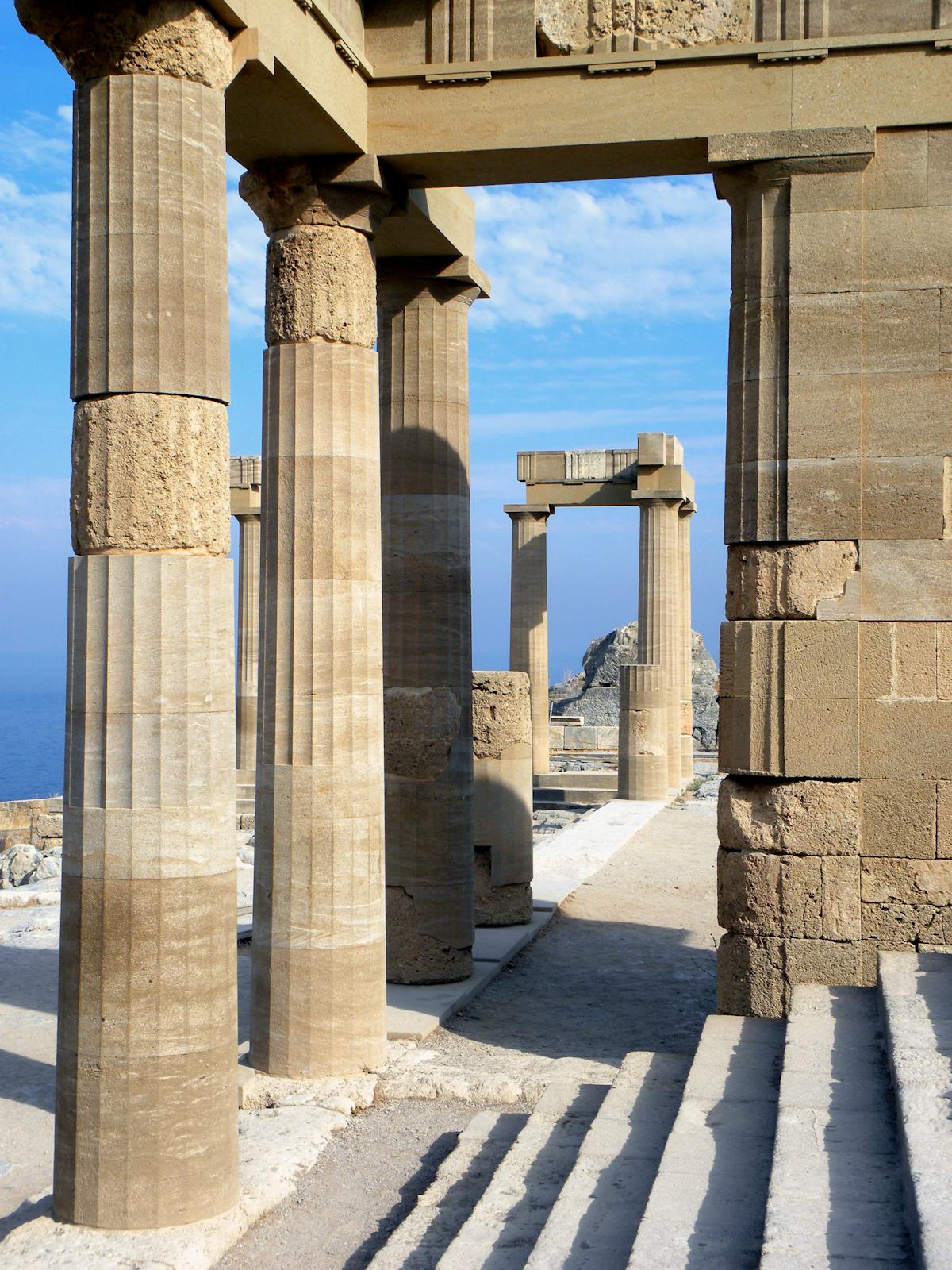
Lindos — a white cubist village wrapped around the rock, with an ancient acropolis on top and two bays below. No cars in the village; you walk (or take a donkey, which we'd skip). Stay overnight to have it after the buses leave.
Embonas & the interior — the wine village on the slopes of Mount Attavyros, plus old hill towns like Monolithos with its lonely castle on a crag. The green, slow, untouristed Rhodes.
History to walk through, wind to ride, islands to escape to.
Rhodes mixes culture and outdoors better than most Greek islands — you can spend a morning in a medieval palace and an afternoon kitesurfing where two seas collide.
Rhodian food is Dodecanese with its own accent — chickpeas, sesame, mountain cheese, and a local spirit that isn't quite the raki you met on Crete.
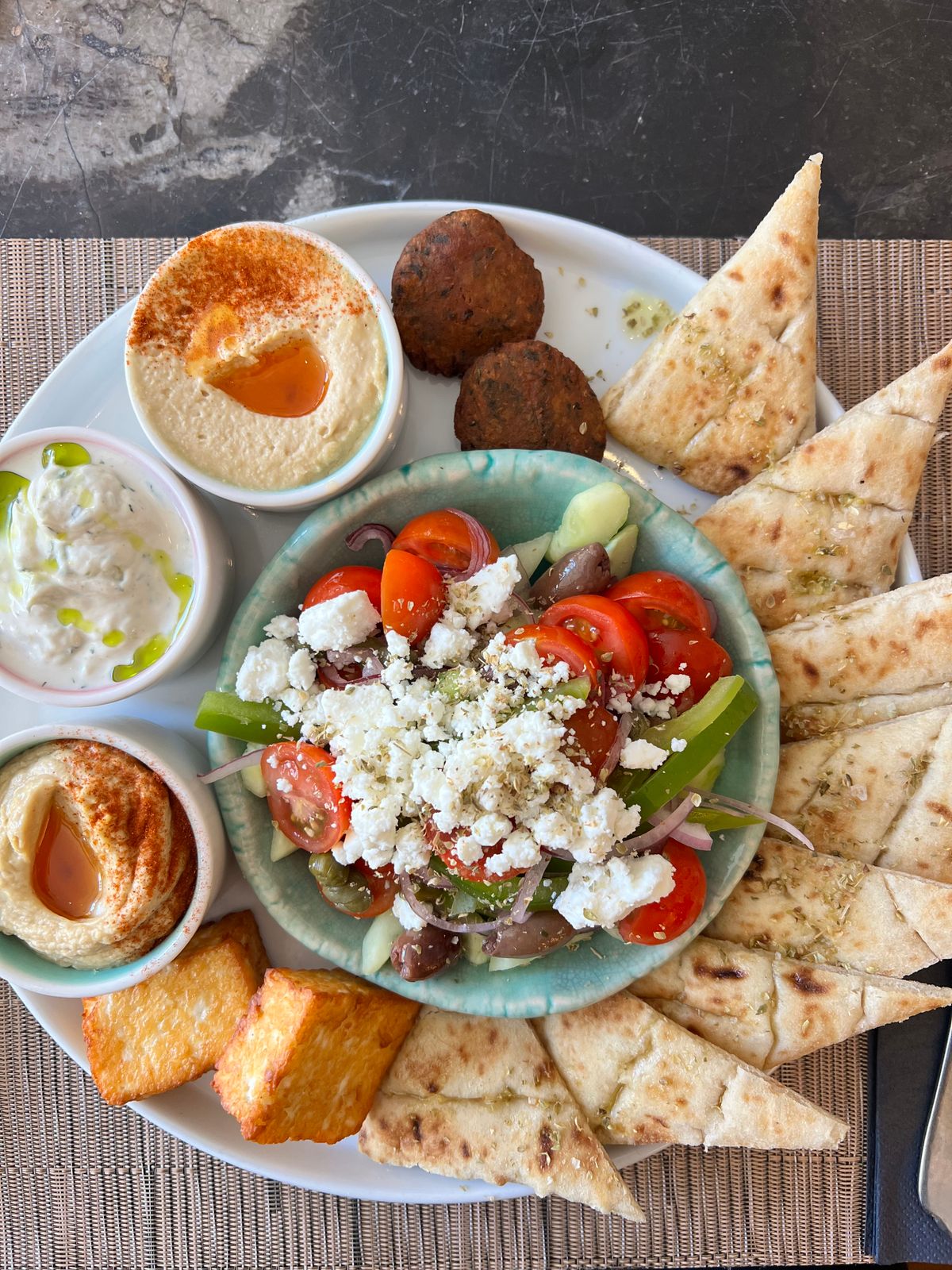
Pitaroudia — fried chickpea-and-herb fritters, the island's signature meze. Order them first, everywhere.
Melekouni — a chewy sesame-and-honey bar spiced with citrus and clove, traditionally a wedding sweet. Sold everywhere now.
Giouvetsi & slow-cooked meat — baked with orzo (kritharaki) in tomato; the inland tavernas do it best.
Souma — the local grape spirit, close cousin to raki, distilled in the villages and poured generously after a meal.
Where to eat: avoid the menu-with-photos places on the Old Town's main drag (Sokratous) and walk a few lanes deeper, or head inland to the villages around Embonas and Archangelos where the food is cheaper and better. A village taverna dinner runs €15–25 a head.
Wine: the slopes of Mount Attavyros around Embonas are Rhodes's wine country — crisp whites from the Athiri grape and reds from Mandilaria. Estates like Emery and the big CAIR cooperative run tastings.
May, June, September, October are the best months. Rhodes is one of the sunniest islands in Greece, so the shoulder season is long and warm, the sea swimmable well into autumn, and the Old Town walkable without the crush.
July and August — hot and busy. The Old Town fills with cruise passengers by day, the east-coast resorts run at capacity, and inland temperatures climb. Like much of the southern Aegean, the dry interior can be wildfire-prone in a heatwave — worth keeping an eye on local advice in peak summer.
The butterfly window: if Petaloudes is on your list, it only makes sense from about June to September, when the moths are actually there.
November to April — mild and quiet. Most beach resorts close, but Rhodes Town keeps a real life going year-round, which makes a winter city break here more rewarding than on the smaller islands.
Rent a car to see the island — it's 80 km long, and Lindos, Prasonisi, the wine villages, and the west-coast sites are all a drive apart. You won't need it in Rhodes Town itself.
The Old Town is pedestrian-only inside the walls. Park outside the gates and walk in; don't book a car-dependent plan around staying in the medieval core.
Buses run frequently down the east coast to Faliraki, Lindos, and the resort beaches, and are cheap and reliable. The west coast and interior are far less served.
Ferries & day boats connect Rhodes to the rest of the Dodecanese — Symi, Halki, Kos, and beyond. The fast boat to Symi is the easy half-day escape.
Base yourself by what you want most — atmosphere, beach, or quiet — and use the car for the rest.
Rhodes Old Town — for history and atmosphere; staying inside the walls is the whole experience. Lively, characterful, no driving to your door.
The New Town (Mandraki) — for a town base with a beach and easy walk to the Old Town.
Lindos — scenic and special, but car-free and busy by day; best for a night or two, not a fortnight.
East-coast resorts (Faliraki, Kolymbia, Pefkos) — for beach holidays and value, with Pefkos the calmest of the three.
The interior or west — for quiet, wine country, and a car-based road-trip feel.
Rhodes is mid-range Greece — well below Santorini or Mykonos, broadly in line with Crete. The package resorts make it one of the better-value big islands; the Old Town's tourist lanes are where prices spike, so eat a few streets back.
Prices in 2026 euros. Shoulder season knocks 30–40% off the beds; the resorts run all-inclusive deals that can undercut everything here.
Go if you want a living medieval city, a clifftop acropolis, and more layered history than any other Greek island — and you'll rent a car and pick the calmer east coast for the beaches. Skip if you came for the Faliraki party strip, you want a tiny island you can walk end to end, or peak-summer heat and cruise crowds in the Old Town would wear you down.
Found this useful? Share it.
Still planning?
We don't stop at "here's the country." Real places to stay, what to do, apps that matter, even how to find someone to travel with — plus guides for whatever vibe you're after, from beach days to wine country to slow weekends. All up top. Spin for somewhere new when you're done with this one.