This is your destination guide for Greece.
This is your destination guide for Corfu
📍 Part of GreeceVenetian old town, olive-green hills, and food that tastes more Italian than Greek.
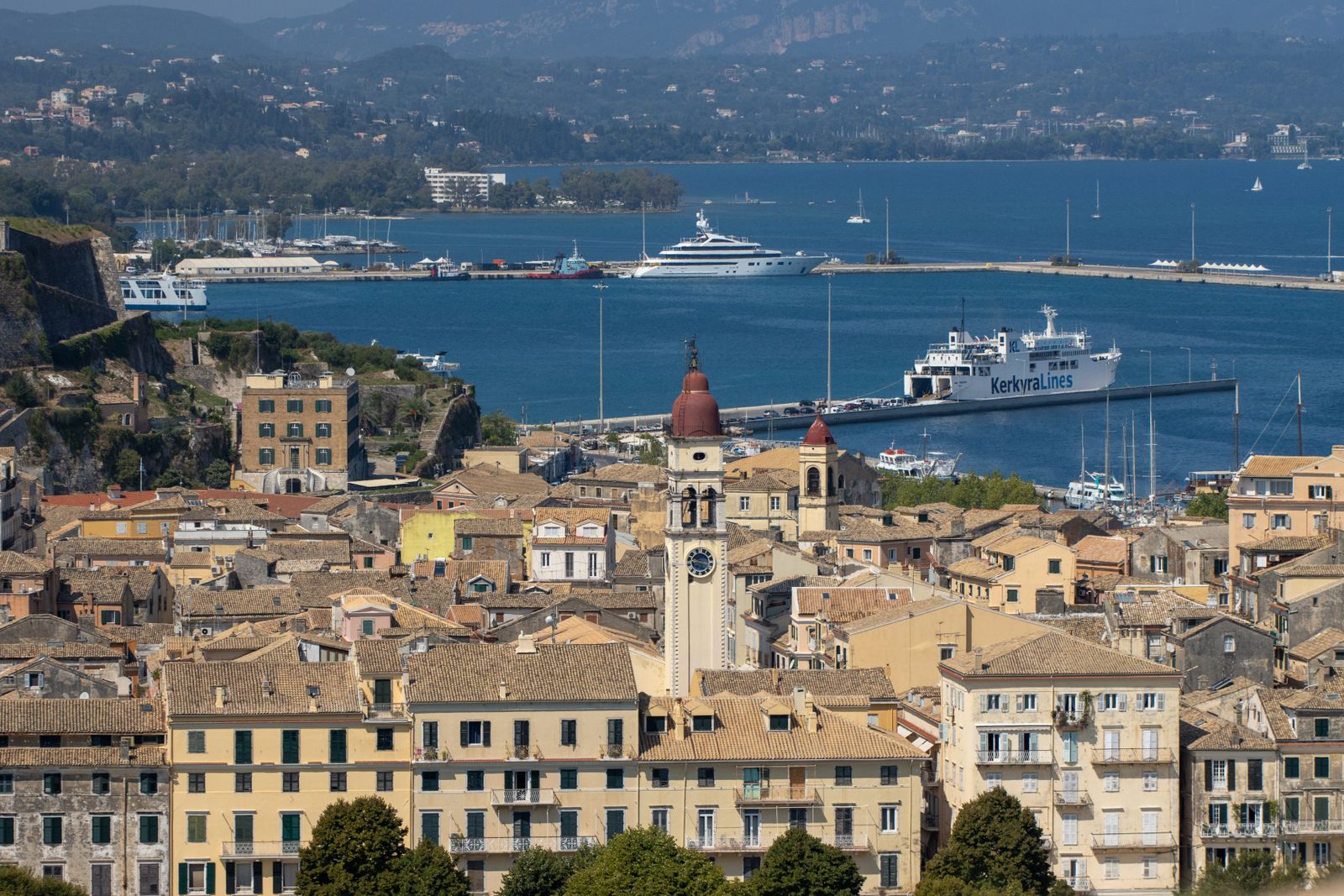

The reality: You land on a runway that juts into a lagoon, drive ten minutes, and you're in a town that looks more Venetian than Greek — shuttered houses six storeys high, washing strung between them, a French arcade where the whole town drinks coffee. Head north and the island turns green. Olive trees the Venetians paid farmers to plant, millions of them, climb the hills.
That's the surprise of Corfu. The package strips — Kavos in the south, Sidari in the north — are real, but they're a sliver of the island. The rest is mountain villages, pebble coves at the end of single-track roads, a Byzantine fortress on a headland, and a kitchen that took four centuries of Venetian and British rule and made something you won't taste anywhere else in Greece.
Most people come for a beach and leave talking about the food. Most come for the sun and remember the green. Corfu rewards anyone who rents a car and drives twenty minutes past the resort. Do that, and the island opens up.
Corfu's coast splits in two. Long sandy beaches run down the west; small pebble coves wrap the green north-east. The west catches the sunsets; the north-east catches the calm.
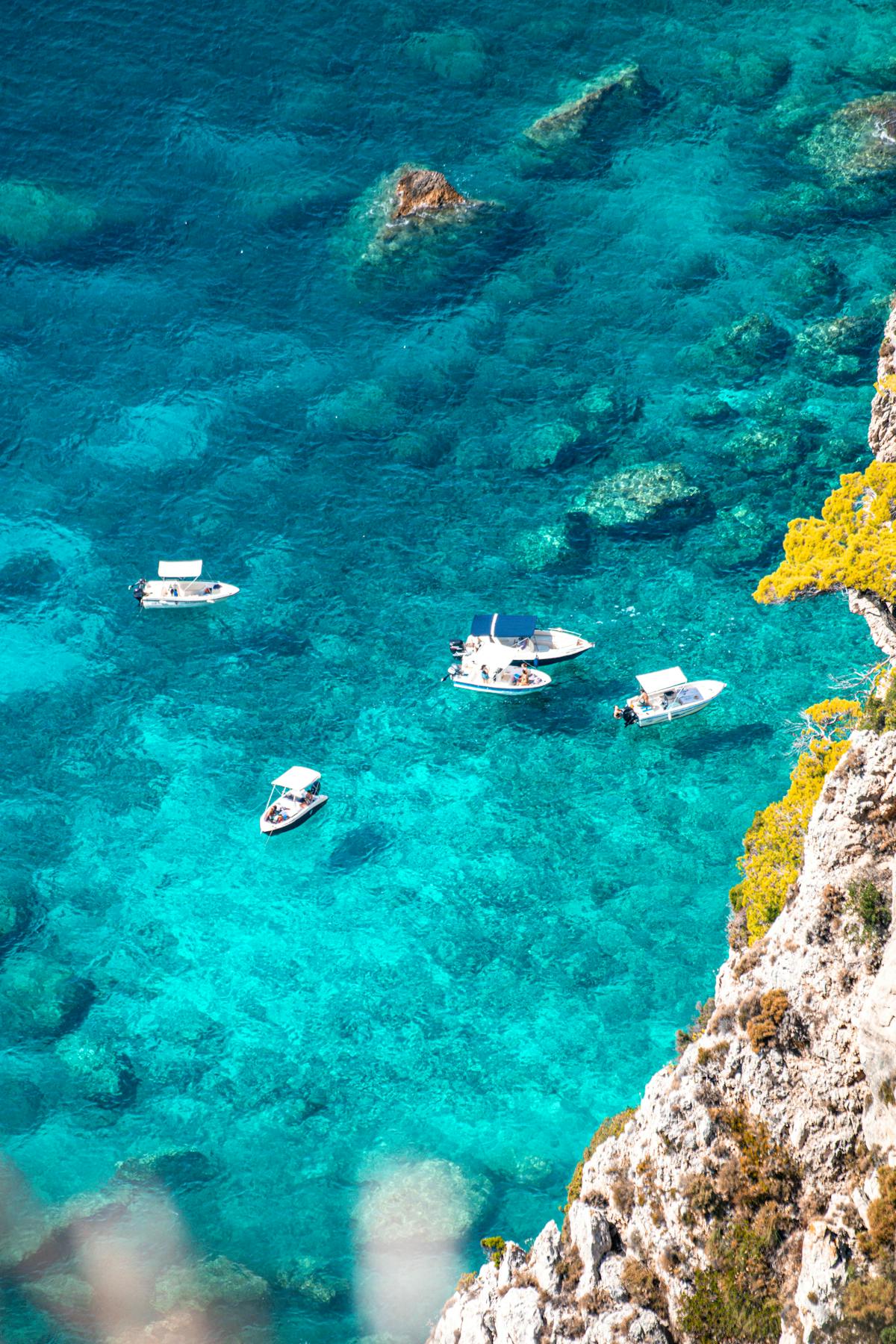
Paleokastritsa — six coves under a clifftop monastery, the water a deep green-blue. The coves are small and fill fast in August. Boat trips from here reach sea caves you can't walk to.
Porto Timoni — a double bay (two beaches back-to-back on a thin isthmus) reached on a 20-minute walk down from Afionas village. No road, no facilities, one of the island's best swims. Bring water.
Rovinia — a quiet pebble-and-sand cove below Liapades, framed by cypress. Used in the recent Durrell filming. Calmer than its busier neighbours.
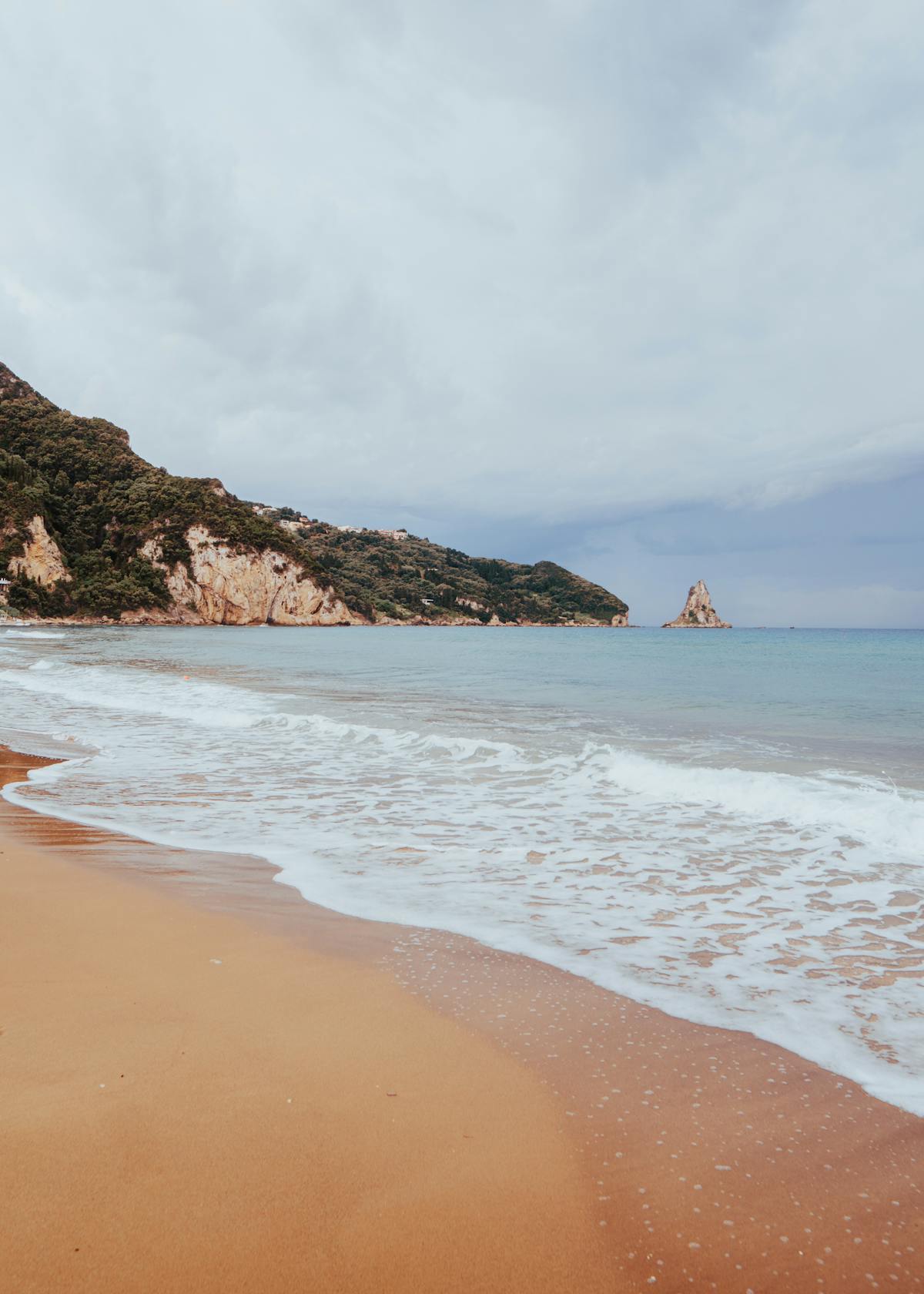
Agni Bay — three tavernas and a pebble beach on the north-east coast. People arrive by boat for lunch. No sand, no umbrella scramble — just clear water and a long, slow meal.
Myrtiotissa — Lawrence Durrell called it the loveliest beach in the world. Steep, rough access down a dirt track, partly naturist. Worth it for the setting, not the convenience.
Cape Drastis — less a beach than a cluster of white-rock fingers at the island's northern tip. Swim off the rocks; the cliffs do the rest.
Corfu's towns run from a Unesco old town to a half-abandoned Venetian village in the mountains. Pick two or three.
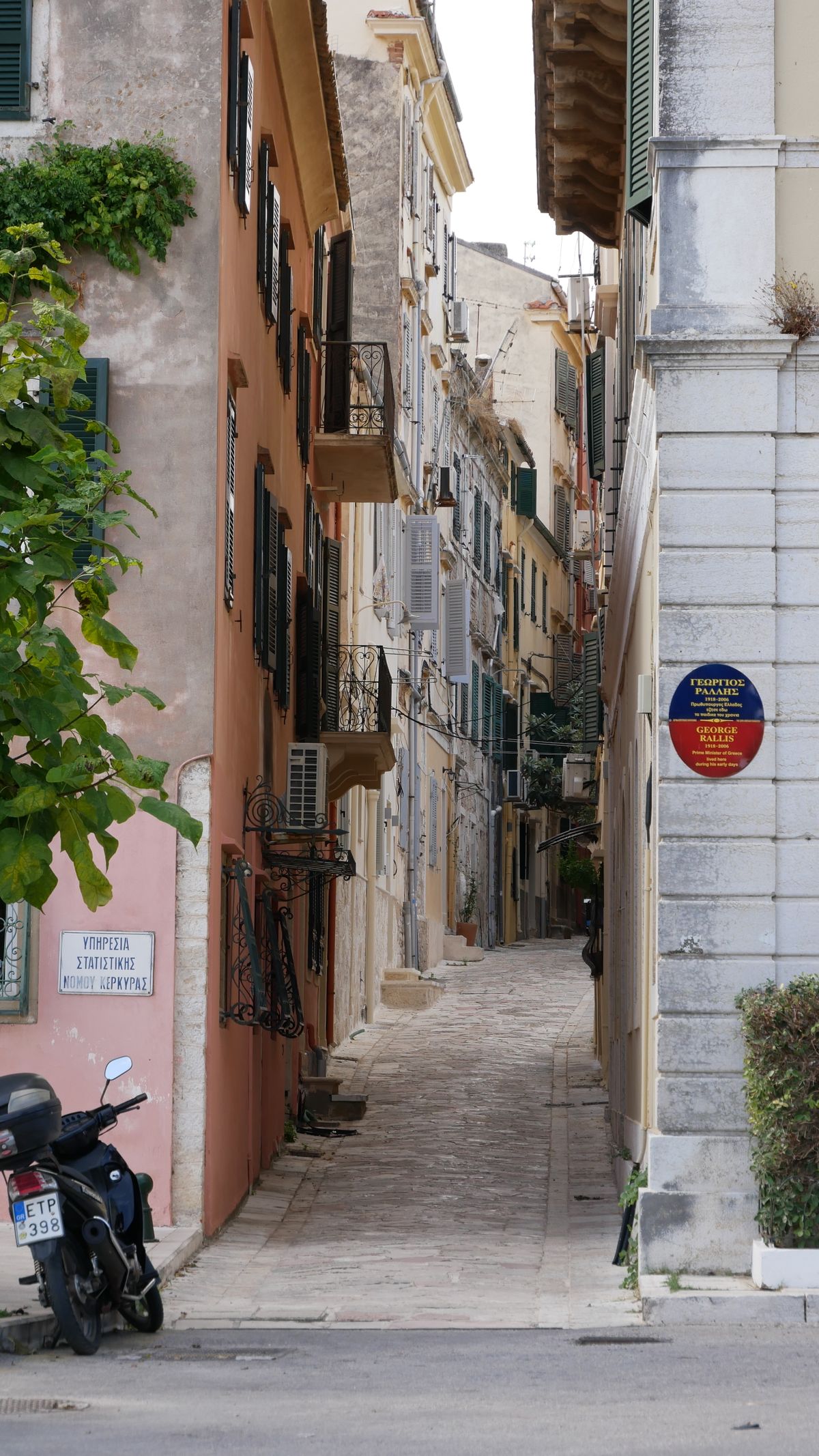
Corfu Town (Kerkyra) — reason enough to come even if you never reach a beach. Two Venetian fortresses bracket a Unesco old town of tall Italianate houses and narrow lanes (the Campiello quarter). The Liston — a French arcade built under Napoleon, modelled on Paris's Rue de Rivoli — is where the town takes its coffee. On the Spianada green in front, men play cricket on summer Sundays: a leftover from British rule nobody thought to stop.
Kassiopi — a north-east harbour village under the ruins of a Venetian-Byzantine castle. Tavernas around the bay, a couple of pebble coves either side. Busier than it was, still a long way from Kavos.
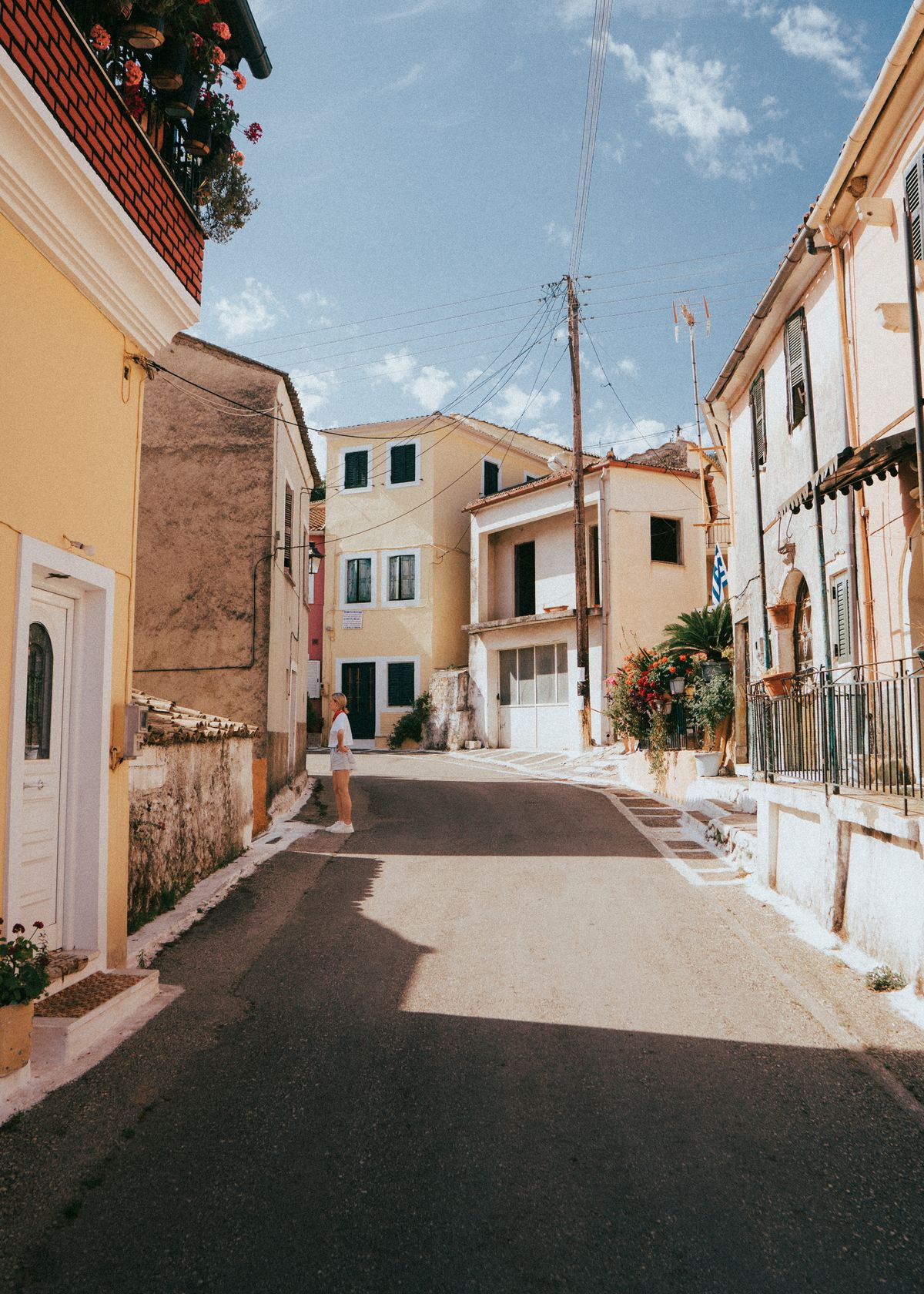
Old Perithia — the oldest village on the island, high on Mount Pantokrator, abandoned for decades and now slowly coming back. A handful of stone tavernas among the ruins. Cool air, no beach, real quiet.
Pelekas — a hilltop village inland from the west coast. Climb to the "Kaiser's Throne" viewpoint, where Kaiser Wilhelm II watched the sunset, for the whole western coastline at once.
Lakones — perched above Paleokastritsa, with the "Bella Vista" terrace looking straight down onto the coves. Worth the drive up for a coffee and the view alone.
For people who want to move a bit, not enrol in a triathlon.
Corfu isn't a cycling island the way Mallorca is — the roads are too narrow and twisting for that. But it walks beautifully, and the water is the real playground.
Corfu doesn't eat like the rest of Greece. Four hundred years of Venice and fifty of Britain left a kitchen of slow-cooked meat, spice, and a few things you'll only find here.
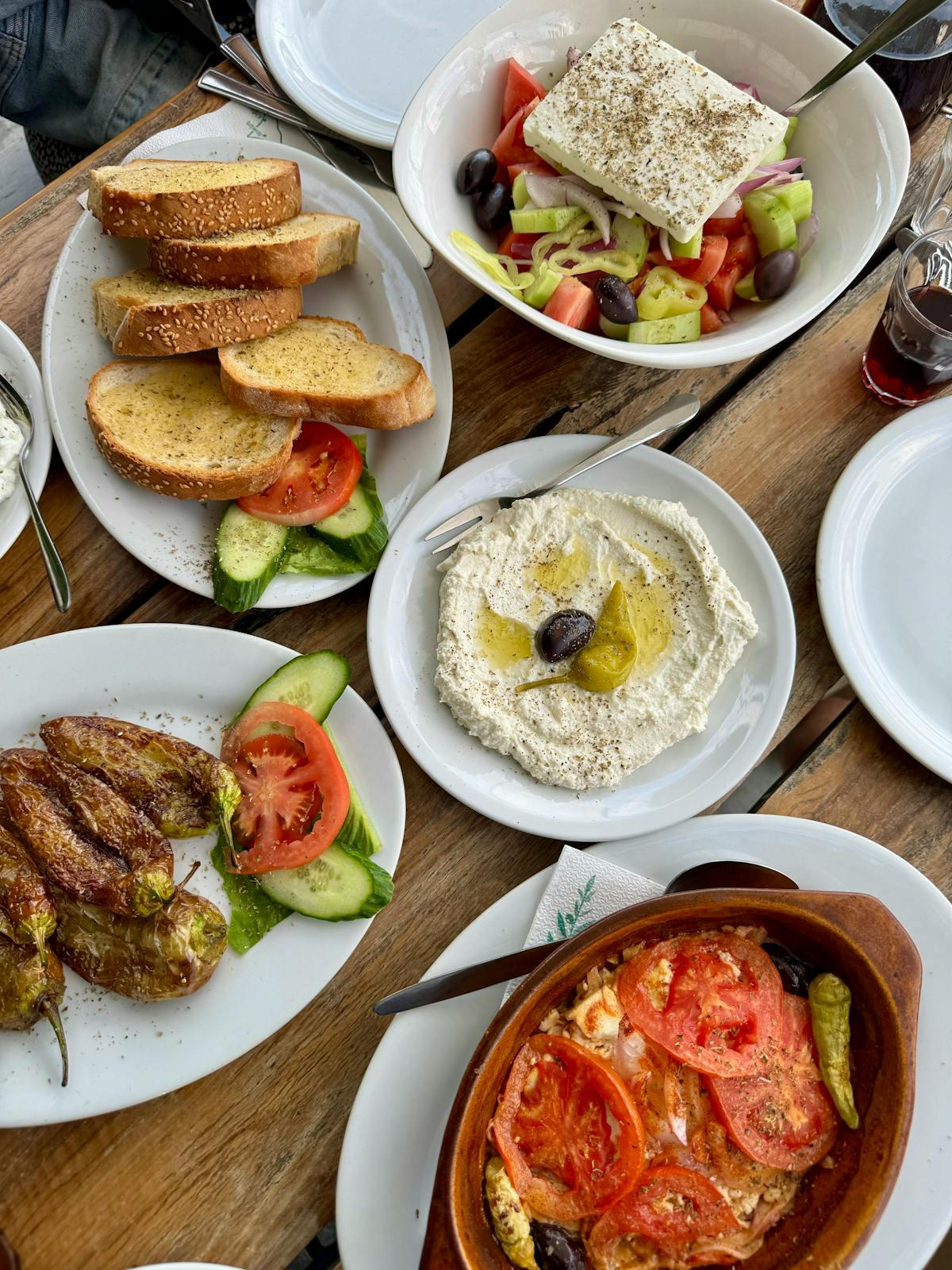
Sofrito — beef simmered slowly in white wine, garlic and parsley. The Corfiot Sunday plate. Venetian roots, no tomato in sight.
Pastitsada — rooster or beef in a spiced tomato sauce over thick hollow pasta. Cinnamon and clove where you don't expect them.
Bourdeto — fish (traditionally scorpionfish) stewed in red pepper and paprika until it bites back. The fisherman's dish.
Kumquat — the British brought the tiny citrus; the island turned it into a sweet liqueur and spoon-sweets. Try it once, then decide.
To drink, look for tsitsibira — a local ginger beer, another British leftover, still made on the island.
Where to eat: the tavernas around Agni Bay (you arrive by boat or a steep drive) do long lunches on the water. In Corfu Town, leave the Liston and eat in the back lanes. Klimataria in Benitses, south of town, is the one locals send you to for the old dishes. Most full meals run €18–28 a head with wine.
Wine: Corfu isn't famous for it, but the Theotoky estate in the Ropa valley has made wine from the local Kakotrygis grape for over a century, and runs tastings. Half a day, modest prices.
May, June, September, early October are the right months. 22–28°C, the sea warm enough, everything open, the town busy but not heaving. The Corfu Trail is at its best in late April–May, when the island is green and full of wildflowers.
July and August — hot and humid (30–34°C, sticky, because Corfu is greener and wetter than the Cyclades), packed, and dear. The old town can feel airless at midday.
Easter — Corfu Town has the most famous Easter in Greece. On Holy Saturday morning, people throw large clay pots (botides) from balconies to shatter on the street; philharmonic bands march for days. If you come for one festival, come for this — and book months ahead.
November to March — wet. Corfu is one of the rainiest corners of Greece, which is exactly why it's so green. Most coastal tavernas shut; the old town stays open and atmospheric in the rain.
Rent a car. The coves, the mountain villages and the north-east coast all need one, and the island is small enough to base anywhere and drive across in about two hours — though "two hours" hides a lot of hairpins.
Roads — the north-east coast road twists above the sea and is slow. What looks like ten minutes on the map is often forty. Drive it in daylight the first time.
Ferries — Corfu is one of the easiest Greek islands to reach overland: ferries from Igoumenitsa on the mainland (about 1.5 hrs), from several Italian ports (Venice, Ancona, Bari), and short hops to Paxos and across to Saranda in Albania for a day trip.
Airport and buses — the airport (CFU) sits 3 km from the old town, so taxis are quick and cheap. Green KTEL coaches link the main towns and blue local buses cover Corfu Town and nearby — fine for hubs, useless for hidden coves.
Where you base yourself changes the holiday more than on most islands, because the two coasts feel different.
Corfu Town — for culture and dinners. Walk the old town at night, day-trip to beaches by car.
North-east coast (Kalami, Agni, Nissaki, Kassiopi) — quiet, green, pebble coves, and pricey: this stretch is nicknamed "Kensington-on-Sea". Best with a car.
West coast (Paleokastritsa, Pelekas, Glyfada, Agios Gordios) — sandy beaches and the sunsets, more package hotels, livelier.
Hill villages (Pelekas, Lakones, Sinies) — views, cooler air, lower prices, a car essential.
The far south (around Lefkimmi) — quiet and local, with Kavos sealed off in its own party bubble at the tip. Pick the villages, not the strip.
A villa with a pool inland or in the north-east — best for a week, best with a car.
Corfu is mid-priced for Greece — far cheaper than Santorini or Mykonos — but the north-east "Kensington-on-Sea" coast around Kalami and Agni charges Riviera money in August.
Prices in 2026 euros. Shoulder season knocks 30–40% off hotels — the north-east coast is the exception, it stays expensive.
Go if you want the greenest, most Venetian of the Greek islands — a Unesco old town, olive-grove walks, sofrito lunches by the water, and a north-east coast Gerald Durrell wrote home about. Skip if you came for Cycladic white-and-blue, dry guaranteed heat, or a week in Kavos.
Found this useful? Share it.
Still planning?
We don't stop at "here's the country." Real places to stay, what to do, apps that matter, even how to find someone to travel with — plus guides for whatever vibe you're after, from beach days to wine country to slow weekends. All up top. Spin for somewhere new when you're done with this one.