This is your destination guide for Cinque Terre
📍 Part of ItalyFive car-free fishing villages stitched to a cliff — pesto from the source, vineyard terraces, and crowds that vanish by evening.
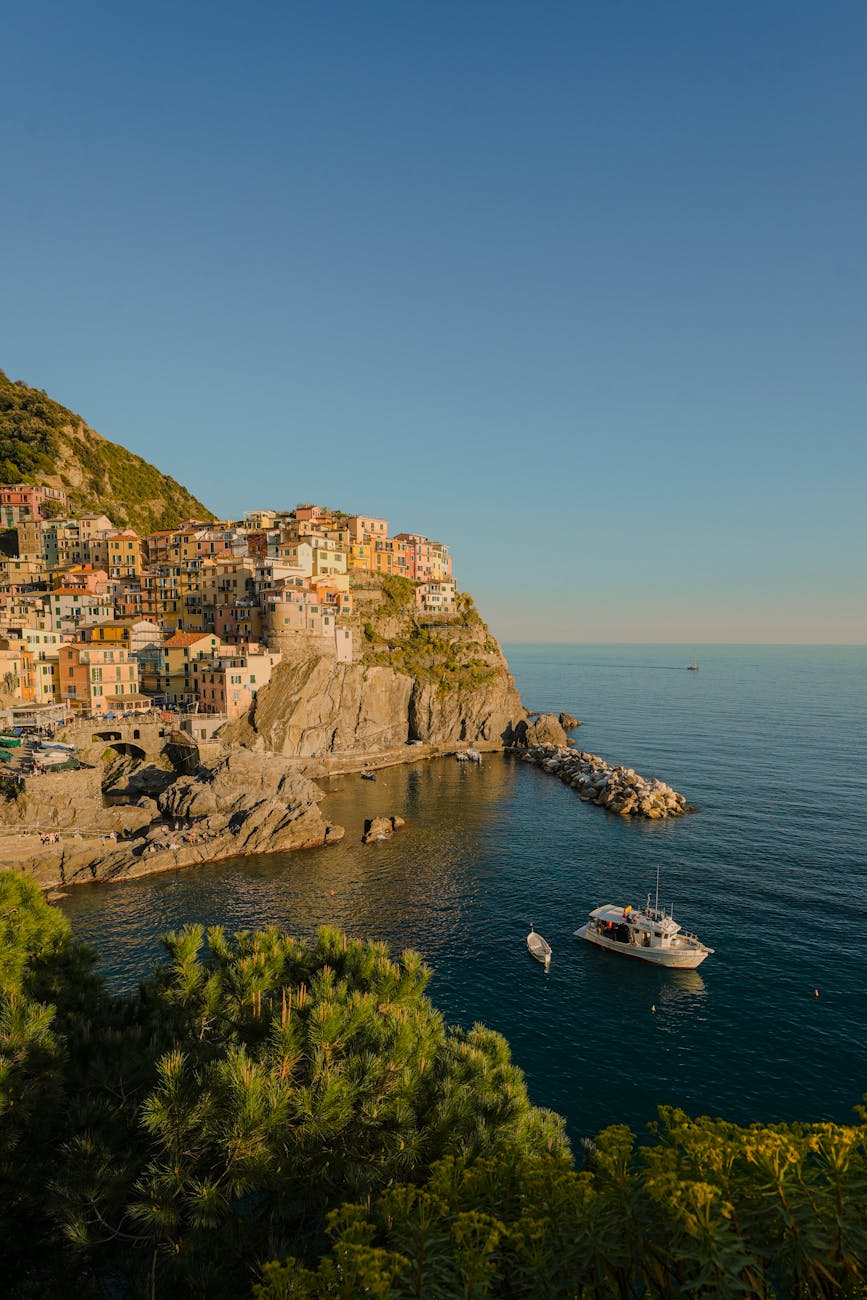

The reality: You step off the train at Vernazza and the platform spits you straight into a piazza on the water — boats hauled up onto the cobbles, a stone castle tower above, no road in or out for a car. Then you clock the other 400 people who got off the same train.
That's the deal with Cinque Terre. Five villages, no cars, painted houses stacked up the cliffs, and one coastal path stringing them together — and in summer, far more visitors than the whole thing was ever built to hold. Most are day-trippers off cruise ships and Florence coach tours. By six in the evening they're gone, and the villages breathe out.
So stay the night. Walk a section of trail in the morning before the heat and the crush. Eat salted anchovies in Monterosso, drink a thimble of sweet Sciacchetrà, take the boat at least once for the view the trains and trails don't give you. And accept what this isn't: a beach holiday. It's a five-village, train-and-footpath, lunch-with-a-sea-view holiday. Come for that and it delivers.
Five villages, south to north, all linked by the same train line and clifftop path. People rank them like football teams. Here's what each actually does differently.
Riomaggiore — the southern gateway and the postcard everyone's seen: tall houses in ice-cream colours tumbling down to a slipway where boats are winched up the street. Busiest arrival point, so the main lane bottlenecks by mid-morning. The Via dell'Amore path starts here.
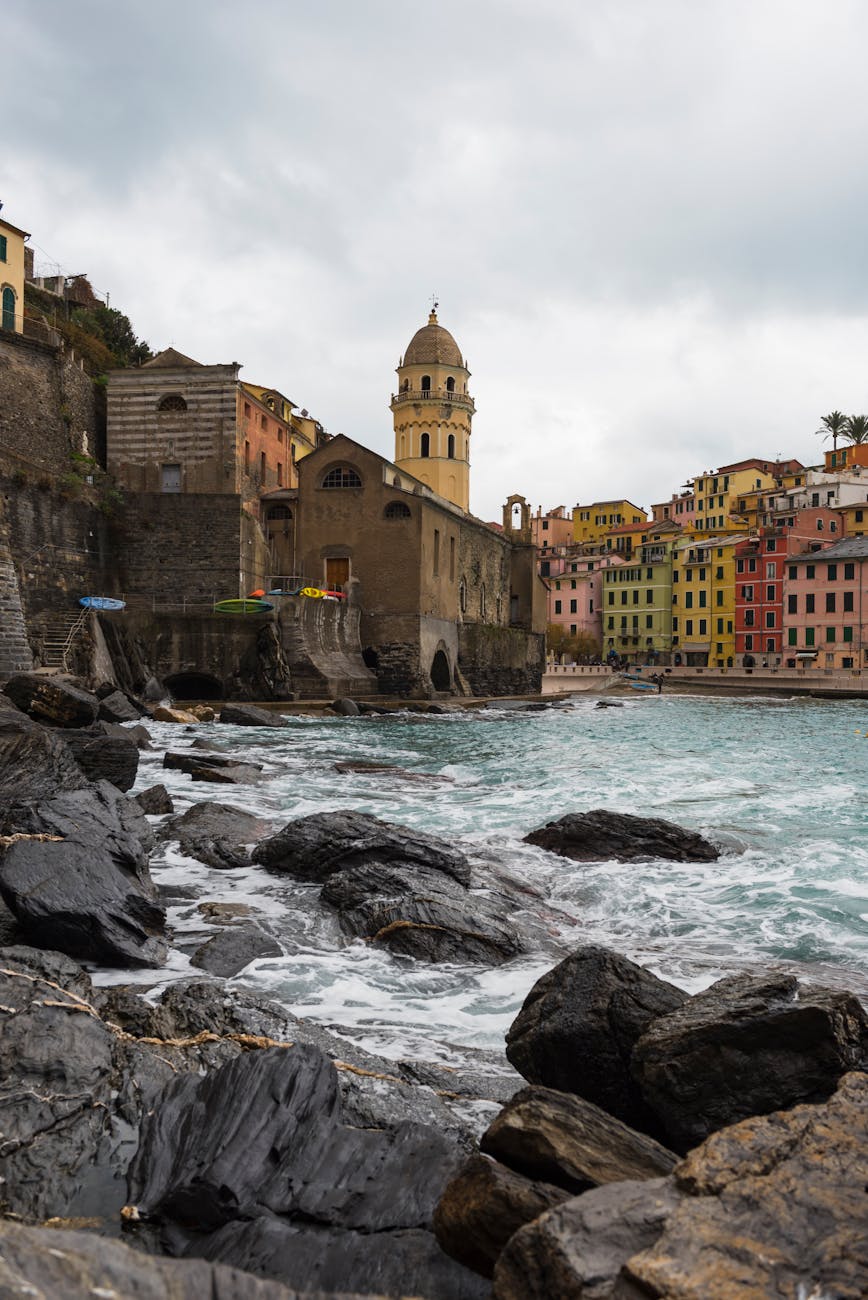
Manarola — the sunset one. Climb to the little cemetery point at Punta Bonfiglio (or grab a spot at the Nessun Dorma bar) and you'll be one of fifty people pointing a phone at the same row of houses. Worth it anyway. Vineyards rise straight off the back of the village; it's arguably the prettiest from the water.
Corniglia — the odd one out, perched about 100 m up on a headland with no harbour and no easy sea access. You earn it: 33 zig-zag flights up the Lardarina staircase from the station, or wait for the shuttle bus. Fewest day-trippers of the five, precisely because of those stairs. Quietest place to sleep.
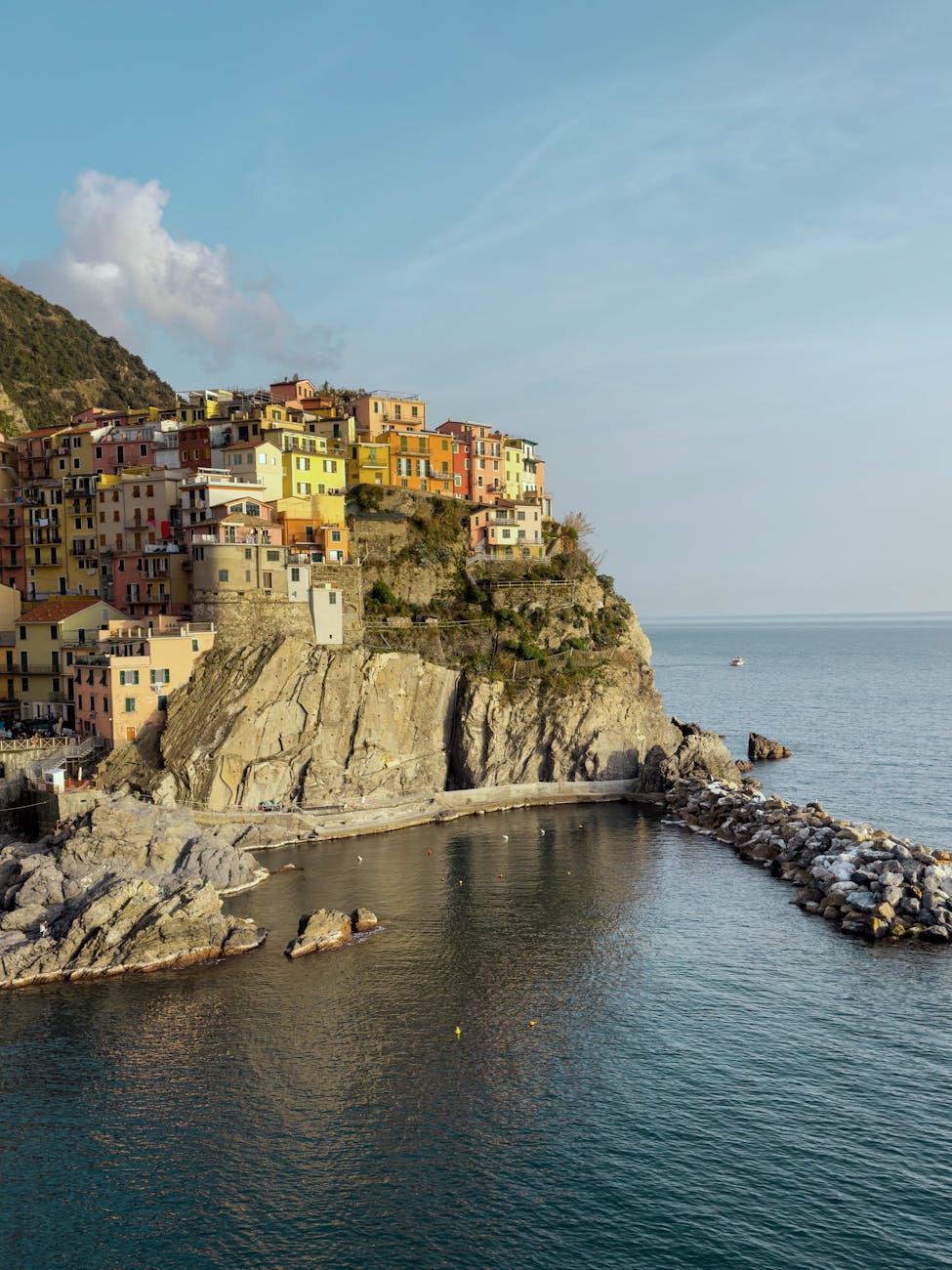
Vernazza — most people's favourite, and it knows it. A natural harbour, a tiny piazza right on the water ringed with tables, the Doria castle tower above. It took the worst of the 2011 flood and rebuilt. Show up before 10am or after 5pm and it's a different, better village.
Monterosso al Mare — the biggest, split in two: the medieval old town and Fegina, the newer side with the only proper sandy beach and the weather-beaten giant statue (Il Gigante) holding up a cliff. This is where you come if you actually want to lie on sand. Home of the famous salted anchovies.
Let's be honest up front, because the postcards aren't: this is not a beach destination. It's a swim-off-the-rocks destination, with one exception.
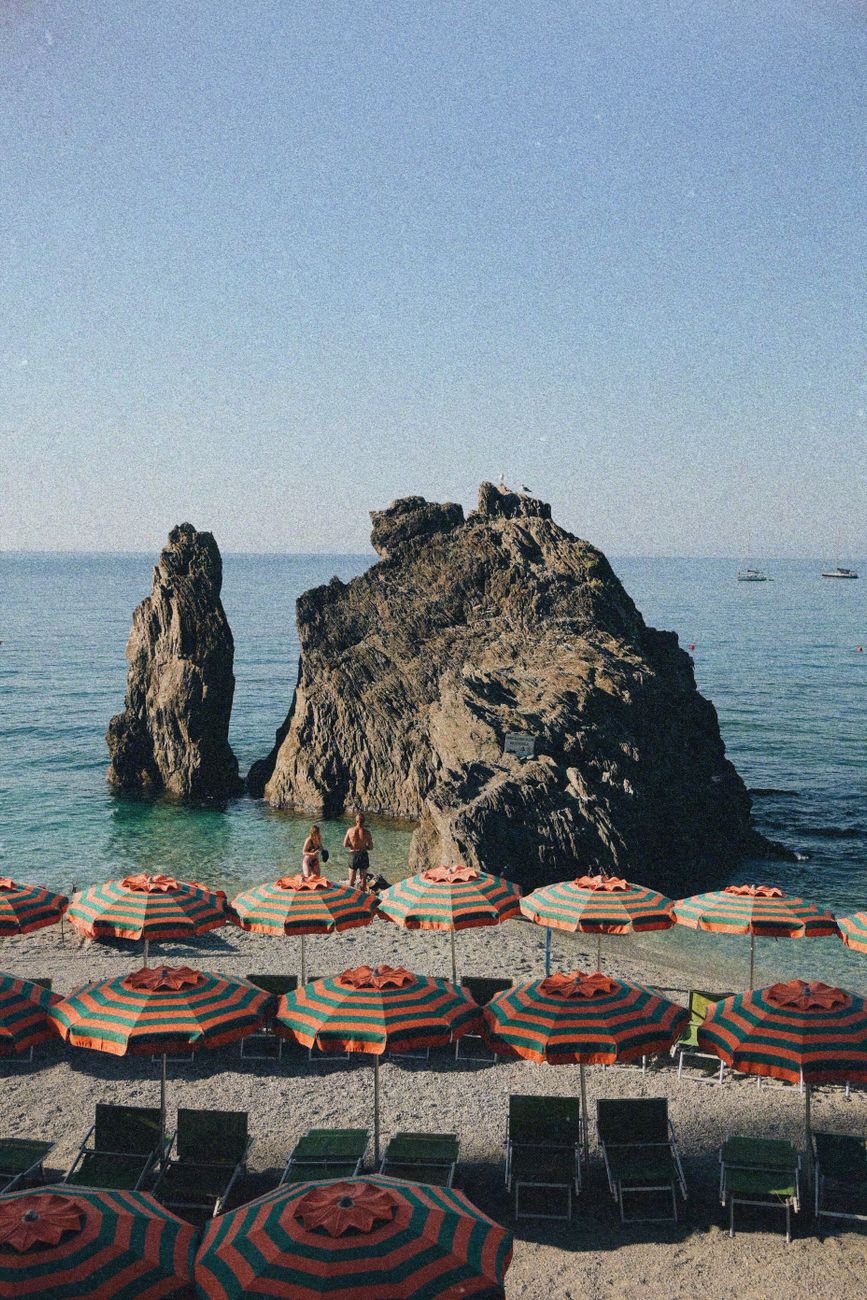
Monterosso (Fegina) is the only village with a real beach — sand, umbrellas, a gentle entry. It's also the most crowded patch of coast in the park in August.
Guvano, below Corniglia, is the wild rocky cove with a faint nudist past; getting down is a scramble. At Manarola and Vernazza people swim straight off the rocks and breakwaters by the harbours — ladders, flat stones, deep clear water, no sand. Riomaggiore has a small rocky inlet by the marina.
If a genuine beach day matters, hop one stop north on the train to Levanto (proper sand, room to breathe, a surf school) or south toward Portovenere. Both are minutes away and half as mobbed.
A walking destination — but the trail map changes year to year, so check before you commit.
The whole place is built for moving on foot, but sections open and close with the rains — never assume the full coast-to-coast walk is on. In recent seasons the coastal Manarola–Corniglia stretch has been closed for landslide repair (you take the train or the high path via Volastra instead), while the famous Via dell'Amore between Riomaggiore and Manarola runs one-way with a timed online booking. Check the current map at parconazionale5terre.it before you plan a route.
This is Liguria, which means two things travellers underrate: it's the birthplace of pesto, and it does cheap fried seafood better than almost anywhere on the Italian coast.
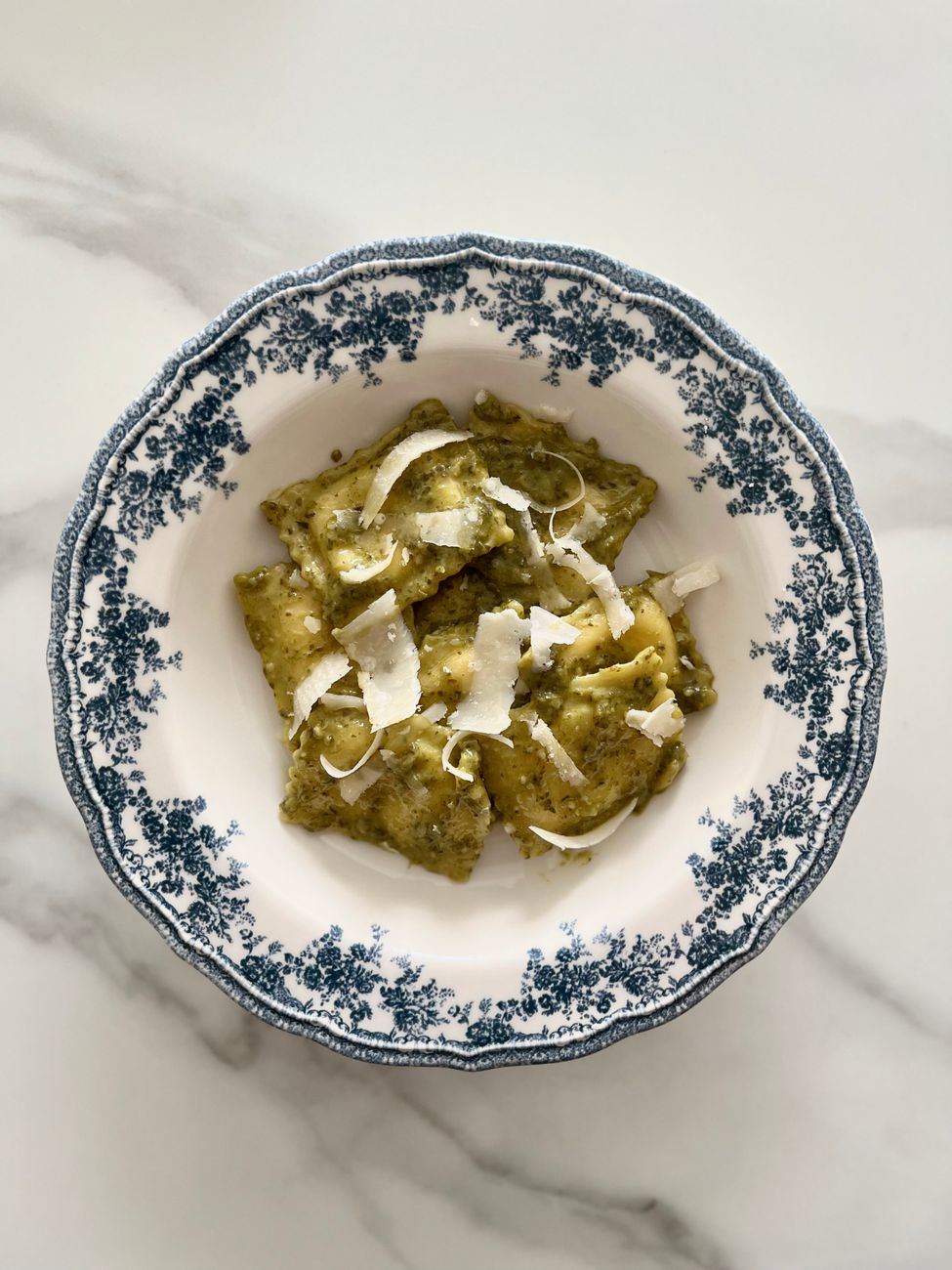
Pesto alla genovese — basil, pine nuts, Parmigiano, pecorino, garlic, oil, bruised (not blitzed) in a marble mortar. Served over trofie (little twists) or trenette. Tastes nothing like the jar.
Focaccia & farinata — Ligurian focaccia is its own food group; farinata, a thin chickpea-flour pancake baked in a copper pan, is the local snack to hunt down.
Acciughe di Monterosso — Monterosso's salted anchovies, eaten with lemon and oil. Worlds away from the pizza-topping version.
Fritto misto in a paper cone — the great cheap Cinque Terre lunch. Fried anchovies, calamari and prawns from a hole-in-the-wall (you'll see the queues in Riomaggiore and Vernazza). About €8, eaten walking.
Wine: the crisp dry whites (Cinque Terre DOC — Bosco, Albarola and Vermentino grapes) are the everyday pour. The one to seek out is Sciacchetrà: a sweet wine from grapes dried on racks, made in tiny quantities on those terraces. Pricey by the glass, and the most local thing you can drink. Limoncino, the Ligurian lemon liqueur, closes the meal.
May, June, September and early October are the sweet spot. Warm but walkable (low-to-mid 20s°C), the sea swimmable from June, trails generally open, villages alive but not yet impossible. This is where you want to be.
July and August — peak everything. High-20s to low-30s°C, day-trip crowds at full volume, one-way crowd-control rules on the busiest trail sections, and the tiny stock of rooms sold out and priced at a premium. Go only if your dates are fixed — and start your walks at dawn.
November to mid-March — the quiet, cheap, honest season. Many guesthouses and restaurants close, trail entry is free but sections may be shut, and this is why the trails crumble: Ligurian autumn and winter rains are heavy, and the landslides that close paths come from exactly this weather. Upside — trains still run, and you can stand in Vernazza's piazza with nobody else in it.
Take the train, not a car. The Cinque Terre Express runs along the coast between La Spezia and Levanto, stopping at all five villages every 20–30 minutes; hops between neighbours take 5–20 minutes, much of it through tunnels. The villages are essentially car-free and there is nowhere to park — if you drive to the region, leave the car in La Spezia or Levanto and train in.
The Cinque Terre Card comes in two forms: a Trekking Card (trail access + park shuttle buses) and a Train Card (the same plus unlimited regional trains between Levanto and La Spezia). Train Card pricing is dynamic by date — buy it for the days you'll actually village-hop. Check current rates before you go; they change yearly.
The ferry is the scenic alternative from spring to autumn (no Corniglia stop — it has no harbour). Slower than the train, far prettier.
Pick your base for the trade-off you want — heart-of-it-all charm versus space and value. Everything is minutes apart by train.
Vernazza or Monterosso — sleeping inside the postcard. Magic once the day-trippers leave, but rooms are small, expensive, and booked months ahead. Monterosso adds the only real beach.
Riomaggiore or Manarola — the southern pair. Easy train access, a touch less mobbed after dark than Vernazza, same colour-stacked looks.
Corniglia — the quietest bed in the park, for the same reason it's the quietest village: the climb, and no harbour. Best if you want evenings to yourself.
La Spezia — not charming, but a real city: cheapest rooms, good food, 10 minutes by train to the villages. The practical base.
Levanto — just north, with an actual beach, more room, and a main train line. The family-friendly choice.
Cinque Terre isn't cheap Italy. A cigarette-box room here can cost more than a proper one in Florence — closer to Amalfi Coast money in July — even while a focaccia lunch stays refreshingly normal.
Prices in 2026 euros. Card and train prices shift with demand and by year — check current rates. Off-season knocks roughly a third off rooms.
Go if you want five car-free villages you walk and train between — terraced vineyards, pesto crushed in marble, fritto misto in a paper cone, and a harbour that's yours once the day boats leave. Skip if you wanted a beach week, can't stand a crowd on a cliff path, or planned to "see all five" between two cruise stops.
Found this useful? Share it.
Still planning?
We don't stop at "here's the country." Real places to stay, what to do, apps that matter, even how to find someone to travel with — plus guides for whatever vibe you're after, from beach days to wine country to slow weekends. All up top. Spin for somewhere new when you're done with this one.