
Port Vila sits on a natural harbor on the island of Efate, surrounded by green hills and turquoise water. It’s small enough to walk across the center in twenty minutes, but dense enough with markets, restaurants, and local life to keep you occupied for days.
The Port Vila Central Market is the pulse of the city. Stalls sell taro, tropical fruit, fresh fish, and woven baskets. The covered section holds kastom vendors selling kastom craft—woven pandanus mats, carved tamtam drums, and traditional shell jewelry. Prices are negotiable; the market is busiest on Friday and Saturday mornings.
The Vanuatu National Museum, a short walk from the harbor, holds one of the Pacific’s best collections of traditional art—sand drawings, tamtam slit drums, ceremonial masks, and carved grade figures. It’s small but excellent. Entry around VT500.
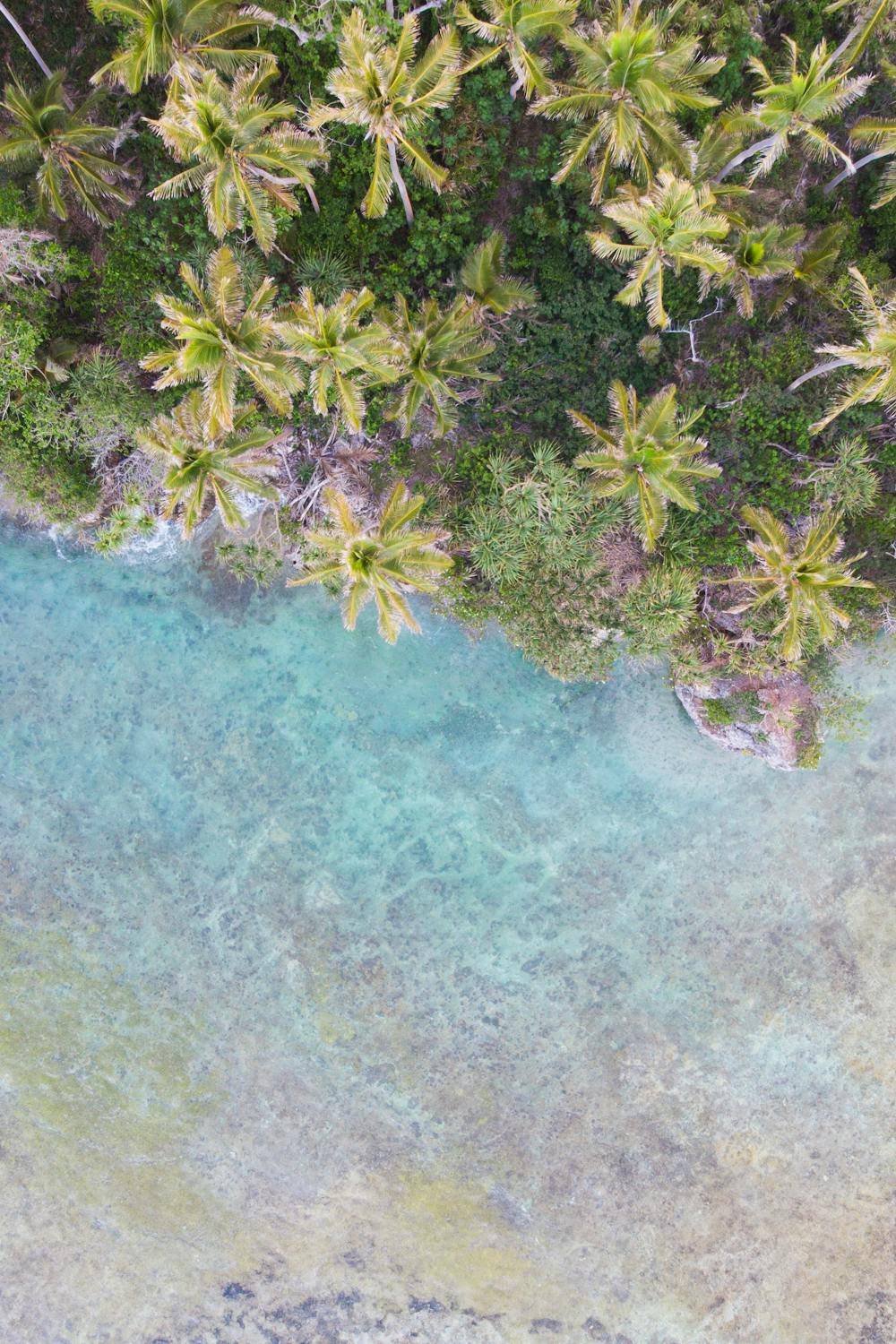
Iririki Island sits just 200 meters offshore in the harbor. A free ferry crosses from the waterfront every 30 minutes. The surrounding water is calm and clear; snorkeling directly off the island’s beaches reveals coral gardens and tropical fish without a boat trip required.
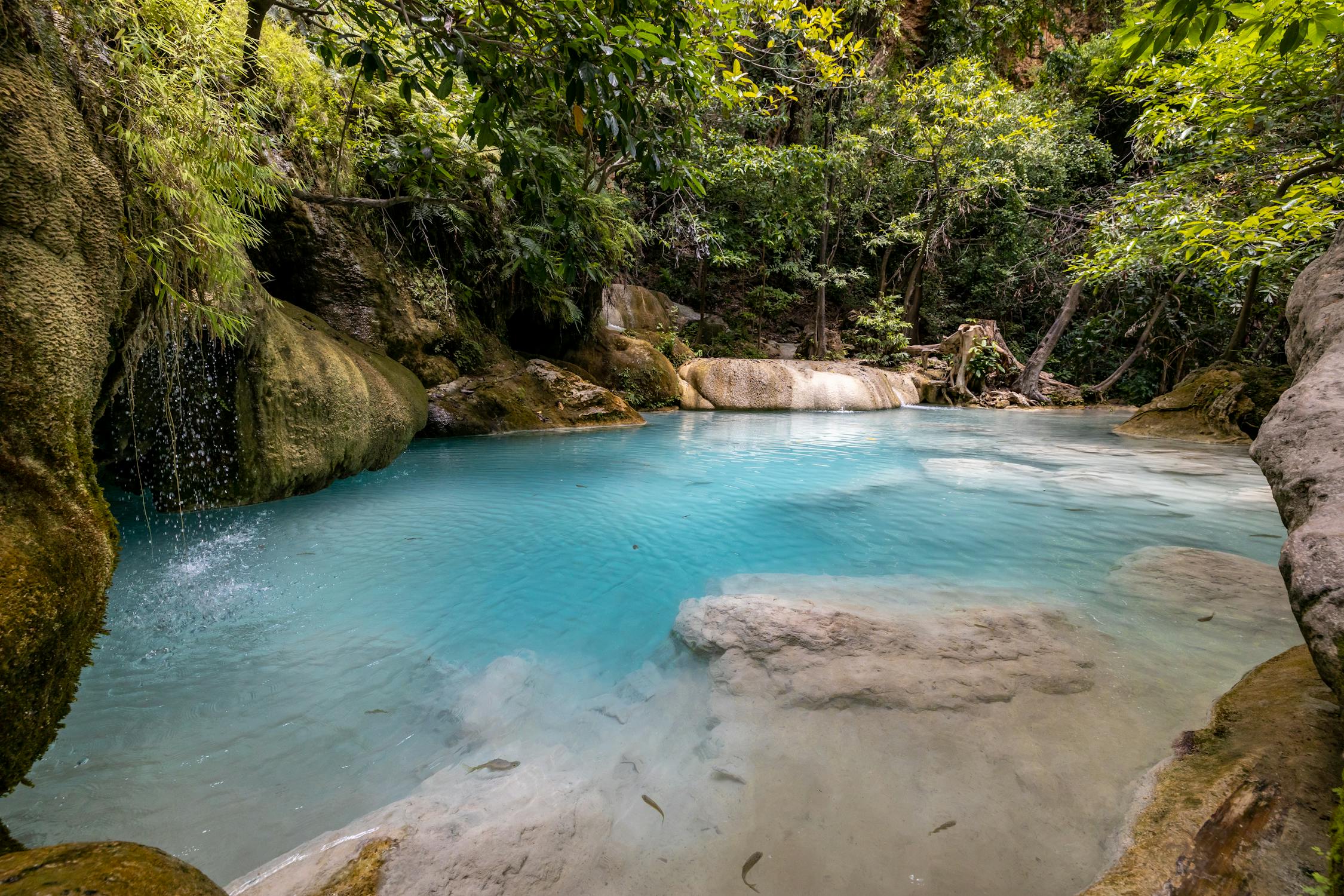
Efate’s ring road circles the entire island in about three to four hours by car, passing through villages, jungle, and the occasional remote beach. The Blue Lagoon near Lonnoc is a short detour worth taking—a freshwater pool of improbable turquoise, open to visitors for a small fee.
Espiritu Santo is Vanuatu’s largest island, a place of serious natural abundance. Luganville, the main town, is a quiet base with a frontier feel. Most visitors come for three things: the blue holes, Champagne Beach, and the wreck of the SS President Coolidge.
The blue holes on Santo’s east coast—Matevulu, Riri, and Nanda—are freshwater springs that emerge through limestone bedrock. The mineral filtration turns the water a brilliant, electric blue. Matevulu Blue Hole is the most visited, with wooden platforms and rope swings. Entry VT500–1,000. The water is cold, clear, and genuinely extraordinary.
Champagne Beach, in northern Santo, is consistently ranked among the Pacific’s best. A long horseshoe of white sand with coconut palms, fringing reef, and the curious fizzing of volcanic gas through shallow water at low tide. The snorkeling on the left side of the beach is exceptional. Entry fee applies; the beach is reached from Luganville by car in about 45 minutes, then a short boat crossing.
The SS President Coolidge was a luxury ocean liner converted to a troopship and sunk in 1942 after striking two American mines at the entrance to Luganville harbor. It lies in 20–70 meters of water and is one of the world’s largest and most accessible wreck dives. The ship is remarkably intact—a statue known as “The Lady”, ceramic tiles, jeeps, guns, and thousands of gas masks remain inside.
Million Dollar Point, a short drive from Luganville, is where the US military dumped tens of millions of dollars’ worth of equipment—jeeps, trucks, bulldozers, refrigerators—into the sea at the end of WWII rather than sell it cheaply to local traders. The site is now a remarkable snorkeling spot.
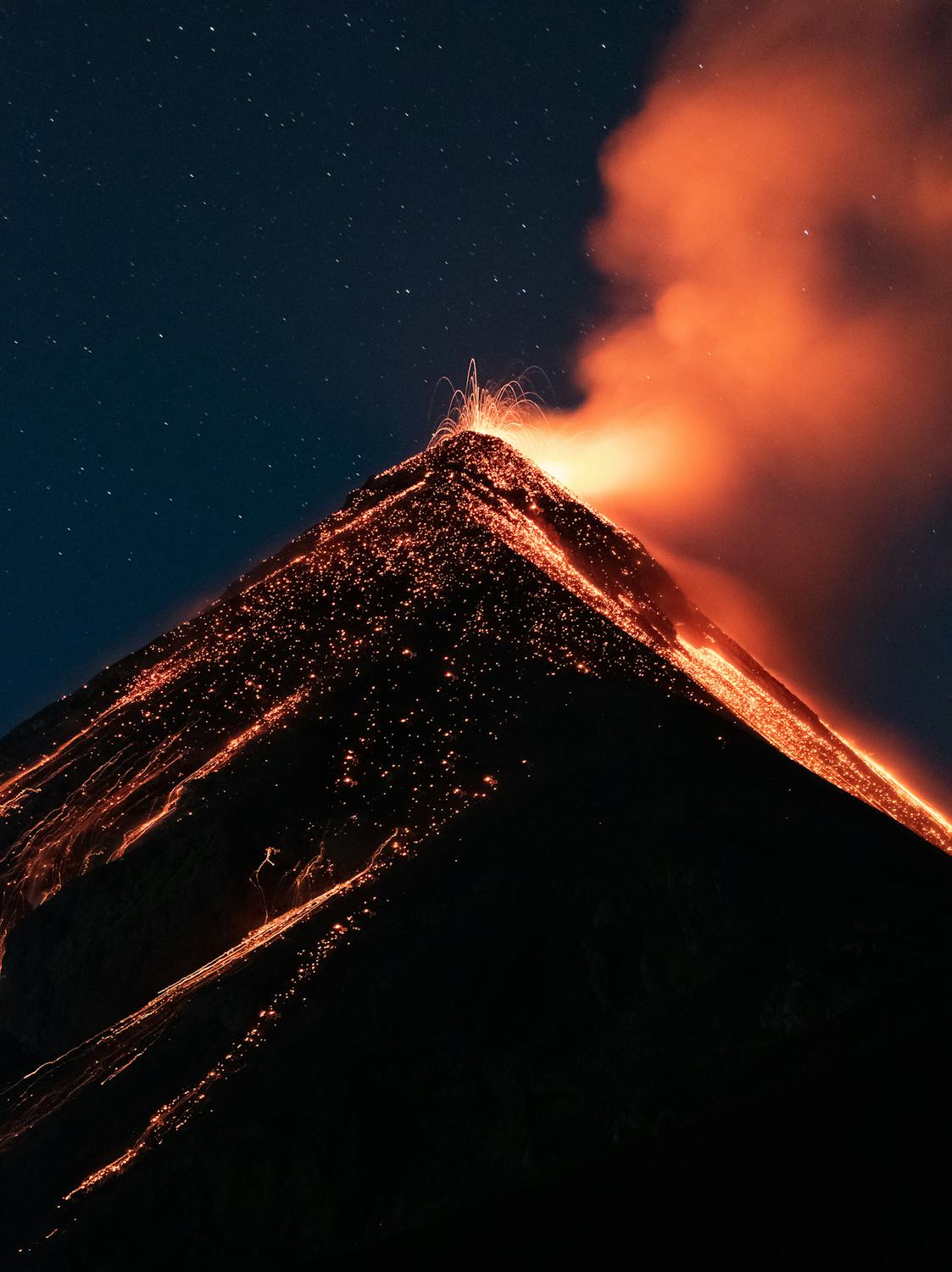
Tanna is a 40-minute flight south of Port Vila, or a multi-day adventure by interisland boat. Most visitors come for one reason: Mount Yasur. The volcano has been erupting continuously for at least 800 years—Captain James Cook observed ash eruptions from his ship in 1774. At 361 meters, it is not the tallest volcano in Vanuatu, but it is the most accessible active volcano anywhere on earth.
You reach the rim by four-wheel drive across a lunar ash plain, then walk 10–15 minutes to the crater edge. Three tour timings are offered daily: sunrise (4am start), day (9am), and sunset (4:30pm). The sunset tour is the most dramatic—eruptions glow orange against a darkening sky. Entry fees are paid through your guide; most day tours from Port Vila including flights cost VT25,000–35,000 per person.
The Yasur ash plain itself is otherworldly—grey-black earth stretching in every direction, dead trees bleached white by volcanic gas, steam vents hissing at the edges. It looks like the end of the world. Walking across it to the summit is one of the most striking approaches to any natural wonder in the Pacific.
Away from the volcano, Tanna has traditional Ni-Vanuatu villages where kastom is practiced with particular intensity. The Emaio Cultural Village near Lenakel offers genuine insight into local customs—traditional dance, cooking, and kava preparation performed by villagers who live the kastom life year-round. Dress modestly, ask before photographing, and accept the kava if offered.
Tanna’s east coast has several white-sand beaches reached by rough tracks. They are completely undeveloped and almost always empty. The snorkeling off Green Point is excellent—clear water, healthy coral, and no other boats in sight.
Vanuatu has 113 distinct languages among a population of just 320,000 people—one of the highest language densities on earth. Each island has its own kastom, its own ceremonies, its own version of the customs passed down through oral tradition over centuries. The Bislama language (a creole English) binds the nation together, but kastom belongs to each community separately.
The nagol land-diving of Pentecost Island is one of the most extraordinary rites in the Pacific. Each year from April to June, men and boys from the island’s south build elaborate bamboo towers up to 30 meters tall. They then jump headfirst, with only a vine tied around each ankle to arrest the fall. The vine is cut precisely so the diver’s head brushes the earth at the bottom—a symbolic gesture of connection to the land. The tradition is both a rite of passage and a ritual to ensure a good yam harvest. Spectators are welcome; several operators run flights from Port Vila during the season.
Kava is central to Ni-Vanuatu social life. Made from the root of the yaqona plant, ground and mixed with water, it produces a mild sedating effect and is drunk communally at nakamals—traditional meeting huts—at sunset every evening. Visitors are welcome at most nakamals in Port Vila. Dress is modest, noise is minimal, and the correct form is to clap once, say “Tankyu”, and drink in one go.
Sand drawing is recognized by UNESCO as intangible cultural heritage unique to Vanuatu. Traditional artists trace complex geometric figures in sand with a single continuous line—lifting the finger at any point is a mistake. The drawings encode stories, genealogies, and knowledge transmitted across generations. You can see demonstrations at cultural villages near Port Vila and in the Vanuatu National Museum.
The weekly Saturday market in Port Vila is one of the best places to see kastom craft—woven pandanus mats, carved tamtam drums, nakamal kava bowls, and bilum bags. Buy directly from makers. The craft section of the main market is the place for genuine pieces rather than tourist imports.