
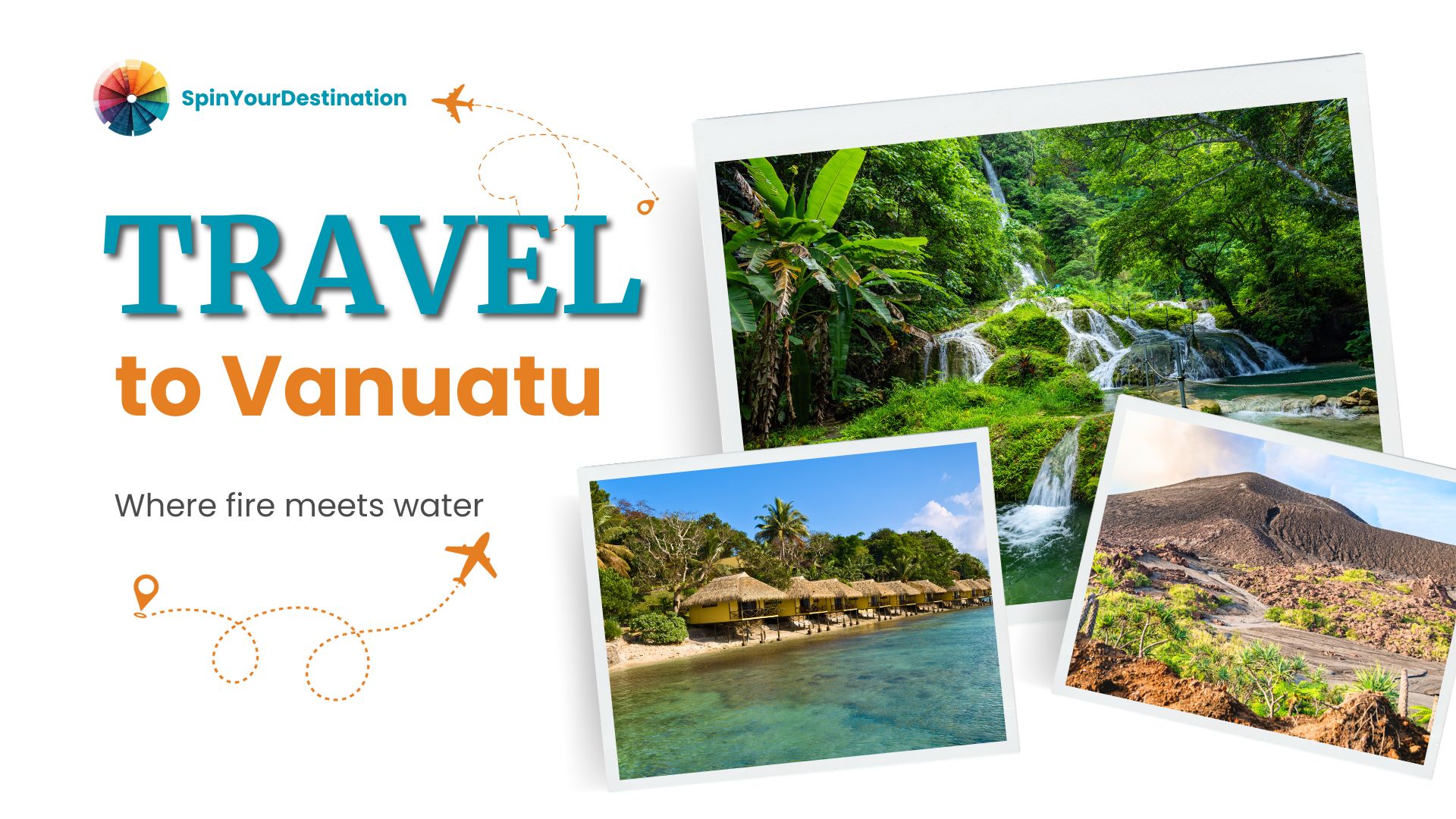
City Break in Vanuatu — Port Vila
Your complete guide to Port Vila and city life in Vanuatu
The taxi turns onto the seafront road and suddenly it all opens up: a harbour of flat turquoise water, dugout canoes at anchor alongside cruise ships, a row of painted cafés and restaurants, and beyond it the dark green hills of Efate rising straight from the shore. Port Vila is not what anyone expects from a Pacific capital. It is small enough to walk across in twenty minutes, laid-back enough that the main street effectively closes at sundown, and culturally layered enough to keep you occupied for days without once repeating yourself.
Vanuatu was jointly governed by Britain and France until independence in 1980 — the only condominium territory in history. That arrangement left Port Vila with a unique colonial legacy: two separate court systems, two police forces, two school systems operating side by side. The traces are everywhere — in the bilingual street signs, in the French bakeries beside Melanesian kava bars, in the British-style Parliament House facing a traditional Nakamal ceremonial ground. Nowhere else in the Pacific does this particular historical layering exist.
Beyond the colonial curiosities, Port Vila has its own distinct energy. The Central Market is one of the best in the Pacific — not a tourist market, but a genuine daily hub where village women sell taro, island cabbage, fresh coconut crabs and hand-woven baskets from the outer islands. The handicraft market nearby is honest and well-stocked with authentic Ni-Vanuatu work. And within twenty minutes of the waterfront, the city gives way entirely to rainforest, rivers, suspension bridges and volcanic gardens that belong to a completely different world.
Port Vila — A Crossroads in the Pacific
Port Vila sits on a natural harbour on the southwest coast of Efate island, sheltered from the ocean by a ring of smaller islands. The town centre is compact and walkable — the main commercial strip runs along the harbour for about a kilometre, lined with duty-free shops, French restaurants, Vanuatu-owned cafés, and the open-fronted kava bars that are unique to Melanesian culture. At sundown, the kava crowd gathers, and the flavour of the city shifts unmistakably towards something older and more local.
The waterfront promenade is the social centre of Port Vila. In the mornings, fishermen sell their catch directly from boats moored at the dock. At weekends, the area between Independence Park and Erakor Landing fills with families, market vendors and tourists. Parliament House, a striking building that blends Melanesian and modern Pacific architecture, is visible from the waterfront and open to occasional public visits.
The colonial history is best understood on foot. The old British and French jailhouses, the twin-system administrative buildings, and the churches built by competing missionary societies all tell the story of a territory that was governed by two European powers simultaneously for nearly 75 years. A guided city highlights tour brings this history to life with local context — the guides' family stories are often woven directly into the narrative.
Port Vila has a relaxed restaurant and café scene with good options at every price point. French and Melanesian cuisine both feature strongly — look for laplap (the national dish, made from grated root vegetables wrapped in leaf and baked) at the market, and fine French dining with Pacific ingredients at the harbour-side restaurants. The local Tusker beer, brewed in Vanuatu, is on every menu.
Art, Culture and Colonial History
The Vanuatu Cultural Centre and National Museum, housed in a purpose-built complex a short walk from the waterfront, is one of the best cultural museums in the Pacific. The collection includes slit gongs (tamtam) up to four metres tall, ceremonial masks, Lapita pottery dating back 3,000 years, shell money, traditional outrigger canoes, and sand drawings — a form of art and communication unique to Vanuatu and recognised by UNESCO as intangible cultural heritage. One-hour guided tours include a live demonstration of traditional instruments and sand drawing. Entry is around $7.5 for adults.
The museum also houses the National Library and the National Film and Sound Archive, which has been systematically recording Vanuatu's oral traditions since the 1970s. The fieldworker program — which sends cultural researchers to remote islands to document kastom practices — is considered one of the most important community heritage projects in the Pacific. The museum shop sells books, crafts and authentic artefacts, all with local provenance.
The Summit Gardens, located on a hillside 200 metres above sea level just outside Port Vila, are the largest tropical gardens in the South Pacific, covering six hectares. Eleven separate named gardens — including a fernery, a hibiscus garden, a heritage garden of Vanuatu-native species, and a productive kitchen garden — surround a working essential oils distillery. The panoramic views over Mele Bay and Efate's west coast from the viewing terrace are among the best available without a boat or plane. Entry is free.
A short drive from the gardens is the Erakor Lagoon — a narrow tidal lagoon connecting to the sea that divides one of Port Vila's oldest residential areas. The lagoon is a calm and scenic spot for an early-morning or late-afternoon walk, with traditional villages on the far bank and resort buildings among coconut palms on the nearside.
Shopping, Markets and Local Crafts
The Central Market — the big open-sided building on the northern end of the waterfront — is Port Vila's most authentic urban experience. Women from outer islands sell produce they've brought in on overnight ferries: giant land crabs, smoked fish, taro in several varieties, island pumpkin, seasonal fruit and hand-gathered bush medicine. On Saturday mornings the market is at its fullest and most chaotic, with buyers from the outer islands shopping for supplies before their return journeys.
The Mahitahi Handicraft Market, situated nearby, is a dedicated crafts market where all vendors must sell Vanuatu-made goods only. This is enforced and meaningful — you will not find Chinese imports here. The selection includes carved tamtam drums, woven pandanus baskets and mats, tamtam earrings, shell jewellery, kava spoons, carved masks from different island traditions, and siapo cloth. Prices are fixed at most stalls. Give yourself at least an hour to work through properly.
The ACTIV Centre, a local NGO-operated complex on the edge of town, is home to the Aelan Chocolate Factory — a 45-minute guided tour that takes you from raw cacao beans to finished bar, with tastings throughout. The cacao is locally grown by communities on Efate and nearby islands, and the chocolate is flavoured with distinctly Vanuatu ingredients: kava, nangai nut, sea salt and crystallized ginger. It is small-scale, genuine, and one of the best $13 you can spend in Port Vila.
Day Trips from Port Vila
Eden on the River is the top-rated day trip from Port Vila, consistently ranking as the city's most-reviewed attraction on travel platforms. Located 20 minutes from the capital on the Rentapau River, it combines suspended bridge walks through riparian rainforest, natural swimming holes with sliding rocks, a kava plantation tour, a traditional cooking demonstration, and an animal park with native Vanuatu wildlife. Entry to the river and gardens starts at $17 per person, with bridge tours and guided activities priced additionally.
Mele Cascades — a 35-metre waterfall 15 minutes from Port Vila — is the city's most-visited natural attraction. A marked trail climbs through cascading pools to the main falls, where you can swim in the plunge pool at the base. Entry is $17 per adult. Best visited in the morning before the cruise-ship groups arrive around midday.
The Blue Lagoon at Efate is a freshwater swimming hole in a jungle clearing about 20 minutes from Port Vila, fed by an underground spring. The electric-blue water colour is caused by the same limestone filtration effect as Espiritu Santo's famous Blue Holes. It is a popular half-day trip, often combined with a kava bar visit or a round-island drive. Entry fee payable to the landowner, typically $4.2 per person.
🌟 Top City Experiences in Vanuatu
🏛️ Port Vila Highlights Tour
A 2.5-hour guided city tour covering Parliament House, the Council of Chiefs, Erakor Landing, Independence Park, and the colonial history of the British-French Condominium. Includes pickup from most Port Vila accommodations, an air-conditioned bus, local refreshments, and a visit to the Mahitahi Handicraft Market to finish. Rated 4.8/5 by travellers. From $30 per person. More info →
🍫 Aelan Chocolate Factory — Bean to Bar
A 45-minute guided tour of the Aelan Chocolate Makers factory at the ACTIV Centre — owned 80% by a local NGO supporting Vanuatu cacao farmers. Watch the full bean-to-bar process and taste chocolates made with kava, coconut, sea salt, nangai nuts and crystallized ginger. A Virgin Coconut Oil factory and handicraft shop are on the same site. From $13 per person. More info →
🏺 Vanuatu Cultural Centre & National Museum
The finest cultural museum in the Melanesian Pacific. Collections include four-metre tamtam slit gongs, ceremonial masks, 3,000-year-old Lapita pottery, shell money, traditional canoes and sand drawings (UNESCO-listed). Guided tours include live instrument demonstrations. The museum shop sells books and authentic crafts. Monday–Friday 9am–4:30pm, Saturday 9am–noon. Adult entry around $7.5. More info →
🌿 The Summit Gardens
Six hectares of tropical gardens at 200m altitude overlooking Mele Bay and the Port Vila waterfront — the largest in the South Pacific. Eleven named gardens include a working essential oils distillery, heritage Vanuatu-native plants, hibiscus gardens and a kitchen garden. Café and day spa on site. The views from the terrace are among the best accessible from Port Vila. The Jungle Skybridge tour includes full entry to the Summit Gardens. More info →
🧺 Port Vila Handicraft Market
A dedicated crafts market where all goods must be Vanuatu-made — no imported items are permitted. Over 50 vendors sell carved tamtam drums, woven pandanus baskets, shell jewellery, traditional masks from different island traditions, kava spoons and siapo cloth. Monday–Saturday 9am–4pm. Located near the Central Market on the Port Vila waterfront. Free to enter. Allow at least an hour. More info →
🌊 Eden on the River — Bridges & Swimming Holes
The top-rated day trip from Port Vila. Twenty minutes from the capital, the Rentapau River runs through tropical gardens and riparian rainforest with natural swimming holes, sliding rocks, and a series of suspended bridges through the tree canopy. Guided kava plantation tours and traditional cooking demonstrations also available. Transfers from Port Vila arranged on request. Entry from $17 per person. More info →
💡 Insider Tips for Port Vila
- Go to the market early on Saturday. The Central Market is at its most authentic between 7am and 9am on Saturday, when inter-island boats arrive overnight and women set up stalls directly from their baskets and coolers. After 10am the cruise-ship crowd arrives and the atmosphere changes completely.
- Kava at a nakamal, not a tourist bar. The nakamal is a traditional kava-drinking house. Most Port Vila neighbourhoods have one, and they're open to respectful visitors. Etiquette: remove your shoes, don't bring food, drink your shell in one shot, sit quietly. Price is typically $2.5 to $4.2 per shell. Far more authentic than the tourist kava bars.
- Walk from the airport to the waterfront. Bauerfield International Airport is just 3 kilometres from central Port Vila. A metered taxi is $8.4 to $13; a shared bus (blue trucks with a B on the side) costs $1.3. The bus route passes the main handicraft and central markets — good for a first look at the city.
- The Handicraft Market has fixed and negotiable prices. Prices at the Mahitahi Handicraft Market are often displayed on items and are genuine. Gentle bargaining on large items (drums, carvings) is accepted, but aggressive haggling is considered disrespectful. Prices are already fair by regional standards.
- Cruise-ship days change everything. Port Vila receives large cruise ships several times per week. On those days, prices in tourist areas rise slightly, queues at attractions form, and transport availability drops. Check the cruise schedule (Port Vila harbour publishes arrivals) and plan accordingly.
- French and English are both practical. With English and French as co-official languages alongside Bislama, Port Vila is unusually easy to navigate. Menus, signs and guides are multilingual. Bislama — a Creole English — is the local lingua franca, and a few words go a long way: tankyu tumas (thank you very much) will earn immediate goodwill.