This is your destination guide for Iceland.
This is your destination guide for Westfjords
📍 Part of IcelandIceland's remotest corner - gravel-road fjords, a bridal-veil waterfall, and puffins that don't fly off.
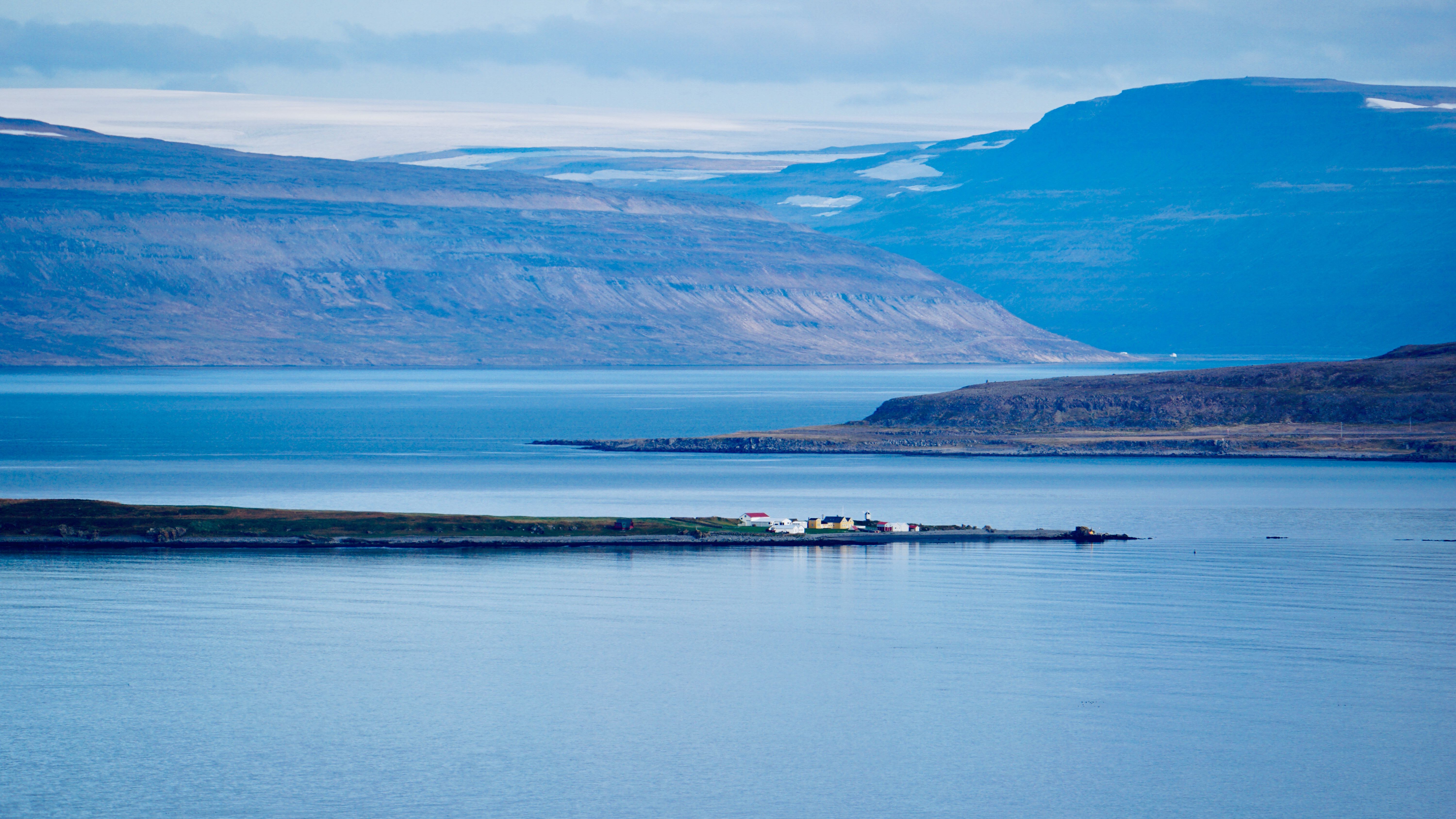

The reality: You've been driving five, six hours from Reykjavík. The tarmac gave out somewhere past the last petrol station, and now it's gravel — a fjord on one side, a wall of flat-topped mountain on the other, and no other car since you can't remember when. The road climbs a pass, drops the far side into the next fjord, and does it again. And again. That's the whole peninsula in one sentence: up here, the driving is the Westfjords.
Barely one in ten visitors to Iceland makes it this far, and the ones who do come for the emptiness. This is the oldest, quietest corner of the country — no active volcanoes, which is why one of its best-known beaches is red instead of black. There are no geysers to queue for and no ring-road coaches. What there is: the largest bird cliff in Europe, a waterfall the size of a cathedral, an uninhabited reserve you can only reach by boat, and fjord after fjord with almost nobody in them.
The catch is access, and it's a real one. Half of what you'll come for sits at the end of a gravel pass that only opens in summer. So the Westfjords ask a question before you go: will you drive it? If the answer's yes — and you've got a few days, not a few hours — you get a piece of Iceland that still feels like it did before the buses found the rest.
The Westfjords are all coast — a hand of long fjords clawing into the North Atlantic, edged by flat-topped mountains and joined by roads that hug every inlet. Distances feel longer than the map says, because you're always driving around water, never across it.
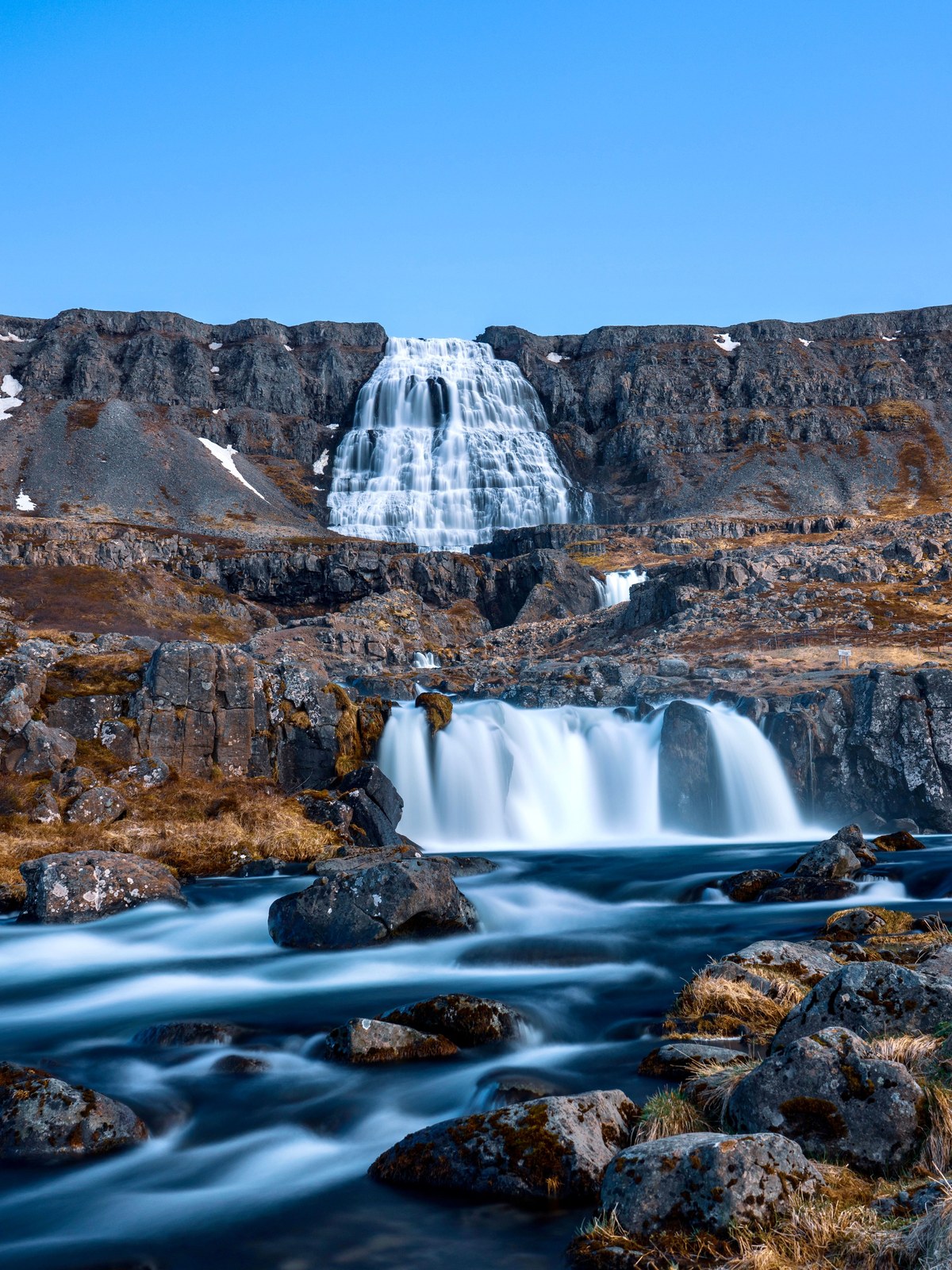
Dynjandi — the one everybody drives for, and it earns it. Seven waterfalls stacked down a mountainside, the top one fanning out like a bridal veil from about 30 metres wide to 60 at the base — a hundred metres of water in all. A 15-minute climb takes you up past the six smaller falls to the big one; each has its own name. A small parking fee, a toilet block, and that's the extent of the facilities. It sits below the Dynjandisheiði pass, which closes in winter — one more reason this is a summer trip.
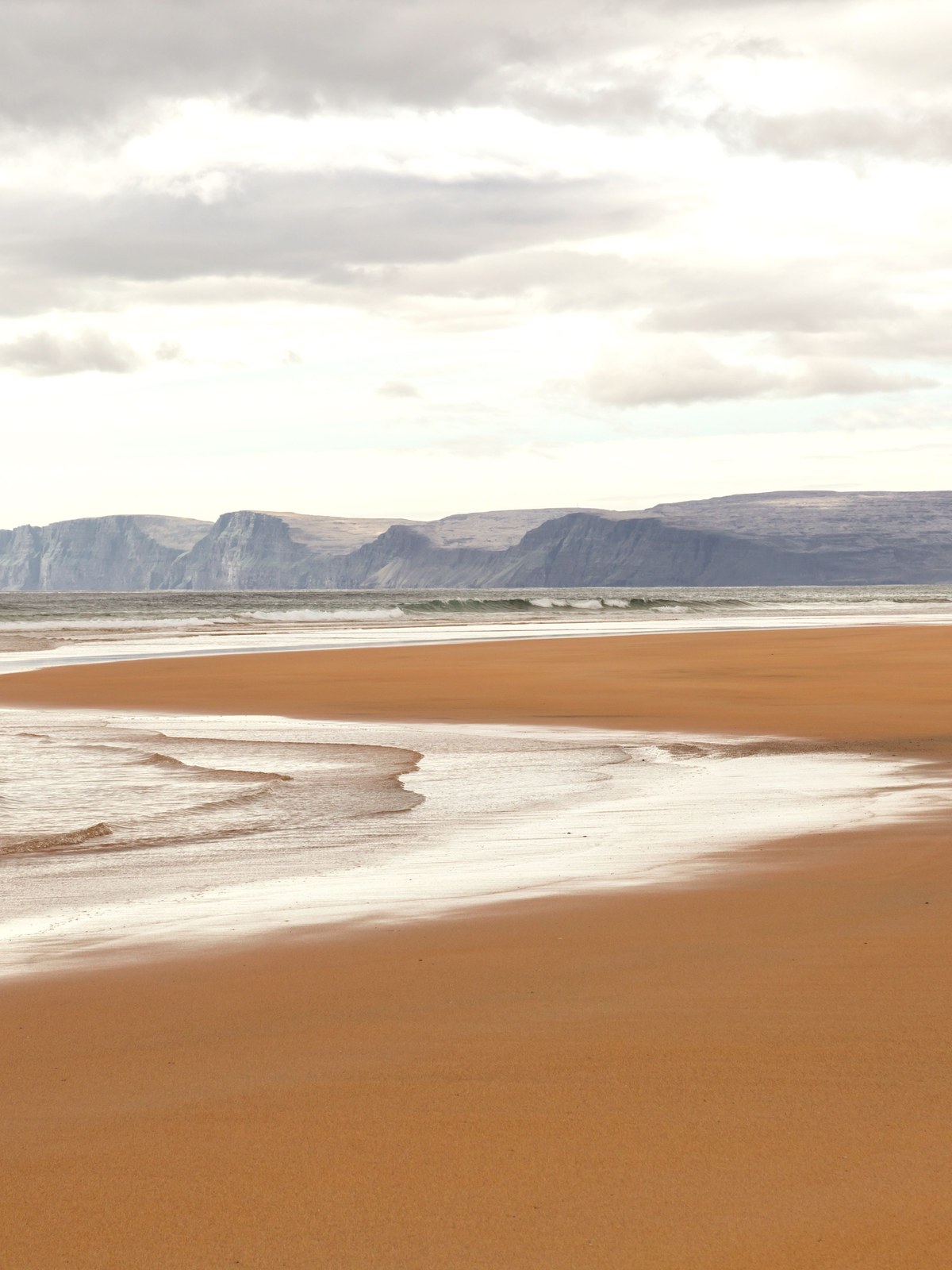
Rauðisandur — a 10-kilometre sweep of red-gold sand, coloured by crushed seashells rather than lava. In a country of black beaches, it's a genuine shock. Seals haul out at the far end, and the reach it takes to get there — a steep, guardrail-free gravel descent on Route 614 — keeps the crowds off. A little black church and a café sit at the bottom.
Látrabjarg — the westernmost point of Iceland and the largest bird cliff in Europe: 14 kilometres long, up to 440 metres straight down. Even without the birds it's a staggering piece of coast. The last stretch is 36 kilometres of gravel with no fuel, so top up in Patreksfjörður first. (More on what lives on that cliff below.)
Between the headline sights, the coast road itself is the point — the Westfjords Way loops the whole peninsula — and the quiet fishing villages tucked into the fjord-heads are where you'll actually stop for coffee.
This is the wildlife corner of Iceland, and it does a few things the rest of the country can't.
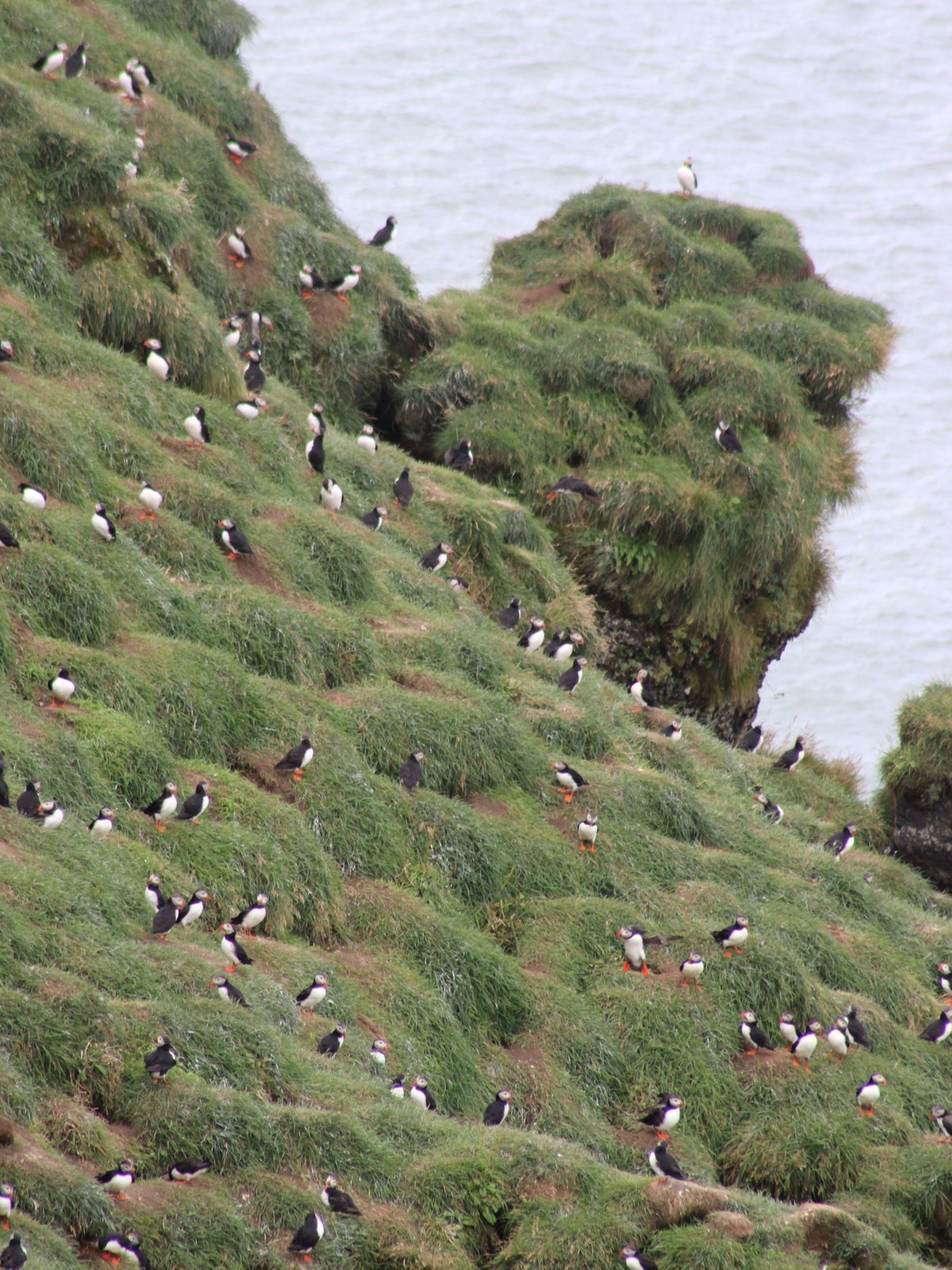
Puffins at Látrabjarg — the best puffin encounter in the country, and it's about temperament as much as numbers. There are no arctic foxes on the cliff to hunt them, so the puffins have no reason to fear something approaching on foot. They'll sit a metre or two from the clifftop path while you lie in the grass and watch. They're here from mid-May to late August; come early morning or evening, when they're back from fishing rather than out at sea. Keep well back from the edge — the lip is undercut with burrows and gives way.
Arctic foxes — Iceland's only native land mammal, here before the settlers and thriving in the one place nobody hunts them: the Hornstrandir reserve, where you might watch one trot past unbothered. If you'd rather a sure thing than a lucky sighting, the Arctic Fox Centre in Súðavík is a research station and sanctuary for orphaned and injured foxes, with animals you can actually see.
Seals and seabirds — the seal colony at Rauðisandur is reliable at low tide. For eider ducks and more puffins without the long drive west, take a boat or kayak out to Vigur, a tiny island off Ísafjörður that's essentially one big seabird colony. Whale watching runs from Ísafjörður too, and you won't be sharing the fjord with fifty other boats.
There aren't many towns up here, and none are big. But they each do a job, and two of them anchor the whole trip.
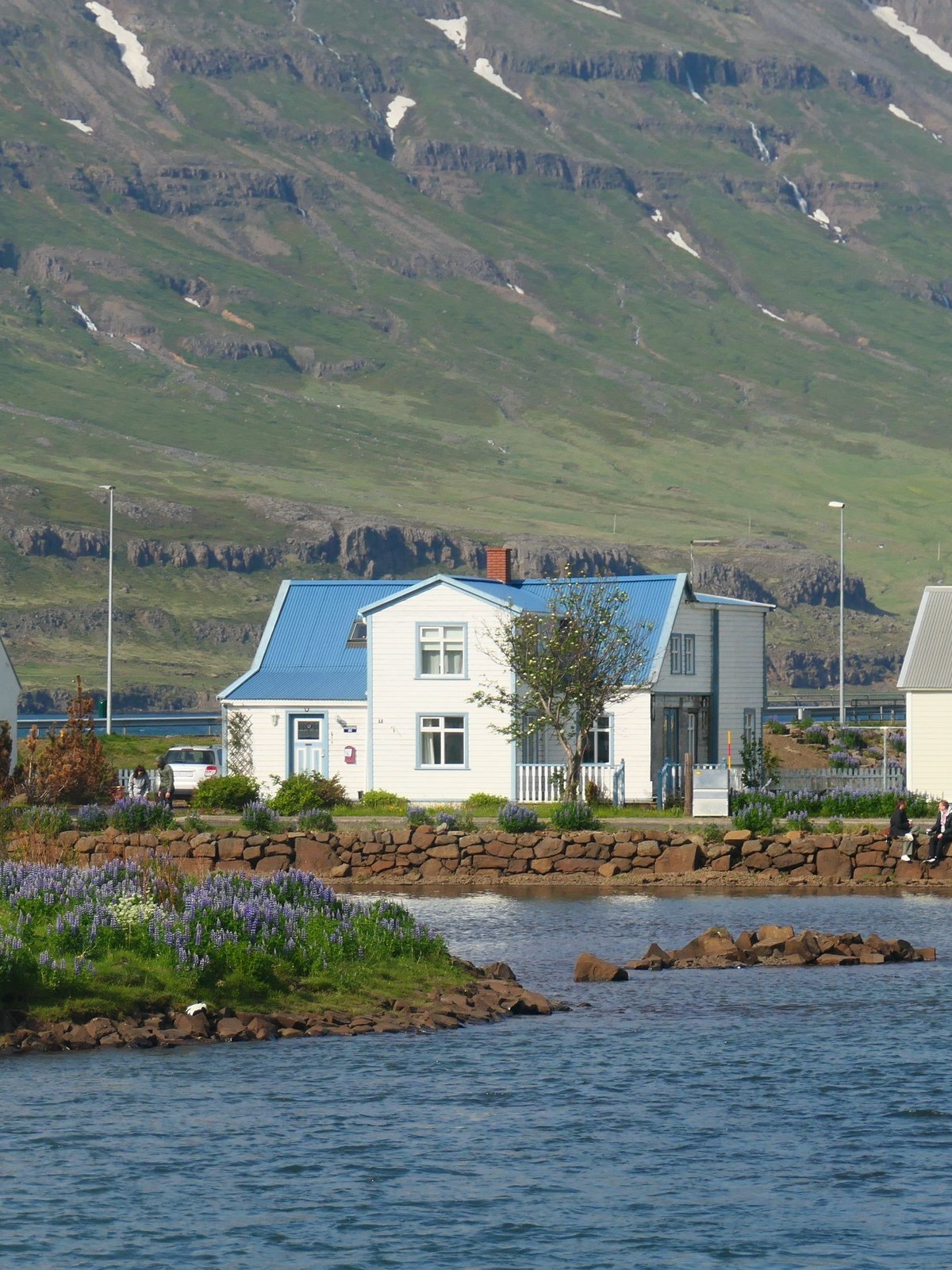
Ísafjörður — the unofficial capital, all of 2,600 people, built on a sandspit that curls into its fjord. The old quarter holds the oldest cluster of timber houses in Iceland, some from the 1750s. For its size it eats and drinks unreasonably well: Tjöruhúsið serves the day's catch in a 200-year-old building (book ahead), and Dokkan is the northernmost brewery in the country. It's the base for boats to Hornstrandir and Vigur, and at Easter the whole town fills up for a free music festival that's been running since 2004.
Patreksfjörður — the southern base, and the one you'll sleep in for Látrabjarg and Rauðisandur. A working fishing village with hotels, fuel and a pool. Less to look at than Ísafjörður, but perfectly placed.
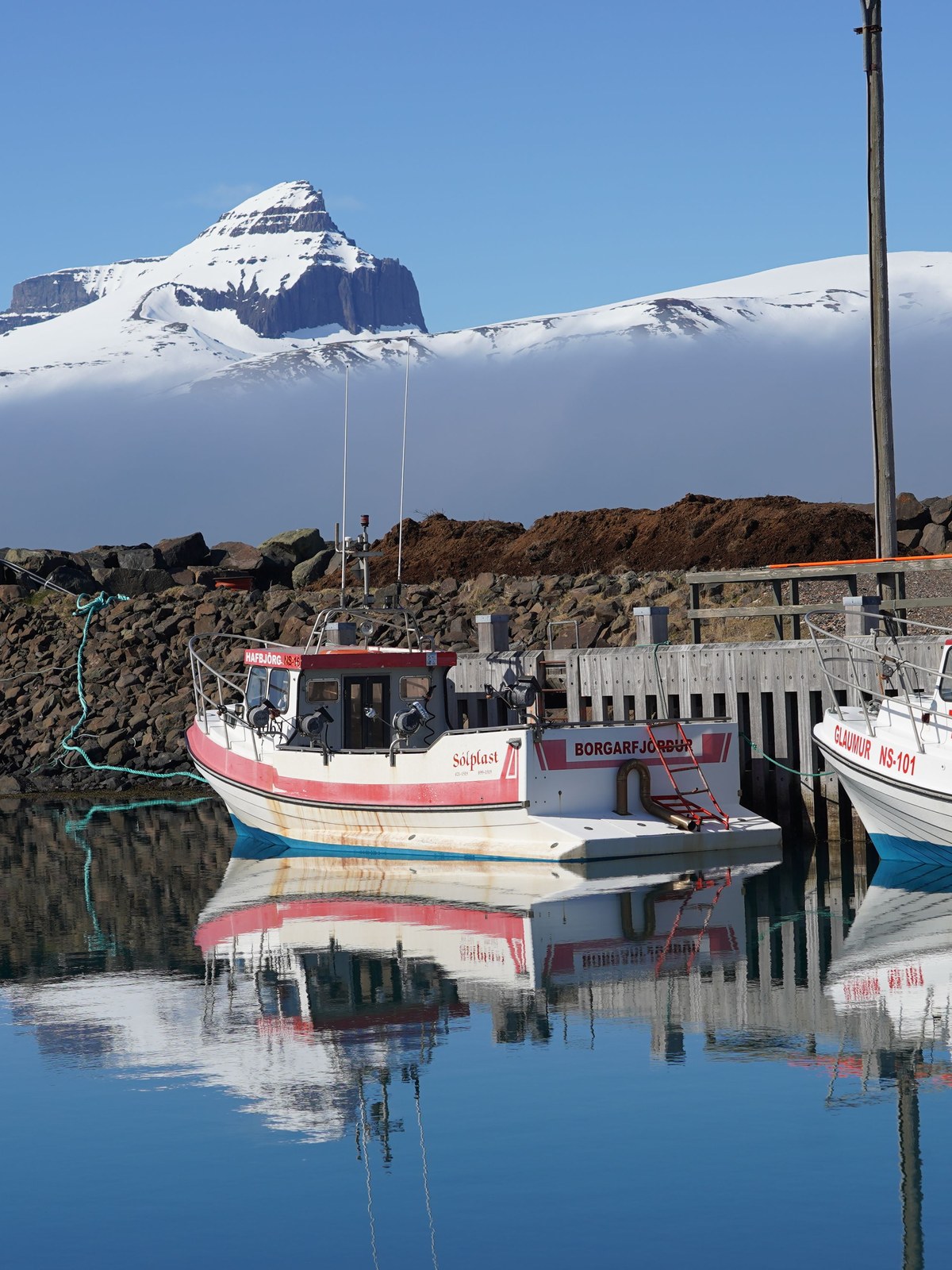
Hólmavík — over on the eastern Strandir coast, and worth the detour for one thing: the Museum of Icelandic Sorcery and Witchcraft. It tells the story of Iceland's 17th-century witch craze, when — unlike Salem — nearly all the accused were men. The exhibits run from magical staves to the genuinely grim nábrók: a pair of trousers made from a dead man's skin, meant to bring the wearer money. The café does blue mussels farmed in the fjord outside.
Bíldudalur — a speck of a village on Arnarfjörður with a Sea Monster Museum, which is exactly as much fun as it sounds. Worth a stop if you're driving past.
For people who'll walk, paddle and soak — the landscape does most of the work.
The Westfjords reward effort more than most of Iceland. The trails are quieter, the water's colder, and the payoff is usually solitude.
Food up here is about what comes out of the water, and the further from a town you are, the simpler and better it gets.
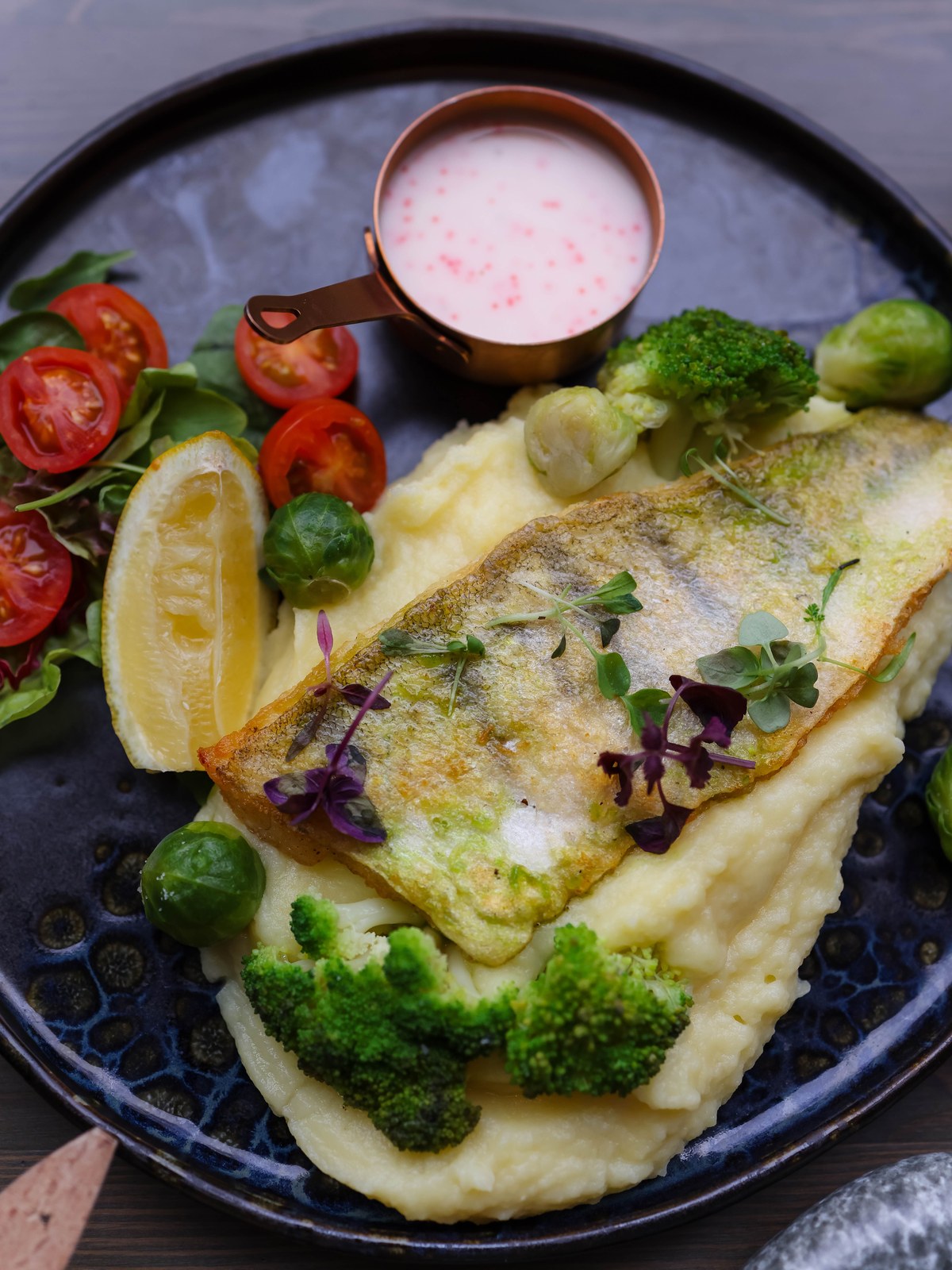
Seafood, first and last. The fjords are cold and clean, and the fish is hours out of the sea. In Ísafjörður, Tjöruhúsið is the name everyone knows — a long table of the day's catch, pan-fried, in an eighteenth-century warehouse. Elsewhere it's plokkfiskur (fish and potato mashed together), harðfiskur (wind-dried fish eaten with butter), and blue mussels straight from the fjord at Hólmavík.
Beyond the fish: Icelandic lamb, skyr, and — if you're brave — a shot of brennivín, the caraway schnapps locals nickname Black Death. For beer, the Westfjords now have two small breweries worth finding: Dokkan in Ísafjörður and Galdur in Hólmavík.
Stock up in the towns. Between them, a petrol-station hot dog is often the only kitchen open for an hour in any direction — which, to be fair, is a very good hot dog.
June to August is the window, and for the Westfjords that's less a recommendation than a requirement. The mountain passes and gravel roads to Látrabjarg, Rauðisandur and Dynjandi are only reliably open in these months, and the Hornstrandir boats run roughly early June to early September. Daylight is enormous — near-endless in June — and the puffins are in. Temperatures stay cool: a warm July day tops out around 13°C, and this is the windiest, foggiest corner of the country, so pack for weather even at the height of summer.
Late May and early September are a gamble. Some roads are open and the crowds are thinner, but a single storm can close a pass and strand your plans. Worth it only if you're flexible.
October to April shuts most of it down. The passes close, and the sights you drove for sit behind the snow. Ísafjörður itself stays reachable — you can drive there on tarmac the whole way, and there's small-town skiing above it — but the wild corners are off the table. This is a winter for the town, not the peninsula.
Getting to the Westfjords is the single biggest decision of the trip, so make it first.
Driving is the classic way and the only one that gives you the freedom the region demands. It's roughly six hours from Reykjavík to Ísafjörður on Routes 60 and 61 — and, usefully, you can do that whole drive on tarmac if you stay on the main road. The gravel starts when you branch off to the far sights. A string of tunnels keeps the core around Ísafjörður open year-round; the gravel passes to the west and south do not.
Flying skips the drive: 40 minutes from Reykjavík's domestic airport to Ísafjörður, with a dramatic landing at the end of a fjord. There are also small flights to Bíldudalur in the south. Fly in, rent a car at the airport, and you've saved a day each way — worth it if your time's tight.
The Baldur ferry is the shortcut into the south. It carries cars across Breiðafjörður Bay to Brjánslækur, landing you within about an hour of Rauðisandur and the Látrabjarg road and cutting a big chunk off the drive. It runs year-round — twice daily in summer, once a day in winter — and you must book a car space ahead.
Once you're in, plan on gravel, single-lane tunnels and blind summits. A 4x4 isn't strictly required for the main roads but earns its keep on the descents to the beaches. Fuel is sparse — top up in every town you pass.
Pick a base — ideally two — and accept that you'll drive between them. The peninsula is too big and too folded to work from a single bed.
Ísafjörður — the northern base. Most services, best food, boats to Hornstrandir and Vigur. Sleep here if you want a town around you.
Patreksfjörður — the southern base, for Látrabjarg and Rauðisandur. A working village with a few hotels.
Breiðavík — a lone hotel out west, close to the cliffs, in the middle of nowhere — which is exactly the appeal.
Þingeyri or Flateyri — small villages a short tunnel-drive from Ísafjörður, for quiet guesthouses over town bustle.
Hólmavík and the Strandir coast — the eastern edge, for sorcery, hot pools and near-total quiet. A lonelier trip again.
Iceland is expensive, and the Westfjords don't escape that — but they don't add to it either. Rooms are often cheaper here than on the ring road, simply because demand is low. The real cost of the region isn't the menu; it's the fuel, the ferry, and the days you have to give it.
Prices in Icelandic króna (roughly 140–150 ISK to the euro — check the current rate). Rooms drop sharply outside July and August. Budget for fuel: distances are long and stations are few.
Go if you want the emptiest corner of Iceland — gravel-road fjords, a bridal-veil waterfall, puffins at arm's length and an arctic-fox reserve with no roads — and you'll drive hours of gravel to earn it. Skip if you want Iceland's greatest hits in a long weekend, or a guarantee of sun.
Found this useful? Share it.
Still planning?
We don't stop at "here's the country." Real places to stay, what to do, apps that matter, even how to find someone to travel with — plus guides for whatever vibe you're after, from beach days to wine country to slow weekends. All up top. Spin for somewhere new when you're done with this one.