This is your destination guide for Iceland.
This is your destination guide for North Iceland
📍 Part of IcelandVolcanic north - mud pots, whale bays, and the Diamond Circle without the south-coast crowds.


The reality: You've driven up from the south, where every waterfall had a full car park and a coach idling beside it. Then the Ring Road tips over the top of the island and empties out. At Goðafoss the river bends over a black basalt lip and, some mornings, you share it with two other cars. This is the north, and it runs on a slower clock than the south coast.
The north's story isn't beaches - it's what the ground is doing. Around Lake Mývatn the earth steams, spits mud, and cracks open into craters you can walk into. Out on Skjálfandi Bay, humpbacks feed close enough to soak you when they blow. And because it's a five-hour drive from Reykjavík, the crowds thin out before they get here.
Base yourself in Akureyri or by Mývatn, rent something with a bit of clearance, and give it three or four days. The Diamond Circle - Goðafoss, Dettifoss, Ásbyrgi, Húsavík - is the spine. The baths, the whales, and in winter the northern lights are what make people stay the extra night.
The north's headline sights sit on the Diamond Circle, a loop that trades the south's ice for fire: waterfalls, lava fields, and a live volcanic system you can walk across.

Goðafoss - the "waterfall of the gods". Around the year 1000, when Iceland voted to become Christian, the lawspeaker Þorgeir is said to have thrown his old Norse idols over this lip. It's only 12 metres high but 30 wide, with a footbridge linking viewpoints on both banks. Free to visit, and free to park - for now.
Dettifoss - Europe's most powerful waterfall by volume, and it feels it: the ground shakes and the spray finds you. Two sides, two different trips. The west (road 862, paved) is the all-weather option and adds a short walk to gentler Selfoss. The east (road 864, gravel, summer only) gets you closer and more dramatic - take a car you don't mind rattling.
Ásbyrgi - a horseshoe canyon with 100-metre walls and a birch wood on its floor. Norse myth calls it a hoofprint left by Odin's eight-legged horse. Shaded and quiet, and a relief after all that open lava.
Dimmuborgir - the "dark fortress", a maze of lava pillars and arches you walk through on marked loops. Locals will tell you trolls live here; on television it stood in for a wildling camp.
Hverir (Námafjall) - a hillside of orange mud that boils, hisses, and reeks of struck matches. Genuinely otherworldly, and genuinely a bit alarming. Small parking fee.
Krafla & Víti - a still-active volcanic system north of Mývatn (road 863, summer). Walk the Leirhnjúkur lava field, where flows from the 1980s can still be warm underfoot, then look into Víti, a crater cupping a milky blue-green lake.
Grjótagjá - the little lava cave with the glowing blue pool (yes, that one). You look, you don't bathe: it sits on a working farm and the water has run too hot since the Krafla eruptions.
Húsavík calls itself Iceland's whale-watching capital and, unusually for a slogan, earns it. Skjálfandi Bay is one of the few places on earth where blue whales turn up regularly, and boats report sightings on around 97% of summer trips.

What you'll mostly see are humpbacks - feeding, tail-slapping, sometimes breaching close to the boat. Minke whales, white-beaked dolphins, and in spring the odd blue whale round it out; the bay hosts up to eleven cetacean species across a season.
North Sailing started it all in 1995 and runs restored oak schooners alongside silent electric boats. Gentle Giants (oak boats and faster RIBs) and Salka work the same harbour. Prices are close - pick your boat type, not the logo.
Tours run roughly April to November on the oak boats; blue-whale odds peak April to June. Dress like it's winter even in July - Skjálfandi means "shivering bay" and it means it. You get warm overalls, and on the way back, cocoa and a cinnamon bun.
The north has one proper town and a handful of harbours. Each does something different.

Akureyri - the "capital of the north", and the only place up here that feels like a town rather than a village. A walkable centre, red heart-shaped traffic lights (a small act of national morale-boosting after the 2008 crash), a botanical garden that shouldn't work this far north but does, and the widest range of restaurants for hours in any direction. Most people base here.
Húsavík - the whale town, small and photogenic, with a timber church from 1907 and a harbour that still mixes fishing boats with tour boats. The GeoSea baths sit on the cliff just above it.

Siglufjörður - tucked at the end of a fjord on the Tröllaskagi peninsula, reached through mountain tunnels. Once the herring capital of the Atlantic; the Herring Era Museum tells that boom-and-bust story far better than it sounds. Now a quiet, brightly painted harbour with a couple of genuinely good restaurants.
Dalvík - a working fishing town and the ferry port for Grímsey, the little island astride the Arctic Circle. Low-key and local, and the base for cheaper whale trips out of nearby Árskógssandur and Hauganes.
The north has three geothermal baths, each with a different character - and none of them is the famous one near the airport, which is a five-hour drive south.
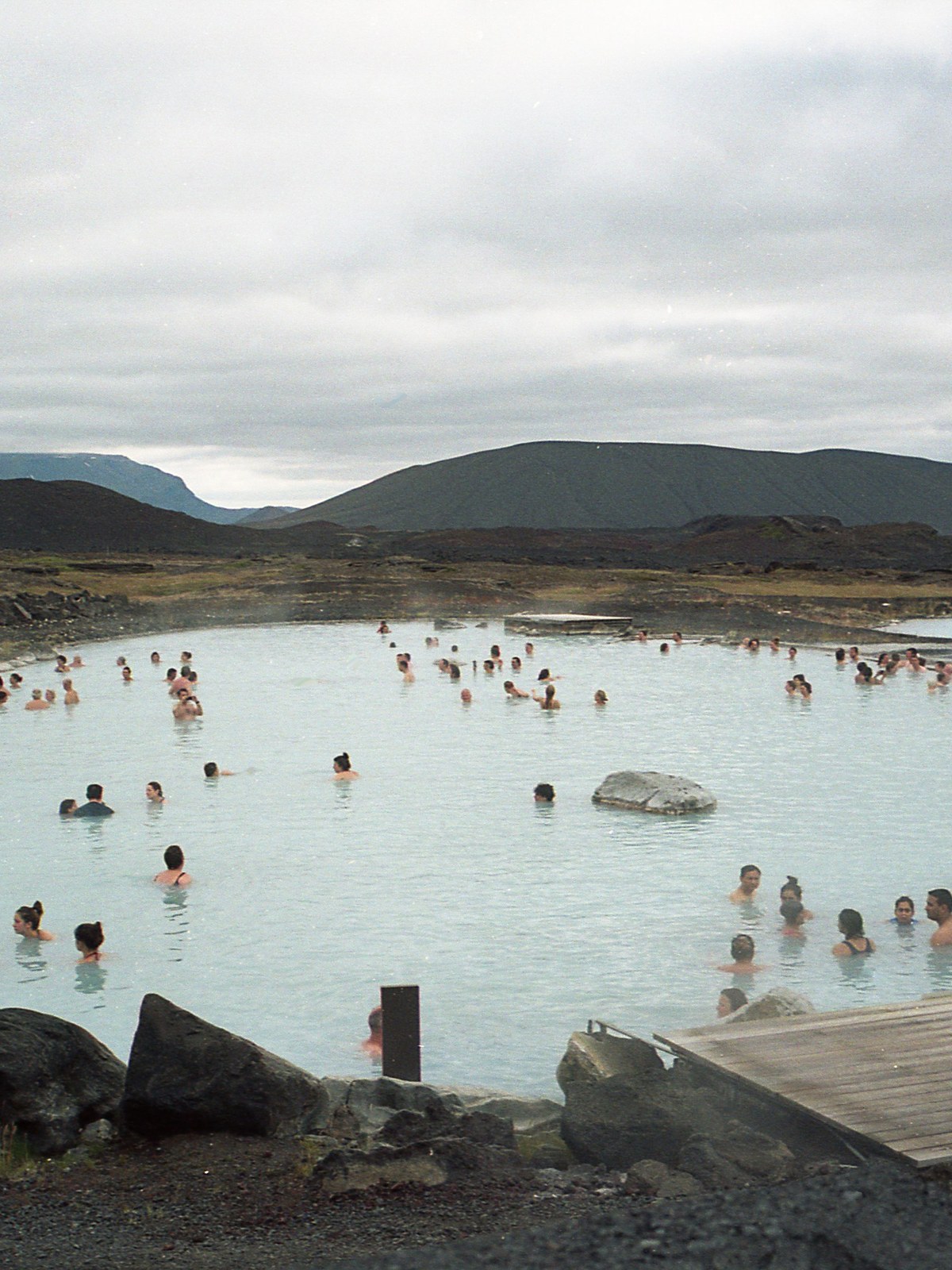
Earth Lagoon Mývatn (long known as Mývatn Nature Baths) - the milky-blue lagoon among the lava fields east of the lake, rebuilt into a bigger complex with steam caves and a swim-up bar. The north's answer to the big southern lagoon, at a lower price and with fewer people.
GeoSea (Húsavík) - the pick of the three for setting. Geothermally heated seawater, in infinity pools on a cliff edge over Skjálfandi Bay. Whales sometimes surface below you in summer; the aurora sometimes moves above you in winter.
Forest Lagoon (Akureyri) - the newest, five minutes from town, tucked into a birch-and-pine wood with fjord views, a hot-cold sauna circuit, and a free shuttle from the centre. The easy one if you're staying in Akureyri.
For getting out of the car without signing up for an expedition.
The north rewards a bit of effort - short crater climbs, canyon walks, kayaks, and, if you want it, some of Iceland's best snow. You don't need to be an alpinist to enjoy any of it.
North Iceland eats the way the country does: lamb, fish, dairy, and not much that grows above ground. It's simple and often very good - especially straight off the boat in the harbour towns.
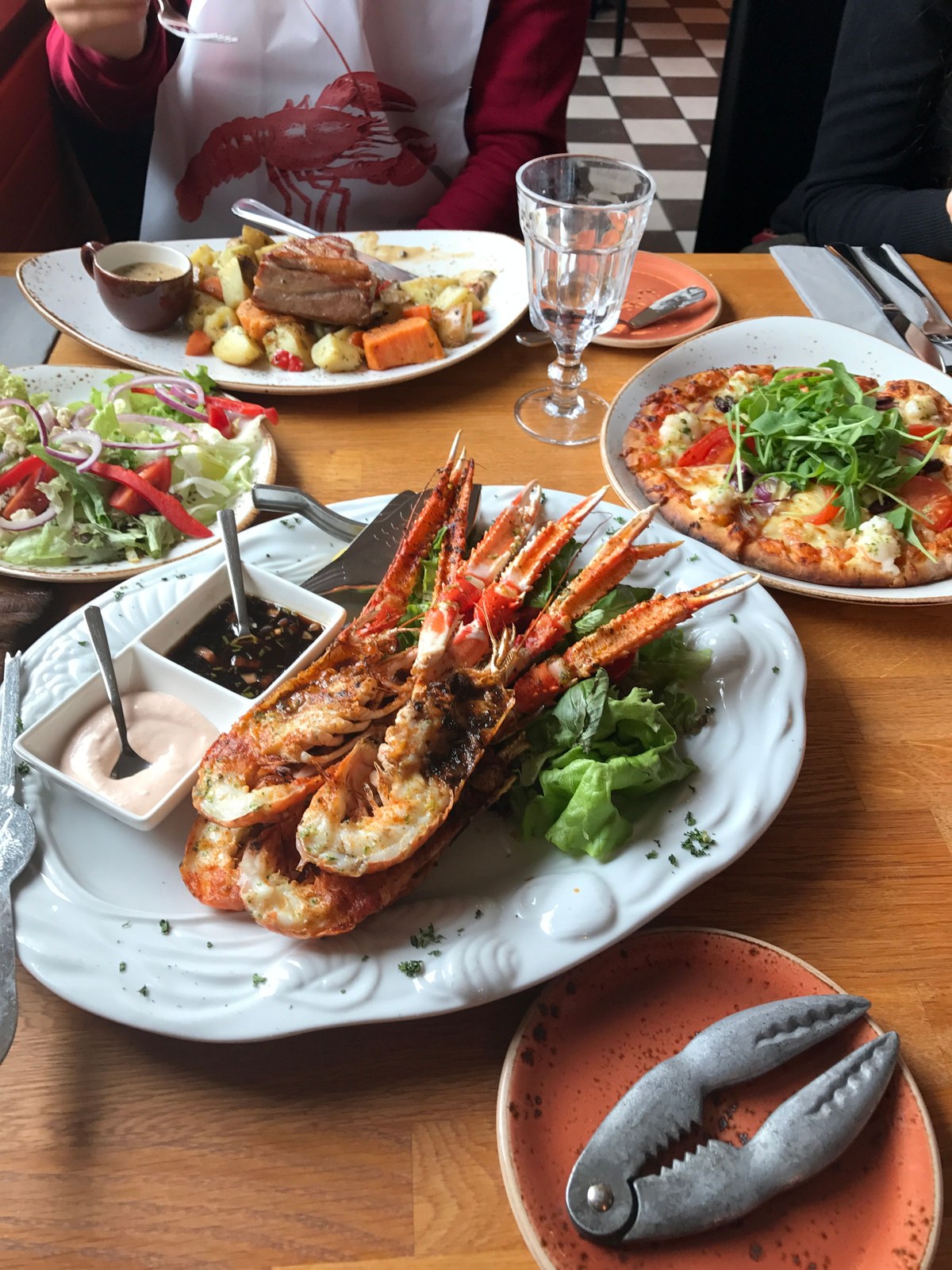
Fresh fish - cod, haddock, and Arctic char, often landed that morning. Harbour restaurants in Húsavík (Gamli Baukur, Salka) and Siglufjörður do it best. Plokkfiskur, a warm fish-and-potato mash, is the comfort-food version.
Lamb - free-roaming all summer on grass and wild herbs, which you can taste. Slow-roasted, or in a hearty kjötsúpa (meat soup) when the weather turns.
Geothermal extras - at Mývatn look for hverabrauð, a dense rye "lava bread" baked in the ground by geothermal heat, with smoked Arctic char alongside. Vogafjós, a working cow-shed café by the lake, does both.
A drink - the craft-beer wave reached the north; Akureyri's Kaldi was one of Iceland's first microbreweries. Coffee is taken seriously everywhere.
June to August - the practical window. Roads open (including Dettifoss's east side and the highland F-roads), whale tours in full swing, and daylight that barely quits - in June the sun essentially doesn't set. The trade-off is company: the Diamond Circle sees coaches, though still nothing like the south coast. It's also midge season at Mývatn, as the name warns.
May and September - the sweet spot. Most things open, prices softer, crowds thinner, and by late September the first auroras appear on dark nights.
The northern lights. This is where the north earns a winter trip. The aurora needs two things - darkness and a clear sky. The north supplies the first from late September to late March, when nights are long and genuinely black once you're away from town lights. Akureyri and Mývatn make good bases, Mývatn especially, where you can watch from a warm bath while the sky moves. Nothing is guaranteed - you're betting on cloud cover as much as solar activity - so give yourself several nights rather than one, and check the forecast at en.vedur.is. February and March pair long dark evenings with slightly steadier weather and enough daylight to still sightsee, which is why they're the pick for an aurora-first trip.
November to January - dramatic and quiet, but short days and real weather. The east side of Dettifoss (road 864) closes, the highlands are shut, and driving demands care and a look at road.is every morning. Rewarding if you came for the dark and the lights; frustrating if you came to tick off sights.
Rent a car. The north is spread out and public transport barely reaches the sights. A 2WD is fine in summer for the Ring Road, the paved parts of the Diamond Circle, and Dettifoss's west side. You want a 4x4 for the east side of Dettifoss, for Askja, and for anything with an "F" in front of the road number.
Fly in to skip the drive. Akureyri has a domestic airport with several daily flights from Reykjavík (about 45 minutes), turning a five-to-six-hour drive into a short hop. A sensible move if the north is your focus rather than one leg of a Ring Road loop.
Check the roads, always. This isn't the south. road.is shows live closures, vedur.is the weather, safetravel.is the alerts. Gravel turns to washboard, wind is a genuine hazard, and shoulder-season conditions change by the hour.
Mind the tunnels. A couple of routes run through the mountains rather than around them - the Vaðlaheiði tunnel by Akureyri (toll) and the Tröllaskagi tunnels to Siglufjörður. Worth knowing so you don't take the long way round by accident.
Pick a base and day-trip out. The north is too big to see comfortably from one spot, but two well-chosen bases cover almost all of it.
Akureyri - for town comforts. Restaurants, shops, the airport, Forest Lagoon, and Goðafoss half an hour east. The natural first base.
Mývatn (Reykjahlíð) - for the volcanic landscape and the Diamond Circle. Steam, craters, a bath, and dark aurora skies on your doorstep. Fewer dinner options, so plan ahead.
Húsavík - for the whales and the sea baths. Small, walkable, and enough to justify a night.
Siglufjörður or the Tröllaskagi coast - for the quietest, most scenic corner, and for the skiing.
North Iceland is cheaper on its headline sights than the south - Goðafoss and most of the Diamond Circle cost nothing to see - but Iceland's overall price floor still applies: fuel, food, and a whale tour add up fast.
Prices in ISK; roughly €7 ≈ 1,000 ISK at the time of writing. Winter rates run well below summer for hotels and cars.
Go if you want Iceland's volcanic, geothermal north on emptier roads - whale bays, steaming mud, three good baths, and the aurora over Mývatn. Skip if you want the south coast's greatest hits in a single day, or if gravel roads and midges aren't your idea of a holiday.
Found this useful? Share it.
Still planning?
We don't stop at "here's the country." Real places to stay, what to do, apps that matter, even how to find someone to travel with — plus guides for whatever vibe you're after, from beach days to wine country to slow weekends. All up top. Spin for somewhere new when you're done with this one.