This is your destination guide for Argentina.
This is your destination guide for Salta & the Northwest
📍 Part of ArgentinaFourteen-colour mountains, salt flats at 4,000 metres, and empanadas worth the altitude headache.


The reality: You leave Salta city before dawn and drive north. The land dries out and lifts. By Purmamarca the hills behind the town are striped pink, ochre and green, and you're already at 2,300 metres. Keep climbing and the air thins, the cactus thins, and the road tops a pass over 4,000 metres onto a white salt plain. This is the part of Argentina that looks like nowhere else in Argentina.
Most people picture Argentina as steak, tango and Patagonia. The northwest is the opposite end — Andean, indigenous, high, and dry. Quechua words sit in the Spanish. Lunch is goat and corn, not beef. The colours come from minerals in the rock, not from filters.
Two provinces hold it: Salta, with the colonial city and the Calchaquí valleys, and Jujuy, with the Quebrada de Humahuaca and the salt flats. Rent a car, take the altitude slowly, and give it a week. Done in a rush from a single base, it's a blur of viewpoints. Done properly, it's the strangest and quietest week you'll have in the country.
There's no coast here. The landscape is the draw: rock striped by minerals, gorges cut by old rivers, and salt flats sitting above 3,400 metres. Most of it is on the road between towns, so the driving and the sightseeing are the same thing.

Serranía de Hornocal — the "14 colours". A 25-kilometre gravel road climbs east out of Humahuaca to a viewpoint at 4,350 metres. Go in the late afternoon: the angled sun is what makes the jagged stripes glow. 4x4 trips leave from Humahuaca's main square; there's a small community entry fee at the top.
Cerro de los Siete Colores — the seven-striped hill behind Purmamarca, the one on every postcard. Walk the Paseo de los Colorados loop behind the cemetery in the morning before the day-trip vans arrive.
Quebrada de Humahuaca — a UNESCO gorge that was an Inca trade road. Drive it slowly: Maimará's layered "Painter's Palette", the steep cemetery above it, and a string of small adobe villages.
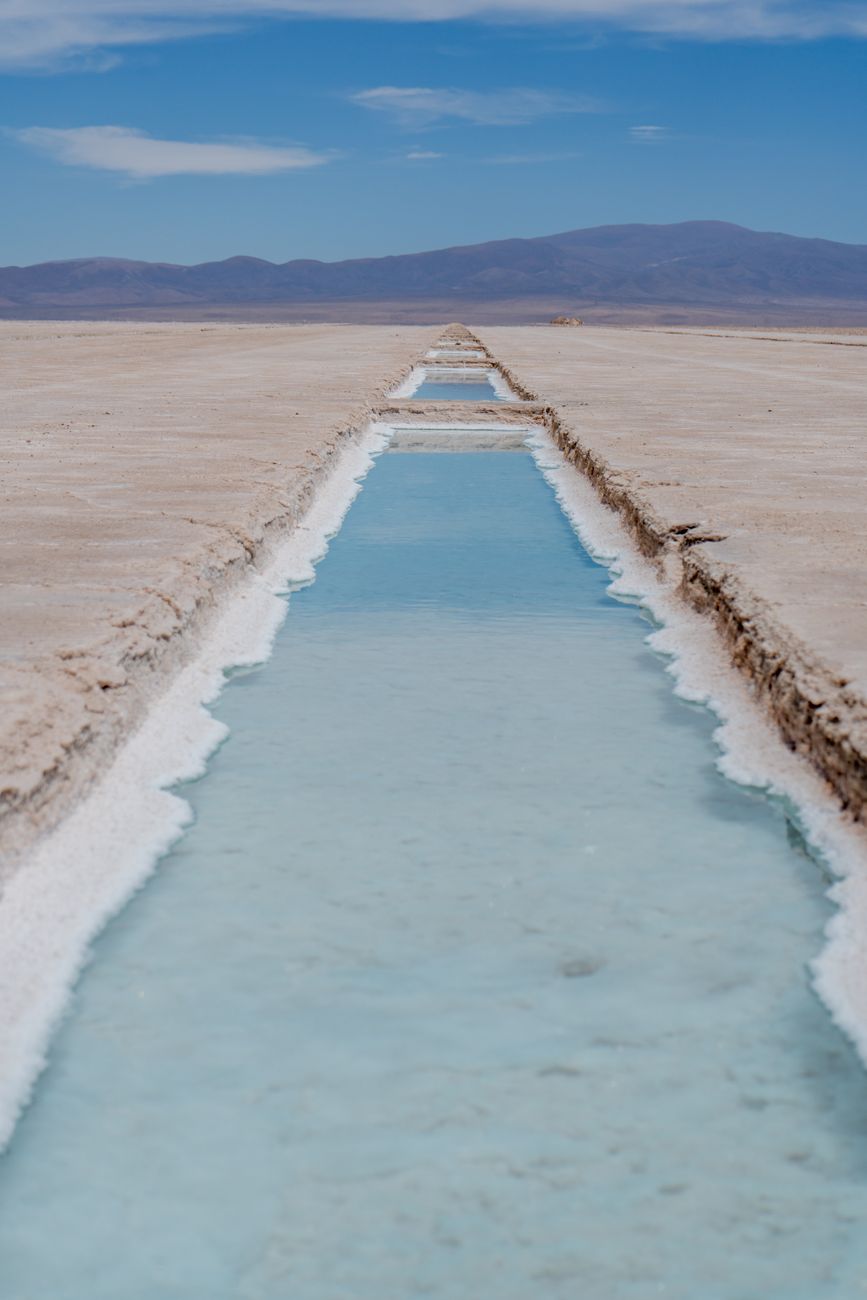
Salinas Grandes — white salt at 3,450 metres, reached over the 4,170-metre Cuesta de Lipán. You can't drive onto the crust alone — a local community guide rides ahead and you follow. Flooded and closed in the December–March rains.
Quebrada de las Flechas — arrow-shaped rock blades leaning over Ruta 40 on the way to Cafayate. No booth, no railing, no crowd. Just stop and stand in it.
Los Cardones National Park — a valley of giant cardón cacti, some older than the country, reached over the switchbacks of the Cuesta del Obispo at 3,300 metres.
You'll move between a few small towns and one real city. Each sits at a different altitude and does something different.
Salta city — your base, at 1,200 metres. A pink colonial cathedral, a cable car up Cerro San Bernardo, and the MAAM museum, which holds the Llullaillaco children — Inca offerings found preserved at 6,700 metres on a nearby summit. At night the peñas serve empanadas while folk singers pass a guitar around the room.
Purmamarca — sleep here, don't just stop. One street of adobe under the seven-coloured hill, very quiet after the day-trippers leave. A good first night to start adjusting to altitude.

Tilcara — the liveliest town in the gorge. Good comedores, an artisan market, and a pre-Inca hilltop fortress (the pucará) above it. The usual base for a Hornocal day trip.
Humahuaca — highest of the gorge towns, cobbled and cold, with a big craft market on the square. The jumping-off point for the 14 colours.
Cachi — whitewashed and remote at 2,280 metres in the Calchaquí valleys, reached over the Cuesta del Obispo. The end of one of Argentina's great drives.
Cafayate — the wine town at the south end, worth a night mainly for the red canyons of the Quebrada de las Conchas on the way in.
For people who like moving — but remember every effort costs more at 3,000 metres.
The headline activities here are altitude and distance. You don't need to be an athlete, but you do need to give your body a day or two to adjust before the high stuff, and to take the climbs slowly.
The northwest eats Andean, not Pampas. Corn, goat, llama and beans, not the big beef plates of the south. It's cheaper and more distinctive than most travellers expect.

Salteña empanadas — small, baked, juicy with broth inside. Eaten by hand, never with a fork. Different from anywhere else in the country, and the thing to order first.
Locro — a thick stew of corn, squash and meat, the cold-weather staple eaten across the north.
Humita & tamales — fresh corn mashed with goat cheese, steamed in the husk.
Llama and cabrito — the everyday Andean meats; api, a hot purple-corn drink, warms up a winter breakfast.
Where to eat: the peñas in Salta city — folk-music taverns where the food is empanadas, locro and tamales and the entertainment is whoever picks up the guitar. They run late and loud. In the gorge towns, look for a small comedor doing a fixed lunch of locro or goat for a few dollars.
If you're driving the south loop, Cafayate makes a floral white called Torrontés that pairs with the heat and the canyons — a glass with lunch, no more. Argentina's real wine story lives further south, in Mendoza.
April–June and September–November are the months you want. Dry, clear, days around 18–24°C, cold nights. Roads open, salt flats firm, the Tren a las Nubes running. This is the window.
December–March — the summer rains. Salinas Grandes floods, gravel roads to Hornocal and Cachi wash out, and the Tren stops. Everything is greener, but access is unreliable.
July — Argentine winter holidays. Sunny days, the busiest and priciest period, and hard freezes at altitude after dark. Pack a real jacket.
February — the local secret, if you accept the rain risk. Carnaval in the Quebrada (Tilcara, Humahuaca) is the genuine northern festival — dust, brass bands, and unearthed devils — not a show put on for visitors.
Fly in, then rent a car. Flights from Buenos Aires land at Salta (SLA) or Jujuy (JUJ), about 1.5 hours apart by road. A car is the only way to do the Calchaquí valleys and the gorge on your own clock. Most roads are paved; the Cuesta del Obispo, Hornocal and the Salinas approach are gravel.
Watch the fuel and the altitude. Fill up in Jujuy or Tilcara — the next station past Purmamarca is 135 kilometres away in Susques. Take the high passes slowly; both engines and people feel 4,000 metres. Chew coca leaves or carry altitude tablets for the salt-flat and Hornocal days.
Without a car — buses link the gorge towns cheaply (Tilcara to Humahuaca is a couple of dollars), and 4x4 day tours from Salta or Jujuy cover Hornocal and Salinas Grandes if you'd rather not drive the gravel yourself.
Don't base the whole trip in one place — the distances are long and the altitudes vary. Move every two or three nights.
Salta city — for restaurants, museums, peñas, flights and car rental. Your start and end.
Purmamarca — the colour-and-quiet base in the gorge. One night minimum, ideally two to acclimatise.
Tilcara — most life in the Quebrada and the handiest base for a Hornocal trip.
Cachi — for the Calchaquí valleys, the Cuesta del Obispo, and silence.
Cafayate — for the southern loop and the red canyons on the way in.
Salta and Jujuy are the cheapest part of Argentina most travellers reach — well under Bariloche or Patagonia, and a fraction of what the same scenery costs across the border in Chile's Atacama. The price you pay here is distance and altitude, not money.
Prices in 2026 US dollars. Pay by card for the tourist (MEP) rate; carry some USD cash for remote stops and community fees. Shoulder season knocks 20–30% off rooms.
Go if you want the strangest landscapes in Argentina — fourteen-colour rock, white salt at 4,000 metres, giant-cactus valleys — plus folk music and empanadas in Salta's old streets. Skip if you need green, sea-level air, or warm nights.
Found this useful? Share it.
Still planning?
We don't stop at "here's the country." Real places to stay, what to do, apps that matter, even how to find someone to travel with — plus guides for whatever vibe you're after, from beach days to wine country to slow weekends. All up top. Spin for somewhere new when you're done with this one.