This is your destination guide for Argentina.
This is your destination guide for Peninsula Valdes
📍 Part of ArgentinaSouthern right whales from the shore, a million penguins, and orcas that beach themselves to hunt.
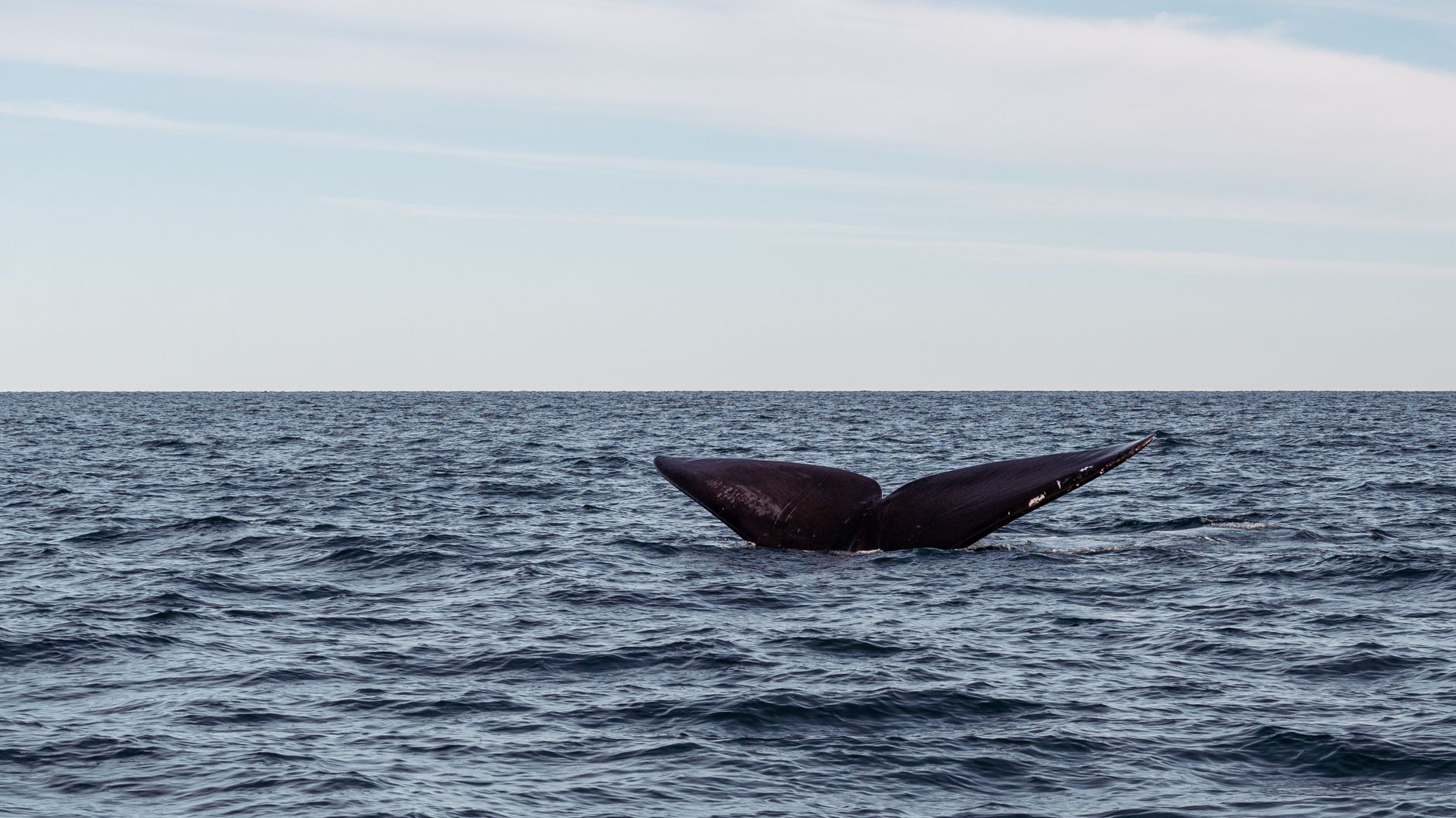

The reality: You're on a beach 15 km north of Puerto Madryn called El Doradillo. It's July, it's cold, the wind comes straight off the South Atlantic. Then a southern right whale surfaces maybe thirty metres out — a 40-tonne mother with her calf — and you hear the breath before you see the spray. No boat, no ticket, no crowd.
That's the trick of this coast. Peninsula Valdes isn't a beach holiday — it's a 360,000-hectare wildlife reserve on a fist of land punched into the Atlantic, ringed by cliffs and gravel roads, with one small village (Puerto Piramides) inside it. The whales are the headline. The same shoreline gives you a million Magellanic penguins down at Punta Tombo, sea lions, a steppe full of guanacos and rheas, and — for two weeks a year — orcas that throw themselves onto the sand to grab sea lion pups.
Base yourself in Puerto Madryn, or better, inside the reserve at Puerto Piramides. Rent a car, because nothing here is close and the buses barely run. Pick your month by the animal you came for. Then accept the deal: some of this is close to guaranteed, some you might drive four hours of gravel to miss. It's still worth it.
From late May to mid-December, southern right whales move into the two gulfs — Golfo Nuevo and Golfo San José — to mate, calve, and raise their young. Valdes is one of the most important nurseries for the species on the planet. There are three ways to watch them, and the cheapest is the best.

El Doradillo — a public beach 15 km north of Puerto Madryn where mothers and calves come within metres of the shore. Free, no boat, best from June to September around high tide. Bring a thermos; you'll stay longer than you planned.
Punta Flecha — a clifftop viewpoint closer to town with a small interpretation post. On a still day you hear the whales breathing from up here before you pick them out of the swell.

Puerto Piramides — the only village inside the reserve, and the only place in Argentina licensed for whale-watching boats. Tours run from mid-June to December; mothers and calves are easiest from mid-September on. Operators cap numbers and cut their engines near the animals.
From below and from a kayak — some Piramides boats have underwater viewing windows, and a few operators run sea-kayak trips alongside the whales. Snorkelling with them isn't allowed in whale season — that window opens later, mid-December to April.
The reserve is busy with animals year-round. Some are a sure thing. One is the hardest sighting in Argentina.
The whales bring people here, but they're not the whole show. The peninsula is a working safari the moment you drive onto it.
Two and a half hours south of Puerto Madryn, on a dry spit of coast, sits the largest continental colony of Magellanic penguins in the world — somewhere around half a million breeding birds, more than a million animals at peak.

The colony — you walk marked paths and boardwalks straight through the nesting ground. Penguins cross in front of you, bray from burrows under the bushes, and waddle to the sea in lines. You don't approach them; they approach you. Two hours is plenty.
When — the reserve is open roughly September to April and closed the rest of the year. Birds arrive in September, chicks hatch from late October, and the fluffy-chick window is December to February. Go early in the day for cooler air and more movement.
Getting there — about 180 km from Madryn (closer to Trelew), the last stretch on gravel. No fuel, little shade, limited food — fill the tank and carry water. Easiest as a guided day trip if you'd rather not drive it yourself.
You're not here for the towns — but where you sleep shapes the trip, and one corner of this coast is unexpectedly Welsh.

Puerto Madryn — the base. A working coastal city of 100,000 with the hotels, the seafood restaurants, the dive shops, and the Ecocentro, a clifftop science-and-art centre worth an hour before you head out. The beach is for strolling, not sunbathing.
Puerto Piramides — the only village inside the reserve, on a curve of beach below the cliffs. Whale boats leave from here; sleep here and you pay the reserve entry once instead of daily. Small, a handful of kitchens, very dark skies.
Trelew & Gaiman — the Welsh corner. In 1865 Welsh settlers founded a colony in this valley, and it stuck. Gaiman still runs working tea houses (casas de té galés) where the afternoon spread means scones, buttered bread, and a dense, dark torta negra. Trelew, the bigger town, is your gateway to Punta Tombo and home to the MEF (Museo Egidio Feruglio), one of the best dinosaur museums in South America — in a province that keeps digging up record-breaking titanosaurs. An odd pairing with the penguins, and a solid rainy-afternoon backup.
Patagonian food is plain and good: lamb, seafood, and — because of the Welsh — cake.
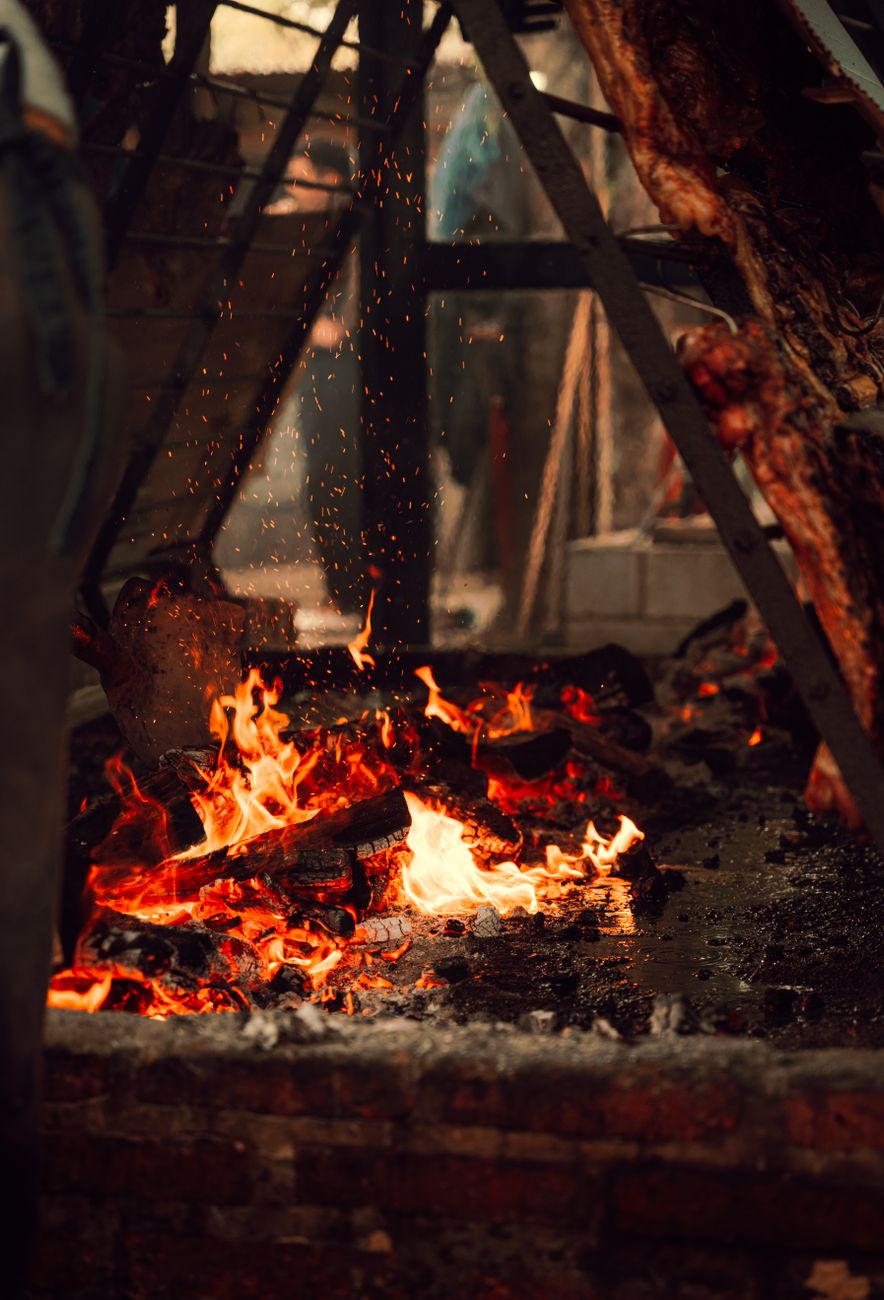
Cordero patagónico — Patagonian lamb, splayed on an iron cross and slow-roasted over coals (al palo) until the skin crackles. The regional dish; you'll see the crosses leaning over fire pits at estancias and parrillas.
Golfo Nuevo seafood — Madryn pulls hake, squid, and shellfish straight from the gulf. The waterfront places cook it simply, which is the point.
Welsh tea — in Gaiman, a té galés is a full sit-down: pots of tea, scones, buttered bread, and torta negra galesa, a heavy dark fruit cake. Strange to find in Patagonia, and worth the detour.
Empanadas & alfajores — the everyday standbys, and what to load up on before the long, foodless drive to Punta Tombo.
Where to eat: in Madryn, the seafood and parrilla spots near Boulevard Brown along the seafront; in Piramides, a few good kitchens that book out in whale season. Several peninsula estancias serve a lamb lunch as part of a day visit.
Here the calendar is the whole story — you pick your month by the animal, not the weather.
September–November — the sweet spot. Whales at their peak and easy from the boats out of Piramides, weather warming, days lengthening. This is high season: book boats and Piramides beds weeks ahead.
June–August (winter) — cold and windy, but the whales are in and El Doradillo shore-watching is at its best. Fewer people, lower prices, real layers required. The penguin reserves are closed.
December–February (summer) — penguin chicks at Punta Tombo, sea lions, long warm days. The last whales leave in December. Hot, dry, and busiest with Argentine holidaymakers.
Mid-March–mid-April — the orca window at Punta Norte, plus autumn quiet. The only time the beach-stranding hunt happens, and even then it's a gamble.
Whatever the month: this is Patagonia, the wind is constant, and the temperature swings hard between sun and shade. There's no indoor version of most of this — pack for cold and wind even in summer.
Fly in. Most people fly from Buenos Aires to Puerto Madryn (PMY) or Trelew (REL), about two hours. Madryn's airport is closest to the whales; Trelew is closer to Punta Tombo. The Buenos Aires bus exists but takes around 20 hours and often costs more than the flight.
Rent a car. There's no bus network inside the reserve and the one public service from Madryn to Piramides barely runs. A car is how you reach El Doradillo, Punta Norte, Caleta Valdes, and Punta Tombo. The road to Piramides is paved; everything deeper into the peninsula and the last stretch to Punta Tombo is gravel. Keep to 60 km/h, watch for guanacos, and fill the tank before you leave town.
The entry ticket. You pay the reserve fee once at the El Desempeño checkpoint on the isthmus, and it's valid 24 hours. Sleep in Piramides and you only pay once for the whole stay — another reason to base inside the reserve.
Pick your base for the animal you came for.
Puerto Madryn — most hotels, restaurants, and tour operators. Best if you want choice and don't mind driving out each day (you'll re-pay the reserve fee on each entry).
Puerto Piramides — inside the reserve, whale boats from your door, one reserve fee for the whole stay, dark skies. Smaller, pricier, books out in whale season.
Trelew or Gaiman — handy for Punta Tombo and the Welsh tea houses; less so for the whales.
An estancia — working sheep ranches on the peninsula (La Ernestina is the orca-watching one at Punta Norte). Remote, simple, the deep-wildlife option.
Atlantic Patagonia isn't cheap. The wildlife itself is mostly free or low-cost — but the flights, the rental car, the reserve fee, and the sheer distances add up. And with Argentina's inflation, peso prices can move between booking and arrival, so treat the numbers below as a guide, not a quote.
Prices in 2026 euros, converted from US dollars and pesos. Argentine inflation moves fast — reserve fees here have been rising every few months — so check current rates before you go, and bring some US-dollar cash.
Go if you want wildlife on wild terms — southern right whales close enough to hear from a free public beach, a million penguins down the coast, and the slim, electric chance of orcas hunting on the sand. Skip if you need it guaranteed, or can't face the long gravel distances.
Found this useful? Share it.
Still planning?
We don't stop at "here's the country." Real places to stay, what to do, apps that matter, even how to find someone to travel with — plus guides for whatever vibe you're after, from beach days to wine country to slow weekends. All up top. Spin for somewhere new when you're done with this one.