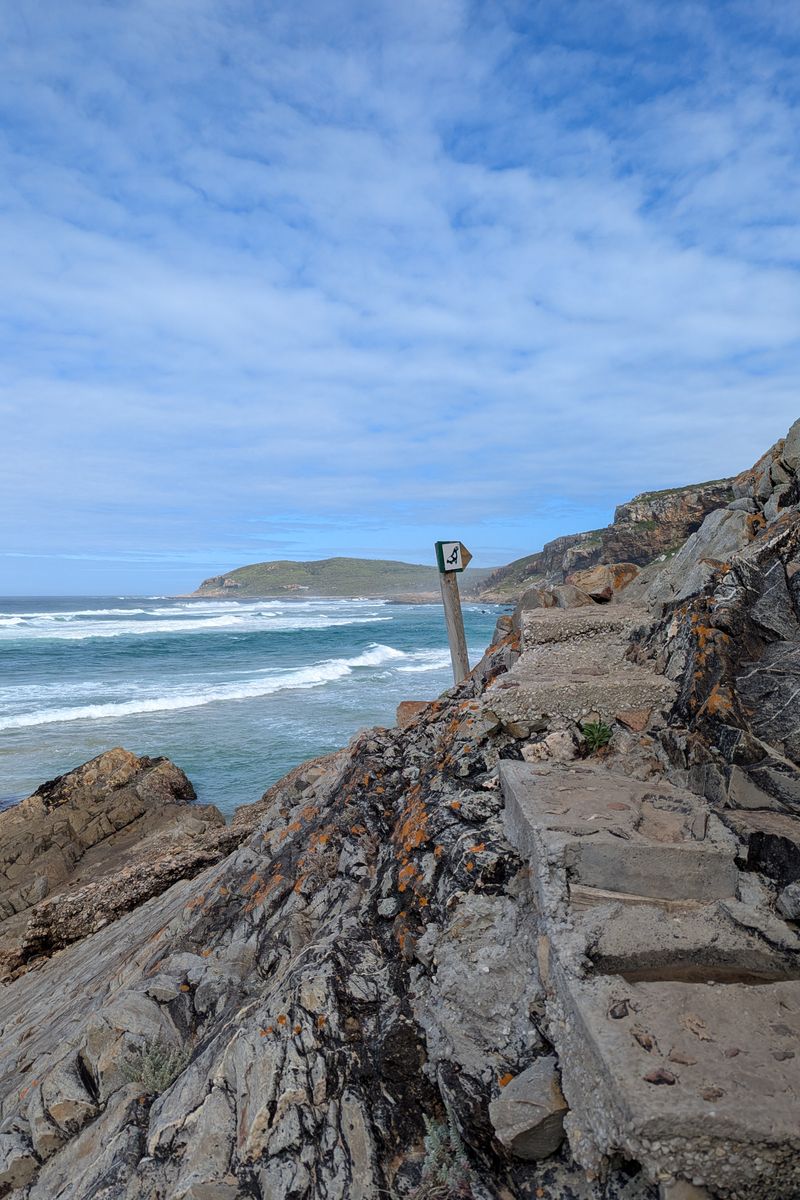
This is your destination guide for South Africa.
This is your destination guide for Garden Route
📍 Part of South AfricaA forest-and-coast drive on the N2 — gorges, lagoons, oysters, and the world's highest bungee.
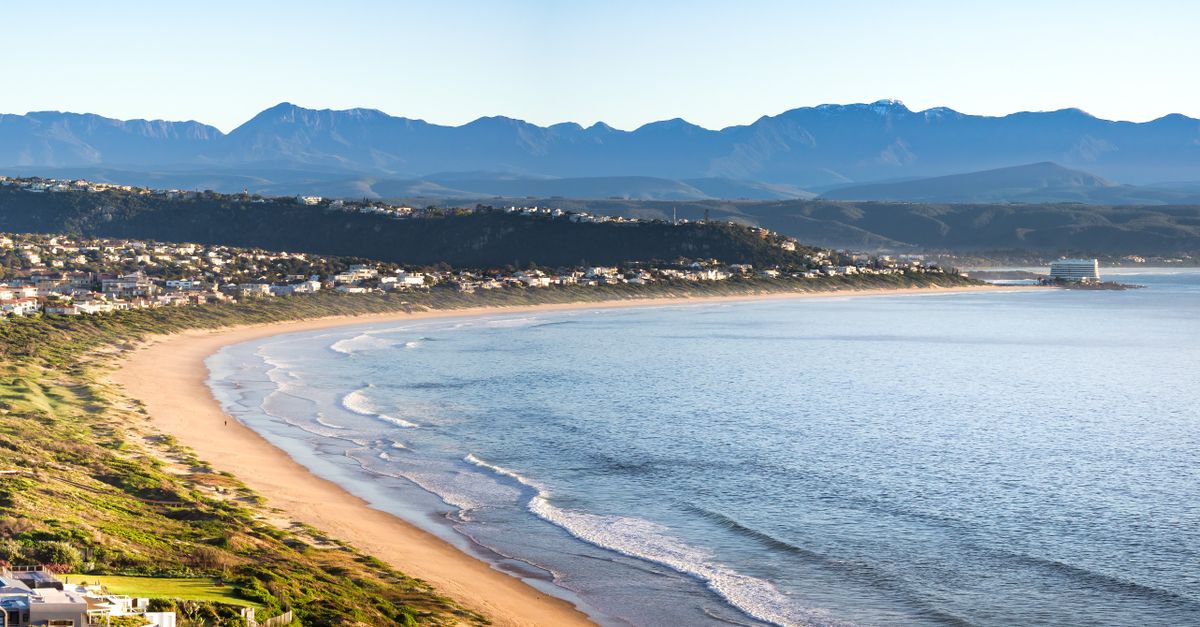

The reality: You're driving east out of Mossel Bay on the N2. The land lifts, the indigenous forest closes in on the left, the Indian Ocean opens on the right, and then the road drops you across a gorge you didn't see coming. An hour in you stop at Sedgefield because a lagoon appeared. This keeps happening. That's the Garden Route — it's a route, not a town.
Most people get this wrong. They book five nights in Knysna, do two day-trips, and call it the Garden Route. The real thing is roughly 300 kilometres of coast and forest between Mossel Bay and Storms River, and the mistake is staying in one place. The other thing nobody warns you about: it's green for a reason. The southern Cape catches weather off two oceans, so you can get four seasons in an afternoon, in February. Pack a fleece even in summer.
Fly into George, rent a car at the airport, and give it four or five days minimum. Drive slowly. Stop when something appears — it will, every twenty minutes. The Garden Route rewards the people who treat the road as the point, not the gap between hotels.
The Garden Route's coast doesn't do long flat sand. It does gorges, lagoons, and forest that runs right down to the rocks. The water is cool — this isn't the warm east coast — so come for the swim's setting, not its temperature.

Storms River Mouth (Tsitsikamma) — where the river meets the sea under a 77-metre suspension bridge, with a boardwalk through coastal forest to reach it. The headline view of the whole route.
Robberg Nature Reserve (Plettenberg Bay) — a rocky peninsula jutting into the ocean, with a seal colony, whales in season, and three walking loops by fitness. A CapeNature reserve, covered by the Wild Card.
Nature's Valley — a single quiet village at the bottom of the old Bloukrans pass, where forest, lagoon and a near-empty beach meet. The Garden Route before it got busy.
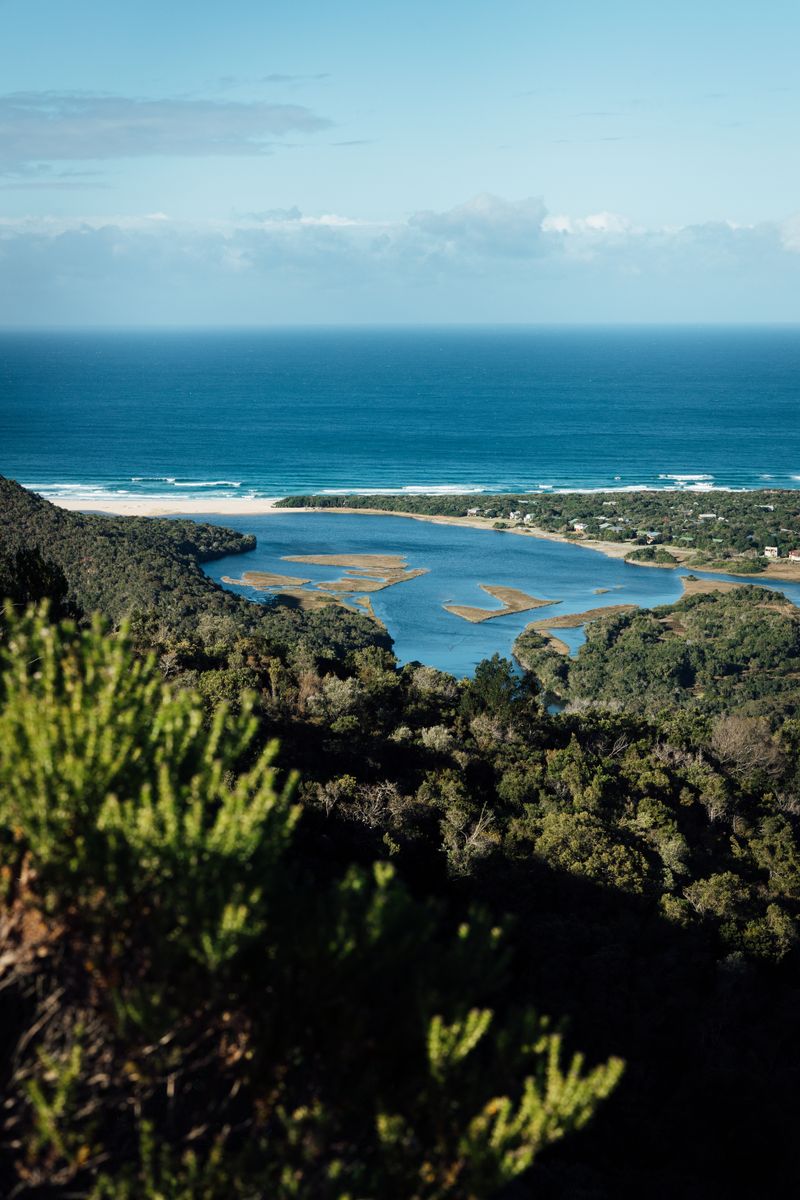
Wilderness — not a wilderness but a town, fronting a string of lakes and lagoons behind the dunes. You paddle here more than you swim.
Buffalo Bay & Goukamma (near Sedgefield) — a long unguarded beach and a quiet estuary, the local antidote to Plett in December.
West to east, each does something different. Don't base in one.

Mossel Bay — the working western gateway. Not pretty, but cheaper, with the Cape St Blaize lighthouse walk and the route's first oysters.
Wilderness — lakes, lagoon, paddling, and forest right behind. Quiet, between George and Knysna.
Sedgefield — South Africa's official "Slow Town." The Saturday Mosaic and Wild Oats farmers' markets are the reason to time a morning here.
Knysna — the centre of gravity. A lagoon town built on oysters and timber, with the Heads framing the water. Busy, and earns it.
Plettenberg Bay ("Plett") — the smart one. Better beaches, higher prices, the whale-watching base, and Robberg on the doorstep.
Storms River village — a tiny forest settlement at the eastern end. You stay here for the adventure: bungee, canopy tour, and the Otter Trail trailhead.
The route that turns a drive into a holiday you feel the next day.
The Garden Route is where South Africa keeps its adrenaline. You don't need to bungee to enjoy it, but the option is right there on the N2.
The Garden Route eats off the water and the farm. No grand cuisine, just good, specific things.

Knysna oysters — the local religion. Wild lagoon-grown and farmed both, cheap by European standards, best straight from the source. The Knysna Oyster Festival takes over the town in early July.
Line fish — kingklip, kabeljou, yellowtail, grilled simply. Ask what came in that day.
Padkos — "road food." Biltong, droëwors, and a koeksister (a sticky plaited doughnut) from a farm stall between towns. This is how locals do the drive.
Plett's wine — a small cool-climate scene makes decent sparkling just inland from the bay. Worth a tasting if you're staying in Plett, not a reason to detour.
There's no month with guaranteed sun — the southern Cape gets weather from two oceans. Pick by trade-off.
February to April (autumn) — the quiet sweet spot. Warm, calmer seas, the summer crowds gone, prices easing. The best all-round window.
September to November (spring) — whales at their peak (Sep–Oct), wildflowers, shoulder prices. The other strong choice.
June to August (winter) — cool and damp, but green, cheap, and uncrowded, with whales arriving and the Oyster Festival in July. The forest is at its moodiest.
December to January (SA summer holidays) — Knysna and Plett fill with South African families, prices peak, and you book months ahead. Hot, lively, expensive.
Rent a car. The Garden Route is the drive. Fly into George Airport (GRJ), central to everything. The N2 is the spine — mostly easy, single-carriageway in long stretches, with a toll near the Tsitsikamma section to keep change for.
The Baz Bus hops backpackers between towns but skips the side-road sights that make the route. Distances are short: George–Knysna about an hour, Knysna–Plett thirty minutes, Plett–Storms River about an hour. Drive on the left.
And to put an old worry to rest: the load-shedding years are over — as of 2026 the power stays on.
Compare rental cars →Each base has a feel. Split your nights across two or three.
Knysna — central, lagoon-side, the most choice, oysters at the door.
Plettenberg Bay — beaches and whales, smarter and pricier.
Wilderness — lakes and quiet, good for paddling, between George and Knysna.
Sedgefield — the slow, local, cheaper base in the middle.
Storms River village — tiny and forested, the eastern adventure base.
Mossel Bay — the cheaper western gateway, light on charm.
The Garden Route is the cheapest "wow" in this guide. A weak rand means a forest, a gorge and a lagoon cost less than a single Amalfi lunch — the splurges here are the activities, not the days.
Prices in 2026 rand (euro at ~R18.8/€1). Dec–Jan and Easter are the spikes; everywhere else is gentle. Activities are the spend, not the nights.
Go if you want an Africa you can drive — indigenous forest, lagoons, a gorge you can bungee into, oysters off the boat, and whales from the cliff, all malaria-free on one tank of petrol. Skip if you came for the Big Five (that's Kruger, two days north) or for guaranteed sun.
Found this useful? Share it.
Still planning?
We don’t stop at “here’s the country.” Real places to stay, what to do, apps that matter, even how to find someone to travel with — plus guides for whatever vibe you’re after, from beach days to wine country to slow weekends. All up top. Spin for somewhere new when you’re done with this one.