This is your destination guide for South Africa.
This is your destination guide for Drakensberg
📍 Part of South AfricaBasalt cliffs, 3,000-year-old San rock paintings, the highest pub in Africa, and the tallest waterfall on the continent.

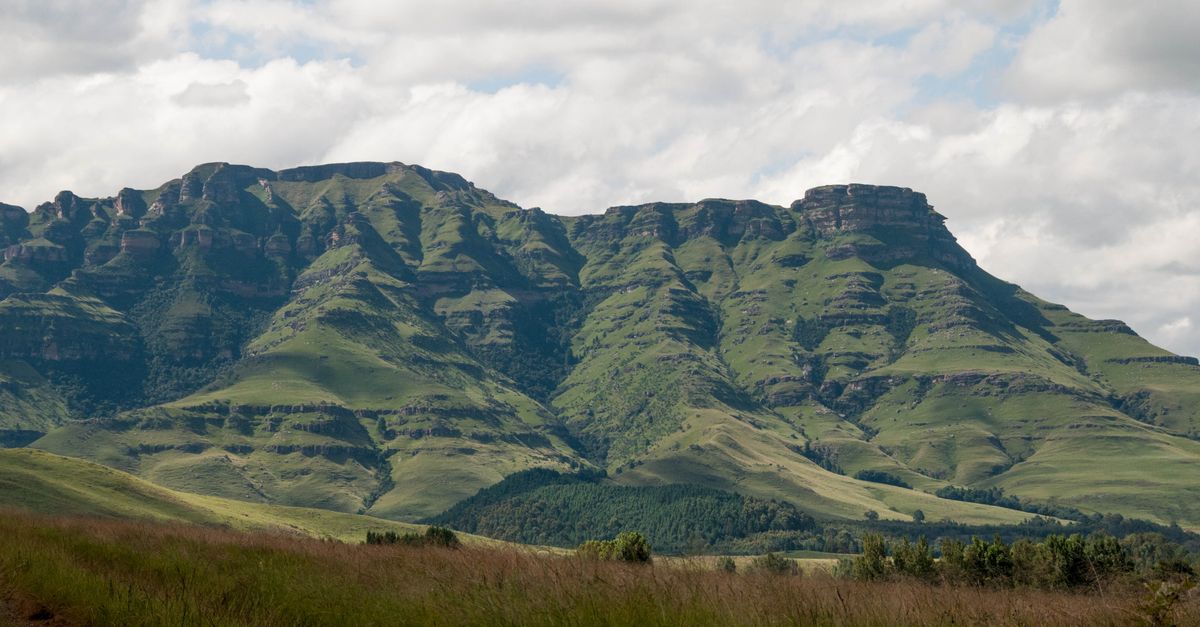
The reality: You're driving west out of the sugar-cane lowlands and a wall builds on the horizon — not peaks, a wall. Basalt cliffs run flat across the sky for kilometres, the rim of a plateau two kilometres up. The Zulu name is uKhahlamba, the barrier of spears. The Voortrekkers called it the dragon's mountain. Both got it right.
Most people fly to South Africa for the Big Five and never come here. That is the point. The Drakensberg is the other South Africa — vertical instead of flat, cool instead of hot, and stitched with the largest collection of rock paintings on the planet. You sleep under a duvet, hike to an escarpment that forms the border with Lesotho, and meet a herd of eland instead of a lion.
There is no single road along the range, so you pick a section — north for the Amphitheatre and the Tugela Falls, central for Cathedral Peak and Giant's Castle, south for the Sani Pass and trout. Hire a car. Drive three or four hours from Johannesburg or Durban. The lowveld safari is somewhere else entirely.
The Drakensberg is not a row of alpine spikes. It is a continuous basalt wall, the edge of the high Lesotho plateau, running roughly 200 kilometres along the border with peaks over 3,000 metres. You don't summit it so much as climb up onto it.

The Amphitheatre — a five-kilometre curved cliff at Royal Natal, one of the most photographed rock faces in Africa. The Sentinel guards its western end, the Devil's Tooth its skyline. This is the wall the Tugela falls down.
Tugela Falls — drops 948 metres in five leaps off the Amphitheatre rim, the tallest waterfall in Africa and, by most counts, the second tallest in the world. Honest warning: in dry winter it can shrink to a thread, so the falls are best after summer rain.

Cathedral Peak — a free-standing 3,004-metre spire in the Central Berg, set apart from the main wall. The day hike to the top is a long, steep scramble; the views from the saddle below are the reward most people stop at.
Giant's Castle — a 3,314-metre massif and the best place to see eland and the bearded vulture. There's a vulture hide you book through the reserve office.
Champagne Castle & Monk's Cowl — at 3,377 metres, Champagne Castle is the second-highest point in South Africa. Both rise above the Champagne Valley, the busiest base in the range.
Locals split the range into three, and so should you. Each has its own gateway towns and its own drive in. They are closer on a map than on the road.

Northern Berg — Royal Natal, the Amphitheatre and the Tugela Falls. Gateway towns are Bergville and Winterton; Witsieshoek, up on the Free State side, is the launch point for the Sentinel chain-ladder hike.
Central Berg — Cathedral Peak, Champagne Valley and Giant's Castle. This is where most of the lodges are, plus the Drakensberg Boys Choir. Winterton is the supply town.
Southern Berg — Underberg and Himeville, the Sani Pass, Cobham and Garden Castle. The quietest section: trout, empty trails, and the road up to Lesotho. Last fuel and a real supermarket are in Underberg.
Just over the line in the Free State, Clarens and Golden Gate Highlands National Park trade basalt for orange sandstone cliffs. Different rock, different park authority, but often tacked onto a northern-Berg trip — the drive between them is short.
The reason the Berg is a cultural World Heritage Site, not just a scenic one.
The Drakensberg holds an estimated 35,000 San paintings across more than 500 shelters — the densest concentration of rock art in the world. Some are 3,000 years old. They are painted in a shaded technique that blends colours into each other, and the recurring figure is the eland, the animal the San linked to the trance dance and to half-human, half-animal "therianthropes." You reach the important sites on foot, with a guide.

Game Pass Shelter (Kamberg) — the panel that let researchers decode the meaning of San art, often called its "Rosetta Stone." Guided walk only, about three hours return from the Kamberg Rock Art Centre. Walks usually leave at 08:00, 11:00 and 12:30, in small groups, led by guides from the local community.
Main Caves (Giant's Castle) — around 500 paintings, an easy 30-minute walk from the camp office, with guided visits through the day from 09:00 to 15:00. The gentle introduction if you only do one.
Battle Cave (Injisuthi) — rare scenes of fighting figures, a longer half-day hike for people who want more than the headline sites.
A walking and riding range, not a ski-lift one. Most of it you do on your own two feet.
The Berg is built for hiking — gentle gorge walks at the bottom, serious multi-day traverses along the top. The weather is the real grading system: an easy trail in the morning sun becomes a different thing under an afternoon storm. Start early, watch the sky, and tell someone your route.
The Berg is not a food destination, and nobody here pretends otherwise. What it does well is mountain food — trout, fire-cooked meat, and farm stalls between the towns and the trailheads.

Trout — rainbow and brown, often straight from the dam you can see from the table. The Southern Berg around Kamberg and Cobham is the heart of it.
Braai and potjie — meat over coals, or a slow stew in a three-legged cast-iron pot. The standard lodge dinner, and better than it sounds in a brochure.
Boerewors and biltong — farm sausage coiled on the grill, and air-dried spiced meat for the trail. Pick both up at any farm stall.
Maluti beer — brewed in Lesotho, poured at the highest pub in Africa at the top of the Sani Pass. The reward at 2,874 metres.
Stop at the farm stalls along the R74 and through the Midlands Meander on the way in — local cheese, bread, jams and biltong. South Africa's wine country is the Cape, a different trip entirely, so don't come to the Berg expecting cellars; come for the pot on the fire.
Autumn (April–May) is the sweet spot. Dry, stable, clear air, cold nights, the summer storms gone and the snow not yet arrived. The best months for the high hikes and the long views.
Spring (September–October) — dry and warming, the grass greening up, wildflowers starting, and the worst of the winter cold behind you. A close second to autumn.
Summer (November–February) — green and warm by day, but the afternoons bring violent thunderstorms and lightning on the high ground. Be up early and off the tops by midday. The upside: this is when the Tugela actually thunders.
Winter (June–August) — cold, frosty, often below freezing at night, with snow on the peaks and crisp clear days. Beautiful and quiet, but the Sani Pass and some high routes can close in snow, and the waterfalls drop to a trickle. Pack proper layers.
Hire a car. There is no public transport into the parks, and the three sections of the Berg are long, separate drives apart via the lowlands. A normal car handles the tar roads and most lodge access, but several trailhead roads are rough gravel — the last 7 km up to the Sentinel car park is steep and broken enough that many people take the 4x4 shuttle from Witsieshoek instead.
The Sani Pass is the one drive that needs a proper 4x4. It climbs about 1,300 metres of gravel hairpins into Lesotho, and the South African border post turns back vehicles it judges unfit — this is not a road for a normal hatchback. It's still a gravel pass for now, though tarring of the final steep section has been approved and may begin soon, which will change the experience.
Crossing into Lesotho at the top needs a passport valid for at least six months. There's a Lesotho tourist levy (around R100 per person), the border posts run roughly 06:00 to 18:00, and a hire car needs a cross-border letter of authority from the rental company (about R650) before they'll let it over. Get that sorted when you collect the car, not at the border.
Choose your base by which Berg you're here for — you won't easily day-trip between them.
Northern Berg (Bergville / Royal Natal) — for the Amphitheatre, the Tugela Falls and the chain ladders.
Champagne Valley — the busiest central base: most lodges, families, the Boys Choir, Monk's Cowl trails from the door.
Cathedral Peak — one big resort under the spire, with walks straight off the property.
Giant's Castle or Kamberg — Ezemvelo's in-park camps, best for rock art, trout and quiet.
Underberg / Himeville — the Southern-Berg base for the Sani Pass, fly-fishing and the fewest crowds.
The Drakensberg is cheap once you're there by European or North American standards — the real cost is getting to South Africa and renting the vehicle, not the days in the mountains. Park fees are a few euros, and a good mountain lodge costs less than a mid-range hotel in Cape Town.
Prices in 2026 rand. Park and conservation fees change every 1 April — check the latest before you go. Holiday seasons (South African school holidays) push lodge prices to the top of the range.
Go if you want big mountain days, the oldest art gallery in southern Africa, and a 4x4 climb into Lesotho for lunch — in a range you'll have more to yourself than any game park. Skip if you came for the Big Five, won't hire a vehicle, or expected guaranteed warm weather two kilometres up.
Found this useful? Share it.
Still planning?
We don’t stop at “here’s the country.” Real places to stay, what to do, apps that matter, even how to find someone to travel with — plus guides for whatever vibe you’re after, from beach days to wine country to slow weekends. All up top. Spin for somewhere new when you’re done with this one.