This is your destination guide for Iceland.
This is your destination guide for Snæfellsnes
📍 Part of IcelandGlacier-volcano, lava caves, lifting stones on a black beach — the whole of Iceland shrunk into one drivable loop.

The reality: Snæfellsnes is the peninsula that points west off the middle of Iceland, and Icelanders call it "Iceland in miniature" because everything the big island keeps hundreds of kilometres apart is here inside one loop. A glacier-capped volcano at the tip. Lava fields and a cave you can walk down into. Cliffs, sea arches, a black church, a seal beach. You can drive the whole ring in a day.
That compactness is the point. On the Ring Road you earn each landscape with three hours of driving. Here you get a seal colony, a black-pebble beach with fishermen's lifting stones, a clifftop path past a stone arch, and the volcano from Journey to the Center of the Earth — all before dinner, all within an hour's drive of each other.
Most people rush it as a day-trip from Reykjavík and see it through a bus window. Give it a rental car and one night in Stykkishólmur or Arnarstapi instead. Drive it clockwise so you hit Kirkjufell for the evening light. Two hours from the capital, and it feels a world further out.
Snæfellsnes doesn't do lie-on-the-sand beaches. Its coast is lava, basalt and black stone, worked into arches and sea stacks by the Atlantic. This is the part you came for.
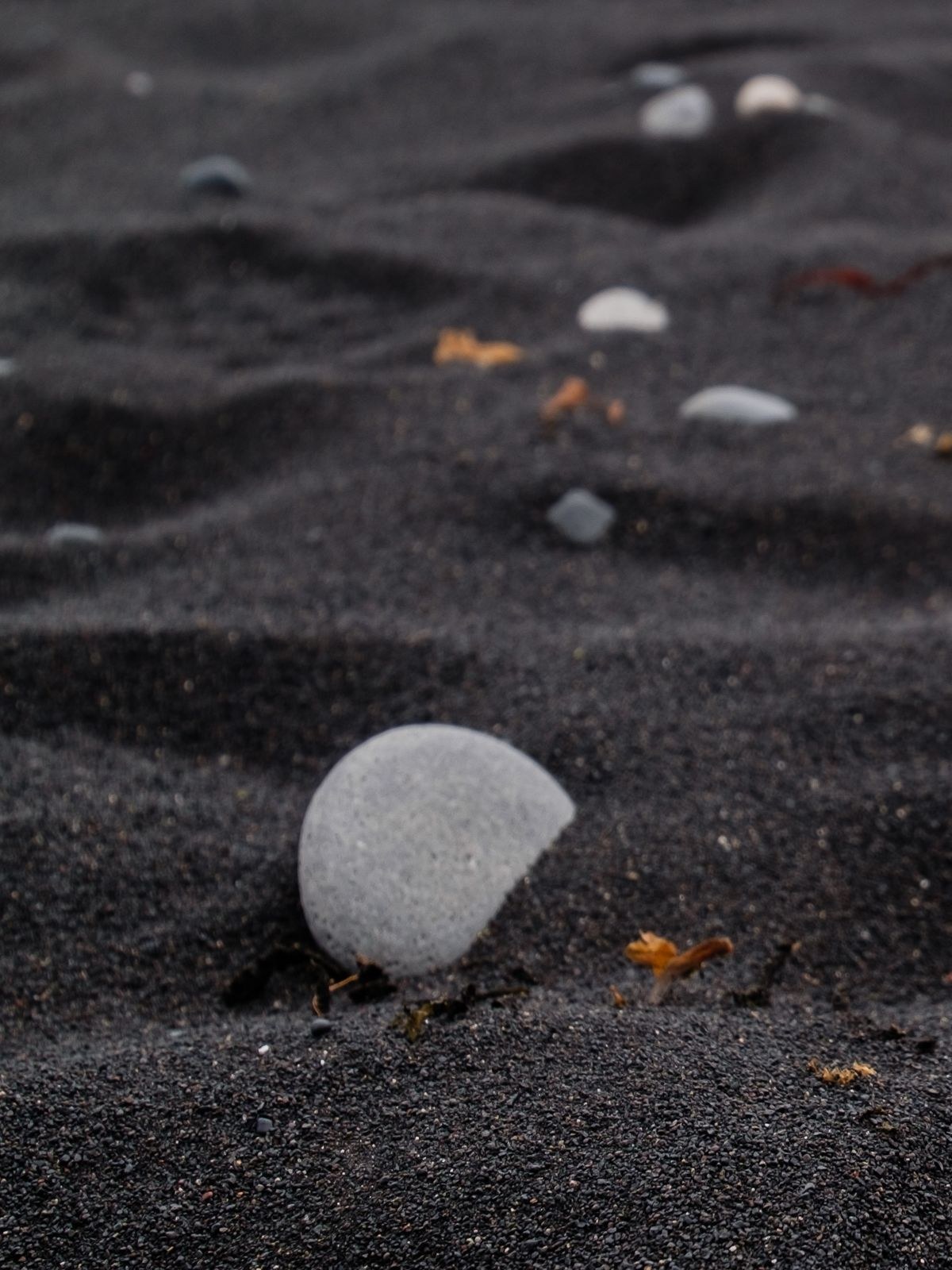
Djúpálónssandur — a beach of smooth black pebbles below the glacier, reached by a short walk down the Nautastígur path through lava. Four lifting stones sit here that fishermen once heaved to prove they were fit for a boat: the lightest, "Weakling", is 54 kg; "Full Strength" is 154. Rusted metal scattered across the beach is what's left of a British trawler, the Epine, wrecked here in 1948 — it's a memorial, not a souvenir. Don't swim; the surf drags.
Ytri Tunga — the odd one out: a rare golden-sand beach with a resident seal colony. Harbour and grey seals haul out on the offshore rocks year-round, best seen at low tide from May to August. Bring binoculars and keep 50 metres back.
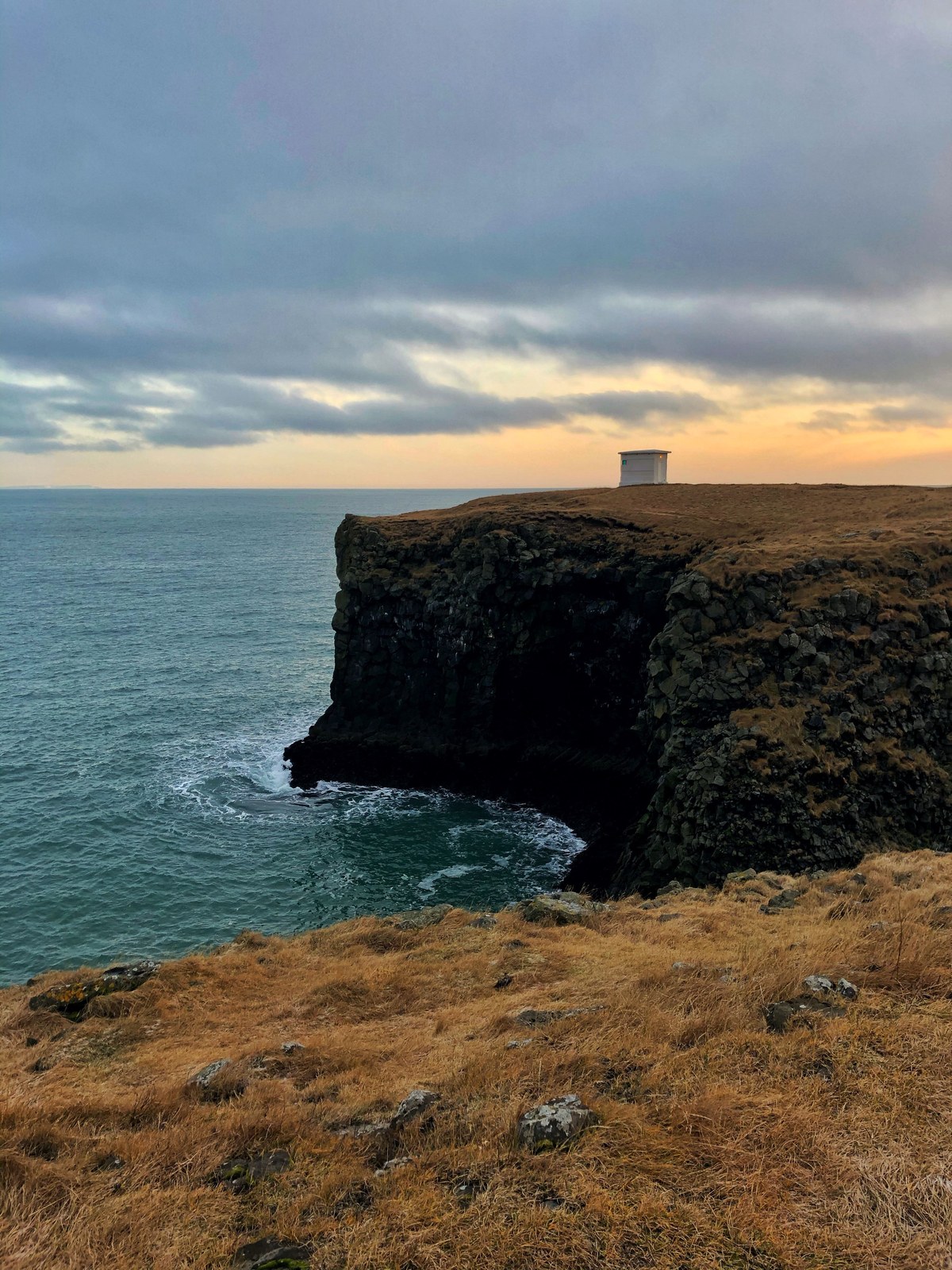
Arnarstapi to Hellnar — a 2.5-km clifftop walk between two tiny fishing hamlets, about an hour, past basalt columns, blowholes, nesting terns and the sea arch Gatklettur. A stone statue of Bárður Snæfellsás — the half-troll said to guard the peninsula — stands at the Arnarstapi end. Finish with coffee and cake at Fjöruhúsið, the café on the cliff at Hellnar.
Lóndrangar — two basalt pillars rising straight out of the lava near the national-park visitor centre, the eroded plugs of an old crater. A five-minute look from the viewpoint is enough.
Búðakirkja — a small black timber church standing alone in a lava field at Búðir, dark against the moss. It's usually locked (weddings and concerts only), so it's a photograph-from-outside stop, not an interior.
Four working fishing towns ring the peninsula. None takes long to see, and they make better bases than a Reykjavík hotel.
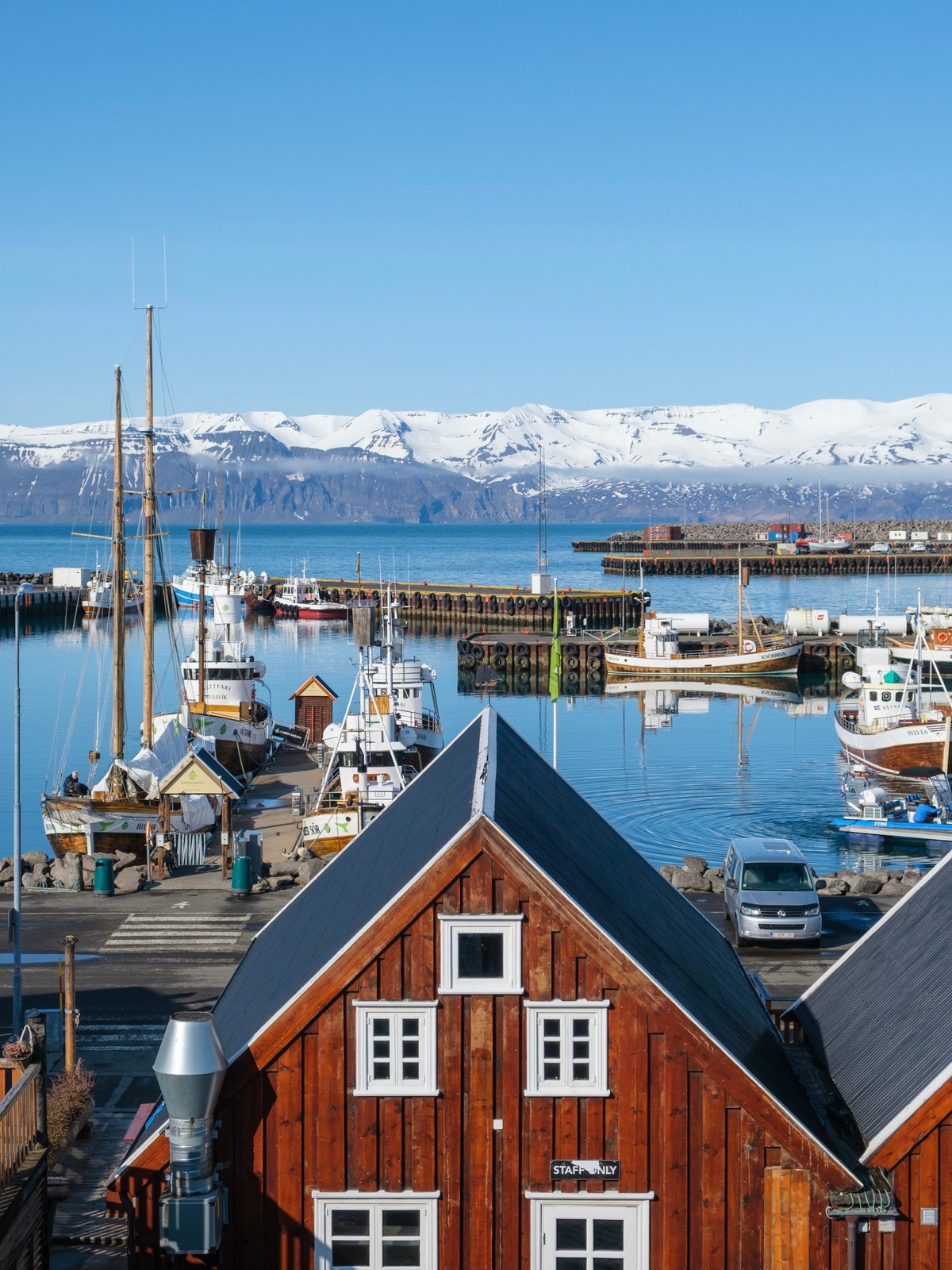
Stykkishólmur — the biggest town and the natural base, a harbour of coloured houses on the north coast. Climb the little Súgandisey islet by the harbour for the view over Breiðafjörður's scattered islands. The Eldfjallasafn volcano museum is here, and the town is the departure point for the Baldur ferry across the bay. Breiðafjörður is mussel and scallop water — eat accordingly.
Grundarfjörður — small, functional, and the base for Kirkjufell ten minutes west. It's the town to sleep in if you want the mountain to yourself at first light, or as the classic foreground for northern-lights photos on a clear winter night.
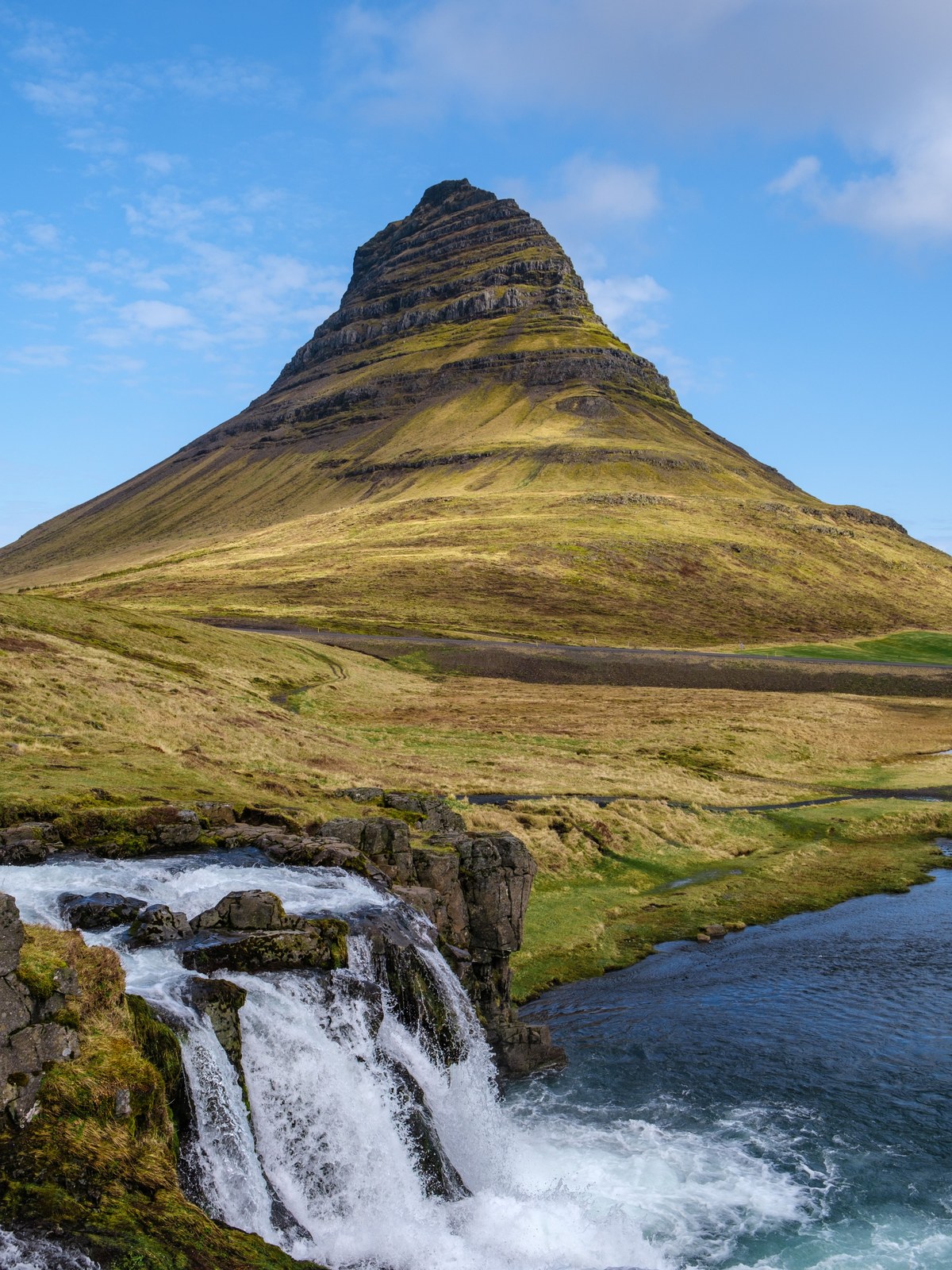
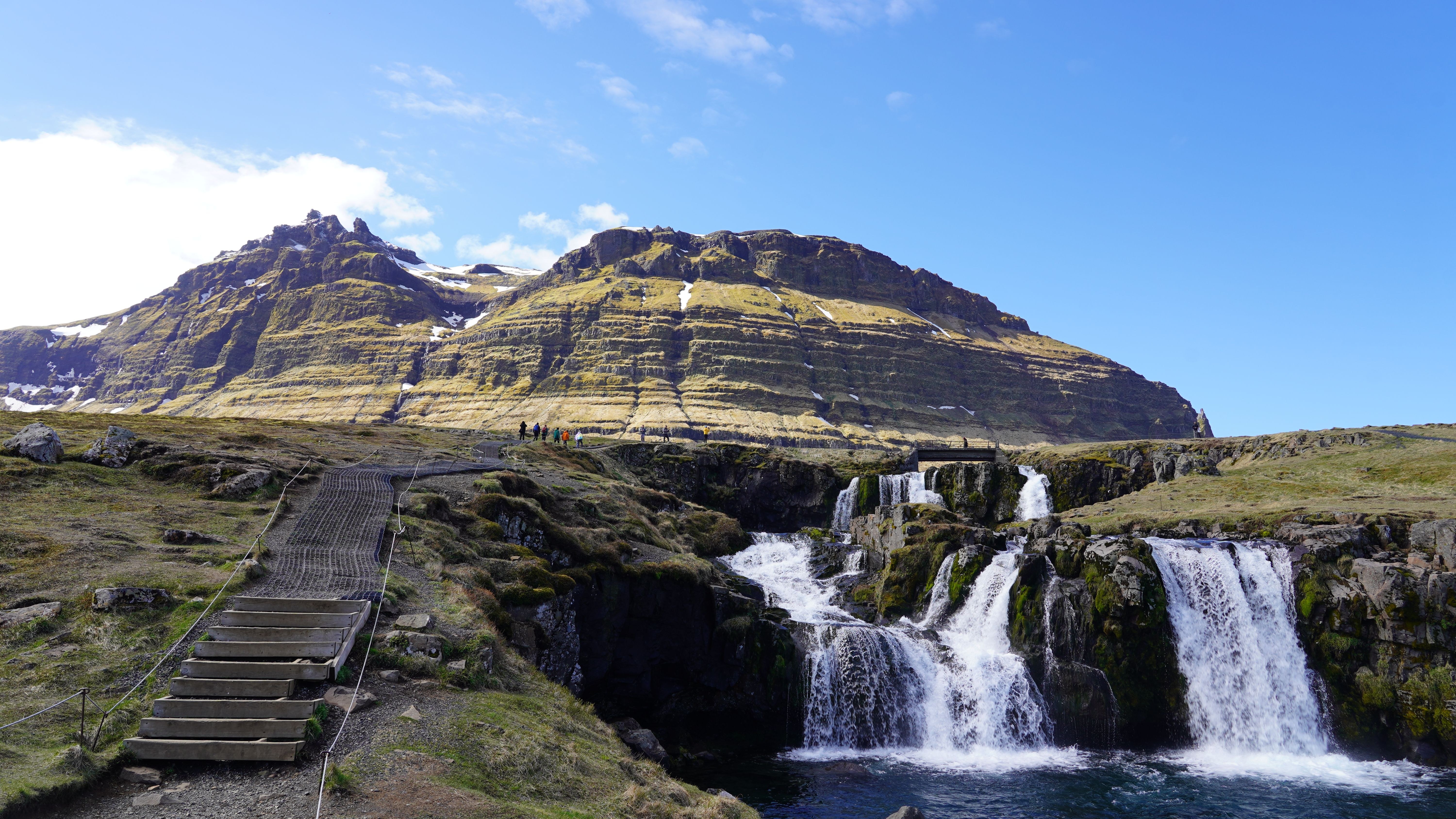
Kirkjufell — the pointed "Church Mountain" beside its little three-step waterfall, the most photographed view in Iceland and the one everyone means by "that Snæfellsnes shot". The viewpoint is a two-minute walk from a paid car park; it fills by mid-morning in summer, so come early or late. The summit climb is steep and only sensible with a guide.
Ólafsvík & Hellissandur — twin fishing villages on the west end. Ólafsvík runs whale-watching trips out into Breiðafjörður; Hellissandur has reinvented itself as Iceland's street-art village, its old houses covered in murals. Both are quiet, and that's the appeal.
Short, varied outings — no expedition kit required for most of it.
The whole tip of the peninsula is Snæfellsjökull National Park — Iceland's only park that runs from mountain to sea, and free to enter. Most of what's worth doing is a walk of an hour or less; the glacier is the one thing you shouldn't attempt alone.
This is fishing country, and Breiðafjörður is some of the richest shellfish water in Iceland. Eat what comes out of the bay and you'll do well.
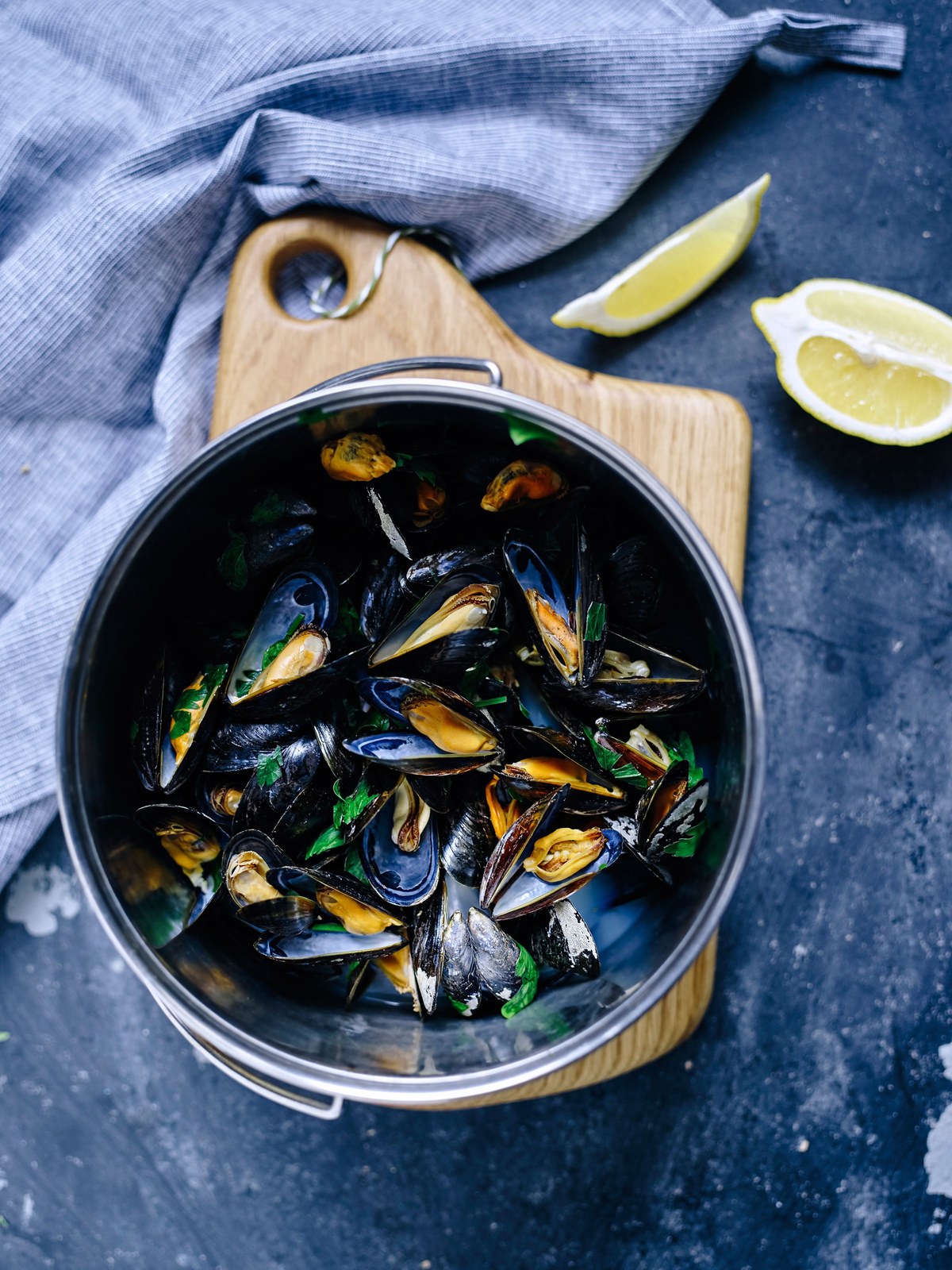
Blue mussels & scallops — Breiðafjörður's specialty, pulled from the bay off Stykkishólmur. In town, Sjávarpakkhúsið on the harbour does a mussel pot that's reason enough to stay the night; Narfeyrarstofa is the sit-down option.
Fresh fish — cod and haddock landed the same morning in Ólafsvík, Grundarfjörður and Arnarstapi. Plainly cooked, and better for it.
Icelandic lamb — free-grazed on the peninsula, the reliable non-fish plate on every menu.
The dare: hákarl — fermented Greenland shark — is cured and sold at the Bjarnarhöfn farm on the north coast, which runs a small museum and hands you a cube to try. It smells of ammonia and tastes worse; Icelanders chase it with a shot of brennivín. You don't have to like it, but Snæfellsnes is where it's actually made.
June to August — the easy season. Long daylight (near-endless in June), roads clear, every café and tour open, seals most active at Ytri Tunga. It's also the busiest: Kirkjufell's car park fills by mid-morning and the day-tour coaches are out. Warm is relative — pack for 10–14°C and wind.
May and September — the sweet spot. Most things open, far fewer people, and September brings the first proper dark evenings and the quietest roads of the good season. Weather is less reliable; that's the trade.
October to April — short days, real wind, and roads that can close without much warning. The peninsula is at its most dramatic under snow, but you'll want a 4x4, winter tyres, and the habit of checking road and weather forecasts before every drive. The Baldur ferry runs a reduced winter timetable.
One local note: the tip of the peninsula catches its own weather off the glacier. It can be still in Stykkishólmur and blowing hard at Djúpálónssandur twenty minutes away.
Rent a car. The loop is the experience, and the good stops sit at the ends of short side-roads no bus takes. In summer a normal 2WD handles the whole ring (Routes 54 and 574); the only place you need a 4x4 is the rough track up towards the glacier. In winter, take a 4x4 regardless.
Drive it clockwise from Reykjavík (about two hours to the peninsula) and you'll reach Ytri Tunga and the south cliffs first, the glacier tip around midday, and Kirkjufell for the evening light. Anticlockwise works too — you just meet the crowds head-on.
The Baldur ferry crosses Breiðafjörður from Stykkishólmur to Brjánslækur in the Westfjords in about 2.5 hours, with a summer stop at the tiny island of Flatey. It's the shortcut north if you're carrying on to the Westfjords — book a car space ahead, and check the current timetable, which thins out in winter.
Buses and tours — public buses reach the main towns but not the sights. Without a car, a guided day tour from Reykjavík is the realistic option, with the compromises that come with it.
One night on the peninsula turns a rushed day-trip into a proper visit. Pick a base by what you want to wake up next to.
Stykkishólmur — the most to do after dark: harbour restaurants, the ferry, the widest choice of rooms.
Grundarfjörður — for Kirkjufell at first light, before the car park fills.
Arnarstapi or Hellnar — for the south cliffs and the glacier on the doorstep; small guesthouses and a hotel, quiet at night.
Búðir — Hotel Búðir by the black church, a single upmarket country hotel out in the lava field for a splurge.
Ólafsvík / Hellissandur — cheaper and plainer, handy for the west end and whale trips.
Snæfellsnes costs about what the rest of Iceland does — which is to say, a lot. The real budget is fuel, a rental car and the odd parking or cave-tour fee; most of the sights themselves are free.
Prices in 2026 ISK; divide by roughly 150 for euros. Rooms drop 25–35% outside July and August.
Go if you want Iceland's full range — glacier-volcano, lava tube, cliff walks, a seal beach and a black church — packed into a loop you can drive in a day. Skip if you only came for the Kirkjufell photo, or need a beach you can actually swim off.
Found this useful? Share it.
Still planning?
We don't stop at "here's the country." Real places to stay, what to do, apps that matter, even how to find someone to travel with — plus guides for whatever vibe you're after, from beach days to wine country to slow weekends. All up top. Spin for somewhere new when you're done with this one.