This is your destination guide for North Macedonia.
A drowned church, a walnut iconostasis and North Macedonia's highest mountain — in one park most visitors drive past.
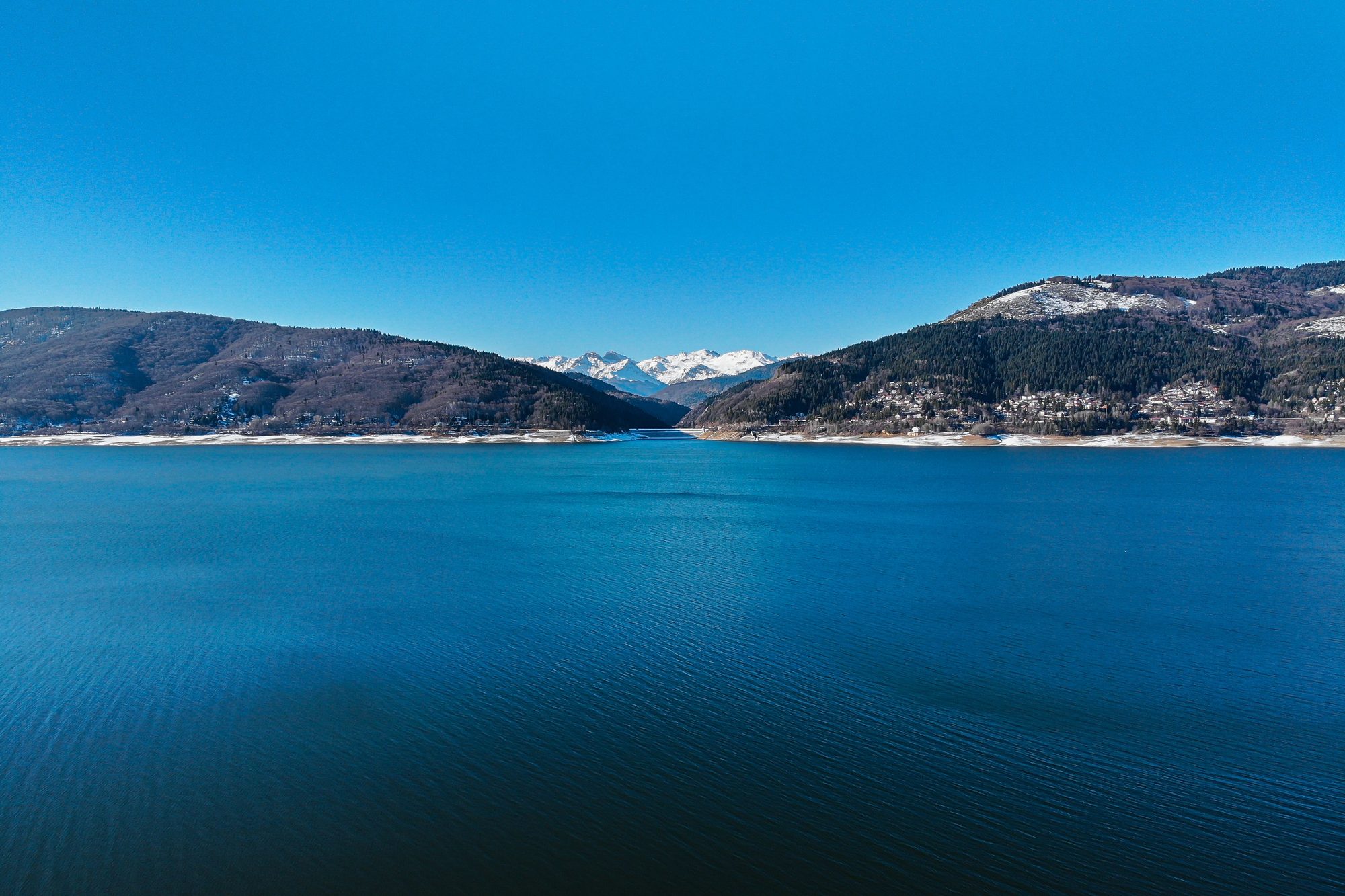

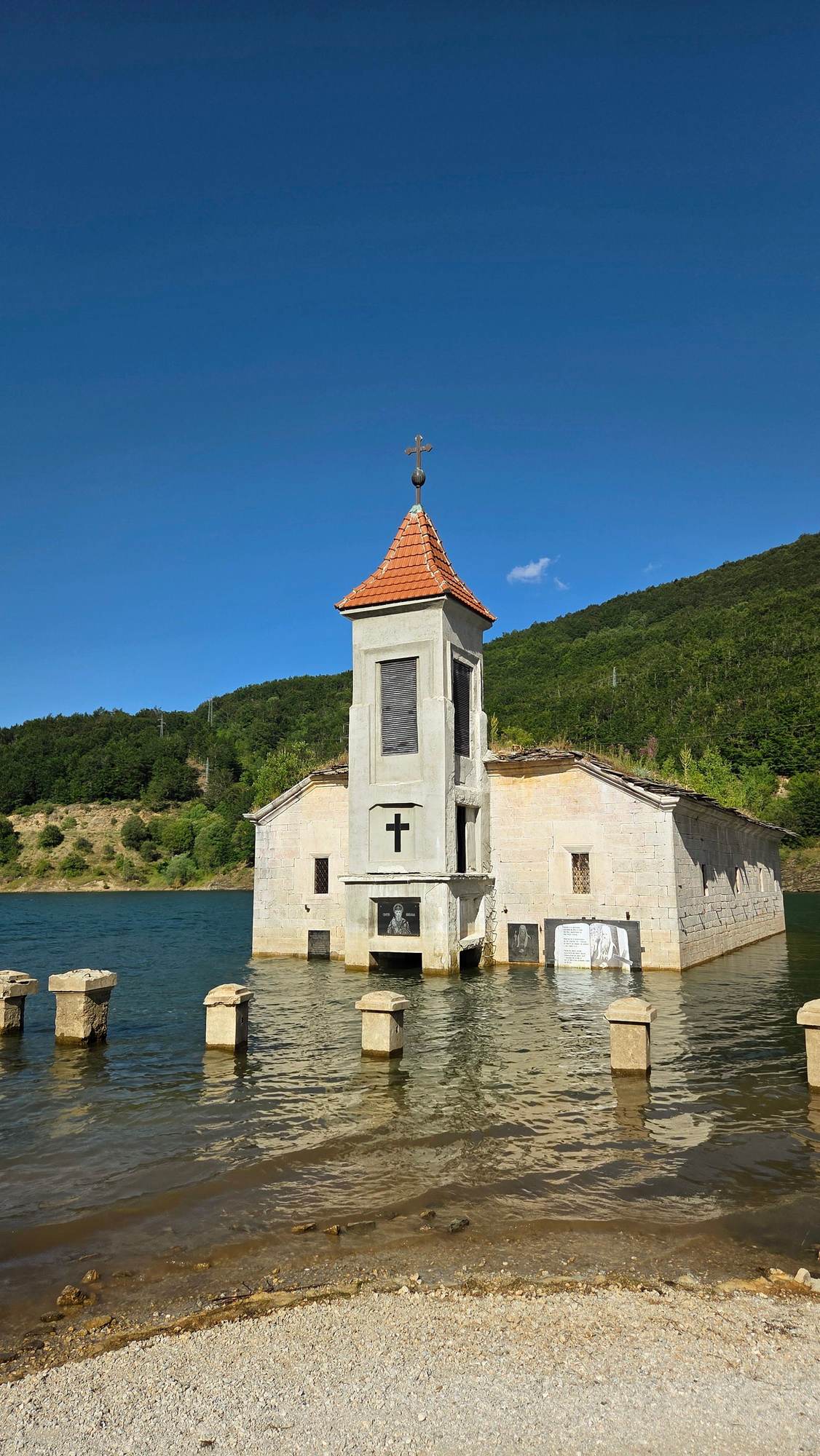
The reality: You drive west out of Skopje, past Gostivar, and the road climbs into the mountains. Then the water opens up: Lake Mavrovo, a reservoir that flooded part of a village in the early 1950s. Near the shore, the bell tower of St Nicholas sticks out of the water — or, in a dry summer, the lake pulls back and you can walk up to it.
That's Mavrovo: North Macedonia's largest national park, 731 square kilometres of mountains on the Albanian border, with the country's highest summit, Korab, at 2,764 metres. Most visitors know Ohrid and Skopje. Far fewer turn off the main road to come up here.
The rest is the Radika valley: a river road south through a gorge, a monastery whose tradition reaches back to 1020, stone villages where a wedding draws thousands every July, and the core of the Balkan lynx's last population. Bring hiking boots and a car. Leave the itinerary loose.
Mavrovo has two halves. Up top, a high plateau with an artificial lake and the ski slopes of Bistra. Below, the Radika river cutting south through a gorge towards Debar. Most people see only one. See both.
Lake Mavrovo — the largest artificial lake in North Macedonia, created when the valley was dammed in the early 1950s. Walk the shore in the late afternoon and watch the light change on the water and the ski slopes above it.
St Nicholas church — built in 1850 for the village of Mavrovo and flooded in 1953 when the lake filled. Depending on the water level it stands half-submerged or fully on dry land. In dry summers you can walk right up to it. Nobody can tell you in advance which version you'll get.
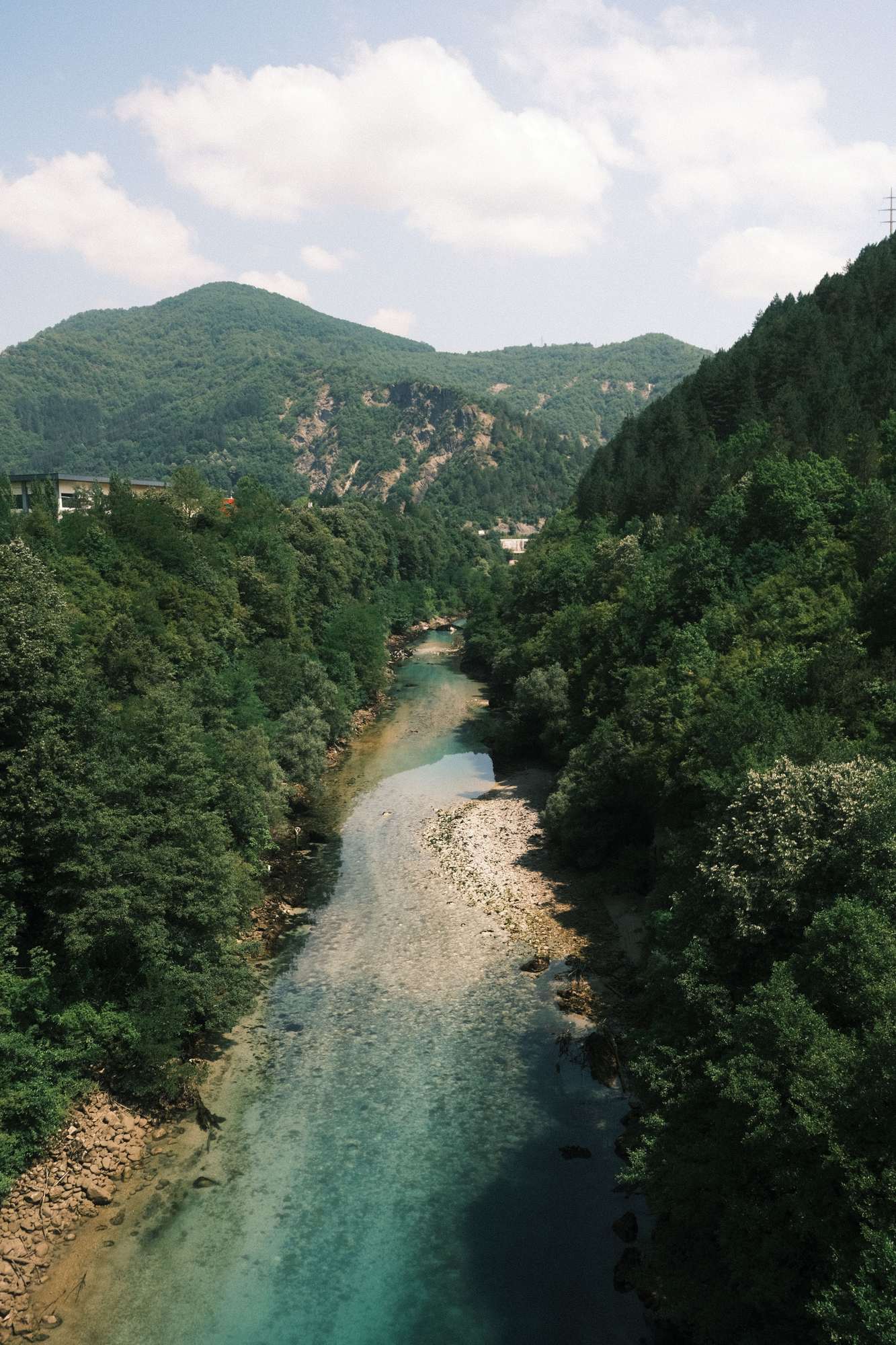
The Radika valley — the road south towards Debar runs down the Radika past the village of Rostuše and Bigorski monastery. Pull over often.
Duf waterfall — a forest trail from the village of Rostuše leads up to it. Allow about an hour each way at an easy pace, and go in spring or early summer, when there's water.
Glacial lakes — the park has 14 permanent ones, most of them high on Korab and Dešat. You won't drive to any. That's the point.
The Mijak villages here are small and quiet now. What's left is stone architecture, a monastery that outshines most city churches, and one weekend a year when the crowds arrive.
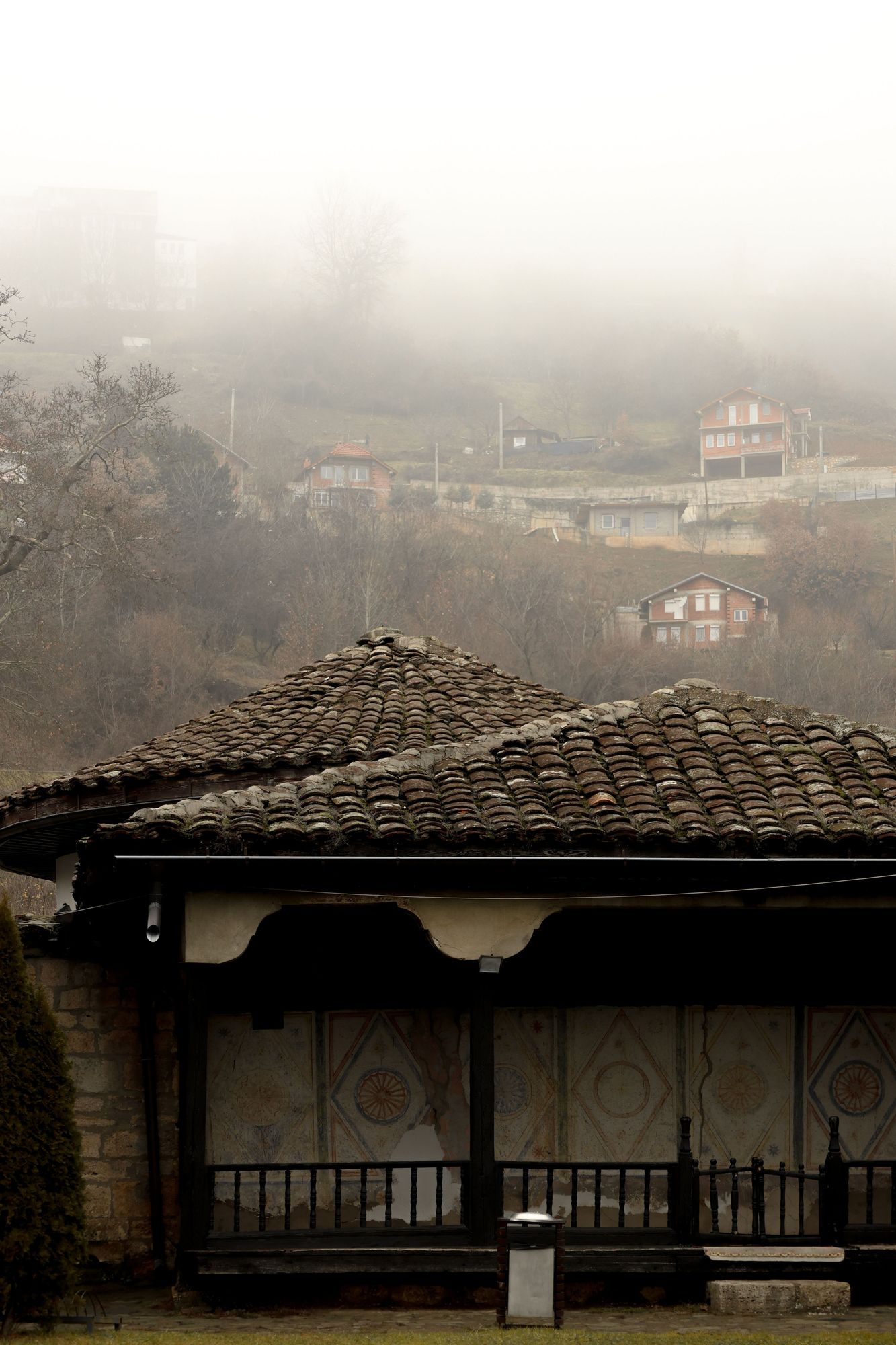
Galičnik — tall stone houses on a bare slope of Bistra. The 2021 census counted 48 residents. On the weekend nearest Petrovden (St Peter's day, 12 July), the village stages the Galičnik Wedding — a festival since 1963, and since 1991 with a real couple marrying in the old ritual. Drums and zurna pipes lead the processions; thousands come to watch.
Lazaropole — the other big, old Mijak village of the region, quieter than Galičnik outside festival weekend.
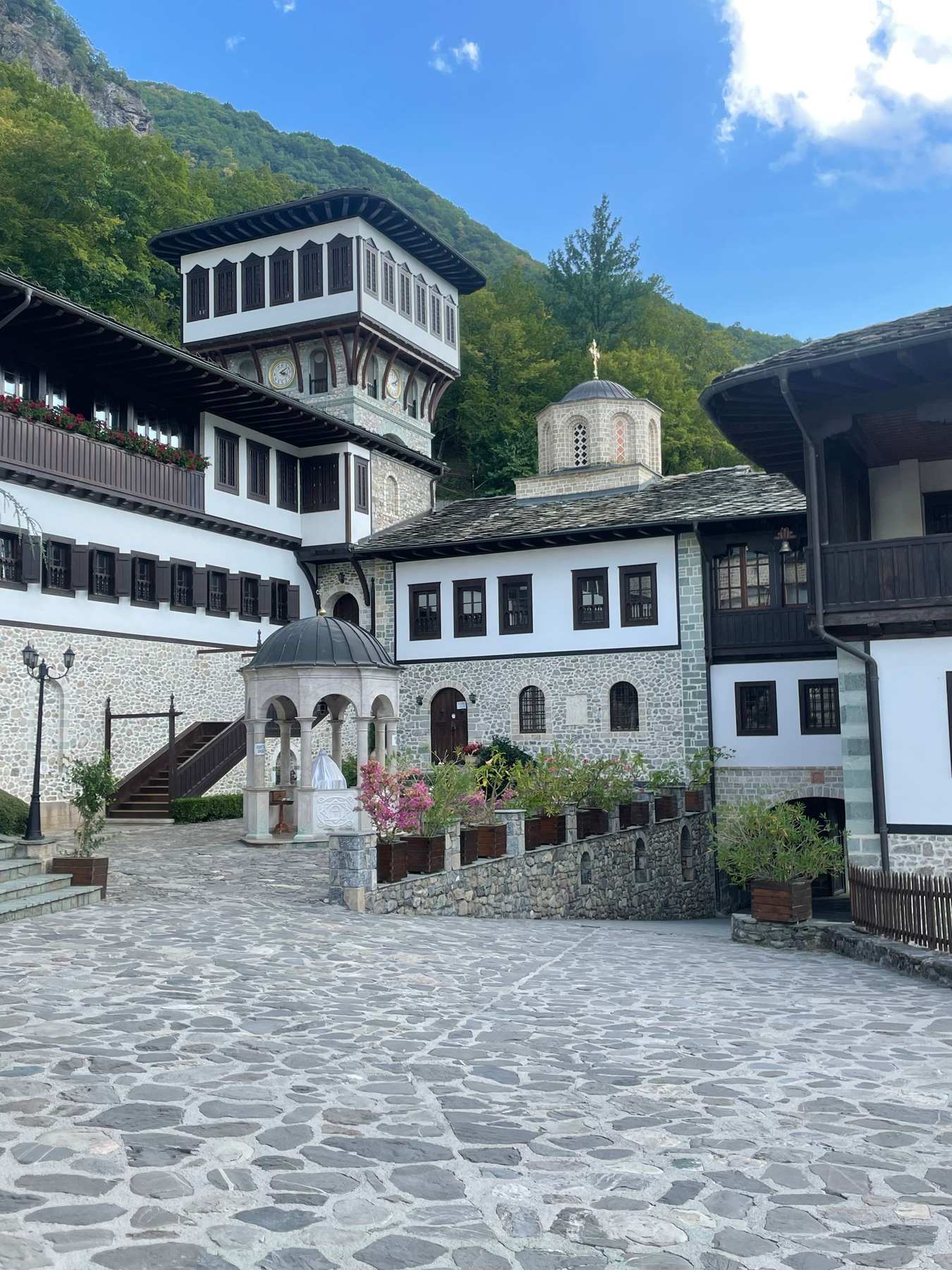
Saint Jovan Bigorski — the monastery above the Radika road. Tradition dates its founding to 1020 and says an icon of St John the Baptist appeared floating above a spring — the springs still run beneath the church. The reason to stop is the iconostasis: carved in walnut around 1830–1835 by Mijak masters including Petre Filipovski-Garkata and Makarije Frčkovski, with hundreds of human and animal figures.
The 2009 fire — on 30 September 2009 fire destroyed the monastery's older living quarters. The church came through, iconostasis and all, and the wings were rebuilt in the old style. The walls are new; the carving is not.
For people who like a mountain without a cable car to the summit.
Trail marking is patchy and services are thin. That's the trade. You get forest, high pasture and a summit on the border, often without meeting anyone. Download offline maps before you go.
This is shepherd country. The menu is short and seasonal: sheep's cheese, slow-baked beans and whatever the garden gave that week.
Galičnik cheese — the village is known for its sheep's cheese and kaškaval, from flocks grazed on Bistra. Buy it where it's made if you get the chance.
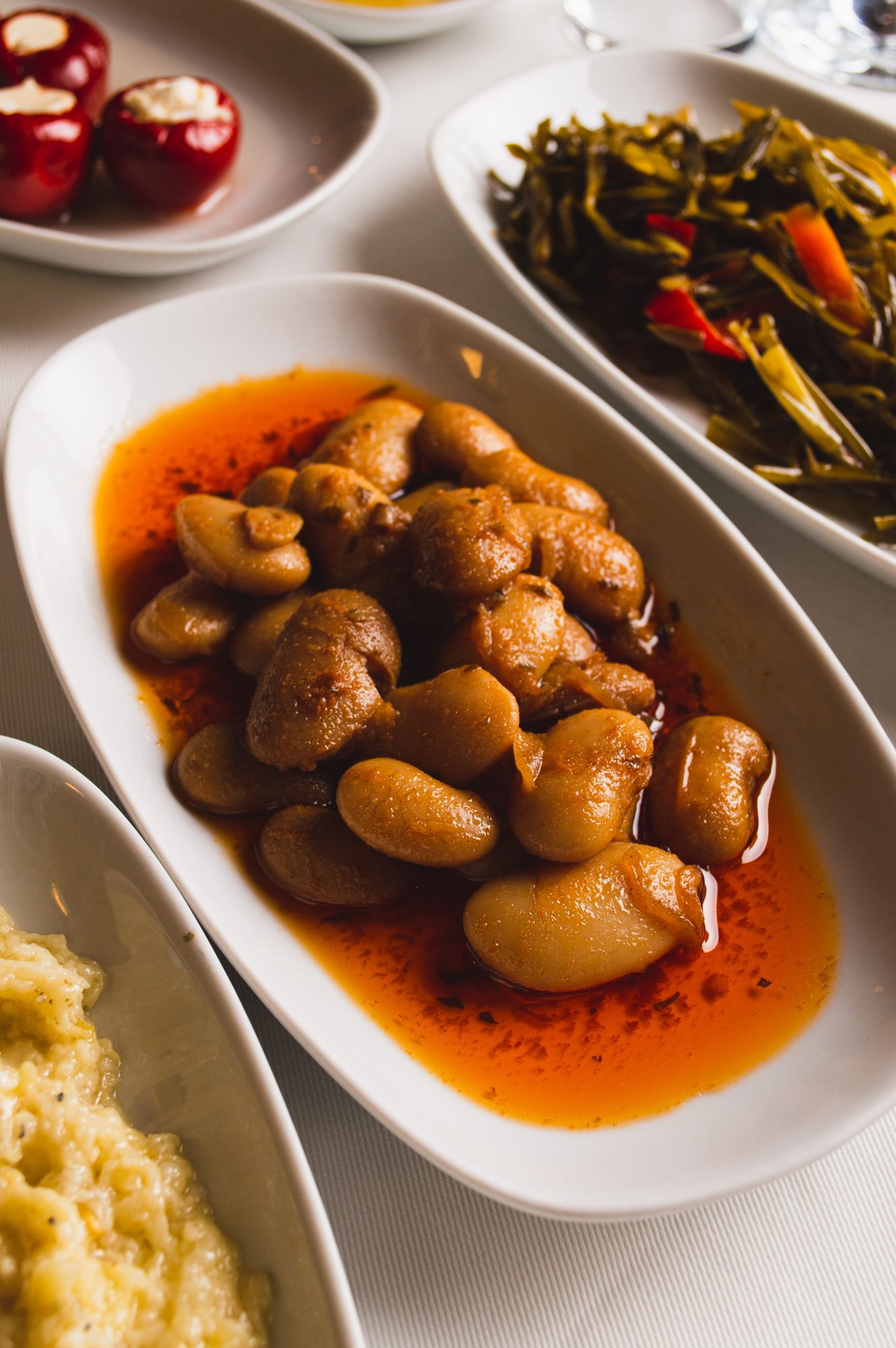
Tavče gravče — white beans baked in an earthenware pot with onion and red paprika. The national dish, and the best thing to order on a cold evening.
Where to eat: the guesthouses. In the villages, dinner is usually whatever your host is cooking — often the best meal you'll have in the country. Around the lake and the ski area there are hotel restaurants and grill houses. In the Radika valley, there are roadside grill houses along the Debar road.
June to September — the hiking season. High trails are clear of snow, guesthouses are open and the villages have people in them. The Galičnik Wedding falls on the weekend nearest 12 July — book a bed well ahead if you want to be there.
Dry summers — your best chance of walking out to the church of St Nicholas. No guarantees.
October — autumn colour and empty trails. Nights get cold; high routes can get their first snow.
Mid-December to mid-April — ski season on Bistra, snow permitting. The rest of the park goes quiet.
Drive. Skopje is roughly 100–120 kilometres away via Gostivar — about 1.5 to 2 hours. The road south down the Radika passes Bigorski on the way to Debar, and on towards Ohrid. Galičnik and Lazaropole are on narrow side roads; take them slowly.
Buses to Skopje, Debar and Gostivar usually stop at Mavrovi Anovi, so you can reach the park without a car. Getting from the main road up to the villages is another matter — arrange a pickup with your guesthouse.
Winter — carry chains or winter tyres. Side roads to the villages can be snowbound.
Compare rental cars →Two choices: the lake and ski area for convenience, or a village guesthouse for the reason you came.
Mavrovo and Mavrovi Anovi — by the lake and the ski lifts. Hotels and apartments, restaurants within walking distance. The easy base.
Galičnik or Lazaropole — stone-house guesthouses high on Bistra. Home cooking, silence, stars. Book ahead in July.
The Radika valley — closest to Bigorski and the waterfall, and on the road to Debar and Ohrid. Fewer beds, so check what's open.
North Macedonia is one of the cheaper places to travel in Europe, and Mavrovo is no exception. The figures below are Skopje averages. Expect similar prices in the villages, and more at the ski area in peak weeks.
Approximate prices in Macedonian denars, based on Numbeo's figures for Skopje (last updated 8 November 2026).
Go if you want mountains, a walnut iconostasis and a guesthouse dinner in a stone village, with almost no one else around. Skip if you need marked trails, a bus to every door, or a lake you can count on.
Found this useful? Share it.
One new way to travel. Every Thursday.
Not deals or destinations — methods. House sitting, night trains, repositioning cruises, and what each one really costs.
Ever thought of travelling this way?
Caretaking
House sitting’s long version: a lodge, an estate or a ranch that needs someone for a whole season, and sometimes pays for it. The job is the place, not the cat.
Read article →Farm Stays
A few hours’ work a day on a farm, and a bed and dinner at the family table in return. Pick grapes in Portugal in September and again in New Zealand in March.
Read article →Repositioning Cruises
Twice a year cruise ships change oceans, and the crossing is sold cheap to fill the cabins. Two weeks across the Atlantic, six days of open sea, and a whole continent at the end of a one-way ticket.
Read article →👇 Tap one, or just type