
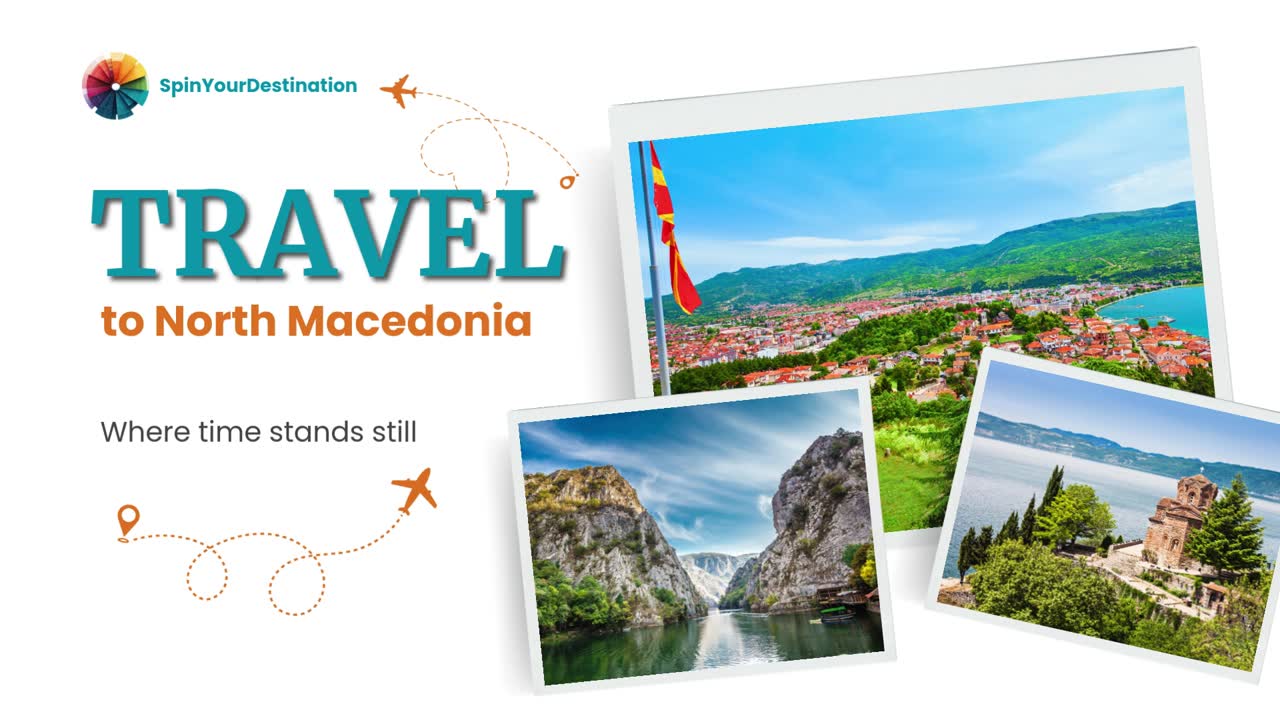
North Macedonia Drink Guide
From the Tikveš vineyards where Vranec has ripened for three thousand years to the Strumica distillery that has baked Mastika for three centuries, the copper coffee kettles of Skopje’s Old Bazaar and a quietly serious specialty roast scene — North Macedonia drinks deep into its own past.
The bottle comes out without a word. Clear as water, but you smell anise the second the cap turns — honey behind it, herbs underneath, a sharper edge waiting. Two small glasses, a wooden board, a square of feta, a slice of melon. Your host fills both glasses level with the rim, lifts one, looks you straight in the eye, and waits. Na zdravje. You meet his glass, you meet his look, you drink. That is mastika. And that is how North Macedonia opens a table, a story, an evening, a friendship.
The country drinks far wider than its one famous spirit, though. The Tikveš valley between Veles and the Greek border holds 70% of the national vineyard — eleven thousand hectares of Vranec, Stanušina, Kratoshija and Temjanika, indigenous grapes you will not find anywhere else in the world at this scale or quality. Tikveš Winery, founded in 1885, is the largest in southeastern Europe; Stobi Winery, opened in 2009 next to the Roman ruins of the same name, is the modern benchmark. Demir Kapija, the southern entrance to Tikveš, is where Popova Kula has spent two decades rescuing the indigenous Stanušina grape from the brink of disappearance.
Above the vineyards sits Skopje — a wine bar scene that has finally caught up with the cellars, an Old Bazaar where Turkish coffee is still poured from copper džezve heated on hot sand, and a fast-growing specialty coffee culture along the Vardar river. Pivara Skopje has been brewing Skopsko lager since 1924, and a small craft scene now circulates through the Pivoteka beer salon and a handful of micro-producers. A handful of places tell each piece of the story.
This guide contains information about alcoholic beverages and is intended for adults of legal drinking age in their country. The legal drinking age in North Macedonia is 18 for all alcohol; ID checks are uncommon but may be requested at clubs and hotels.
Wine — The Tikveš Valley
Tikveš is the largest wine region in southeastern Europe outside Greece — an hour south of Skopje, sheltered by mountains, hit by both Mediterranean and continental weather, and home to three thousand years of continuous viticulture. These are the three estates that define the modern Macedonian wine map.
Tikveš — The Vranec Heartland
The Tikveš basin lies between the towns of Veles and the Demir Kapija gorge, on the same latitude as Rioja and Ribera del Duero. Continental winters from the Vardar valley meet Mediterranean summers funnelling north through the gorge; the result is a long, dry growing season that ripens dark, intense red grapes — above all Vranec, the country’s national variety. Three estates — one giant, one modern, one boutique — show the full spectrum.
Key varieties: Vranec · Stanušina · Kratoshija · Temjanika · Smederevka · Žilavka · Prokupec

Tikveš Winery
Kavadarci, Tikveš
The grandfather of Balkan wine. Founded in 1885 in the centre of Kavadarci, Tikveš is the oldest and largest winery in southeastern Europe — today it owns 80% of the Tikveš vineyard and exports to more than thirty countries. The guided tour walks the production halls, the underground barrel cellar eight metres below ground, and a small wine museum. Tastings cover the entry-level Vranec, the prestige Bela Voda and Barovo single-vineyard reds, the Domaine Lepovo boutique line and the dessert Teško Vino. The fine-dining cellar restaurant pairs the wines with traditional Macedonian tave-gravce, ajvar, smoked cheeses and grilled lamb. Pre-book all visits via the website.
⏱ Mon–Sat by appointment · 🍷 Cellar tour + 3-wine tasting; food pairing add-on · 📍 Str. 8-mi Septemvri 5, 1430 Kavadarci · 1 hour drive from Skopje on the A1
More info →
Stobi Winery
Gradsko, Tikveš
Stobi is the Macedonian winery that broke through internationally — opened in 2009 next to the Roman ruins of the same name, where a peacock mosaic from the fourth century gave the winery its bird logo. Architecturally striking, technically state-of-the-art, and uncompromising about estate-grown fruit: all wines come from the 600 hectares of vineyards around Gradsko. The flagships are the premium single-vineyard Vranec Veritas and the Aminta red blend (Vranec, Cabernet, Merlot, Syrah). The cellar tour ends in a tasting room overlooking the 300,000-litre barrique hall, paired with cheese and meat from the Galichnik mountain villages. Combine with a short visit to the Stobi archaeological site next door for the full picture — two thousand years of wine, ten minutes apart.
⏱ By prior reservation · 🍷 Cellar tour, 4-wine tasting, cheese & charcuterie plate · 📍 Avtopat br. 2, 1420 Gradsko · 80 km / 1 hour from Skopje, A1 motorway exit Gradsko
More info →
Popova Kula Winery
Demir Kapija, Tikveš
At the southern edge of the Tikveš basin, where the Vardar squeezes through the Iron Gate gorge, Popova Kula has spent two decades rescuing an almost-extinct grape. Stanušina — an indigenous Macedonian variety nicknamed makedonsko devojçe, “Macedonian girl” — had nearly disappeared in the 1990s as growers ripped out old vines for international varieties. Popova Kula is the world’s only fully licensed Stanušina producer today, bottling it as a light red, a deep-pink rosé and a still white (Stanušina Bella). The estate also makes serious Vranec, Temjanika, Žilavka and one of the country’s best Prokupec wines. The on-site hotel and panoramic terrace look directly over the gorge — an obvious overnight on any Tikveš route.
⏱ Open year-round · 🍷 Vineyard walk, cellar tour, 5-wine tasting, optional lunch · 📍 ul. Marshal Tito 110, 1442 Demir Kapija · 32 boutique rooms with vineyard view, restaurant on site
More info →Wine Bars — Where Skopje Drinks
The Skopje wine scene is still small but increasingly serious — one urban château on the eastern edge of the city, one quietly excellent wine bistro on Mitropolit Teodosij Gologanov. Both pour the country’s best by the glass.
Chateau Kamnik
Vardar valley, Eastern Skopje
Ten minutes out of central Skopje, on the eastern slopes of the Vardar valley, Chateau Kamnik is the urban winery the city deserves. The Malinkovski family planted their first vines in 2004; by 2013 they had won the Decanter World Wine Awards Regional Trophy for Best Red in Central & Eastern Europe. Today the cellar holds the signatures of John Malkovich, Jens Stoltenberg and Alexis Tsipras on its barrels — visitors at the Tasting Room can write their own on a custom bottle. The Wine Tasting Tour walks the 17 hectares of vineyard and the cellar, ends with a flight in the elegant tasting room overlooking Skopje, and can roll straight into lunch or dinner at the Hunter’s Lodge restaurant next door (game specialties, indoor shooting range, four-star hotel rooms if you want to stay).
⏱ Visits by reservation only · 🍷 Vineyard + cellar tour, 4-wine tasting, optional lunch · 📍 Kamnik bb, 1000 Skopje · Hunter’s Lodge hotel + restaurant on site
More info →
Wineberry
Mitropolit Teodosij Gologanov, Centar
A small, focused wine bar and bottle shop on the boulevard Mitropolit Teodosij Gologanov, opened by Jadranka Klarić-Kimovska — one of the country’s few officially recognised wine knights and a working sommelier for two decades. Wineberry is the only place in North Macedonia where the menu is strictly wine, water and coffee, with nothing else to dilute the conversation. The list runs to 150-plus labels: every serious Macedonian winery plus hand-picked bottles from Italy, France, Chile, New Zealand, Argentina, South Africa and Portugal. The bottle shop in the same room sells everything at retail (a 15–20% discount on the bar price). Professional tastings happen most weeks; pair them with a charcuterie board and ask for Jadranka’s short, sharp commentary as you go.
⏱ Mon–Sat 11:00–23:30 · 🍷 By the glass, bottle shop, wine tastings · 📍 Mitropolit Teodosij Gologanov 32-36, 1000 Skopje · Reservations recommended for tastings
More info →🍷 Macedonian Wine Bar Tips
- 🍷 If a wine list says Vranec, order it. It is North Macedonia’s national grape and the variety that wins international medals year after year — deep, plummy, peppery, slightly bitter on the finish. The Tikveš “Bela Voda”, Stobi “Veritas” and Chateau Kamnik “Terroir” are the three benchmark single-vineyard versions
- 🍷 For whites, ask for Temjanika — the indigenous Muscat variety, more aromatic than Italian Moscato, dry to off-dry, perfect with grilled fish or feta-and-pepper salads. It is not yet on most foreign wine lists and travellers consistently rate it the country’s most underrated bottle
- 🍷 Wine in restaurants is poured generously and is rarely the most expensive line on the bill. A glass of decent Vranec is inexpensive; a bottle of premium single-vineyard wine remains modestly priced — about a third of equivalent French or Italian quality
- 🍺 If you want a quick wine flight in the city centre, Wineberry is the only single-purpose bar in town. For a fuller cellar plus food, Forza Wine Bar & Restaurant in Taftalidze (Londonska 12a) stocks 250 labels in a more restaurant-style setting
Know Your North Macedonian Wine
Macedonian wine carries three thousand years of history and a vocabulary that does not appear on most European wine lists. Get the four indigenous grapes and the region names right and the cellar staff will pour you something better.
North Macedonia is the world’s 25th largest wine producer and Europe’s 11th by per-capita exports, but most of the production still goes to the wider Balkans (Serbia, Bosnia, Croatia, Montenegro) rather than western Europe. That keeps prices low and quality-to-cost ratios extraordinary — a top single-vineyard Vranec at the cellar door costs less than half its equivalent Spanish or Portuguese bottling.
Mastika & Rakija — The Spirits of the Table
Mastika is the national spirit — an anise-and-honey grape brandy distilled in Strumica for more than three centuries. Rakija, the wider Balkan family of fruit brandies, is the household drink: every village still has its own still, and every dinner table starts with a small glass.

Grozd Strumica — Strumička Mastika
Strumica, Eastern Macedonia
Mastika has been distilled in Strumica for over three hundred years and the brand from AD Grozd, founded 1953, is the version that became national shorthand. Where ouzo and sambuca are typically built on neutral alcohol, Strumička Mastika starts from a grape distillate — the same base as a serious rakija — before being infused with anise essential oil, bargam honey from the Strumica valley, and a blend of local aromatic herbs. The result is 43% ABV, crystal clear in the bottle, and turns milky white the instant you add ice or water (the “ouzo effect”). The classic order: Mastika so meze — a small chilled glass alongside fresh tomatoes, white cheese, watermelon in summer. Bottles are sold in every supermarket and decent grocery in the country; the AD Grozd site lists the full range plus the company’s 70-year history.
⏱ Buy in any Macedonian supermarket · 🍸 Drink chilled, with ice and water, as an aperitif before meze · 📍 AD Grozd, Strumica · Family-friendly seasoned with melon, feta, fresh herbs
More info →
Enoch Winery & Distillery
Kavadarci, Tikveš
Rakija is the Macedonian household drink — almost every family with rural roots still bakes a few hundred litres a year from a wood-fired copper still — and a small number of licensed family producers have pulled the tradition into the premium spirits world. Enoch, in the heart of Kavadarci, is one of the cleanest examples: a small family operation with vineyards and a distillery on the same property, tracing its lineage back to 1972 across four working generations. The house specialty is pure Macedonian grape rakija, both single- and double-distilled (the double version is smoother, more polished), aged following exclusive family recipes. Enoch also makes its own wines under the Sevda, Vranec Vézir, Merlot Zograf and Sauvignon Blanc Koprina labels — several of them medal-winners at international competitions. Order online or contact the family directly to arrange a tasting visit.
⏱ By prior arrangement · 🍸 Single- and double-distilled grape rakija + estate wines · 📍 ul. Gore Brushanski 9, Kavadarci · Phone +389 71 250 907 · In the heart of the Tikveš region
More info →Careva Distillery, near Ohrid
Klimeštani village, near Ohrid
Most Macedonian wine tourism points at Tikveš in the east. This goes the other way, into the hills above Ohrid, to a family that makes both rakija and wine at home.
- Guided walk through the distillery and wine cellar
- A rakija tasting and three homemade wines
- Meze platter, homemade coffee and a traditional dessert
Know Your Mastika & Rakija
Two spirits, one centuries-old culture. Knowing the basic distinctions makes a Macedonian table much easier to read — and means you order the right thing before, during and after the meal.
Mastika and rakija are not interchangeable. Mastika is an aperitif, drunk specifically before the meal alongside meze; rakija can open or close a meal, or appear with coffee in the late afternoon. Wine arrives with the food itself. A traditional Macedonian feast will move through all three over the course of an evening — rarely in the same glass.
Beer — Skopsko and the Craft Wave
Skopsko has been the national lager since 1924 — brewed in the same Skopje brewery, holding 64% of the domestic market, and serving as the default beer in every kafana, restaurant and football stadium. The craft scene is small but real, anchored by a handful of micro-producers and the country’s only dedicated beer salon.

Pivara Skopje — Skopsko
Gazi Baba, Skopje
Two Czech engineers, Viktor Cajs and Karel Husnik, started construction of a brewery on the Skopje–Niš railway line in 1922; the first glass of beer was poured in 1924 according to an old Czech recipe, with hops, malt and the local Skopje well water that has defined the taste ever since. A century later, that same beer — SKOPSKO — is the national brand. The brewery sits on a 32,000-square-metre site in Gazi Baba and pours roughly forty-six million litres of beer a year. SKOPSKO is a clean, well-made European pale lager at 4.9% ABV, has collected Monde Selection gold medals across more than a quarter century, and is the default order in every restaurant and kafana in the country. The brewery itself does not run public tours, but the brand and its history are documented on the Pivara Skopje site — and the beer is on tap or in bottle absolutely everywhere.
⏱ Beer available nationwide · 🍺 Pale lager 4.9% ABV + Gorsko, Skopsko Strong and seasonal specials · 📍 Pivara Skopje AD, ul. 808 br. 12, 1000 Skopje · Brewery not open for public tours
More info →
Sakam Pivo — Pivoteka
Centar, Skopje
Sakam Pivo (“I love beer”) is the specialised beer shop and tasting salon that has carried Macedonia’s small craft scene on its shoulders for two decades. The Pivoteka — the country’s only dedicated “beer library” — is a curated bricks-and-mortar bottle shop and tasting space that pairs every serious Macedonian craft producer with the best European microbreweries: Belgian Petrus sour ales, German Camba, Austrian Schnabulierer, alongside Macedonian Belleza Brewing, Kurajber, the Bakrevski brothers and other domestic micro labels. The organisers also run BIRARIJA, Europe’s smallest craft beer festival, held annually in Bitola, and a regular Skopje events calendar for new releases, brewer meet-ups and tasting nights. The webshop ships across the country; the salon is the place to taste before you buy.
⏱ Check site for current opening hours · 🍺 Specialist beer shop + tasting salon + events · 📍 Skopje city centre · Stocks Macedonian craft + European imports, ships nationwide
More info →Coffee — From the Bazaar to the Third Wave
Coffee in North Macedonia means two things at once. In the Old Bazaar, copper džezve still bake on hot sand, served Turkish-style with a glass of water and a square of locum. Across the river in Centar and Aerodrom, a new generation of SCA-certified roasters is pulling Skopje into the European specialty coffee map.

EDGE Specialty Coffee
Debarca, Centar Skopje
Founded in 2024 by Nikol (Czech Republic) and Kevin (USA), EDGE was the first Skopje shop to earn SCA — Specialty Coffee Association — certification. The menu is brutally short on purpose: espresso, milk drinks, V60 pour-over, batch brew. No syrups, no flavoured lattes, no unnecessary additives — just coffee. Most of the beans come from Fáther’s Coffee Roastery in the Czech Republic with rotating guest roasters from across Europe. The room is small, calm and bright; the staff will happily walk you through the day’s coffee origin and brew method. The standard order is a long black on filter or a cortado on espresso — both pour cleanly. Closed Sundays.
⏱ Mon–Sat, mornings to early evening · ☕ Espresso, V60, batch brew, milk drinks · 📍 ul. Debarca 13/1-1, 1000 Skopje · Five minutes from the Vardar river walk
More info →
Café Duplo
Aerodrom, Skopje
Duplo opened in Aerodrom in late 2021 with a simple thesis: great coffee can bring people together. Four years on, it is the heart of the Skopje specialty scene — a small ceramic-counter café with a handful of rotating espresso roasts, the now-famous La Marzocco Linea Mini Florentine Edition behind the bar, alternative-milk options on every drink, and a second life as Macedonia’s first mobile specialty cart. The Duplo Pop-Up is the country’s only travelling specialty bar — weddings, festivals, conferences — built from the same beans and the same Linea Mini. Sister projects include a small in-house ceramics line (the cups you drink from are also for sale) and weekend brew courses for amateurs. Aerodrom is a 12-minute taxi or 25-minute bus ride from central Skopje.
⏱ Daily, mornings to early evening · ☕ Espresso, latte, V60, alternative milks, ceramics · 📍 Aerodrom, Skopje · Pop-up cart available for events nationwide
More info →
TIPIKA Roastery
Naroden Front, Centar Skopje
If EDGE is the small specialty café and Duplo the showroom-and-mobile-cart, TIPIKA is the roastery. Tipikalab DOOEL sources, roasts and ships single-origin coffee from a Profitec roaster in central Skopje, with a constant rotation of greens from the best origins: Ethiopia Sidamo Bensa Bombe, Kenya Gicherori, Burundi Kiryama, Colombia Finca La Rochela, Guatemala Huehuetenango, Brazil Diamond, Nicaragua. The flagship Tipika Blend is 70% Brazilian arabica and 30% Indian robusta — chocolate, almond, balanced. Beans are sold whole, ground, or as “Tipika &Gcaron;ezve” for traditional Turkish-style brewing. Delivery across North Macedonia; in-person purchase by appointment from the roastery on Naroden Front.
⏱ By appointment · ☕ Whole-bean, ground, Turkish-grind · 📍 Naroden Front 23/6-13, 1000 Skopje · Country-wide delivery, single-origin rotation
More info →🥃 Good to Know — North Macedonia Drink Tips
- 🍷 The single most local thing you can do at a Macedonian table is open with mastika and meze. Order a small glass of Strumička Mastika, ask for a splash of cold water (it turns milky white), and pair it with a plate of feta, fresh tomato, peppers and olives. This is how a Macedonian dinner traditionally begins
- 🍷 Toast properly. The word is Na zdravje — “to your health”. Meet eyes with everyone you clink, never break eye contact during the clink, and do not put the glass down until the first sip is drunk. Skipping the toast is the only real faux pas at a Macedonian table
- 🍇 The best Macedonian wine is not in Skopje; it is in Tikveš. Hire a car or book a wine-tour day trip from the capital — Tikveš, Stobi, and Popova Kula are within an hour’s drive of each other along the A1 motorway, and each cellar door tasting costs a fraction of equivalent French or Italian experiences. Pair with lunch at the winery restaurant; reserve everything 24–48 hours in advance
- 🍇 Order Vranec for the red, Temjanika for the white, Stanušina if it is on the list. These three indigenous grapes are why anyone visits a Macedonian cellar — international Cabernet, Merlot and Chardonnay are made too, but they are not what the country does best
- 🍺 Beer in a restaurant or kafana defaults to Skopsko at 4.9% ABV. Ask for “malo pivo” (small, ~300 ml) or “golemo pivo” (large, ~500 ml). For craft beer, head to the Sakam Pivo Pivoteka in central Skopje — the country’s only dedicated beer salon, stocking Macedonian craft producers alongside the best European microbreweries
- ☕ Coffee splits into two clean traditions. Tursko kafe (Turkish-style, brewed in a copper džezve on hot sand, served with grounds in the cup and a glass of water) is the bazaar style; specialty coffee in Centar and Aerodrom (EDGE, Duplo, Tipika) is the third-wave alternative. Both are excellent. Both cost a fraction of western European prices
- 🍺 In the Old Bazaar, do not skip Rakija Bar Kaldrma on ulica Kazandžiska. Over fifty varieties of rakija on a wooden bar, mostly homemade or small-distillery, mostly inexpensive by the shot, with live music many evenings. Bring cash — cards are not always accepted in the bazaar
- 🔔 Practical: the legal drinking age is 18 for all alcohol; ID checks are rare but possible at hotels and clubs. The local currency is the Macedonian denar (MKD). Tipping in restaurants and bars: round up the bill or leave 5–10% if you’ve had a long sit-down meal. Most central Skopje bars take cards; the bazaar is still largely cash-only
- 📍 Geography for a weekend: Skopje holds the wine bars, the bazaar coffee, the craft beer, the kafanas. Kavadarci, Negotino and Demir Kapija — the heart of Tikveš — sit one hour south on the A1 motorway. Strumica (mastika capital) is two hours east. For a focused drink weekend, base in Skopje, day-trip to Tikveš, and finish with a kafana evening in the Old Bazaar
Planning Your Wine Trip
Two practical questions every Macedonian wine trip runs into.
Compare rental cars in North Macedonia →
Find hotels in Skopje → · Find hotels in Ohrid → · Find hotels in Bitola →