This is your destination guide for Montenegro.
Water lilies, pelicans and island monasteries on the Balkans' largest lake, with family wine cellars on the slopes around it.

The reality: Lake Skadar is the largest lake in the Balkans, shared between Montenegro and Albania, and most visitors see it for an hour: a boat trip from Virpazar squeezed between Budva and Kotor. That hour is nice. It's also the least interesting way to see the place.
Here's the thing: the lake isn't one view, it's a whole region. Reed beds and lily pads full of birds, small islands with old monasteries, a river that loops through the hills in a famous bend, and wine villages where the family that grew the grapes pours the glass. Montenegro's Lake Skadar is a national park, and it feels like it — slow, green and very quiet.
Give it a night, or two. Sleep in a village, take a boat out at dawn or at sunset when the birds are moving, and drive the narrow road along the southern shore. You'll be surprised how few people you meet.
The lake's size changes with the seasons: it spreads out in the wet months and shrinks in summer, and much of its edge is marsh, reeds and floating plants rather than a clean shoreline.

That marsh is why the birds come. Lake Skadar is one of Europe's most important wetlands for birds, and the Dalmatian pelican — big, shaggy-headed and rare — is its symbol. Their nesting sites are protected, so you watch from a distance — but with a good boatman and binoculars you have a fair chance of seeing them fishing.
In summer the shallow bays turn green and white with water lilies, and the small boats from Virpazar thread through them on channels just wide enough to pass. Herons, cormorants and terns are everywhere.
At the lake's north-west corner, the Crnojević River winds out of the hills in a deep green horseshoe bend. The viewpoint above it, Pavlova Strana, is the most photographed spot in the park, right by the road between Podgorica and Cetinje.
The river runs down to the village of Rijeka Crnojevića, with an old stone bridge, a few riverside restaurants and boats to the lake. Once a busy little trading town, it's now one of the sleepiest, prettiest places in the country.
The lake was once on the edge of empires, and its shores and islands still carry the traces: fortresses, monasteries and stone villages.
Virpazar is the main village and the busiest: a small square, a bridge, a fortress on the hill above, and the jetty where most boat trips start. It's convenient, and lively by day in summer.
Out on the water, small islands carry old Orthodox monasteries — Kom, Starčevo, Beška and Moračnik among them — some still home to monks or nuns. Many boat trips stop at one; dress modestly if you go in. Near Vranjina, the ruins of the Lesendro fortress sit beside the road and railway across the lake, and on the northern side stand the remains of Žabljak Crnojevića, an old fortress-town above the marshes.
On the southern shore, a narrow, winding road runs through villages like Godinje, where old stone houses are built close together, and down to Murići, a small pebble beach on the lake with boats to the islands.
Paddle, walk, cycle — and stop for wine.
Everything here happens at a slow pace, and that's the point.
Lake Skadar is an easy trip from the coast — it's well under an hour from the Budva Riviera. You'll need a national park ticket for boating, fishing and some activities; buy it at the visitor centres or from your boatman.
The lake has its own kitchen: freshwater fish, and wine from the slopes around it.
Carp is the lake's classic fish, often baked with prunes or apples, or smoked. Smoked ukljeva (bleak), a small lake fish, is a local speciality — order a plate with bread and a glass of wine. Eel is on some menus too.
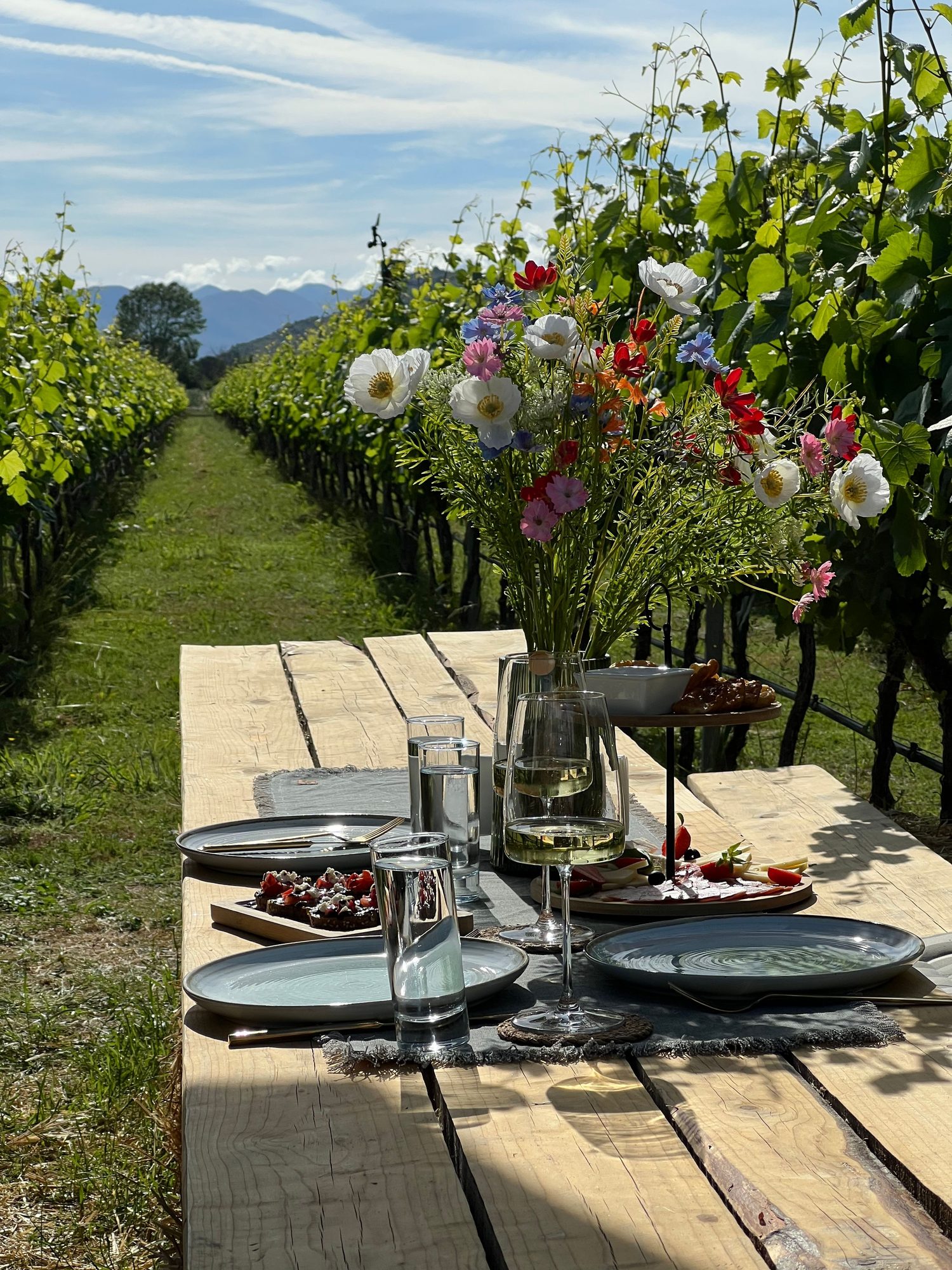
The hills around Virpazar, the Crmnica area, are one of Montenegro's oldest wine regions. Family wineries there make Vranac, the country's dark red, and many open their cellars for tastings. Call ahead or ask your guesthouse; it's often a family meal, not a formal visit.
Many wineries also sell their own loza (grape brandy), honey and olive oil. Buy from them rather than from the souvenir stalls.
April to June is the best time: green hills, high water, birds nesting and migrating, and comfortable temperatures. The lilies start to bloom in late spring.
July and August are very hot around the lake — it's lower and more sheltered than the coast. Go out on the water early or late, and spend the middle of the day in the shade, or in the sea.
September and October are calm and mellow, with the grape harvest in the wine villages and autumn migration on the water. In winter the lake is wild and quiet, many guesthouses and restaurants close, and it rains a lot — but it's the season for wintering birds.
The lake sits between the capital and the coast. Podgorica and its airport are about half an hour from Virpazar by car; the coast at Budva or Bar is under an hour, through a tunnel under the mountains.
Virpazar has a station on the Bar–Podgorica railway line, and buses between the coast and Podgorica stop near the village. That's enough for a boat trip, but not for exploring.
A car makes the most difference here. The villages, the river bend, the wineries and the southern shore are spread out, and there's little public transport between them.
Compare rental cars →There are no big hotels on the lake. You'll stay in guesthouses, small family hotels and wine-estate rooms.
Virpazar — the most choice, the boats at your door, the train station close by.
Rijeka Crnojevića — tiny, quiet and beautiful, by the river. A few rooms only, so book ahead.
The Crmnica wine villages — stay at a winery, eat with the family, and wake up to vineyards.
Murići and the southern shore — the most remote, with a lake beach at the door.
On the coast — visit as a day trip from Budva or Bar if you'd rather sleep by the sea.
Lake Skadar is cheaper than the coast. Guesthouses, home-cooked dinners and wine from the family cellar cost a fraction of what you'd pay in Budva or Kotor.
Prices in 2026 euros. The national park ticket is extra for boating and some activities — check current prices with the park or your boatman.
Go if you want water lilies at dawn, pelicans if you're lucky, and red wine in a farmer's cellar, all an hour from the beach. Skip if you need sand, nightlife or a bus every hour.
Found this useful? Share it.
One new way to travel. Every Thursday.
Not deals or destinations — methods. House sitting, night trains, repositioning cruises, and what each one really costs.
Ever thought of travelling this way?
Repositioning Cruises
Twice a year cruise ships change oceans, and the crossing is sold cheap to fill the cabins. Two weeks across the Atlantic, six days of open sea, and a whole continent at the end of a one-way ticket.
Read article →Home Exchange
Live in someone’s home while they live in yours, and nobody pays rent. Your ordinary flat is somebody else’s month abroad — and points mean the dates don’t even have to match.
Read article →Monastery Stays
A room, a bell and dinner at a long table, in a working monastery that has taken in travellers since the sixth century. Around fifty euros a night, and nobody asks what you believe.
Read article →👇 Tap one, or just type