
🌟 What to Do & Local Tips
Explore experiences and tips to get the most from your trip in Uruguay
Uruguay moves on its own schedule. Mate in hand, Rambla in sight, no particular rush. South America's smallest Spanish-speaking nation has quietly assembled a remarkable list of things to do — asado lunches that last four hours, surf breaks without crowds, colonial towns preserved almost by accident, and estancia stays where you ride horses through grasslands with no other tourists in sight.
Montevideo is a city you walk — the Ciudad Vieja's 19th-century market halls, the murgas beating their drums through Barrio Sur, the Rambla stretching unbroken for 22km along the river's edge. The coast runs east to Punta del Este's glamour and beyond to quieter Atlantic villages. And the interior, little-visited by foreigners, holds gaucho culture and natural hot springs.
Uruguay rewards the unhurried. Give it time.
📍 Book Activities & Experiences
Montevideo City Tour
Walking or bus tours of the Ciudad Vieja, Plaza Independencia, Mercado del Puerto, and the Rambla waterfront. Local guides bring history and culture alive — colonial architecture, Carnival traditions, candombe drumming roots. Half-day and full-day options from around UYU 600 (USD 15). Most tours include tastings.
More info →Colonia del Sacramento Day Trip
UNESCO World Heritage Historic Quarter — cobbled lanes, Portuguese colonial architecture, lighthouse with views to Argentina. Day trips from Montevideo by bus (2.5 hours) or from Buenos Aires by ferry (1 hour). Explore the Calle de los Suspiros, the Bastion del Carmen ruins, and the old town walls. Free entry to the barrio.
More info →Estancia & Gaucho Experience
Stay overnight or visit for the day at a working cattle estancia. Horseback riding, cattle demonstrations, traditional asado cooked over wood fire, and gaucho culture up close. The interior departments of Tacuarembó, Durazno, and Soriano have the most authentic operations. Full-board estancias from USD 150/person/night.
More info →Punta del Este Beach & Marina
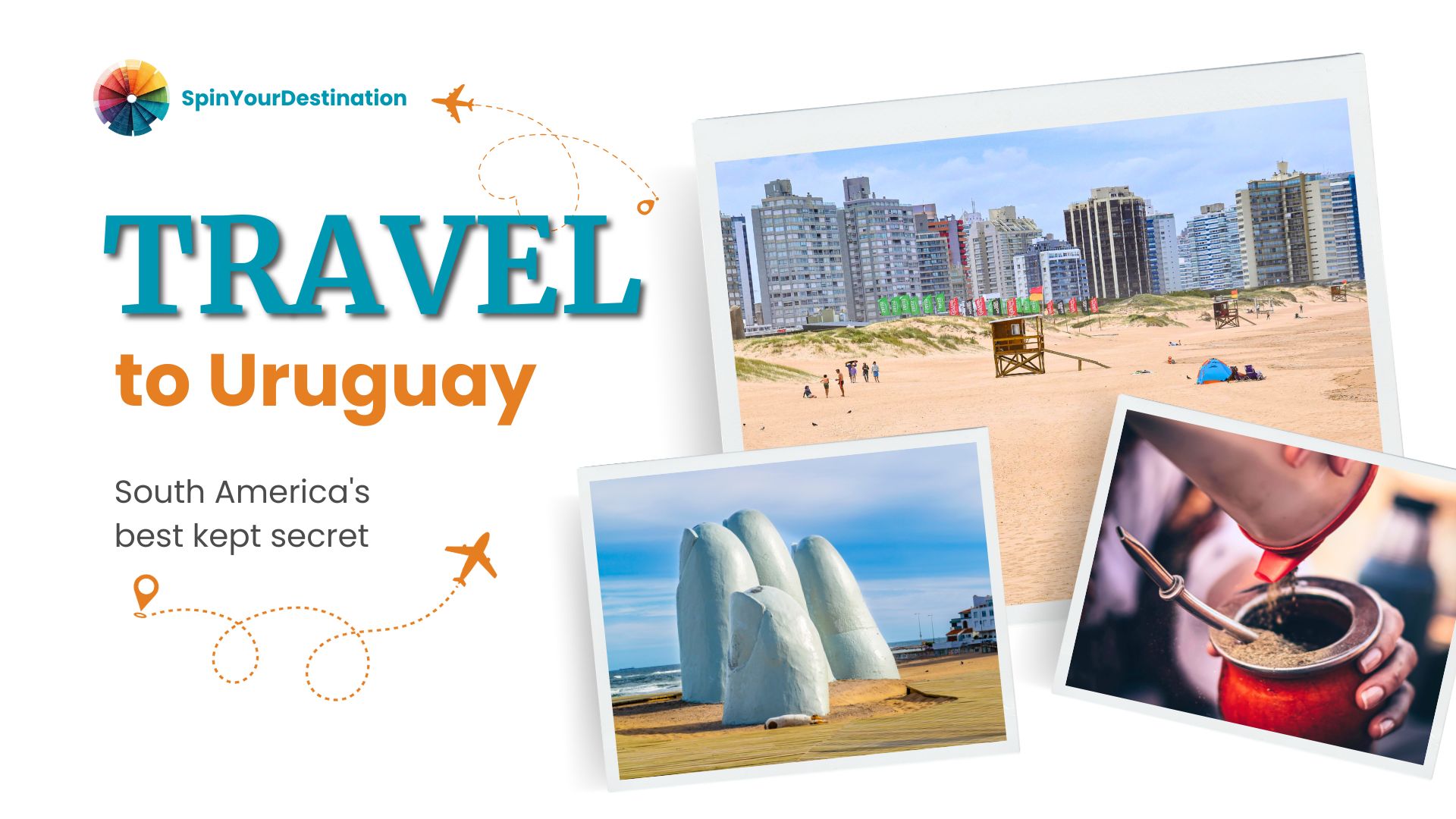
La Mano sculpture on Playa Brava, the marina with its yachts and waterfront restaurants, Playa Mansa for calmer swimming. Summer (December–March) is the time to experience Punta at full energy — concerts, art fairs, fashionable dining. Off-season: deserted beaches and a peaceful resort town that belongs to you.
More info →⭐ Top Experiences in Uruguay
⭐ Mercado del Puerto, Montevideo
Cast-iron market hall from 1868 — now home to traditional parrillas where sides of beef hang over wood fires. Arrive at lunch. Order the asado. Share a bottle of Tannat. Around UYU 800–1,200 per person for a full meal.
More info →⭐ Carnival in Montevideo
South America's longest carnival — 40 days from late January. The murga (satirical chorus, uniquely Uruguayan) and candombe (African-rooted drumming) fill the streets nightly. Free neighbourhood performances in Barrio Sur and Palermo. Main shows at Teatro de Verano require tickets.
More info →⭐ Casapueblo, Punta Ballena
Clifftop museum-house of artist Carlos Páez Vilaró — a whitewashed Mediterranean fantasy 12km from Punta del Este. The daily sunset ceremony, timed to the last light on the building, is one of Uruguay's most memorable moments. Entry UYU 500. Open daily.
More info →⭐ Bodega Garzón Wine Tour
Uruguay's most celebrated winery, in the Maldonado hills near Punta del Este. Tannat tastings, vineyard tours, and lunch at the winery restaurant (book months ahead in summer). Rated among South America's finest wine experiences. Tours from USD 30.
More info →⭐ Cabo Polonio — off-grid beach village
A small community of around 90 permanent residents on a wild Atlantic peninsula — no mains electricity, no running water, sea lions on the beach. Access by 4WD truck from the highway (4km of sand dunes). One of Uruguay's most extraordinary natural places. Best September–April.
More info →⭐ The Rambla, Montevideo
A 22km unbroken waterfront boulevard running along the Río de la Plata — one of the longest continuous waterfront promenades in the world. Cyclists, joggers, mate-drinkers, and sunset-watchers. Free, always open, and the defining experience of Montevideo.
More info →⭐ Natural Hot Springs — Termas del Arapey
Uruguay has exceptional thermal spa complexes in the interior. Termas del Arapey near Salto is the finest — geothermal pools from 35–42°C, spa resorts, and a profoundly relaxed pace. Uruguayans treat these as genuine holiday destinations. Very affordable and far from tourist crowds.
More info →⭐ José Ignacio village
Once a fishing village, now one of South America's most exclusive beach retreats. World-class restaurants (La Huella is legendary), a working lighthouse, and Atlantic beach walking without a crowd outside January–February. The off-season village is serene and beautiful.
More info →⭐ Tacuarembó — Patria Gaucha Festival
Each March, Tacuarembó hosts Uruguay's largest gaucho festival — horsemanship demonstrations, traditional dress, folk music, and craft markets. One of the most authentic cultural events in South America. Free to attend most events. The Museo del Indio y del Gaucho is worth visiting year-round.
More info →⭐ Feria de Tristán Narvaja, Montevideo
Every Sunday morning, Montevideo's most beloved street market fills a long boulevard in the Cordón neighbourhood — antiques, vinyl records, second-hand books, fresh produce, street food, and candombe percussion drifting through the crowd. Free entry. Open 7am–3pm Sundays. A genuine slice of Montevideo life.
More info →📋 Booking Tips
- Book Punta del Este in advance: January–February accommodation sells out months ahead — book by October at the latest
- Estancias require advance contact: Many full-board estancias only accept bookings by email or phone, not through platforms
- Check cancellation policies: Important for weather-dependent activities like Cabo Polonio trips
- Compare platforms: Prices vary between GetYourGuide and direct booking — check both
- Read recent reviews: Some smaller operators change ownership — recent reviews confirm current quality
💡 Local Tips
Everything you need to know before you go
💡 Essential Info
UYU / $U
Uruguayan Peso
Cards accepted in cities and resorts. Carry cash for rural areas and markets. USD accepted in tourist zones. Foreign credit cards give 18% VAT discount — always ask before paying. ATMs in all towns.
Spanish (Rioplatense)
Pronounced with Italian rhythm — "ll" and "y" sound like "sh". English spoken in tourist areas and by younger Uruguayans. A few words of Spanish go a long way and are warmly appreciated.
+598
Emergency: 911 (police, ambulance, fire)
Good mobile coverage in Montevideo, coast, and main towns. Interior and Cabo Polonio can be patchy or signal-free. Free wifi common in hotels, cafés, and restaurants. Most SIM cards available at airports.
No vaccines required for most travelers. Yellow fever certificate required if arriving from Brazil or endemic countries.
Tap water: Good quality in Montevideo and cities — drink safely. Carry bottled water in remote areas. Hospitals good in Montevideo. Medical insurance recommended.
🤝 Cultural Tips
💵 Tipping
10% is standard in restaurants and appreciated (not always included). Not mandatory but expected at sit-down places. Round up taxi fares. No tipping expected at cafés or street food.
👋 Greetings
Social: One cheek kiss (left cheek) for everyone — men, women, strangers, first meetings. This is standard across Uruguay. Handshake in formal business settings.
Tone: Uruguayans are warm, relaxed, and direct. First names immediately. Personal space less guarded than Europe.
🍳 Dining
Times: Lunch 1–3pm, dinner 9–11pm. Restaurants before 8pm are for tourists only — locals arrive at 9 or 10.
Asado culture: Sunday asado lunch is sacred. If invited, cancel everything else. It will last 3–4 hours.
Tourist discount: Always ask "¿Tienen la tarjeta del turista?" — 18% VAT discount with foreign card.
☕ Mate
The ritual: Mate is shared, not individual. If someone offers their gourd, accept — declining is rude. Drink from the same bombilla (metal straw). Do not wipe it. Do not say "gracias" until you want no more — that signals you're done.
🕒 Pace
Social punctuality: Arriving 30–45 minutes late to a dinner invitation is entirely normal. Business meetings are more punctual. Don't rush anyone — rushing is considered impolite. Slow is respectful.
🚨 Safety & Health
- Uruguay is one of South America's safest countries — but standard urban caution applies in busy areas of Montevideo
- Keep emergency contact numbers handy: 911 (police, ambulance, fire)
- Purchase travel insurance covering medical emergencies before departing
- Cabo Polonio and remote beaches: tell someone your plans before going off-grid
- Check weather before beach trips — Atlantic-facing beaches can have strong currents and rip tides
- Sun protection essential November–March — UV index is high in summer even on cloudy days
💰 Money-Saving Secrets
- Always pay by foreign credit card — the 18% tourist VAT discount on accommodation and restaurants is real and significant
- Visit Punta del Este in March–April instead of January — same beaches, 40–50% lower prices
- Eat lunch at Mercado del Puerto — parrilla lunches cost less than dinner for equivalent quality
- Use public buses (STM app in Montevideo) — inexpensive and reliable within the city
- Colonia del Sacramento is cheaper than Montevideo for overnight stays — same charm, lower prices
- Drink tap water in cities — it's clean and free, saves money over bottled water
📅 Best Time to Visit
Summer
December–February ~ 25–33°C coast, warm nights, long sunny days
✅ Pros: Peak beach season, Punta del Este in full swing, Carnival (late Jan–Feb), outdoor dining and nightlife, all coastal activities open
❌ Cons: January is expensive and crowded on the coast, Punta del Este requires advance booking for everything, tourist prices apply across the board
Autumn
March–May ~ 15–24°C, mild and pleasant, shoulder season
✅ Pros: Excellent for Montevideo and Colonia, Patria Gaucha Festival (March), vineyard harvest, prices drop significantly, beaches quiet and beautiful
❌ Cons: Coastal resorts wind down from April, some smaller beach businesses close, days shorten
Winter
June–August ~ 8–15°C, cool and occasionally rainy
✅ Pros: Lowest prices of year, Montevideo city culture at its best, Termas del Arapey hot springs ideal, estancias quieter and more authentic
❌ Cons: Coastal resorts mostly closed, beaches deserted, some rain, cooler evenings require layers
Spring
September–November ~ 14–22°C, warming up, wildflowers in the interior
✅ Pros: Excellent for Cabo Polonio (before January crowds), surf season builds on Atlantic coast, rural Uruguay at its greenest, good value before peak season
❌ Cons: Spring weather unpredictable — can switch quickly, sea still cool for swimming until November