
Beach & Sun Uruguay
Your complete guide to Uruguay's Atlantic coast, surf towns, and hidden beaches
It's early December. You've driven east from Montevideo for two hours along Ruta 10. The Atlantic stretches ahead, wide and grey-green. The road bends around a lagoon. A sea lion stares at you from a rock. This is not Copacabana. This is something quieter and stranger and, for the right traveler, considerably better.
Uruguay's 660km of Atlantic coastline is one of South America's best-kept beach secrets. Between the glamour of Punta del Este and the wild emptiness of the north, a string of beach towns offers surf, solitude, and a coastal culture that belongs entirely to itself. Punta del Este has its January crowds and yacht marinas. Further east, the crowds thin quickly and the nature thickens.
Summer runs December through March. The sea is warmest (20–22°C) in January and February. Off-season, the coast is almost deserted — dramatically beautiful, if you don't need sunshine and crowds.
Punta del Este — Atlantic and Plata coast
The Punta del Este peninsula divides two bodies of water: the Río de la Plata to the west (calmer, brown-tinged, no waves) and the Atlantic Ocean to the east (blue-green, waves, cooler). The contrast between the two sides is real and noticeable.
Playa Mansa (the Plata side) is where families, children, and those who want to swim without waves go. Wide, flat, good for paddleboarding and kayaking. The Rambla de las Américas runs along the shoreline — great for morning walks. Water temperature slightly warmer here than the Atlantic side.
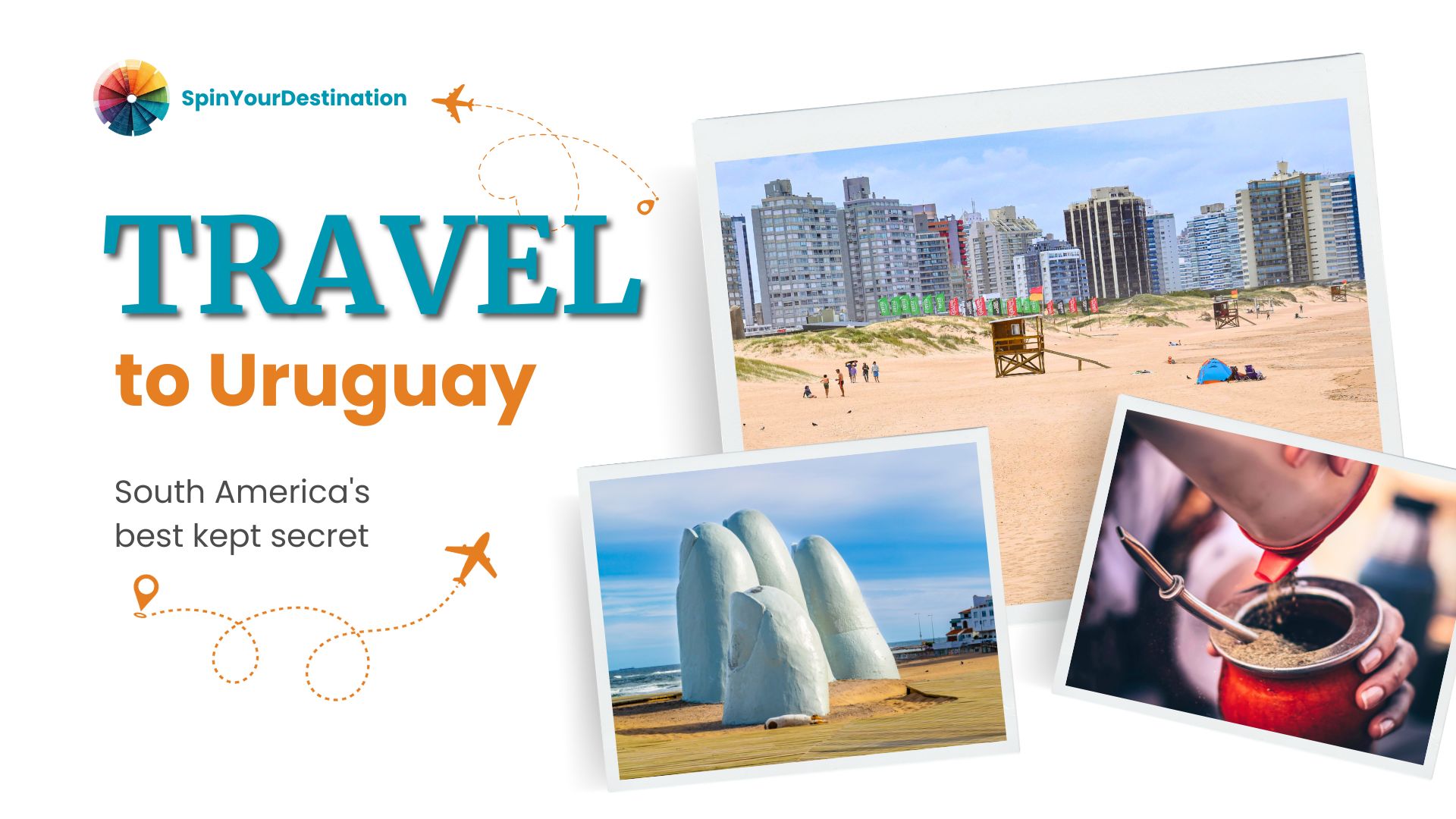
Playa Brava (the Atlantic side) is where La Mano sits — the giant sculptural hand emerging from the sand at the point. The beach faces open Atlantic, with enough swell to make swimming adventurous. Long crescent of sand, beach clubs, beach volleyball. The famous sculpture is free to visit at any time.
Between the two sides, the port marina fills with yachts in summer. The waterfront restaurants, boutiques, and high-end grocery shops around the port are good for people-watching and overpriced lunches. Worth a wander.
January–February is peak season — Argentines and Brazilians fill every corner. March onwards prices drop 30–50% and the beaches clear. November is best if you want warm weather without the crowds.
La Barra, José Ignacio and the surf coast
East of Punta del Este, Ruta 10 runs through a series of beach towns with distinctly different personalities. La Barra (12km from Punta) is the art and surf town — a drawbridge over a tidal inlet, galleries, design shops, and beach clubs with a younger, cooler-than-Punta energy. The beaches here have consistent surf. Playa Bikini and Playa Montoya are popular for intermediate surfers.
José Ignacio (35km from Punta) is a different world — a village of around 100 permanent residents that transforms in January into one of South America's most exclusive beach addresses. A-list visitors from Argentina and Brazil, world-class restaurants (La Huella has a legendary reputation, book months ahead), and a lighthouse that doubles as the main landmark. Outside January–February, it's a quiet fishing village with extraordinary light and empty beaches.
Punta del Diablo (near the Brazilian border, 300km from Montevideo) is the budget alternative to José Ignacio — a bohemian fishing village on a windswept point, popular with backpackers, long-stay travelers, and surfers. More character than comfort. Dune-backed beaches with consistent wind and moderate surf.
La Pedrera, between Cabo Polonio and Punta del Diablo, combines a reasonable surf break with a small village atmosphere. Younger, more relaxed, and increasingly popular with travelers who want beach life without the Punta del Este price tag.
Cabo Polonio — Uruguay's wild coast
Cabo Polonio is one of Uruguay's most extraordinary places. A community of around 90 permanent residents living on a wild Atlantic peninsula with no mains electricity, no piped water, and roads that dissolve into sand dunes. Access is by 4WD truck from a parking area on Route 10 — 4km of sand dunes to reach the village.
The appeal is the unreasonable beauty: huge dunes, a working lighthouse, a colony of South American sea lions on the rocks (often several hundred animals), pristine beaches on three sides, and silence at night interrupted only by waves and sea lions. The village has a handful of guesthouses and restaurants — rustic, genuine, nothing glamorous.
Best visited September–April. July–August can be cold and very windy. The sea lion colony is present year-round but most active during October–March (pup season). Sunrise over the Atlantic from the dunes is a serious experience.
Cabo Polonio is a protected area — no cars, no new construction. What you see is what you see. Come for two nights minimum — it takes that long to unwind to the place's rhythm.
Lago Merín & the eastern lagoons
Uruguay's eastern coast has a network of lagoons separated from the Atlantic by thin strips of dune and beach — Laguna Garzón, Laguna de Rocha, Laguna Negra. These shallow, warm lagoons attract birdlife (flamingos, herons, black-necked swans) and provide calm water for kayaking and paddleboarding.
Laguna Garzón has a notable round bridge (Puente Laguna Garzón, designed by Rafael Viñoly) that makes you drive in a circle to cross it — a deliberate design to slow traffic and make drivers look at the water. Worth stopping for the absurdity and the view.
The Rocha department, between Cabo Polonio and the Brazilian border, is the wildest and least-developed stretch of the Uruguayan coast. Parque Nacional Cabo Polonio protects significant dune systems and coastal wetlands. Wildlife is extensive — nesting sea turtles (November–February), shorebirds year-round.
Aguas Dulces is a tiny village in Rocha with a long empty beach, a single main street, and almost no international visitors. Genuinely off the tourist trail. Rent a house for a week and learn what Uruguay's coast was like before anyone discovered it.
🌟 Top Beach & Sun Experiences
🏖️ Playa Brava & La Mano Sculpture
The iconic symbol of Uruguay's coast — five fingers emerging from the Atlantic sand on Punta del Este's ocean beach. Wide surf beach, great for walking even when swimming feels ambitious. Free to visit, 24 hours. Best at sunrise before the crowds arrive. More info →
🦐 Cabo Polonio Sea Lion Colony
South American sea lion colony of 200–500 animals on the rocks around Cabo Polonio's lighthouse. Access by 4WD truck from Route 10. Stay two nights minimum — the place requires time to absorb. Off-grid, genuine, extraordinary. October–March best for pups. More info →
🏄 Surf at La Barra & La Pedrera
Uruguay's Atlantic coast produces consistent surf throughout the year, best April–October when South Atlantic swells peak. La Barra (Playa Bikini, Playa Montoya), La Pedrera, and Punta del Diablo are the main surf spots. Rental boards and beginner lessons available. More info →
🌆️ Playa Mansa — calm-water beach
Punta del Este's Río de la Plata-side beach: flat, calm, warm-ish water, great for families and anyone who prefers swimming without waves. Paddleboard and kayak rentals available. The Rambla walkway along the beach is excellent for morning jogs. More info →
🏴 José Ignacio at Sunset
The village lighthouse and the Atlantic beach at the end of the headland. December–April: world-class restaurants (La Huella, Parador La Huella), beautiful light, and an atmosphere unlike anywhere else in South America. Off-season: deserted and ethereally quiet. Book La Huella months ahead. More info →
🦎 Laguna de Rocha birdwatching
Coastal lagoon in Rocha department — flamingos, black-necked swans, spoonbills, herons, and shorebirds year-round. Kayaking through the channels is slow, peaceful, and extraordinarily biodiverse. Nesting sea turtles on nearby beaches November–March. More info →
💡 Insider Tips
- 🎰 Punta del Este in January is booked solid — reserve accommodation 3–6 months ahead for peak season. November and March offer 80% of the weather at 40–50% of the price.
- 🚲 Rent a car to explore the Atlantic coast. Buses run between main towns but schedules are limited and Cabo Polonio requires a 4WD truck from the highway (operated locally, around UYU 400 return).
- 🏃 The surf is best April–October on South Atlantic swells. December–February is calmer (good for beginners) but beaches are crowded. January–February can have jellyfish (medusas) on the Atlantic side.
- 🌞 Sunrise is the best time to see Cabo Polonio's sea lions — the animals are most active in the morning, and you'll have the rocks to yourself before day-trippers arrive from the truck.
- 🚫 Cabo Polonio has no ATM — bring all cash before the turnoff on Route 10. The village accepts pesos only. Credit cards are not accepted anywhere in the village.