

Italy Drink Guide
Barolo to Brunello, Aperol Spritz to Neapolitan espresso — Italy is one of the world's greatest drinking destinations, and barely anyone has explored it fully.
Italy has more wine grape varieties than any other country on earth — over 500 officially classified, hundreds more lurking in old vineyards across the peninsula. From the fog-draped Langhe hills of Piedmont to the sun-scorched lava fields of Etna, from Chianti limestone cellars to the baroque baglio estates of Sicily, Italian wine is one of the world's great pleasures — and one of its least fully explored.
But wine is only part of the story. Italy invented the aperitivo — the world's most civilised pre-dinner ritual. It perfected espresso. It produces grappa, amaro, limoncello and some of the most complex bitter liqueurs on earth. And it drinks all of them in a way that feels rooted, social and unhurried. Here are the places worth visiting in person.
This guide contains information about alcoholic beverages and is intended for adults of legal drinking age in their country.
Wine — Vineyards & Cellars
Italy's wine regions span the entire peninsula — each with its own character, its own grape varieties, its own argument about the right way to make wine. These are the producers and estates most worth visiting.
Tuscany
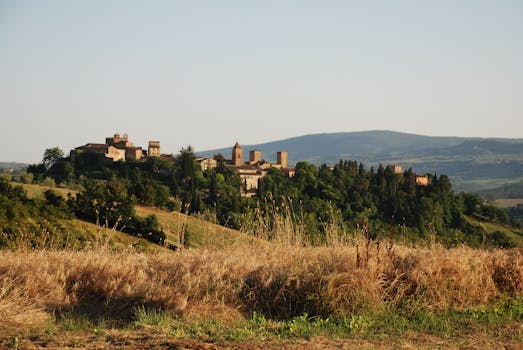
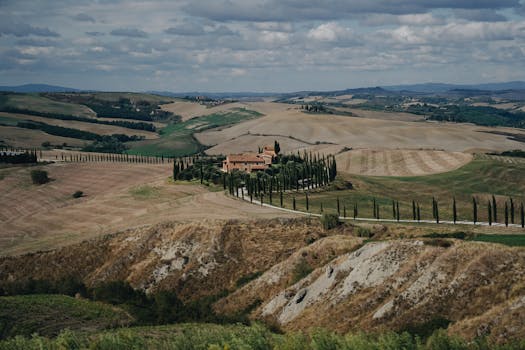
The heartland of Italian wine. Chianti Classico runs through the hills between Florence and Siena; Brunello di Montalcino is one of the world's great red wines; the Super Tuscans broke every rule and changed everything. Tuscany rewards visiting — the estates are beautiful, the tastings are excellent, and the landscape is one of the best reasons to travel.
Key grapes: Sangiovese · Cabernet Sauvignon · Merlot · Vernaccia
Castello di Brolio
Gaiole in Chianti, Tuscany
Italy's oldest winery — the Ricasoli family has made wine here since 1141. The medieval castle, formal gardens and panoramic terrace overlooking olive groves and Chianti vineyards make this one of the most spectacular estates in Europe. Baron Bettino Ricasoli, who also served as Italy's second Prime Minister, invented the original formula for Chianti Classico here. Guided tastings include the cellars and an on-site osteria for lunch.
⏱ Guided tours Thu–Sun, Mar–Dec · 🍷 Guided tastings · 📍 Gaiole in Chianti, 30 min from Siena
Visit Castello di Brolio → Opening hours & booking →
Biondi-Santi
Montalcino, Tuscany
The estate that created Brunello di Montalcino. Ferruccio Biondi-Santi first produced the wine in 1888 from the Tenuta Greppo estate, and five generations later the family is still making some of Italy's most age-worthy reds. The oldest Riservas in the cellar date back to 1891. The estate does not offer tours or tastings at Il Greppo — but the wines are poured in every serious enoteca in Montalcino, and this is as close to the source of Italian wine history as you can get.
⏱ No visits at the estate · 📍 Montalcino, Val d'Orcia, Southern Tuscany
Visit Biondi-Santi →
Antinori nel Chianti Classico
Bargino, San Casciano Val di Pesa
The Antinori family has made wine since 1385. Their winery — completed in 2012, designed by Archea Associati and built almost entirely underground into the hillside — is one of the architectural landmarks of Italian wine. It houses cellars, restaurants, a wine shop and the family's private collection. The Tignanello Super Tuscan, made with Sangiovese and Cabernet Sauvignon, was a defining moment in Italian wine history.
⏱ Visits by booking · 📍 Bargino, 20 min south of Florence
Visit Antinori → Visit Antinori nel Chianti Classico →Piedmont
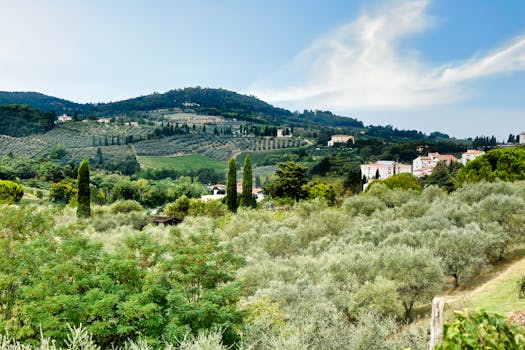
The Langhe hills around Alba produce Barolo and Barbaresco — Italy's two most serious red wines, both made from Nebbiolo and both among the finest in the world. The landscape of fog-draped hills, medieval towers and vine-covered slopes has its own quiet grandeur. Autumn is the best time to visit: harvest in October, truffles in November.
Key grapes: Nebbiolo · Barbera · Dolcetto · Moscato
Gaja
Barbaresco, Piedmont
The estate that put Barbaresco on the world map. Angelo Gaja's obsession with quality transformed Piedmontese wine from the 1960s onwards — single-vineyard wines, French oak, rigorous viticulture. Today his daughter Gaia runs the estate. Visits are by appointment with a requested charitable donation and include a personalised tour of 101 hectares of vineyards and historic cellars. For wine enthusiasts, this is hallowed ground.
⏱ By appointment · 📍 Via Torino 5, Barbaresco, near Alba
Visit Gaja →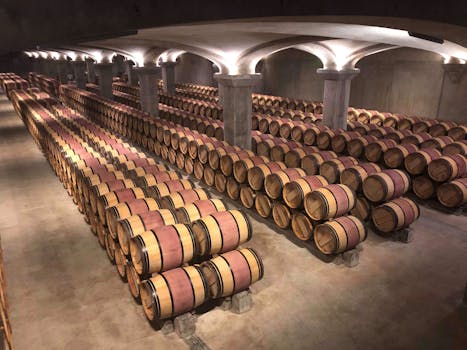
Enoteca Regionale del Barolo
Barolo village, Piedmont
Inside the Castello Falletti in the tiny village of Barolo, the Enoteca Regionale houses wines from virtually every producer in the zone — the best place to taste your way through the appellation without booking multiple private visits. A flight of Barolos from different communes, producers and vintages. The castle also houses WiMu, a wine museum worth an hour of anyone's time.
⏱ Thu–Sun 10:30–18:00 · 📍 Via Collegio, Barolo village, Cuneo
Visit Enoteca del Barolo → Visit Enoteca Regionale del Barolo →Veneto
The Veneto produces more DOC wine than any other Italian region — and some of its most celebrated. Amarone della Valpolicella is made from dried grapes; the appassimento process concentrates everything. Prosecco, from the UNESCO-listed hills around Valdobbiadene, is the world's most popular sparkling wine and far better at source than in export form.
Key grapes: Corvina · Corvinone · Rondinella (Amarone) · Glera (Prosecco)

Masi Wine Experience
Sant'Ambrogio di Valpolicella, Veneto
Masi has been making Amarone for over two centuries and has done more than almost anyone to explain the appassimento process to the world. Their Wine Discovery Museum at Tenuta Canova on Lake Garda and the main cellar at Serego Alighieri (once owned by descendants of Dante) are both open for tours and tastings. The Costasera Amarone is their benchmark wine; the Campofiorin Ripasso is the best everyday introduction to the style.
⏱ Book online · 📍 Multiple estates, Valpolicella Classica, near Verona
Visit Masi →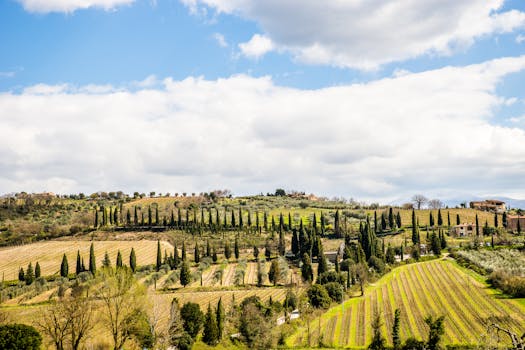
Nino Franco
Valdobbiadene, Veneto
One of Prosecco's finest producers, with roots in Valdobbiadene since 1919. The estate sits within the UNESCO World Heritage-listed Prosecco Hills. Primo Franco continues to make wines that bear no resemblance to the industrially produced versions found in supermarkets. The Rustico Prosecco is a brilliant everyday bottle; the single-vineyard Cartizze is extraordinary. Estate visits by appointment — the landscape alone makes the trip worthwhile.
⏱ By appointment · 📍 Valdobbiadene, Treviso, 1 hour from Venice
Visit Nino Franco →Sicily
Sicily was once Italy's engine room for bulk wine. Now it is one of its most exciting regions — led by Etna's volcanic reds and whites, the revival of indigenous varieties like Nero d'Avola, and a generation of producers who have turned the island's heat and ancient vines into something remarkable.
Key grapes: Nero d'Avola · Nerello Mascalese (Etna) · Carricante (Etna Bianco) · Grillo · Zibibbo (Pantelleria)
Donnafugata
Marsala, Sicily
One of Sicily's great estates — five wineries across the island, with the historic Marsala cellars going back to 1851. The Mediterranean baglio architecture and underground barrique cellar carved from tufo rock are among the most beautiful winery spaces in Italy. Tasting experiences span several tiers; the Donna Vulcano pairing at the Etna estate, matching food to volcanic wines, is exceptional. Named after characters in Lampedusa's Il Gattopardo.
⏱ Daily, tours at 11:00, 13:00 & 17:00 · 🍷 Several tasting tiers · 📍 Marsala, Trapani
Visit Donnafugata → Opening hours & booking →
Planeta
Menfi & Etna, Sicily
The Planeta family traces its Sicilian roots to 1694. Today they farm six territories across the island: Menfi, Vittoria, Noto, Capo Milazzo, Etna and Sambuca. Their Etna estate at Sciaranuova produces exceptional Nerello Mascalese reds and Carricante whites from volcanic soils. The Palazzo Planeta in Palermo offers urban tastings; the Foresteria in Menfi is one of the best wine estate stays in Italy.
⏱ Various locations, book online · 📍 Multiple estates across Sicily
Visit Planeta → Opening hours & booking →🗓️ Practical Wine Tips
- Book ahead: Most Italian estates require advance booking — 1–2 weeks for Tuscany, 3–4 weeks minimum for Gaja and Biondi-Santi
- Best seasons: April–May (spring, quiet) and late September–November (harvest, truffle season in Piedmont). Avoid August — many estates close
- Getting around: A rental car is essential in Chianti and Montalcino; estates are spread across hills with no public transport
- Barolo vs Barbaresco: Both are Nebbiolo. Barolo is bigger and needs more age; Barbaresco is more elegant and drinks earlier. Start with Barbaresco
- Harvest closures: Late September to mid-October — many estates close or run reduced hours during vendemmia. Plan accordingly
Enoteche & Wine Bars
Italy's enoteca tradition is built for lingering — shelves stacked floor to ceiling, a glass of something local, staff who know every producer. These are three of the best wine bars worth going out of your way for.
Trimani Il Wine Bar
Via Cernaia, Rome
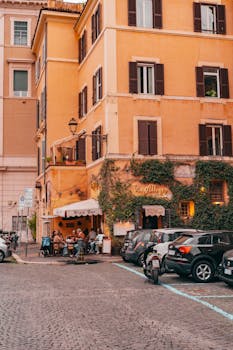
Italy's oldest wine merchant — the Trimani family has been selling wine in Rome since 1821. The wine bar next to the historic shop stocks over 700 Italian and international labels, with a serious menu of traditional Roman dishes. An essential stop for any wine lover in the capital, with one of the best selections of wines by the glass in the city.
⏱ Mon–Sat · 📍 Via Cernaia 37b, near Termini, Rome
Visit Trimani Il Wine Bar →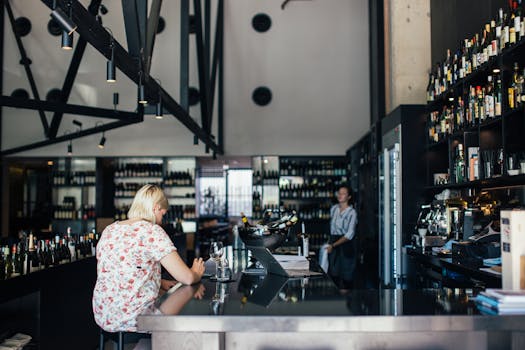
Enoteca Al Volto
San Polo, Venice
One of Venice's great bacari — a traditional Venetian wine bar with over 1,300 labels from across Italy and beyond. Opened in 1936, it remains unchanged in spirit: low ceilings, wooden shelves, cicheti on the counter, rotating wines by the glass. Cash only; arrive early for the best selection of cicheti. Exactly what a serious Italian wine bar should feel like.
⏱ Daily · 📍 Calle Cavalli, San Polo 4081, Venice · Cash preferred
Visit Enoteca Al Volto →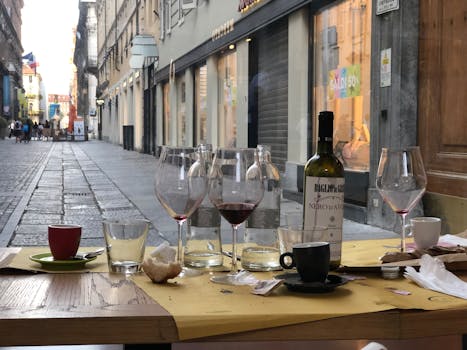
Cantina Bentivoglio
Via Mascarella, Bologna
Bologna's most celebrated wine bar and jazz club — underground vaulted cellars beneath a palazzo, with live jazz nightly from 9pm and a wine list of over 500 Italian labels. Emilia-Romagna is Italy's most underrated food and wine region: Parmigiano-Reggiano, prosciutto di Parma, Lambrusco. The kitchen does all of it justice. Book for dinner; walk in for a glass at the bar.
⏱ Mon–Sat, evenings · 🎷 Live jazz from 21:00 · 📍 Via Mascarella 4b, Bologna
Visit Cantina Bentivoglio →Know Your Italian Wine
Italy's wine classifications can seem impenetrable at first. Here is the short version.
DOC / DOCG
Italy's quality classifications. DOCG (Denominazione di Origine Controllata e Garantita) is the highest tier — Barolo, Brunello, Amarone, Chianti Classico and Prosecco Superiore are all DOCG.
Vino da Tavola
Table wine — technically the lowest classification. But the original Super Tuscans (Sassicaia, Tignanello) were forced into this category for breaking DOC rules, which makes it the most gloriously contradictory category in wine.
Appassimento
The process of drying harvested grapes on bamboo racks for 90–120 days, concentrating sugars and flavours before fermentation. The technique behind Amarone, Recioto and Valpolicella Ripasso.
Ripasso
Valpolicella wine re-fermented over the pressed skins from Amarone production. Fuller and richer than standard Valpolicella, much more affordable than Amarone. An excellent everyday red.
Frizzante vs Spumante
Gently sparkling vs fully sparkling. Prosecco comes in both styles; look also for Prosecco Tranquillo — still Prosecco, rarely exported, and often the most interesting version of the grape.
Italian wine labels can include the producer, village, appellation, vintage and classification — sometimes all on the front. When in doubt: ask the producer. They love explaining it.
Aperitivo & Spirits
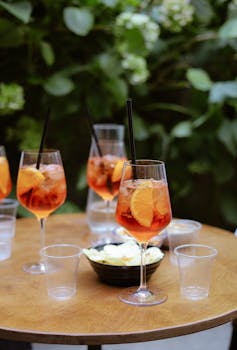
Italy's greatest contribution to drinking culture may not be wine at all. The aperitivo ritual — Campari, Aperol, Negroni, Spritz, served at a marble counter with small bites from 6pm — is the most civilised hour in Europe. And then there is grappa, Italy's fierce, beautiful post-dinner spirit.
Milan, Venice & Veneto
Three of Italy's most important addresses for aperitivo and spirits — from the bar that invented Campari to the distillery that perfected grappa, and the legendary Venice institution that gave the world the Bellini.
Key spirits: Campari · Aperol · Grappa · Negroni · Bellini · Amaro
Camparino in Galleria
Galleria Vittorio Emanuele II, Milan
The original Campari bar, opened in 1915 inside the magnificent Galleria Vittorio Emanuele II. The Liberty-style interior is impeccably preserved; the Campari Seltz was born here. Order a Negroni or a Campari Shakerato. More expensive than the bars around the Galleria. Worth every euro. One of the great aperitivo addresses in Europe.
⏱ Bar di Passo Mon–Fri 09:30–23:00, Sat 10:00–23:00, Sun 09:30–21:00 · 📍 Galleria Vittorio Emanuele II, Milan centre
Visit Camparino in Galleria →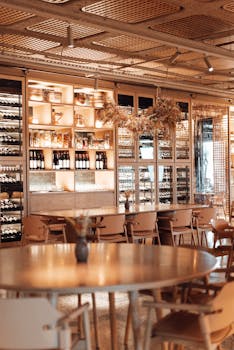
Harry's Bar
Calle Vallaresso, Venice
Opened in 1931 by Giuseppe Cipriani, Harry's Bar invented two of the world's great drinks: the Bellini (white peach purée and Prosecco, 1948) and the Montgomery Martini. Ernest Hemingway drank here; so did Truman Capote, Orson Welles and Charlie Chaplin. Designated a national landmark by the Italian Ministry of Culture. The Bellini is expensive. Order it anyway — there is no more Italian way to spend an afternoon in Venice.
⏱ Daily · 📍 Calle Vallaresso 1323, San Marco, Venice
Visit Harry's Bar →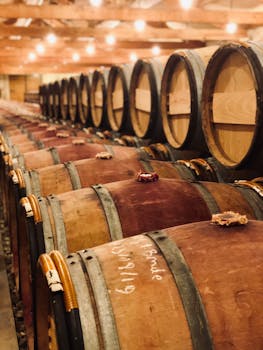
Nardini Distillery
Ponte Vecchio, Bassano del Grappa
Italy's oldest distillery, founded in 1779 on the historic Ponte degli Alpini over the Brenta river. The museum occupies several levels with equipment from 1860 onwards — steam distillers, copper pot stills, oak barrels — with views over the river and the famous bridge. Guided tours by appointment include a tasting of Nardini's range. Don't miss the Mezzoemezzo: half grappa, half bitter, shaken with ice. One of Italy's great aperitivo drinks.
⏱ Tue–Sat, by appointment · 📍 Ponte Vecchio, Bassano del Grappa, Vicenza
Visit Nardini → Opening hours & booking → Book a tour →Amaro — Italy's vast family of bitter herbal liqueurs — is its own world: Montenegro, Averna, Cynar, Fernet-Branca. Ask for the house amaro after dinner, wherever you are in Italy. You will rarely be disappointed.
Italian Spirits — What to Know
Three categories of Italian spirit worth understanding before you order.
Grappa
Made from pomace (grape skins, seeds and stalks). The best are single-varietal (monovitigno) and aged in wood. Serve at room temperature in a tulip glass. Young (giovane) grappas are white and fierce; aged (invecchiata) ones develop colour and complexity.
Amaro
Italy's family of bitter herbal digestivi — every region has its own. Montenegro from Bologna, Averna from Sicily, Cynar (artichoke-based) from the Veneto, Fernet-Branca from Milan. Served at room temperature after dinner. Not optional at a proper Italian table.
Limoncello
Made from Amalfi coast lemon zest, macerated in alcohol and mixed with sugar syrup. Served ice-cold after dinner in southern Italy and Sicily. Homemade limoncello offered by trattorias on the Amalfi coast is almost always better than anything in a bottle.
Craft Beer — Breweries & Taprooms
Italy's craft beer scene exploded from almost nothing in the 1990s into one of Europe's most inventive. Italian brewers brought their food culture to beer — chestnuts, gentian root, tobacco, buckwheat — and created something entirely their own.
Piedmont & Lazio
Two breweries above all others defined Italian craft beer: Baladin, founded in a village in the Langhe hills of Piedmont, and Birra del Borgo, from the hills north of Rome. Both are worth visiting.
Baladin
Piozzo, Langhe, Piedmont
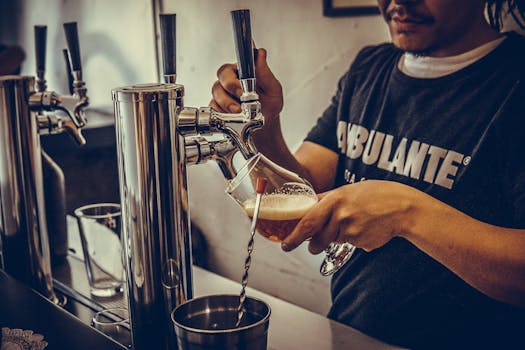
The most celebrated craft brewery in Italy, founded in 1996 by Teo Musso in the village of Piozzo. Baladin's beers — Isaac (spiced wheat), Super (barley wine), Xyauyù (barrel-aged barley wine) — are among the most distinctive in Europe. The Open Garden in Piozzo is a beer garden, restaurant and brewery; the Birreria Le Baladin in the village square is one of Italy's best taprooms. A pilgrimage site for Italian beer culture.
⏱ Guided brewery visits Sundays 10:00, booked by Friday noon · 🍺 30+ taps · 📍 Piozzo, Cuneo, 1 hour from Turin
Visit Baladin → Book a tour →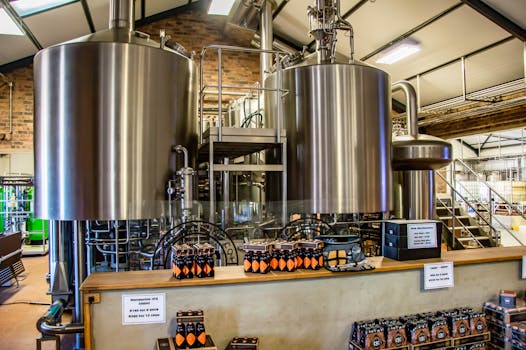
Birra del Borgo
Borgorose, Lazio
Founded in 2005 by Leonardo Di Vincenzo north of Rome, Birra del Borgo introduced winemaking techniques to beer — oak barrel ageing, terracotta amphoras, Metodo Classico secondary fermentation. ReAle (pale ale), Maledetta (rye IPA) and L'Equilibrista are among Italy's finest. Il Bancone, the brewery's taproom at Borgorose, pours ten taps plus three rotating beer pumps of current and experimental releases.
⏱ Tue–Fri 12:00–23:00, Sat–Sun 12:00–24:00 · 🍺 Ten taps plus three beer pumps · 📍 Piana di Spedino, Borgorose, Rieti
Visit Birra del Borgo → Opening hours & booking →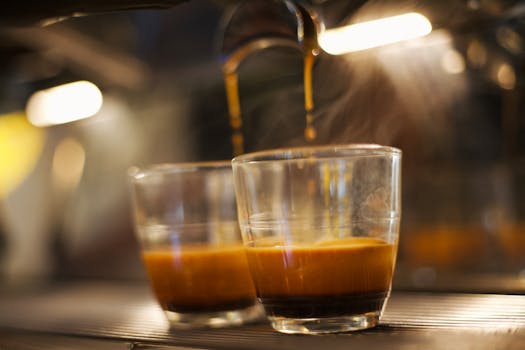
Birra Menabrea
Biella, Piedmont
Italy's oldest continuously operating brewery, founded in 1846 in the foothills of the Alps at Biella. Casa Menabrea, the brewery's own museum, displays original production equipment, coopers' tools, bottles and advertising going back to 1846. Visits are by appointment, arranged through MeBo Museum. The Menabrea 150 Ambrata (amber lager) is one of Italy's finest traditional beers.
⏱ Tours by appointment · 📍 Via Ramella Germanin 4, Biella, Piedmont
Visit Menabrea → Visit Casa Menabrea →Coffee Culture & the Italian Bar
The Italian bar is not a pub. It is a coffee counter, a social hub, a space for standing at the bar and drinking a perfect espresso in under two minutes. Italy invented the espresso machine, the barista and the idea that coffee should be a moment of pleasure — not just caffeine. These three bars are worth going out of your way for.
Naples, Rome & Turin
Three cities, three distinct coffee traditions — Neapolitan darkness, Roman secrecy, Turinese elegance. All three are serious. None of them require an explanation.
Gran Caffè Gambrinus
Piazza del Plebiscito, Naples
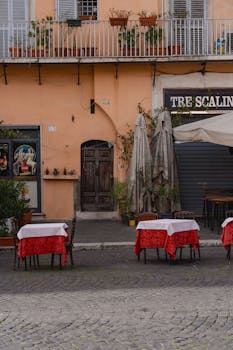
Since 1860, opposite the Royal Palace of Naples — Oscar Wilde, Hemingway and Benedetto Croce all drank here. The Art Nouveau interior is extraordinary: gilded mirrors, marble columns, frescoed ceilings. But the reason to come is the espresso: Neapolitan standard — darker, denser, hotter than anywhere in the north. Order standing at the bar (half the price of table service). Italian Presidents breakfast here on New Year's Day.
⏱ Daily from 7am · 📍 Piazza del Plebiscito, Naples centre
Visit Gambrinus →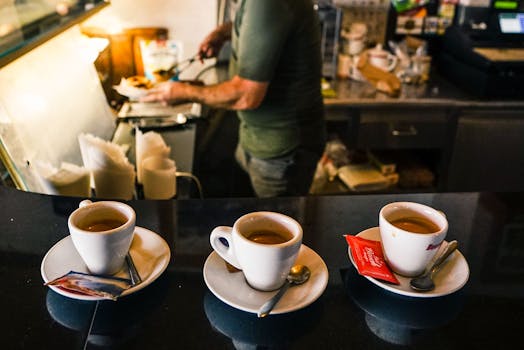
Sant'Eustachio il Caffè
Piazza di Sant'Eustachio, Rome
The most argued-about espresso in Rome. Roasting on-site since 1938; the blend is a guarded secret — a screen behind the bar ensures no one watches the process. The espresso arrives pre-sweetened with a thick, creamy crema; specify amaro if you want it without sugar. Opposite the Senate building in the centro storico, perpetually busy. Take-away beans available at the counter.
⏱ Daily from 7:30am · 📍 Piazza di Sant'Eustachio, Rome
Visit Sant'Eustachio il Caffè →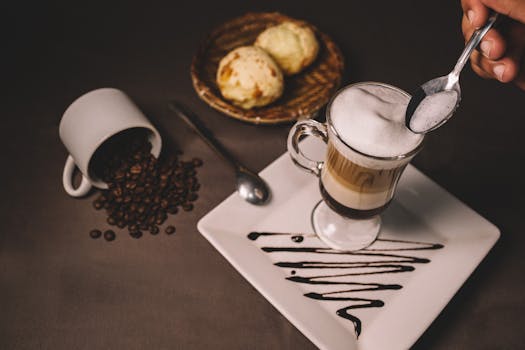
Caffè Al Bicerin
Piazza della Consolata, Turin
Since 1763, the same café in the same spot, serving the same drink: the Bicerin — espresso, melted chocolate and whipped cream in a small glass, in distinct layers. You do not stir it. Nietzsche drank here. So did Dumas, Puccini and Cavour. The café is tiny — eight tables — and entirely unchanged. Turin has over 100 historic cafés, but this is the one worth crossing the city for.
⏱ Daily except Wednesday, 09:00–19:15 · 📍 Piazza della Consolata, Turin centre
Visit Caffè Al Bicerin →Planning Your Wine Trip
Two practical questions every Italian wine trip runs into.
Compare rental cars in Italy →
Find hotels in Florence → · Find hotels in Siena → · Find hotels in Milan →
💡 Good to Know
- ☕ At an Italian bar, "un caffè" always means espresso — short, dark and served immediately. Ask for a caffè americano if you want something longer
- 🥂 "Cin cin!" or "Salute!" — both are cheers in Italian. Make eye contact when you clink glasses
- 🍷 Ordering the vino della casa (house wine) in Italy is rarely a mistake — usually local, honest and a third of the price of bottled wine
- 🍸 Aperitivo hour runs 6–8pm throughout northern Italy — Aperol Spritz, Negroni, Campari Soda. The stuzzichini (nibbles) are often free or included
- 🥃 Amaro after dinner (il digestivo) is a serious institution — Montenegro, Averna, Fernet-Branca. Say yes
- 🏰 Many Tuscan estates close during vendemmia (harvest), late September to mid-October — plan winery visits for spring or early autumn
- 🍋 In the south and Sicily, limoncello is served ghiacciato (ice-cold). If someone offers you homemade limoncello, accept immediately