This is your destination guide for Indonesia.
This is your destination guide for Bali
📍 Part of IndonesiaRice terraces, surf breaks, temple smoke — and a south coast that forgot to stay quiet.

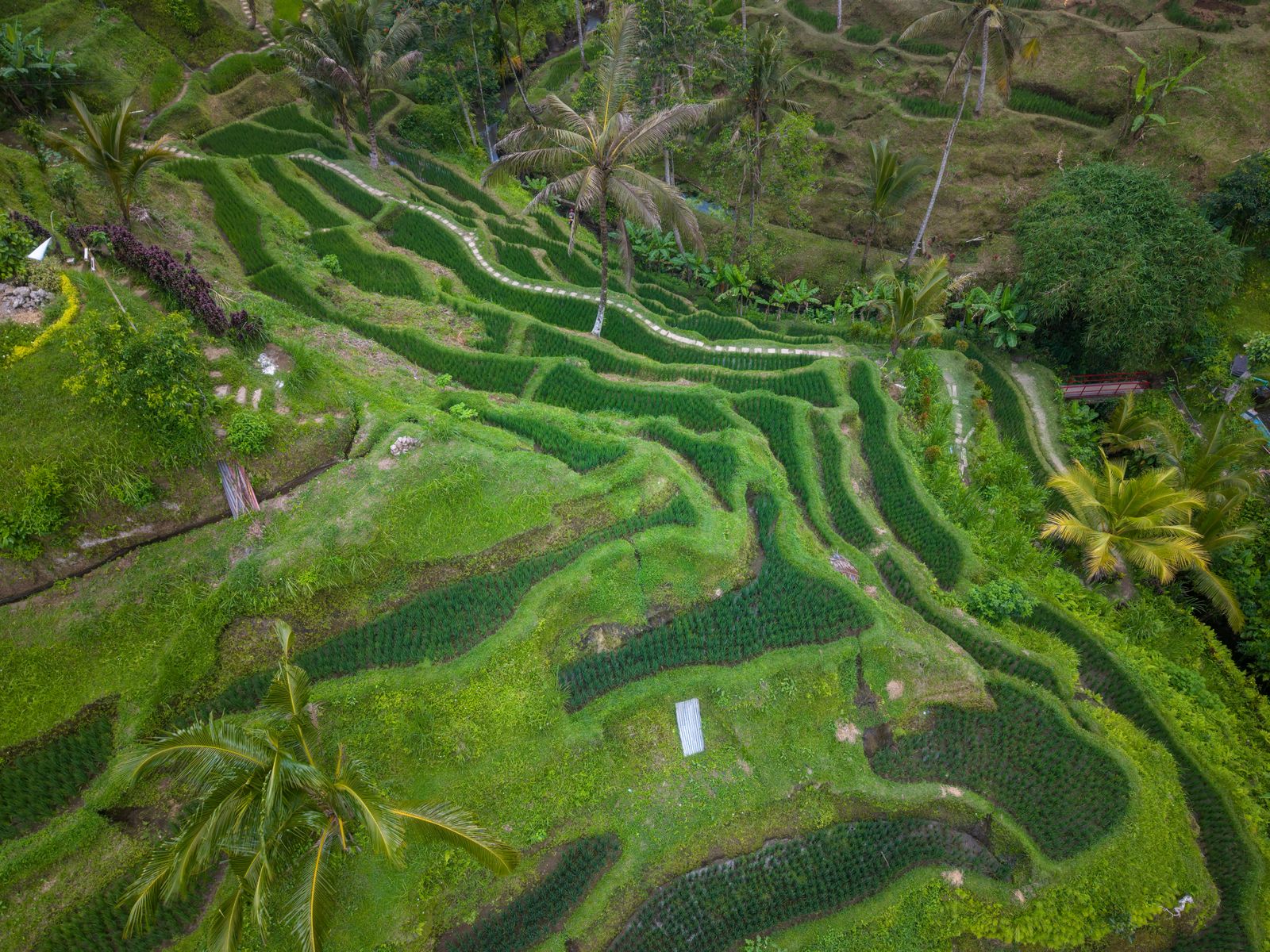
The reality: You land at Denpasar, and the first hour is a scooter-clogged crawl through Kuta you'll want to forget. Then your driver turns inland, the billboards thin out, and you're suddenly between two green walls of rice terrace with a temple gate at the end of the lane. Both of those are Bali. The island just leads with the wrong one.
Here's the trick most people miss: nearly everyone spends their whole trip inside about a tenth of the island — the Canggu–Seminyak–Ubud triangle in the south. It's busy, it's pricey by Indonesian standards, and the traffic is genuinely bad. The rest — the east coast at Amed, the rice valley at Sidemen, the waterfalls and lakes around Munduk, the cliffs of the Bukit — is quieter, cheaper, and where Bali still feels like itself.
You don't have to choose. The island is small enough to surf in the morning, walk a rice terrace by lunch, and watch a fire dance on a sea cliff at sunset — if you get a scooter or a driver and accept that the map lies about how long anything takes. Base yourself well, eat where the menu's in Indonesian first, and give the south a couple of days, not the whole week.
Bali's coast isn't one thing. The south-west (Seminyak, Canggu, Kuta) is dark volcanic sand, big surf, and beach clubs. The Bukit peninsula in the far south hides white sand at the bottom of limestone cliffs. The east around Amed is black-sand and calm. And the Nusa islands offshore are the cliffs you've seen on every screensaver.

Bingin — a scramble down warung-lined steps to a reef beach on the Bukit. Surfers, sunset beers, no pretension. One of the south's better afternoons.
Padang Padang — a small cove reached through a slot in the rock. Famous for surf, fine for a swim at the right tide. Small fee, reliable crowd.
Nyang Nyang & Melasti — longer, emptier white-sand beaches if you'll drive the extra 20 minutes for them.
Sanur — reef-protected and calm on the east side, facing the sunrise rather than the sunset. Good for families and nervous swimmers; the beach path runs for kilometres.
Nusa Penida — Kelingking — the "T-Rex" cliff from a thousand feeds. The viewpoint is the real thing. The climb down to the beach is a steep, rope-assisted slog that punishes you on the way back up, and day-trippers from Sanur pack it out from 11 AM. Go early or stay the night on the island.
Amed — black volcanic sand on the far east coast. No surf, no party — a fishing coast with the best shore diving on the island (more on that below).
Bali doesn't really have "towns" — it has areas, each with a different crowd and a temple or two of its own. Pick your base by which one fits.

Ubud — the inland culture-and-jungle base. Rice terraces, yoga, the Monkey Forest (the macaques will lift your sunglasses — don't dangle anything), the Tirta Empul holy springs nearby. No longer sleepy: the centre is a slow river of scooters and shops. Stay on the edges.
Canggu — surf, cafés, co-working, and the island's densest crowd of digital nomads. Good food, beginner waves at Batu Bolong, and traffic that turns a 3 km hop into 40 minutes. Loud and young.
Seminyak — Canggu's polished older sibling. Beach clubs, boutiques, sunset cocktails, higher prices. Less surf-bum, more sun-lounger.

Uluwatu & the Bukit — clifftops, the best beaches, and the sea-cliff temple with its sunset kecak fire dance (and, again, the sunglasses-thieving monkeys). Spread out — you'll want wheels.
Sidemen — the rice-terrace valley in the east most people skip. What Ubud was twenty years ago. Walks from the door, next to no nightlife.
Munduk — cool mountain country in the north: waterfalls, lakes, the twin lake temples. Bring a layer.
Amed — the diving and freediving coast in the far east. Black sand, the Liberty wreck up the road at Tulamben, very few crowds.
For people who'd rather do Bali than photograph it.
Bali packs more into a small island than almost anywhere: surf at every level, serious cheap diving, a volcano sunrise, waterfalls, rice-terrace walks, and the temples that give the whole place its shape.
The temples are the point, not a sidebar. Uluwatu at sunset for the kecak fire dance on the cliff edge. Tirta Empul near Ubud for the holy-water purification — you can join, sarong required. Tanah Lot is the sunset-postcard temple: go for the setting, expect the crowd. And Lempuyang, the "Gates of Heaven" — the mirror-perfect reflection is a phone held under the camera lens, the queue runs an hour or two, and there's a fee for the photo. Worth knowing before you build a day around it.
Bali eats well and cheap if you follow the locals to the warung. As a Hindu island in a Muslim-majority country, it's also the one part of Indonesia where pork is everywhere — which is why the signature dish is a pig.

Babi guling — Balinese suckling pig, spit-roasted with turmeric, lemongrass, and chilli, served with rice and crackling. Ibu Oka in Ubud is the famous one; locals will point you somewhere better. A lunch thing — it sells out by afternoon.
Nasi campur — "mixed rice": a scoop of rice and whatever's good that day. Point at what you want. The best-value plate on the island.
Sate lilit — minced fish or pork pressed onto lemongrass skewers and grilled. Bali's own satay.
Bebek / ayam betutu — duck or chicken slow-cooked in spice paste and banana leaf for hours. Some places want a day's notice.
Where to eat: the rule is simple. If the menu's in English first, with photos and a smoothie-bowl section, you're on the tourist price list. The warung next door — menu in Indonesian, plastic chairs — is a third of the price and usually better.
Drink: Bintang is the local lager, cheap at a warung and triple that at a beach club (Indonesia taxes imported drink hard, so stay local). Arak, the rice-or-palm spirit, is everywhere and wildly variable — drink it branded and sealed, never from an unlabelled bottle. Kopi is strong and good; kopi luwak, the civet "cat-poo coffee", is overpriced, often faked, and grim at the caged-civet operations. Skip the tour.
Dry season (April–October) is the safe bet — sun, lower humidity, the best surf and diving on the east. July–August is peak: busiest, priciest, school holidays north and south.
Shoulder (April–June, September–October) is the sweet spot — dry enough, quieter, cheaper.
Wet season (November–March) isn't a write-off. Rain usually comes as one heavy afternoon hour, not all day. But humidity is high, dirt roads turn to mud, and the sea goes murky for diving. Prices drop to match.
Nyepi — the Balinese Day of Silence, 19 March in 2026. For 24 hours the whole island shuts down: airport closed, no flights, no traffic, lights off, nobody outside — you included. Hotels stay open and look after guests; in a villa you stock up beforehand. The Ogoh-ogoh monster parades the night before are worth planning around. Don't fly in or out on Nyepi or the days touching it.
Galungan & Kuningan (dates move on the Balinese calendar) — the big celebration, when tall penjor bamboo poles arch over every road. A good week to be here.
The scooter is Bali's bloodstream. If you can ride one — or will learn somewhere quiet first — it's the only thing that beats the traffic, and it's how the island actually moves. Around €5–7 a day. Wear the helmet, watch the dogs and potholes, and know an international permit is technically required and occasionally checked.
A private driver for full days (about €55–70 for roughly 10 hours) is the relaxed option for temples and the east — they double as guides and know the shortcuts. Book through your accommodation.
Grab and Gojek (ride apps, car or motorbike) are cheap in the south and Ubud — but some spots near tourist beaches and taxi ranks are "no-pickup" zones enforced by local co-ops, so you'll sometimes walk a block to get collected.
No real public transport. Tourist shuttles (Kura-Kura, Perama) link the main hubs but won't get you off the beaten track. Fast boats run to Nusa Lembongan / Penida from Sanur (30–45 min) and to the Gili Islands / Lombok from Padang Bai or Serangan — take the morning crossing, afternoon seas are rougher.
One thing that matters: the map app's travel time is fiction. A "30-minute" hop in the south can take 90 in the afternoon. Pad everything.
Pick the base before the hotel — Bali's areas feel completely different, and moving once or twice mid-trip is normal here.
Ubud — jungle, culture, rice terraces, yoga. Inland, no beach. A good first or last base.
Canggu — surf, cafés, nightlife, nomads. Young and busy.
Seminyak — polished beach clubs and shopping. Comfortable, pricier.
Uluwatu / the Bukit — the best beaches and clifftop sunsets, spread out, needs wheels.
Sanur — calm and family-friendly, and the jumping-off point for Nusa Penida.
Sidemen, Munduk, or Amed — for the quiet, real Bali: rice valleys, mountains, diving. Few crowds, a scooter or car essential.
Nusa Lembongan — a slower island base offshore if you want to drop the pace entirely.
Bali runs on two price lists. Eat and sleep local and it's the cheapest place in this guide — but Canggu and Seminyak now charge Lisbon café and Bondi beach-club money, and a smoothie bowl can cost five times the warung plate next door.
Prices in 2026 euros. Plus a one-time tourist levy of IDR 150,000 (about €9), paid online before you fly. The warung-vs-café gap is the biggest lever on your daily spend.
Go if you want one island that does surf, jungle, temples, and rice terraces — and you'll happily trade south-Bali traffic for a scooter and a 3am volcano. Skip if you pictured an empty beach, can't sit with tropical humidity and an afternoon downpour, or your dates land on Nyepi with no plan.
Found this useful? Share it.
Still planning?
We don't stop at "here's the country." Real places to stay, what to do, apps that matter, even how to find someone to travel with — plus guides for whatever vibe you're after, from beach days to wine country to slow weekends. All up top. Spin for somewhere new when you're done with this one.