
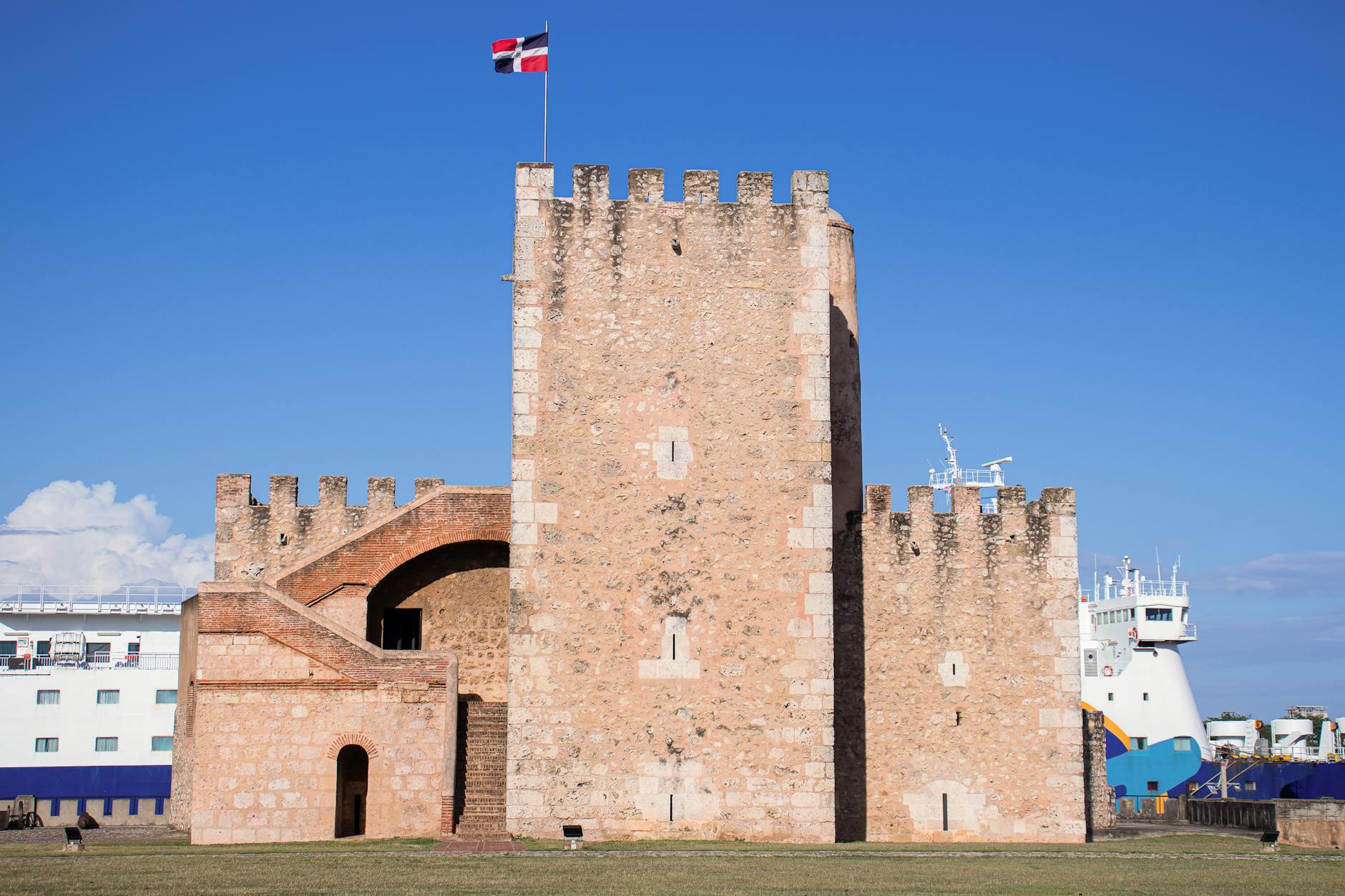
Black volcanic stone rises 240 metres above the coastal plain. Brimstone Hill Fortress is massive, improbable, and UNESCO-listed. Built by the British over a century from 1690, it used enslaved African labour to haul volcanic rock into fortifications that were among the most impressive in the Americas.
The views from the citadel reach across to Sint Eustatius, Saba, and on clear days as far as Montserrat. Inside, the restored barracks and powder magazines tell the story of colonial rivalry between Britain and France—this fortress changed hands once, in 1782, briefly, before the British took it back.
Below the fortress, Basseterre is the capital. Compact and walkable, with Independence Square at its centre—a Georgian plaza once used as a slave market, now shaded by palms and surrounded by pastel-coloured colonial buildings.
Romney Manor, a short drive inland, adds a different chapter. The 17th-century plantation house sits within botanical gardens where a 350-year-old Saman tree spreads its canopy over the lawns. The estate now houses Caribelle Batik, where you can watch fabric being dyed using traditional wax-resist methods.
The St. Kitts Scenic Railway completes the picture. Originally built in 1912 to carry sugar cane from the fields to the mill in Basseterre, it is the last working narrow-gauge railway in the Caribbean. The double-decker cars wind along the coast and through former cane country—a 3-hour loop with rum punch and live music on board.
The Carib name means "fertile land." The volcano earns it. Mount Liamuiga climbs to 1,156 metres through dense rainforest—mahogany, ferns, bromeliads—with green vervet monkeys moving through the canopy above the trail.
The hike to the crater rim takes around 3–4 hours each way. It's steep, sometimes muddy, and genuinely rewarding. At the top, an emerald crater lake sits inside the dormant caldera, surrounded by walls of tropical vegetation. Guides are recommended; the trail is well-worn but the final scramble requires care.
For those who want adventure without altitude, the rainforest offers guided tours at lower elevations. You'll hear the birds before you see them—broad-winged hawks, Caribbean martins, the odd hummingbird hovering at flowers. Vervet monkeys, introduced centuries ago from West Africa, are abundant and unafraid.
The Sky Safari Zipline on the southern slopes offers a faster way through the forest canopy—five lines, some over 300 metres long, with views of the Southeast Peninsula and the Caribbean below.
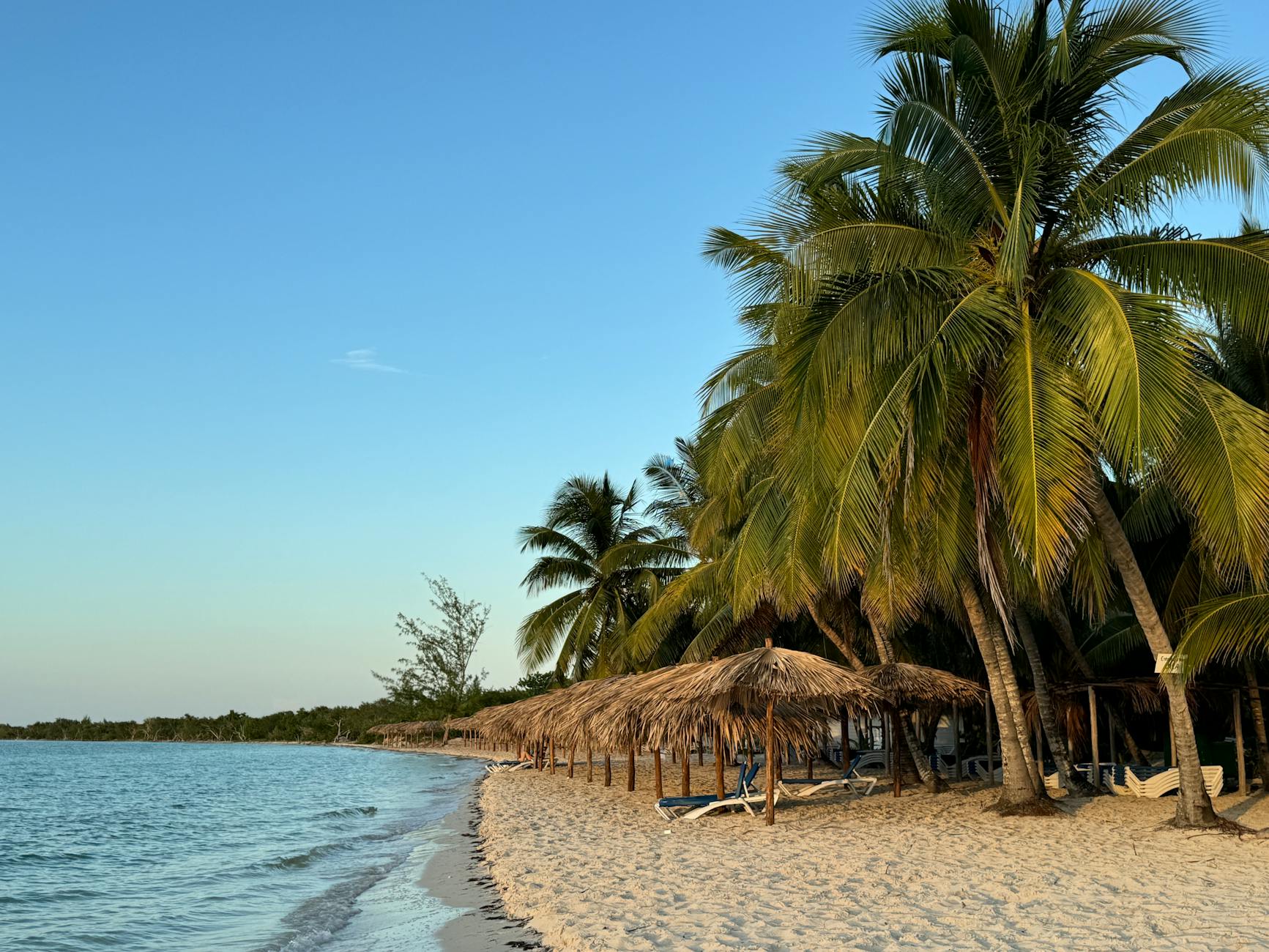
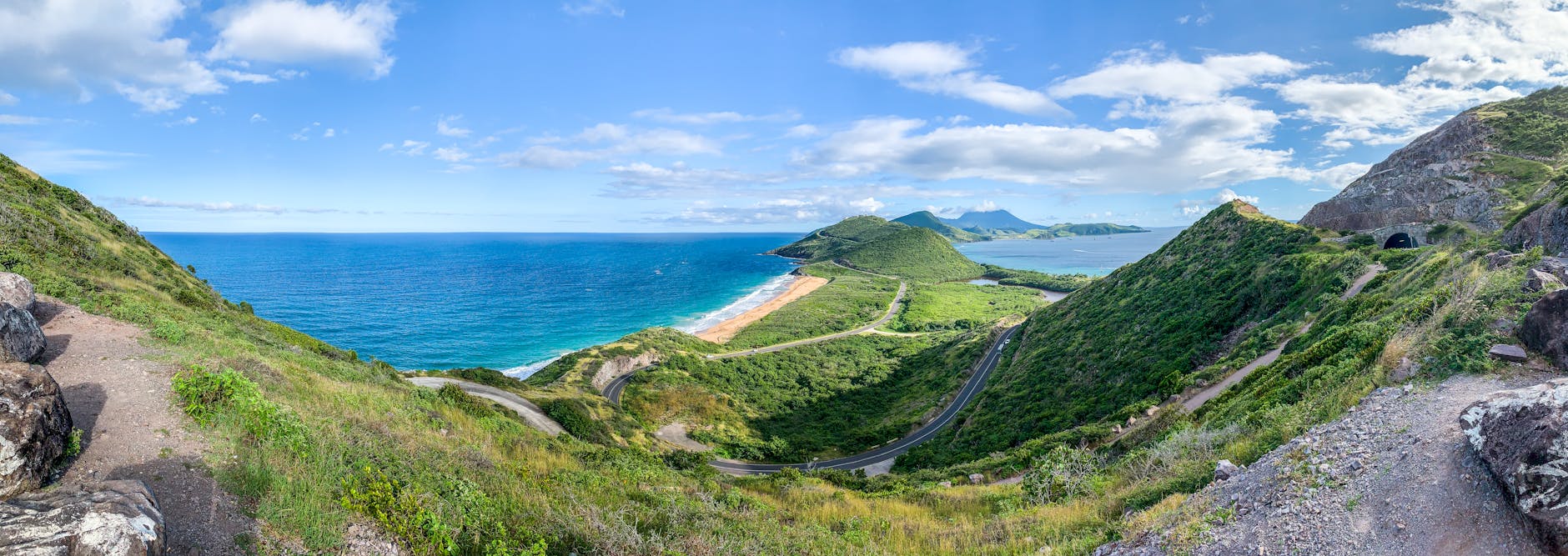
Back at sea level, the Southeast Peninsula stretches south from the main island—a narrow finger of land with salt ponds, hiking trails, and beaches that face both the Caribbean Sea and the Atlantic. Cockleshell Beach at the tip has clear water, a beach bar, and an uninterrupted view of Nevis across the Narrows.
The 45-minute ferry from Basseterre to Charlestown is a crossing between different speeds of life. Nevis moves slowly by design. The island has resisted overdevelopment, and the result is a place where the beach still belongs to sea turtles in the morning and a rum shack at sunset.
Charlestown is the capital—a single main street of Georgian architecture, with the Alexander Hamilton Museum marking the birthplace of the American Founding Father who was born here in 1755. The museum is small but well-curated, set in the house where Hamilton spent his early years before leaving for New York and history.
Pinney's Beach runs along Charlestown's western shore—a long arc of dark sand backed by palms, with the Four Seasons Resort at one end and simpler beach bars further along. The water is calm. The snorkelling off the beach is good, with sea fans and reef fish in the shallows.
Nevis has its own festival calendar. Culturama, held in late July and early August, celebrates Emancipation with kaiso competitions, street parades, craft fairs, and the Miss Caribbean Culture Pageant. It's a genuine community celebration rather than a tourist event—one of the region's most authentic cultural festivals.
The Bath Hotel, built in 1778 and one of the oldest hotels in the Caribbean, sits above natural hot springs at the edge of Charlestown. The springs—heated by geothermal activity from Nevis Peak—were famous across the British colonies for their supposed medicinal properties. Today you can still soak in them.
Sugar Mas is St. Kitts' national carnival—held from late December into the New Year. The name references the sugar plantation history, and the festival itself is an act of reclamation: costumed troupes, soca and calypso competitions, the J'ouvert street party before dawn on January 2nd, and the grand parade that brings the capital to a standstill.
The St. Kitts Music Festival in late June—typically three nights at Warner Park Stadium in Basseterre—brings an international lineup of reggae, R&B, soca, jazz and dancehall alongside local artists. It's one of the Eastern Caribbean's most diverse music events, and the crowd is a mix of islanders and visitors who fly in specifically for it.
Between festivals, the food scene centres on local produce and fresh seafood. Goat water—a slow-cooked goat stew spiced with herbs—is the national dish of Nevis. Conch fritters, saltfish with breadfruit, and fresh lobster appear on menus across both islands. Rum, distilled locally at the Belmont Estate on Nevis, is the drink of choice.
The beaches are the constant. South Friars Bay on St. Kitts has a calm, sheltered bay popular for snorkelling. Frigate Bay has two beaches side by side—one facing the Atlantic, one the Caribbean, within a short walk of each other. And the Southeast Peninsula hides coves that require a boat or a proper hike to reach.
St. Kitts and Nevis doesn't have the airport connections of Barbados or the resort density of St. Lucia. That's partly why it still works. The scale is human. The two islands together have 50,000 people. You can drive the circumference of either island in a couple of hours. That compact size is the point.