This is your destination guide for Iceland.
This is your destination guide for Iceland South Coast
📍 Part of IcelandWaterfall after waterfall, black sand, and glacier ice that washes up on the beach - Iceland's greatest-hits coast.
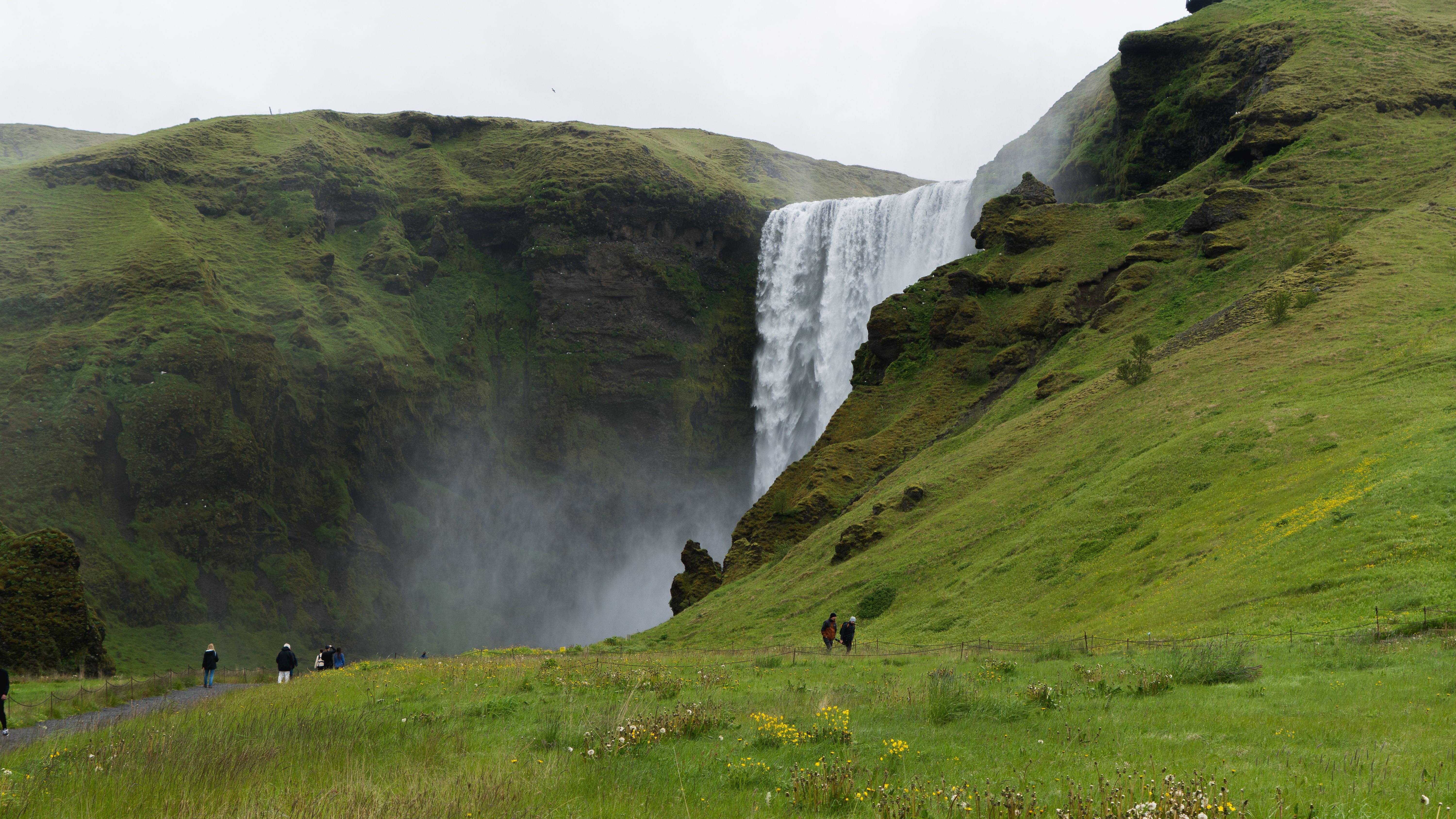

The reality: You leave Reykjavík, and within ninety minutes the waterfalls start. Seljalandsfoss, then Skógafoss, then a black beach, then a glacier, then icebergs on the sand — the South Coast lines up Iceland's postcards along one paved road and dares you to drive past any of them.
That's the appeal and the catch. This is the most-driven stretch of Iceland, so you won't have it to yourself — tour buses run it daily from the capital, and the big stops now charge to park. But the sights earned their fame honestly. Standing behind Seljalandsfoss while it soaks you, or watching a chunk of thousand-year-old ice roll in the surf at Diamond Beach, is not a thing you shrug off.
Give it more than a day trip. The coast keeps unfolding east — past Vík, past the canyon at Fjaðrárgljúfur, out to the glacier lagoon five hours from Reykjavík. Rent a car, book a glacier hike, respect the ocean at Reynisfjara, and let the weather do what it wants. It will anyway.
The South Coast's opening act is water falling off cliffs, one after another, then a beach where the sand is black and the ocean means business.
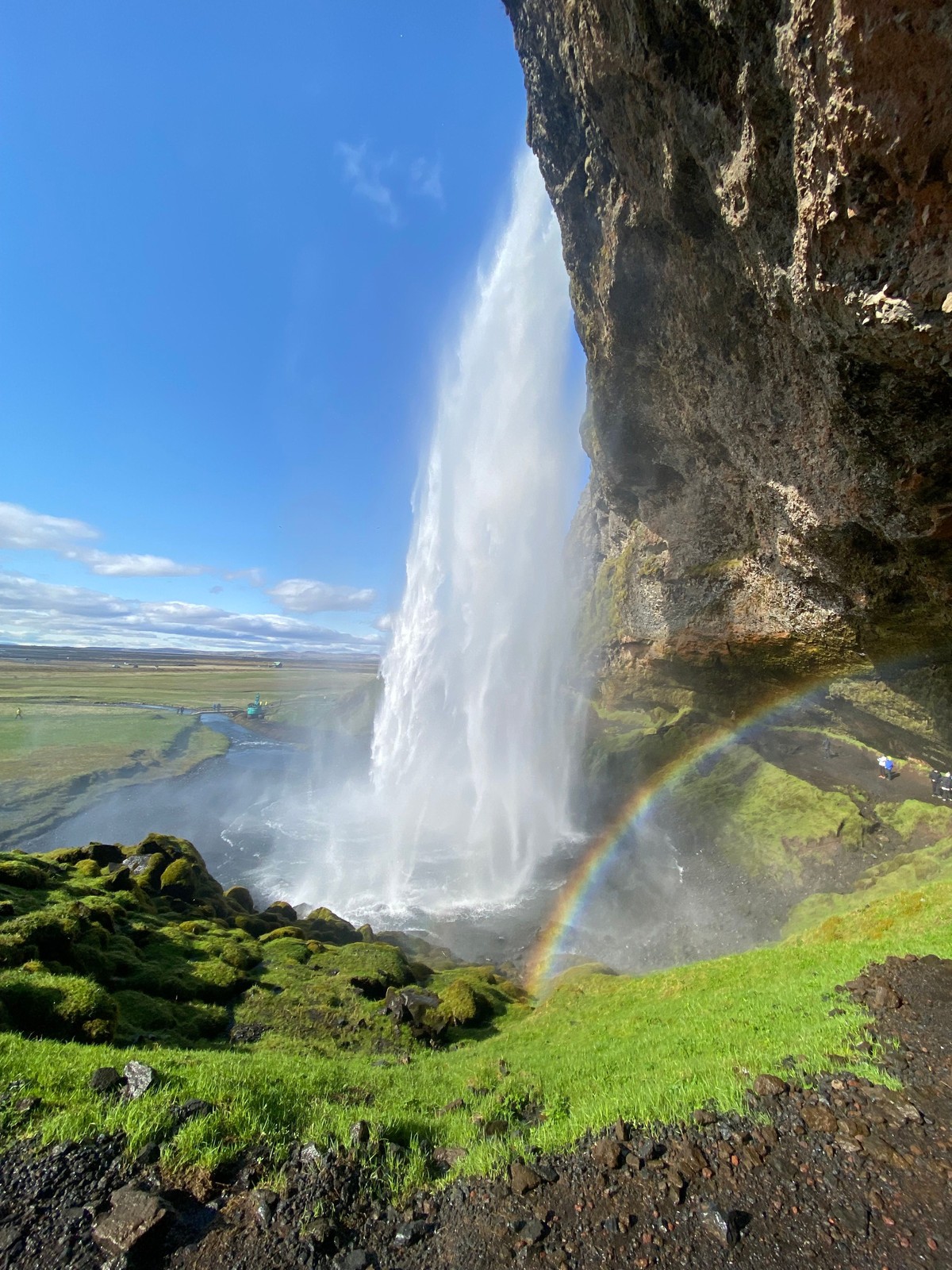
Seljalandsfoss — the one you walk behind. A path loops through the spray behind the curtain, so waterproof everything and expect to come out wet. Sixty metres of glacial meltwater off the old coastline. Hidden in a rock cleft a two-minute walk north, sharing the same car park, is Gljúfrabúi — a waterfall tucked inside a canyon that half the crowd walks straight past.
Skógafoss — a wide, thundering wall of water you can stand right in front of until the mist chases you back. Climb the steel staircase beside it for the top-down view and the start of the Fimmvörðuháls trail. Afternoon sun throws rainbows across the base.
Kvernufoss — the quiet twin, hidden behind the Skógar folk museum. You can walk behind this one too, usually with nobody else there. A 15-minute walk earns you the version of Seljalandsfoss without the buses.
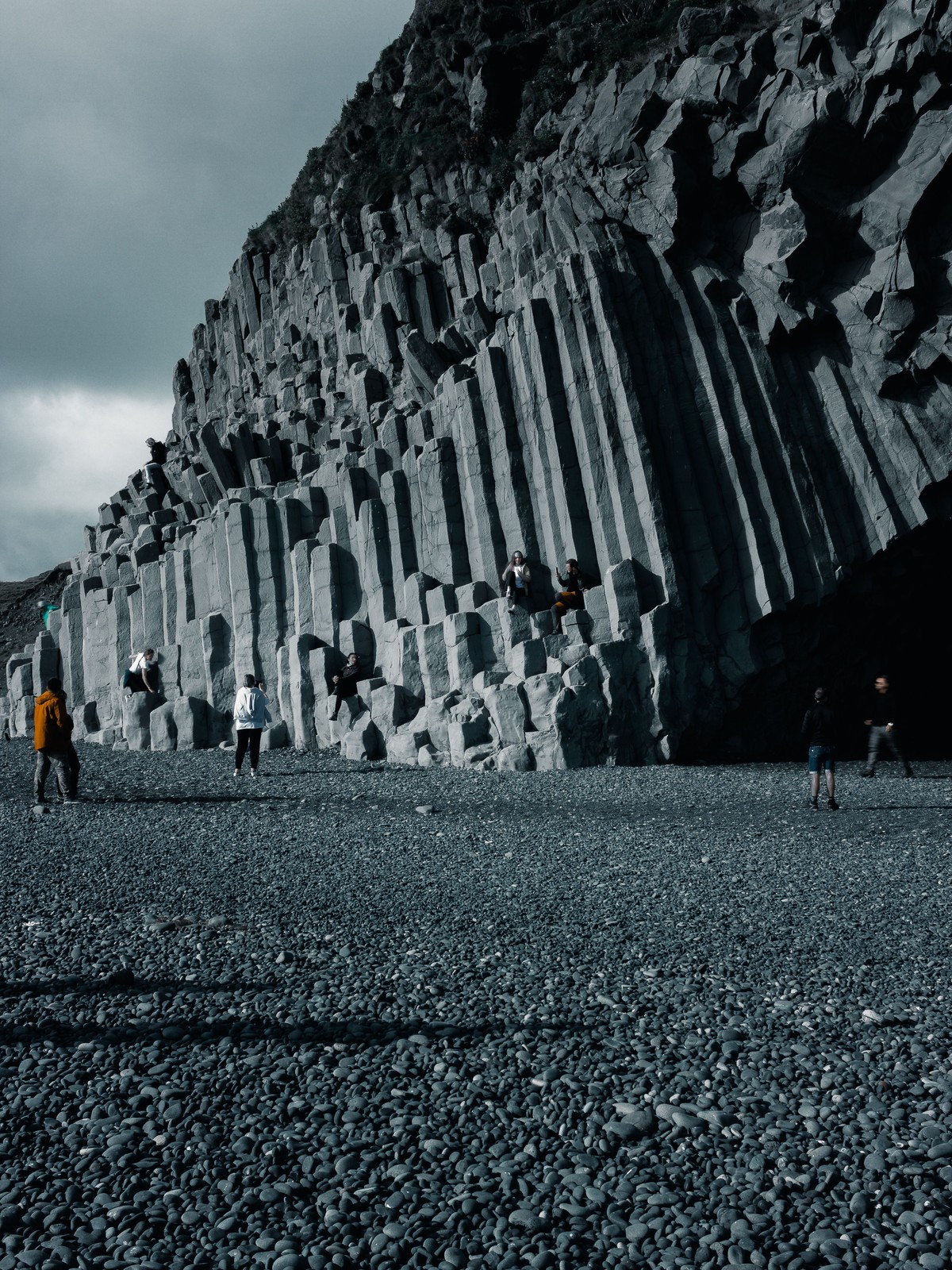
Reynisfjara — the famous black beach: hexagonal basalt columns, the Reynisdrangar sea stacks rising offshore, and sneaker waves that have killed careless visitors. A red-yellow-green warning light and a closure gate govern how close you can go, and the shoreline itself reshapes with every big storm. The one rule that matters: never turn your back on the water. If the light is red, the beach is closed — not "closed for most people".
Dyrhólaey — the arch and lighthouse on the headland just west, with long views back along the black coast. Parts of it close for bird nesting in late spring and early summer, so read the sign at the gate. The view of the promontory from Reynisfjara is often the better photo anyway.
Sólheimasandur — the DC-3 plane wreck out on the flats: a long, level, grey walk (or a paid shuttle) to a stripped fuselage on black sand. Genuinely striking, or a tedious trudge to photograph the same hull as everyone else, depending on your mood.
East of Vík the ice takes over. Vatnajökull, the largest glacier in Europe, sends tongues almost down to the road — and one of them melts into the lagoon you've seen a hundred photos of.
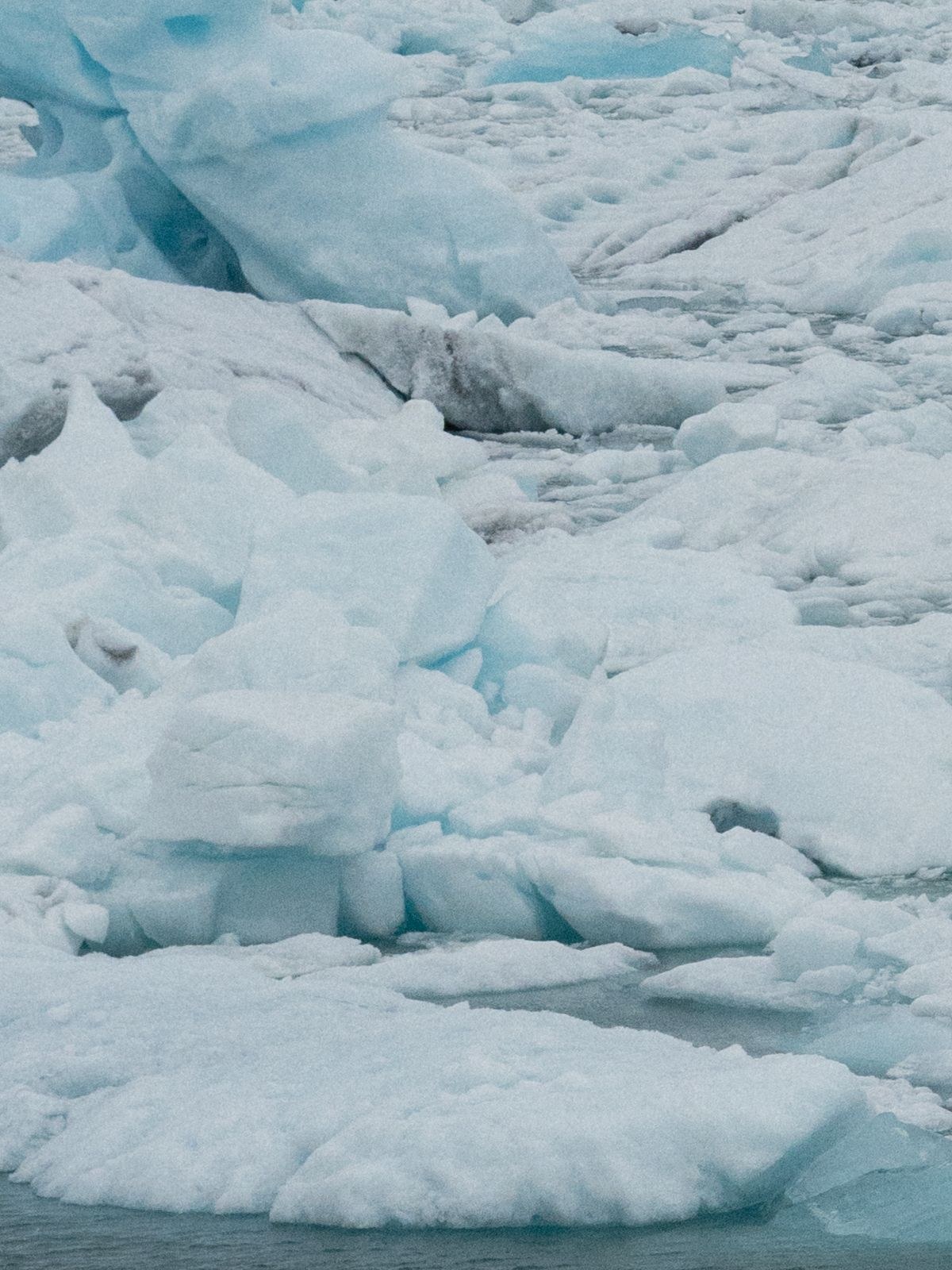
Jökulsárlón — the glacier lagoon. Icebergs calve off Breiðamerkurjökull and drift across the deepest lake in Iceland while seals hunt between them. Amphibian boats (gentle, all ages, ~40 minutes) and zodiacs (closer to the ice, colder, faster) run roughly May to October. It's five hours from Reykjavík — sleep nearby, don't round-trip it in a day.
Diamond Beach — right across the Ring Road. The icebergs wash back up onto black sand and sit there glinting until they melt. Early morning, low sun, numb fingers, and a photo you'll actually keep.
Fjallsárlón — the smaller lagoon a few minutes west, closer to the glacier wall and far quieter. A fair trade when Jökulsárlón's car park is a scrum.
Sólheimajökull — the accessible glacier back near Skógar, where most people do their first crampon walk. The car park used to sit right at the ice; now it's a walk to reach it — the glacier has pulled back that far in barely a decade, and the guides will show you the year-markers.
Skaftafell (in Vatnajökull National Park) — the base for longer glacier hikes on Falljökull and the trail up to Svartifoss, a slim waterfall framed by black basalt columns. In winter, guided trips lead into the blue ice caves that form inside the glacier.
The South Coast isn't really about towns — it's about the road between them. But a few are worth knowing as places to sleep, eat, and refuel before the next empty stretch.
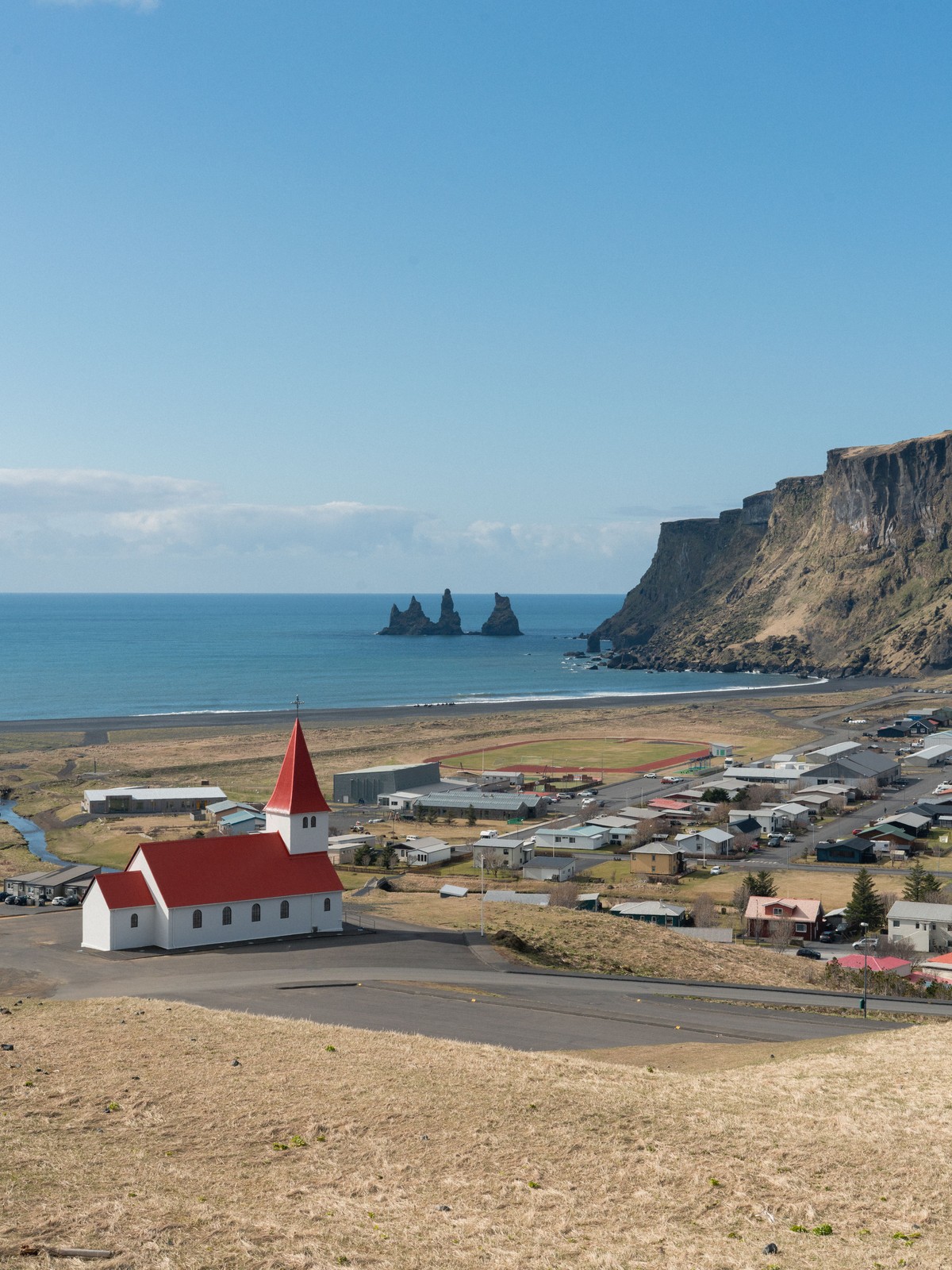
Vík í Mýrdal — the southernmost village, wrapped around a black beach with a little red-roofed church watching from the hill. It's the natural midpoint base for the western half of the coast. The Katla volcano sits under the ice cap above town; that church on the hill is the designated meeting point if it ever erupts. Locals live with that, and so, for a night, will you.
Kirkjubæjarklaustur — "Klaustur" to everyone, because nobody outside Iceland says the whole thing. The gateway east into glacier country, and the base for Fjaðrárgljúfur, the serpentine mossy canyon a short drive north.
Hvolsvöllur — saga country. This is the landscape of Njáls saga, and the Lava Centre here is the honest place to get your head around what's rumbling under all this scenery. A useful first or last stop close to Reykjavík.
Selfoss — the biggest service town on the way out. Not a sight, but where you stock up, fuel up, and find a supermarket that isn't a petrol station.
Höfn — far east, where the South Coast hands over to the fjords. A working harbour town and Iceland's langoustine capital (more on that below).
Get on the ice, into the canyon, or into a hidden pool — without signing up for an expedition.
The South Coast is where most first-timers do their one big Icelandic adventure. You don't need to be an athlete for any of this — you need a guide, the right layers, and a tolerance for weather.
Iceland won't win you over on price, but the South Coast feeds you better than its reputation — lamb that grazed wild all summer, fish landed that morning, and langoustine out east that's worth the drive.
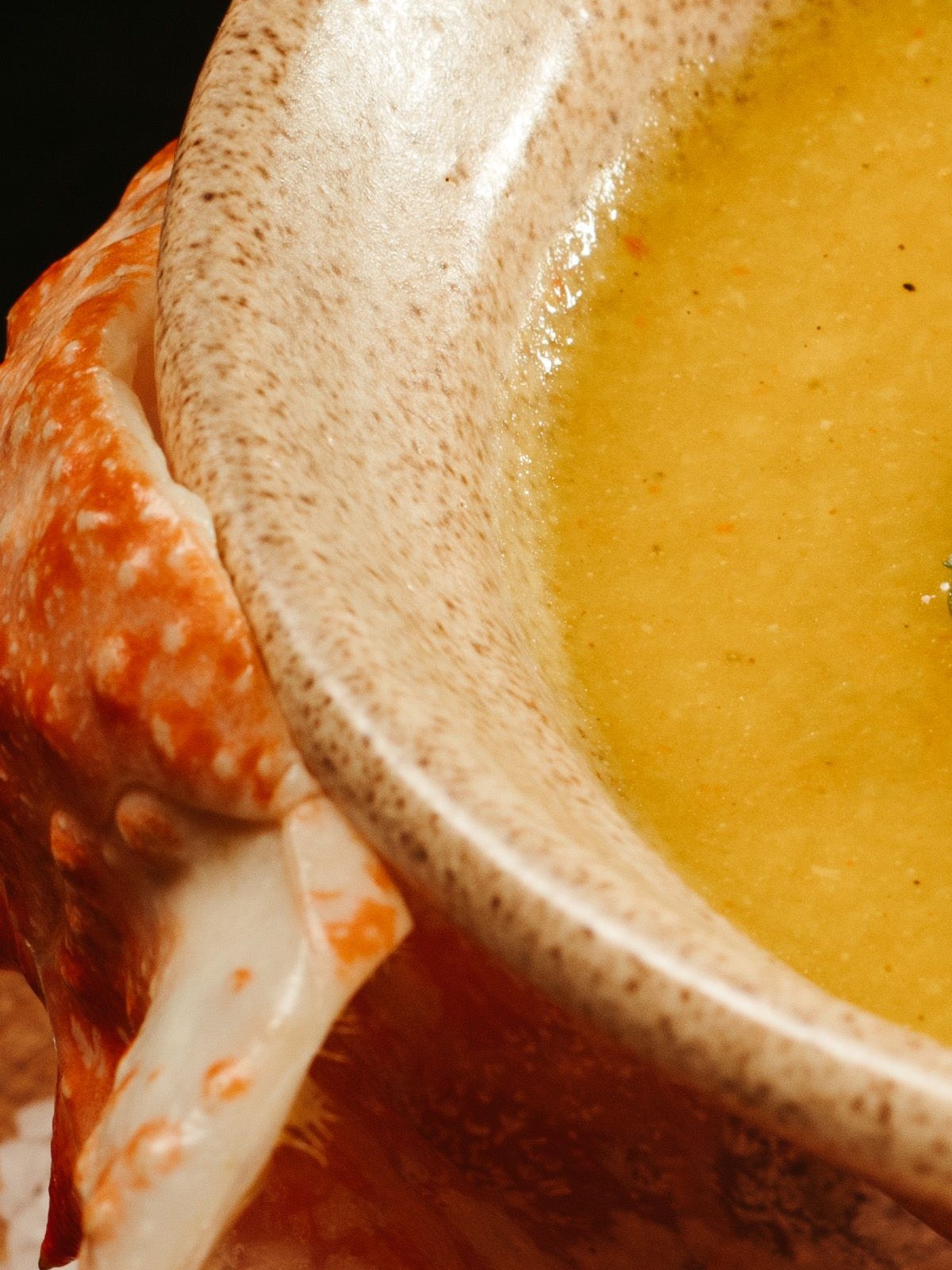
Icelandic lamb — free-roaming and herb-fed all summer, the backbone of every menu. Kjötsúpa (lamb-and-root-vegetable soup) is the honest cold-day meal.
Langoustine — Höfn is the capital of it. A bowl of humarsúpa (langoustine soup, rich with cream and a splash of brandy) at Pakkhús or Humarhöfnin is the reason people detour that far east.
Skyr — the thick, not-quite-yogurt Icelanders have eaten for a thousand years. Breakfast, or dessert with berries.
The hot dog (pylsa) — lamb-based, crispy fried onions, remoulade, from any petrol-station grill. Iceland's true national dish, whatever anyone tells you.
Drink: there's no Icelandic wine — the country sits too far north to grow a grape. What there is: Brennivín, the caraway schnapps nicknamed "black death"; a craft-beer scene that only got going after beer was legalised in 1989 (yes, really); and tap water straight off the glaciers that beats anything you'll pay for. Order the tap water — buying it bottled here is close to an insult.
June to August — the midnight sun, every road open, puffins on the Dyrhólaey cliffs, boats running on the lagoon. Also the busiest and priciest, and the one time Reynisfjara's car park overflows. The long light is your weapon: drive the big stops at 9 or 10 PM in full daylight and let the buses have the afternoon.
May and September — the smart compromise. Most things open, crowds thinner, prices softer. May brings the first puffins and the odd still-closed highland road; September brings the first aurora nights and quiet waterfalls.
November to March — short days (as little as four hours of light in December), storms, and genuine driving challenges, but also ice caves, frozen waterfalls, and northern lights over black sand. Reynisfjara is at its most dangerous now — more red-light closures, higher seas. For confident winter drivers only.
Whatever the month: the South Coast catches Iceland's weather first. Wind that opens car doors the wrong way, rain that arrives sideways, four seasons before lunch. Check road.is and safetravel.is every morning. That's not nervousness — it's how Icelanders travel their own country.
Rent a car. The South Coast is the most drivable part of Iceland — the Ring Road (Route 1) is paved the whole way and the big sights sit just off it. There are no trains anywhere in Iceland, and buses east of Vík are thin, so a car is the whole point.
Distances lie. It looks compact on a map, but Reykjavík to the glacier lagoon is five hours one way. Don't try to swallow the whole coast in a day — you'll spend it staring through a windscreen.
The wind is the hazard, not the road. Gusts strong enough to tear a car door off its hinges are a real (and usually uninsured) risk — grip doors when you open them, and never park nose-out into a gale. Watch for single-lane bridges, sudden fog, and, in summer, ash-and-sand storms on the flats east of Vík.
No car? Day tours from Reykjavík cover the western stretch to Reynisfjara and Vík; multi-day tours reach the lagoon. Þórsmörk and the highlands need a 4x4 or a dedicated highland bus, and only in summer.
Pick your base by how far east you're heading. The coast is a line, not a hub — where you sleep decides what's an easy morning and what's a two-hour slog.
Hvolsvöllur / Hella — closest to Reykjavík and the waterfalls. Good first night in, or a base if you're only doing the western half.
Vík — the central base: black beach, Reynisfjara, and Dyrhólaey on the doorstep. Books out fast in summer.
Kirkjubæjarklaustur — the launch pad for glacier country and Fjaðrárgljúfur. Quiet, few rooms, reserve ahead.
Skaftafell / Freysnes — the closest beds to Vatnajökull's hikes and the winter ice caves.
Höfn — the far-east base for the glacier lagoon and langoustine dinners, if you're carrying on around the Ring Road.
Iceland isn't cheap, and the South Coast is where you feel it — fuel, food, and a parking fee at nearly every stop add up faster than the sights do.
Prices in 2026 króna; roughly €1 ≈ 150 ISK, so divide by about 150 for euros. Winter rates run 30–40% below summer. Budget an extra ~1,000 ISK in parking at most major stops — it's the fee that surprises everyone.
Go if you want Iceland's icons stacked along one drivable stretch — waterfalls you can walk behind, a glacier you can hike, and icebergs on a black beach. Skip if you came for solitude, or if you'll ignore the red light at Reynisfjara.
Found this useful? Share it.
Still planning?
We don't stop at "here's the country." Real places to stay, what to do, apps that matter, even how to find someone to travel with — plus guides for whatever vibe you're after, from beach days to wine country to slow weekends. All up top. Spin for somewhere new when you're done with this one.