This is your destination guide for Iceland.
This is your destination guide for Golden Circle
📍 Part of IcelandTwo drifting continents, the geyser that named the rest, and the loop everyone drives in a day.


The reality: You leave Reykjavík after breakfast and by mid-morning you're standing in a gorge with North America on one side and Europe on the other, watching the ground pull itself apart two centimetres a year. An hour later a column of boiling water fires forty metres into the air on cue. By lunch you're eating soup made from tomatoes grown in a greenhouse heated by the same volcanic plumbing. It's a lot of planet in one day.
That's the Golden Circle: three geological headliners close enough to link in an afternoon, plus a scatter of craters, hot springs, and farms that turn a checklist into an actual day out. It's the most-driven route in Iceland for a reason — and yes, everyone drives it, which is the honest catch.
The trick isn't finding somewhere nobody goes. It's timing. Arrive early, leave the biggest crowds behind, add one detour you'll remember — a snorkel between the plates, a soak in the country's oldest pool — and the loop everybody does becomes yours anyway.
The Golden Circle is really three stops close together, and because the drive between them is short, people underrate each one. Don't. Each does something the others can't.

Þingvellir — the rift valley where the North American and Eurasian plates pull apart about two centimetres a year. You walk down Almannagjá, a gorge with one continent on each wall. It's also where Icelanders founded their parliament, the Alþingi, in the year 930 — they chose the one flat, reachable place, and it happened to sit on the seam of the world. Free to enter; you pay to park.
Geysir — the geothermal field that gave every geyser on Earth its name. The original Great Geysir mostly sleeps now, but Strokkur beside it fires a column of boiling water every few minutes, so nobody waits long. Bubbling mud pots, steam vents, and that faint sulphur smell that tells you the ground is alive.

Gullfoss — the "golden falls," where the glacial Hvítá river drops in two steps into a canyon you feel before you see. In spray and sun it throws a rainbow; in winter it half-freezes into something stranger. It's the one big stop that costs nothing — no entry, no parking fee — which is worth remembering after you've paid at everything else.
A farmer's daughter, Sigríður Tómasdóttir, is the reason it wasn't dammed for hydropower a century ago; she threatened to throw herself into it. Iceland kept the waterfall. Stand at the lower viewpoint and you'll take her side.
The swim between two continents — in water cold enough to concentrate the mind.
In the Þingvellir rift, meltwater from the Langjökull glacier filters through porous lava for decades before it surfaces in Silfra. The result is some of the clearest water on Earth, sitting in the crack between the two plates. You snorkel it — or dive it — floating over a submerged canyon where you can see a hundred metres down.
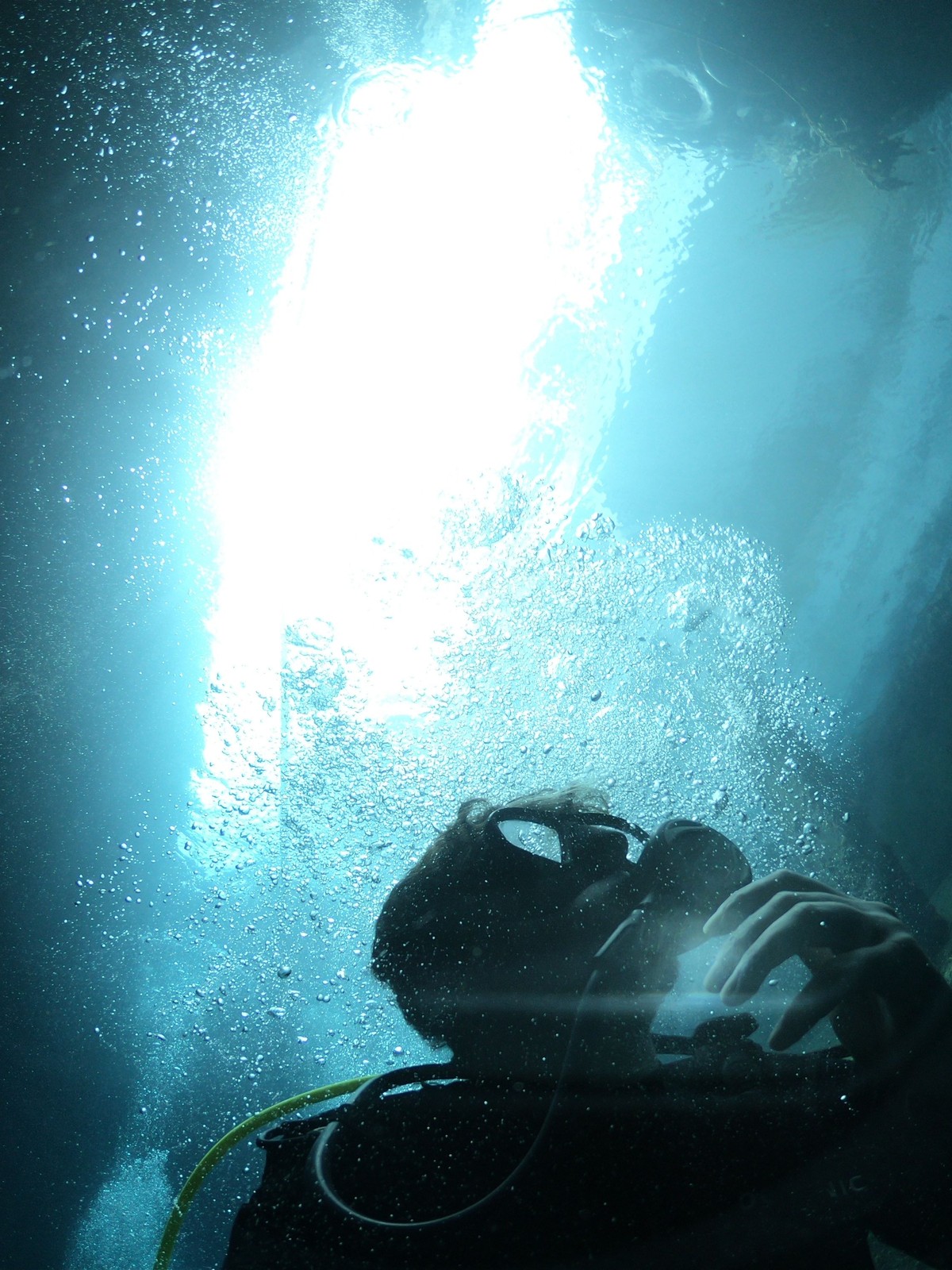
The water stays 2–4°C all year, so your warmth comes from the drysuit, not the season. Your hands and face feel the cold; the rest of you stays dry. The float itself is slow and easy — no experience needed to snorkel, and no current to fight.
Guides run it year-round: DIVE.IS, Arctic Adventures, and Adventures.is are the established operators, meeting you at the P5 car park or picking up in Reykjavík. Book ahead. You sign a medical form, pregnant travellers can't join, and there are cold-tolerance limits.
Do drink from it mid-swim. It's clean glacial water filtered for fifty years, and you won't get to taste anything like it again.
You can pad a Golden Circle day with detours, and most are worth it — but a few earn the stop more than others. The route has almost no towns; what's out here is craters, hot springs, and farms.

Kerið — a 3,000-year-old crater with rust-red walls around a blue-green lake. Small, quick, photogenic: a ten-minute loop of the rim and a staircase down to the water. It's privately owned, so there's a small entry fee — children go free. Best on a clear day when the colours switch on.
Secret Lagoon (Gamla Laugin) in Flúðir — Iceland's oldest pool, in use since 1891, with a little geyser pattering away at the edge. Warmer, cheaper, and far less staged than the famous blue one near the airport. Book ahead in season.
Laugarvatn — a lakeside spa where they bake rye bread by burying the dough in the hot ground for a day (more in Food & drink). Efstidalur — a working dairy farm with an ice-cream barn where you eat looking through a window at the cows that supplied the milk. Reykholt — home base for Friðheimar's greenhouse lunch. Skálholt — the old church seat, a quiet history stop if Iceland's sagas mean anything to you.
Beyond the swim — ways to spend a half-day without a coach parked next to you.
The loop is easy to drive, which means it's easy to treat as a sit-in-the-car day. It doesn't have to be. Everything below leaves from somewhere on the route.
Iceland isn't a wine country, and the Golden Circle isn't about restaurants. It's about food that comes straight out of the geothermal ground — grown in it, or baked in it.

Friðheimar, in Reykholt, grows tomatoes year-round in geothermally heated greenhouses and serves lunch among the vines: tomato soup with unlimited home-baked bread, plus tomato ice cream, tomato beer, even a tomato-and-apple pie. Bumblebees do the pollinating around you while you eat. The restaurant (11:30–16:00) needs booking; the wine bar in an older greenhouse doesn't. Touristy and genuinely good.
Geothermal rye bread at Laugarvatn — dough buried in the hot ground by the lake for 24 hours, dug out dense and sweet, eaten warm with butter and smoked trout. The long slow bake caramelises it almost to molasses.
Efstidalur ice cream comes off the dairy farm made from that morning's milk — simple, cold, and the cows are right behind the glass. Beyond that: lamb soup at any roadside stop, and for the brave, a cube of fermented shark (hákarl) chased with Brennivín at the Geysir shop — more a rite of passage than a meal, but you'll have a story.
June to August — midnight sun, everything open, warmest (which still means 10–15°C). Also peak crowds and peak prices. The move is timing: reach Gullfoss and Geysir before 10 AM or after 5 PM and the coaches thin right out.
May and September — the sweet spot. Days still long, crowds thinner, prices lower, roads easy. If you can choose, choose these.
October to March — short days, possible snow, and you'll want to check road conditions before setting out. The reward is near-empty sites and, on clear nights, the northern lights overhead — though if that's your main goal, the north of Iceland is where you'd base yourself, not here.
Any season, the weather turns fast. Gullfoss can be still and sunny while Geysir, ten minutes away, is sideways rain. Pack for all of it and don't build a rigid schedule.
Rent a car. The loop is 230–300 km depending on detours, all on paved, well-signed roads — Route 36 to Þingvellir, 365/37 past Laugarvatn to Geysir, 35 on to Gullfoss. In summer a 2WD is fine; in winter take a 4×4 and read the road reports before you leave.
Or take a tour. No public bus does the circuit, so if you're not driving, a guided minibus from Reykjavík is the practical option — 6–8 hours, all three headliners, usually Kerið too. You trade flexibility for never having to park or navigate.
Parking now costs at most stops — roughly a thousand krónur at Þingvellir and Geysir, paid by app or machine, valid all day. Gullfoss is still free. Have your number plate handy; the systems read it automatically and bill you if you skip out.
Most people do the Golden Circle as a day trip from Reykjavík, and that works fine. But staying out one night is the only way to reach the big three before the buses arrive.
Reykjavík — the default. Everything's an hour or two out; drive the loop and be back for dinner.
Selfoss — the largest town near the southern side. Hotels, food, and a natural base for pairing the Circle with the south.
Laugarvatn or Flúðir — small, quiet, right on the route. Wake up next to Geysir and Gullfoss.
Reykholt — countryside quiet, next to Friðheimar and the geothermal farms.
Near Gullfoss — a couple of hotels out here exist for one reason: being first at the waterfall in the morning.
The Golden Circle is one of Iceland's cheaper days out — the three headline stops are free or cost a parking fee of roughly a thousand krónur, and Gullfoss doesn't charge even that. The money goes on the extras you choose: a Silfra snorkel, a Secret Lagoon soak, lunch at Friðheimar. Iceland is dear everywhere; here you get to decide how much of it you buy.
Prices in ISK; roughly 150 ISK to €1. Kerið entry (a few hundred krónur, under-12s free) and Gullfoss parking (nothing) are the cheap surprises. Off-season knocks about a third off hotels.
Go if you want Iceland's geology served straight in a single day — a rift you walk through, a geyser that fires on cue, a waterfall you don't pay to see, and lunch grown in the steam. Skip if you came for solitude, or expected the whole island's drama in one afternoon.
Found this useful? Share it.
Still planning?
We don't stop at "here's the country." Real places to stay, what to do, apps that matter, even how to find someone to travel with — plus guides for whatever vibe you're after, from beach days to wine country to slow weekends. All up top. Spin for somewhere new when you're done with this one.