This is your destination guide for Japan.
This is your destination guide for Setouchi
📍 Part of JapanUnderground Ando museums, a Kusama pumpkin on a fishing pier, and six islands you cross by bike.
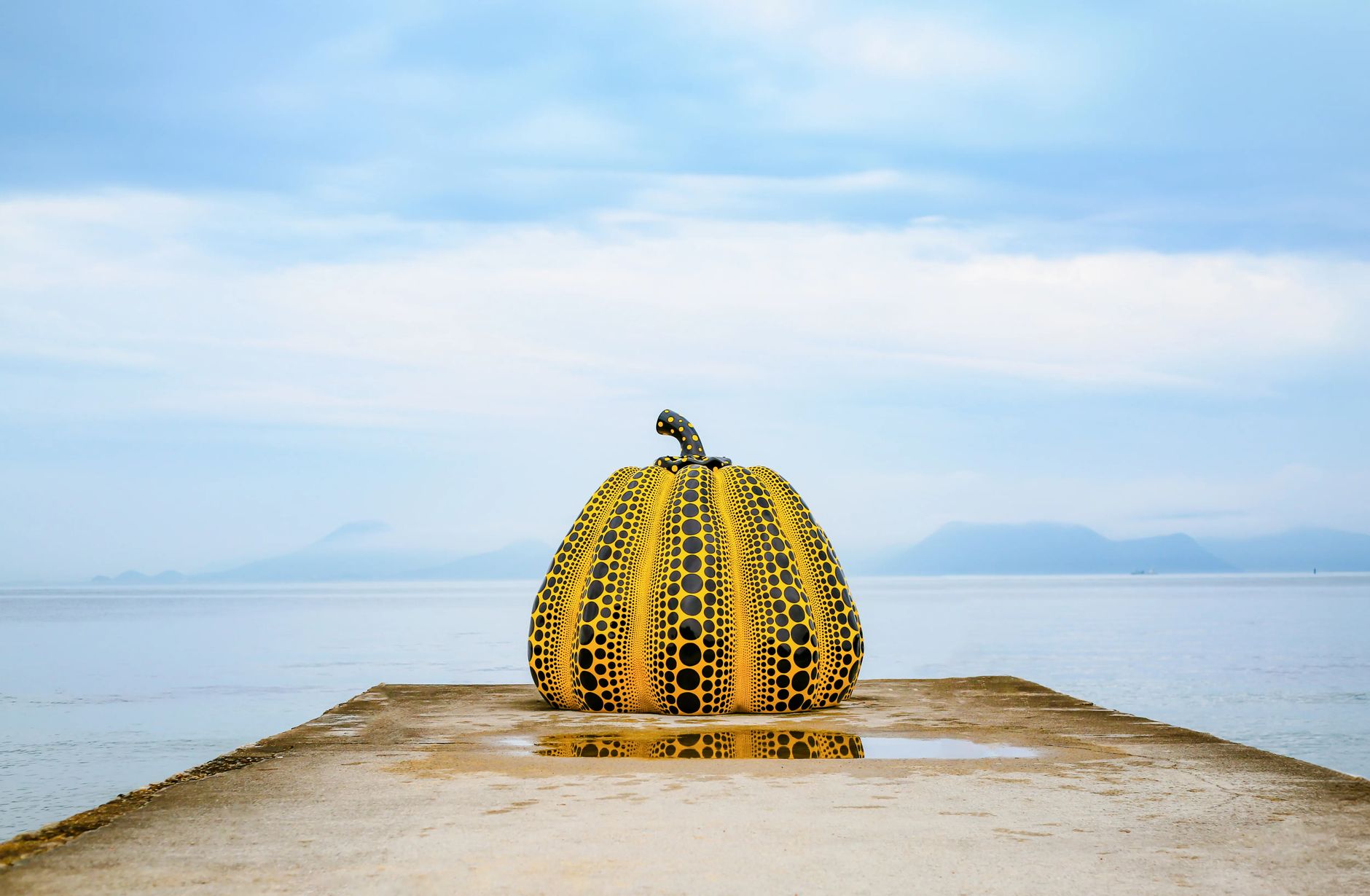

The reality: Naoshima doesn't greet you with a museum lobby. You step off the ferry into a working port — boats, a vending machine, an old man on a bicycle — and the art is somewhere else entirely. The image everyone carries home is on the south coast: a yellow pumpkin with black spots at the end of a concrete pier, sitting over the Seto Inland Sea as if it grew there. Naoshima doesn't perform its art. It leaves it lying around a village that still smells of the sea.
That's the trick of Setouchi. The Seto Inland Sea has dozens of islands, most of them quiet places where people grow olives and catch fish. On a handful — Naoshima, Teshima, Inujima — the Benesse foundation sank world-class museums into the hillsides and turned empty houses into installations. Every three years the Setouchi Triennale spreads the art across seventeen islands and the whole sea fills up; the rest of the time it's much calmer, and the ferry is half-empty.
Come for one island and you'll wish you'd planned for three. Book your museum slots before you arrive, learn the ferry timetable by heart, and leave a day at the western end for the Shimanami Kaido — the cycling route that island-hops all the way to Shikoku. The art is the reason people come. The slow sea between the islands is the part they remember.
The Seto Inland Sea is dotted with islands. Only a few are about art — but those few are why you're reading this.
Naoshima — the one everyone means by "the art island." Eight square kilometres of Inland Sea shoreline, a working port at Miyanoura, and a density of Tadao Ando concrete you won't find anywhere else. Kusama's red pumpkin greets the ferry; the yellow one is on a south-coast pier if you ride that far. Two full days won't quite cover it.
Teshima — slower, greener, terraced rice fields running down to the water. Home to the Teshima Art Museum, the single best thing in the region — and barely a "museum" at all (more below). Rent an e-bike at the port; the island is hilly and the art is spread out.
Inujima — the smallest and rawest. A century-old copper refinery turned into an art museum, plus a scatter of galleries through a village of about forty people. Fewer ferries, so check the timetable twice.
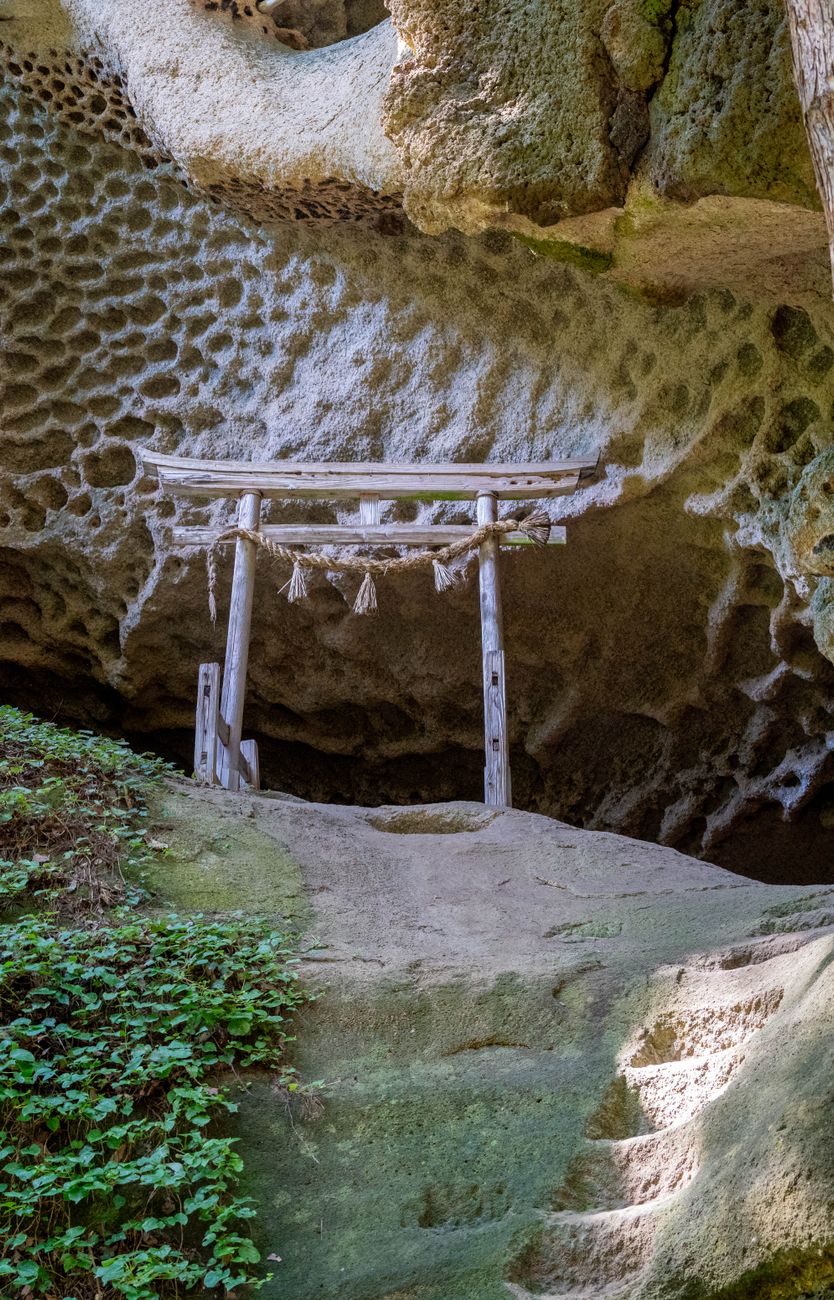
Megijima & Ogijima — the Triennale islands closest to Takamatsu. Megijima trades on the Onigashima "demon island" legend — ogre caves and Momotaro folklore to poke around in. A short ferry hop away, Ogijima is the one in the photo: a steep maze of stone steps, alleys, wall murals and cats. Quieter and more local, especially outside festival years.
Shodoshima — the big one, and not really an art island at all: olive groves, a soy-sauce valley, and the Kankakei Gorge. Worth a day on its own if you've got the time — more food than art.
Read this section before you book flights, because almost everything here now needs a reservation. Since October 2025, online tickets are required for the art facilities on Naoshima, Teshima and Inujima — and Chichu, the Minamidera and Kinza art houses, and the Sugimoto Gallery are timed entry: pick a slot, buy ahead, arrive in your window. And most museums close on Mondays. Plan the trip Tuesday–Sunday or expect locked doors.
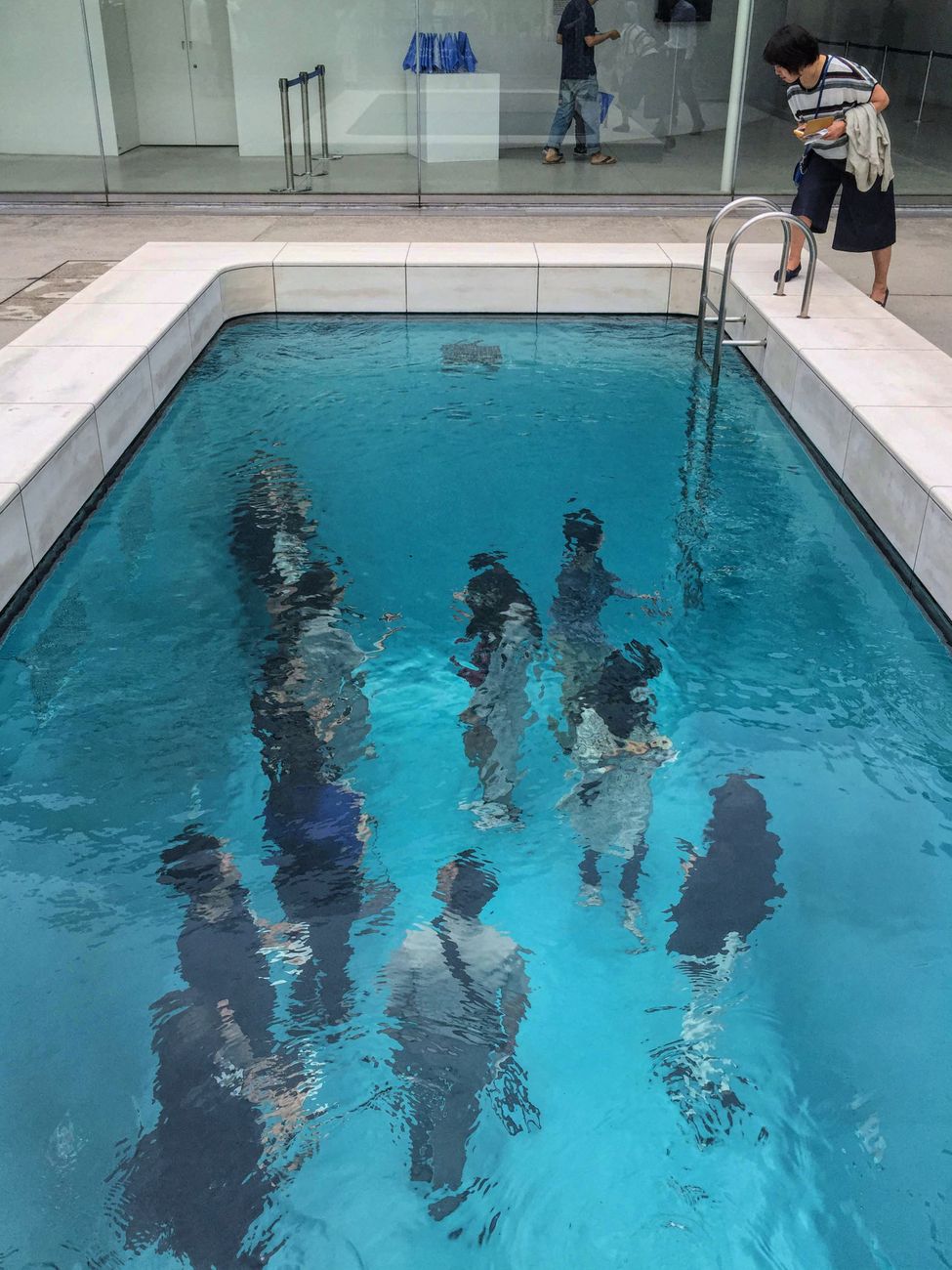
Chichu Art Museum — Ando's masterpiece, buried in a hillside so it doesn't spoil the view. Three artists only: Monet's water lilies in a daylit chamber, a Walter De Maria stone sphere on a temple-like staircase, and James Turrell's rooms of pure light. No photos. Around ¥2,500 weekday / ¥2,700 weekend online. Book it first; everything else fits around it.
Teshima Art Museum — a white concrete shell shaped like a water droplet, open to the sky, with water beading up through the floor and rolling across it all day. One "artwork," no walls, and people sit on the floor for an hour without talking. The quietest, strangest, best thing in Setouchi.
Benesse House Museum — Ando again, half museum and half hotel. You can sleep among the art (see Where to stay). A free shuttle links it to the Lee Ufan Museum, the Valley Gallery and the Sugimoto Gallery.
Naoshima New Museum of Art — opened May 2025, Ando's newest building on the island, partly underground, focused on contemporary artists from across Asia. The reason to come back if you were here before.
Art House Project — empty houses in Naoshima's Honmura village turned into installations. Turrell's Minamidera (you wait in total darkness until your eyes invent the room) is the standout. Kinza is reservation-only, one visitor at a time.
For people who like moving without turning a holiday into a training camp.
Seventy kilometres, six islands, a chain of suspension bridges, and a blue line painted on the road the whole way so you literally cannot get lost. The Shimanami Kaido runs from Onomichi on Honshu to Imabari on Shikoku — the only place in Japan you can cross between the main islands by bike, over the sea. You don't need to be a cyclist: the gradients are gentle, the bridges are reached by long easy spiral ramps rather than climbs, and most riders are ordinary people on rented cross bikes.
A fit rider does the whole thing in a day; most people split it over two and sleep halfway, or ride Onomichi to Setoda (Ikuchijima) and turn back for a relaxed half-day. Either way, skip the bridge out of Onomichi and take the little ferry from the centre of town to Mukaishima instead — it's nicer and easier.
Setouchi food is regional and specific, and most of it is cheap.

Sanuki udon — Kagawa is the udon prefecture. Thick, chewy, springy noodles in self-serve shops where you ladle your own broth and pay by the bowl. Some of the best are unmarked sheds in rice fields. A full lunch can come in under ¥500.
Shodoshima olives, somen & soy sauce — Japan's olive industry started here, and the island's soy-sauce valley still ferments in cedar barrels. Hand-stretched somen noodles too.
Setouchi oysters & lemons — the calm sea grows fat oysters (best Nov–Feb) and the hillsides grow lemons, which turn up in everything from ramen to soft-serve along the cycling route.
Onomichi ramen — soy-based broth with little discs of pork back-fat on top. The cyclist's reward at the Honshu end.
To drink: local sake from the Seto Inland Sea breweries, and craft beer in Onomichi and Takamatsu. Setouchi isn't a headline drinks region the way Kyoto or Hokkaido are, but the sake is worth seeking out.
April–May and October–November are the right windows. Mild, dry-ish, comfortable on a bike and pleasant on a ferry deck. Spring brings blossom; autumn brings clear light over the water.
Triennale years (next: 2028) — the art spreads across seventeen islands, extra ferries and buses appear, and the whole region buzzes. It's the fullest way to see Setouchi and the most crowded — book museums, ferries and beds far ahead, and expect queues at Chichu.
Off-years — calmer, cheaper, easier. The permanent museums and most installations stay open, so you lose the festival-only works but gain space and silence. Some people prefer it that way.
Summer (Jun–Sep) — hot, humid, and the rainy season hits early summer; cycling in August is hard work. Winter — mild but grey, oyster season, reduced ferry and museum hours. And the constant, year-round: most museums close Mondays. Build the trip around that.
Ferries are the whole system. Nothing here connects by road across the sea except the Shimanami bridges. Learn the timetables — boats are punctual and infrequent, and missing one can cost you an hour or a museum slot.
The art islands — reach Naoshima and Teshima from Takamatsu (on Shikoku) or Uno Port near Okayama (on Honshu, ~20 min by Shinkansen from Okayama Station). On Naoshima, a town shuttle bus runs the main sights for ~¥100, and a free Benesse shuttle links the southern museums.
The Shimanami Kaido — starts at Onomichi, reached via Shinkansen to Fukuyama then a short local train. Imabari at the far end connects to Matsuyama and by bus back to Onomichi and Fukuyama.
The honest bit: the art islands and the Shimanami Kaido are roughly a half-day apart by train and ferry. Treat them as two linked trips, not one base — Okayama or Takamatsu for the art, Onomichi for the cycling.
Compare rental cars →Pick a base based on what you want — and book early, because supply on the islands is small.
Benesse House (Naoshima) — sleep inside the Ando museum complex, art on the walls and the sea below. Expensive, few rooms, books out months ahead. The signature splurge.
Naoshima guesthouses & minshuku — family-run rooms in Honmura and Miyanoura. Much cheaper, often the better way to actually meet the island.
Takamatsu — the practical art-islands base. A real city with hotels, late dinners and direct ferries to several islands.
Onomichi — the Shimanami start: a hillside town of temples, cats and cycle cafés, with bike-friendly hotels by the terminals.
Teshima — only a handful of beds, but staying over gets you the Teshima Art Museum near-empty at opening. Reserve well ahead.
Setouchi runs cheap on ferries and udon but expensive on art — once you stack Chichu, Teshima and the Naoshima New Museum, a day here costs more than most of Thailand and edges toward mainland-Japan city prices.
Prices in 2026 yen. Museum slots sell out on weekends and in Triennale years — book ahead. Bridge-toll waiver status changes; confirm before riding.
Go if you want world-class contemporary art parked in working fishing villages, slow ferry days across the Seto Inland Sea, and a 70 km ride over six islands to round it off. Skip if you can't face planning timed tickets, you're stuck with Monday dates, or you expected the art and the cycling to be one trip.
Found this useful? Share it.
Still planning?
We don’t stop at “here’s the country.” Real places to stay, what to do, apps that matter, even how to find someone to travel with — plus guides for whatever vibe you’re after, from beach days to wine country to slow weekends. All up top. Spin for somewhere new when you’re done with this one.