This is your destination guide for Menorca
📍 Part of SpainWhite coves to the south, a wild wind-blown north, and stone tables older than Rome.
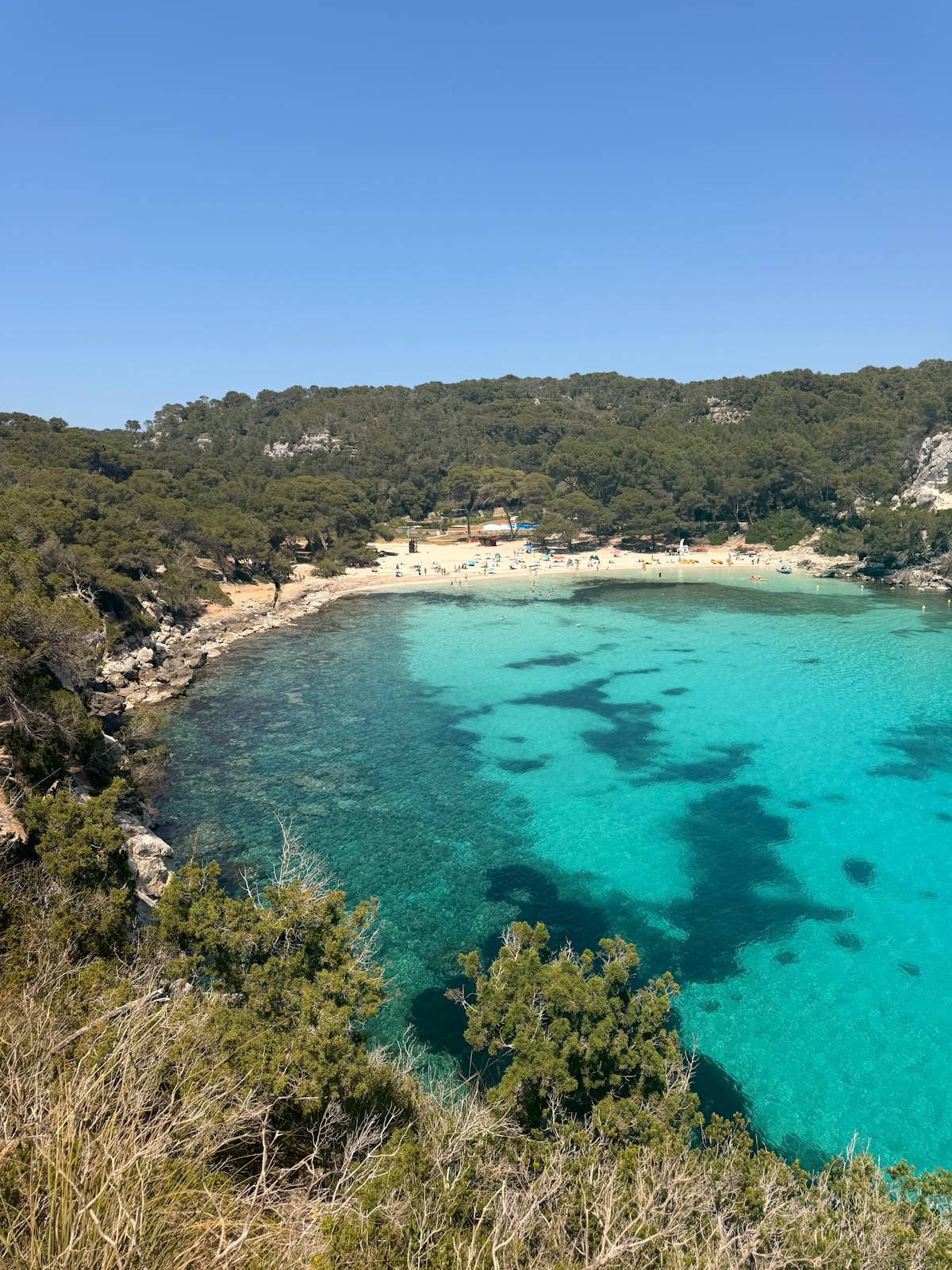

The reality: You park at the end of a dirt track, walk twenty minutes through low pines, and a cove opens up — white sand, water the colour of a swimming pool, maybe ten other people. No hotel behind it. No road to it. That's most of Menorca's south coast, and it's not an accident.
Menorca is the Balearic that said no. While Mallorca built mountain resorts and Ibiza built superclubs, Menorca made the entire island a UNESCO Biosphere Reserve in 1993 and capped the building. The result: no high-rises on the coast, no mega-clubs, beaches you reach on foot, and a quiet most travellers don't expect this close to the package-holiday Mediterranean.
Come for the beaches and you'll leave having walked part of a path that rings the whole island, eaten cheese rubbed in paprika, and pulled over for a stone monument no one can fully date. The two coasts do opposite things — the south is the postcard, the north is the wild one — and you need a car to see both. Rent one at the airport. Menorca rewards the people who drive past the first beach.
Menorca has two coastlines doing completely different things. The south makes the postcards. The north makes you work for it — and rewards the work.

South coast — white sand, pine, turquoise.
Cala Macarella & Cala Macarelleta — the famous pair near Cala Galdana. White sand, pines to the water's edge. Macarelleta (the smaller one, over the headland) is the cove on every postcard. In summer the access road shuts — park at Cala Galdana and walk 30 minutes along the Camí de Cavalls, or take the beach bus.
Cala en Turqueta — the name does the describing. Gentler access than Macarella, good with kids, parking fills before 11 AM.
Cala Mitjana — a 15-minute walk from the car park, pine-backed, with rocks at the sides people jump from.
Son Saura — two wide coves and the longest walk-in on the south coast, which is exactly why it's emptier.

North coast — red sand, dark rock, wind.
Cala Pregonda — reddish-gold sand and rock stacks standing offshore, like Mars met the Mediterranean. A 30-minute walk in from Binimel·là, no facilities, bring everything.
Cavalleria — dark sand under a lighthouse cape, with Roman ruins (Sanitja) nearby. The wind here is not a rumour.
Binimel·là — the easiest north-coast access and the launch point for the Pregonda walk.
Five places, five different reasons to stop.

Maó (Mahón) — the capital, wrapped around one of the deepest natural harbours in the world (a 5 km inlet). The British ran the island from here in the 1700s, which is why the gin exists. Georgian sash windows, a fish market in a former cloister, and the Xoriguer distillery on the harbour where you taste gin straight from the barrel. Less of a looker than Ciutadella, more of a working town.
Ciutadella — the old capital on the west end, and the beauty. Honey-coloured Catalan-Gothic palaces, a cathedral built on the footprint of a mosque, narrow streets funnelling down to a tight harbour lined with restaurants. This is where the Sant Joan horse festival erupts every 23–24 June. If you want the prettier base, sleep here.

Fornells — a whitewashed fishing village on a long sheltered bay in the north. Two reasons: caldereta de langosta (the lobster stew the island is known for — book ahead, bring money) and the bay itself, calm and shallow, the best water on Menorca to learn to sail.
Es Mercadal & Monte Toro — a dead-centre village under the island's high point. Drive up Monte Toro (358 m, a monastery on top) for the one spot where you see both coasts at once. On a clear day you see the whole island.
Es Castell — east of Maó, built by the British as a garrison town in a neat Georgian grid. Its little harbour, Cales Fonts, fills with tables after dark.
For people who'd rather walk a coast than climb a mountain — there are no mountains here anyway.
Menorca is flat-ish (Monte Toro tops out at 358 m), so "active" here means coast and stone, not elevation. The headline act rings the entire island.
Menorca eats simply and drinks better than you'd guess for an island this quiet.

Queso Mahón-Menorca — the DOP cheese: cow's milk, square, the rind rubbed with paprika and oil so it turns orange. Buy it semicurado (mild) to añejo (aged and sharp). It's on every table for a reason.
Caldereta de langosta — the lobster stew, Fornells' grand dish, slow-cooked and serious. It's expensive (€60+ a head isn't unusual). The thing to splurge on once, not the thing to order every night.
Sobrasada & carn-i-xulla — cured pork, shared with Mallorca but eaten the island's own way.
Mayonnaise — local legend says the sauce was born in Maó (salsa mahonesa) and carried home by the French. Historians argue about it. Order the alioli and don't bring it up.
Gin & pomada: Xoriguer, distilled in Maó since the British garrison wanted gin, is still made in a copper still and sold straight off the harbour. Pomada is gin cut with cloudy lemonade, drunk by the jug at Sant Joan. Try it once; respect it after.
Wine: small but real. Bodegas Binifadet near Sant Lluís does tastings and lunch among the vines. The island's wine scene is young, worth an afternoon — but Menorca's drink story is gin first.
May, June, September are the sweet spot. Warm (22–27°C), sea swimmable from June, beaches uncrowded, everything open. This is where you want to be.
23–24 June — Festes de Sant Joan in Ciutadella. Horses rear up in packed crowds, riders in 17th-century dress, pomada poured everywhere. Loud, wild, and unlike anything else in the Balearics — but book months ahead and don't expect a calm trip.
July and August — Spanish-family high season. Hot (28–31°C, humid rather than brutal), prices peak, and the south-coast beach roads close to cars. Go now only if your dates are fixed.
The Tramuntana — the north wind. It can arrive in any season and flatten a north-coast beach day in an hour. Always have a south-coast plan B.
November to March — the island mostly closes. Mild, green, empty. Good for walking the Camí in cool air; bad for almost anything involving the sea.
Rent a car. There's no train here (unlike Mallorca), and buses connect Maó, Ciutadella, and the bigger resorts but won't take you to the walk-in coves. The island is tiny — Maó to Ciutadella is under an hour — so one car turns the whole place into day trips.
The Me-1 is the spine, Maó to Ciutadella; everything branches off it.
Summer beach access — for the famous south coves (Macarella, Turqueta, Son Saura) the access roads close to cars in peak season. Use the beach bus from Ciutadella or Cala Galdana, or walk in along the Camí de Cavalls.
Taxis are fine in Maó and Ciutadella, scarce everywhere else. No real rideshare coverage.
Pick a base by what you're here for — nowhere is more than an hour from anywhere.
Ciutadella — the prettiest base, best for dinners out and the west-coast beaches.
Maó or Es Castell — harbour life, the gin, closest to the airport and the east.
Cala Galdana — the one resort bay on the south coast, walkable to Macarella. Convenient for the famous calas, more package-holiday than handsome.
Fornells — the north, for lobster, sailing, and quiet.
An agroturismo inland — a converted farmhouse among dry-stone walls and cattle (the cheese comes from somewhere). Pool, silence, needs a car and a few nights to be worth it.
Menorca sits just below Mallorca on price and well below Ibiza — until August, when the south-coast resorts and a Fornells lobster dinner close the gap fast.
Prices in 2026 euros. Off-season knocks 30–40% off most of this.
Go if you want white coves you walk into, a wild north coast, gin the British left behind, and 3,000-year-old stones nobody can fully explain — all on an island with no high-rises and barely a nightclub. Skip if you need superclubs, easy beach parking, or a guarantee the wind stays away.
Found this useful? Share it.
Still planning?
We don't stop at "here's the country." Real places to stay, what to do, apps that matter, even how to find someone to travel with — plus guides for whatever vibe you're after, from beach days to wine country to slow weekends. All up top. Spin for somewhere new when you're done with this one.