This is your destination guide for Tenerife
📍 Part of SpainSpain's highest volcano, a laurel forest in the clouds, volcanic wine, and mojo on everything.

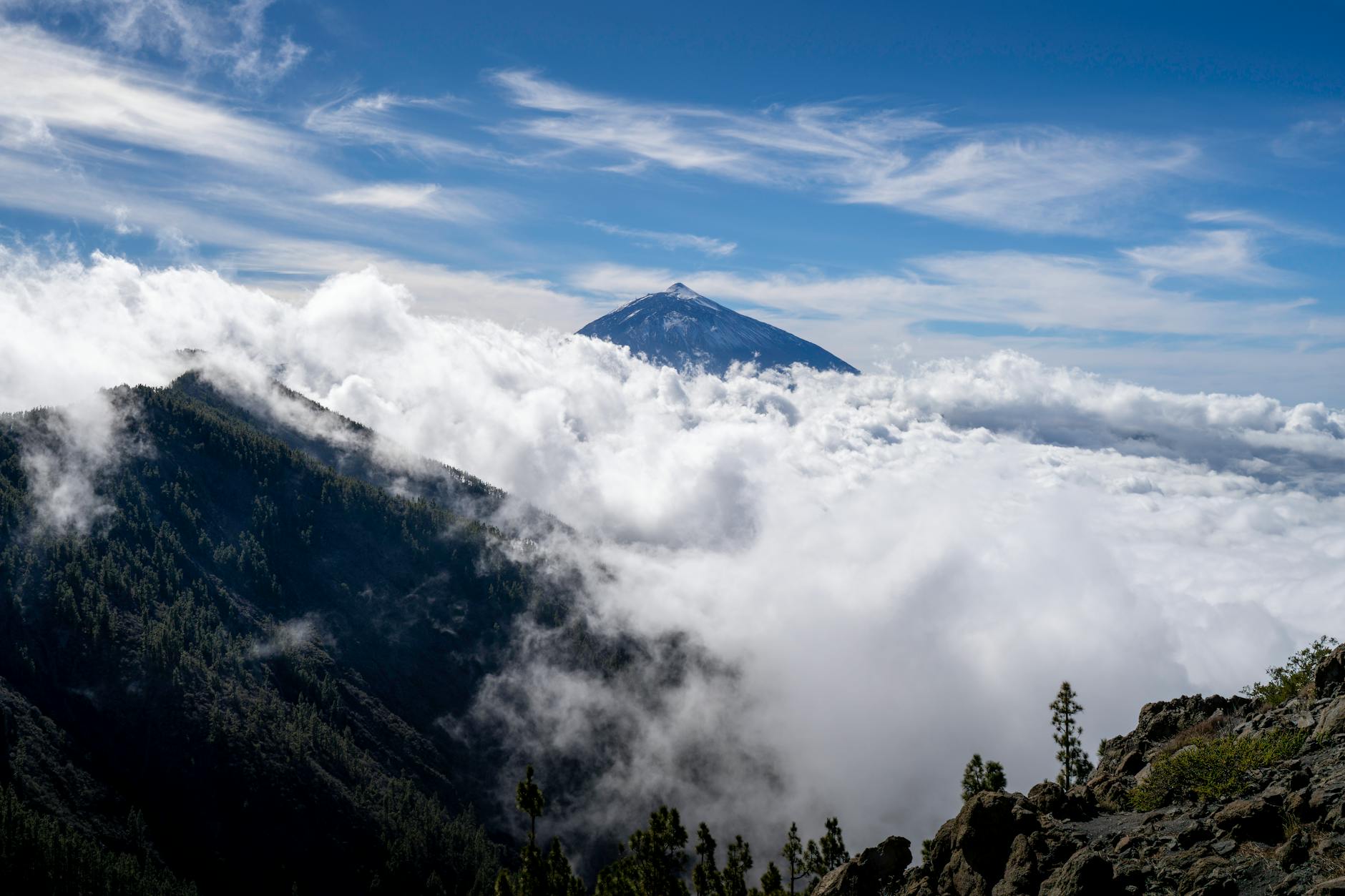
The reality: You drive up through pine forest, cross the cloud line, and the island vanishes below you into white. Then the trees stop and you're on Mars — red rock, lava fields, and a snow-dusted volcano that's the highest point in Spain. Two hours earlier you were on a beach. Tenerife does this every single day.
That vertical range is the whole story. The south is dry, sunny, and built for the package crowd — Playa de las Américas and Los Cristianos run on full English breakfasts and boat trips. The north is green, cloudy, and Spanish — banana plantations, a colonial university town, and a laurel forest left over from the age of dinosaurs. Same island, forty minutes apart, two completely different holidays.
Most people book the south, never leave the pool, and decide Tenerife is Benidorm with better weather. They're seeing about ten per cent of it. Rent a car. Drive into the Anaga forest, climb to the Teide crater, eat papas arrugadas in a town with no English menu. The island you were sold and the island that's actually there are barely the same place.
Tenerife's sand is mostly black — this is a volcano, after all. The tame golden beaches are in the south; the black-sand coves in the north are where the island shows off.

Playa de Benijo (Anaga) — wild black sand at the end of a winding road, rock stacks offshore, surfers, and the sunset spot in the northeast. A couple of cliff-edge fish shacks, and that's it.
Las Teresitas — the golden exception, near Santa Cruz. The sand was shipped in from the Sahara, the water's calm behind a breakwater, and it fills with santacruceros at weekends. The local beach, not the tourist one.
El Bollullo — black-sand cove below the banana plantations near Puerto de la Cruz. Fifteen minutes down on foot; a bar at the top grills decent fish.

Garachico (El Caletón) — not a beach. Natural rock pools carved by the 1706 lava flow that buried the old harbour. Swim between black rock when the swell is gentle.
Playa de las Vistas (south) — for families. Lifeguarded, calm, golden imported sand, everything within reach. Honest about what it is.
Los Gigantes — a small black-sand beach tucked under 600m sea cliffs. The cliffs are the reason you come.
Tenerife's towns do completely different jobs — and most visitors never see the ones that matter.

Santa Cruz de Tenerife — the working capital, not a resort. Calatrava's wave-shaped auditorium, a covered market (Mercado de Nuestra Señora de África), and February's Carnival — the biggest in Europe and second in the world only to Rio.
San Cristóbal de La Laguna — the old capital, a UNESCO grid of colourful colonial mansions, a university, and the island's best tapas crawl. Sits in the cloud band, so bring a layer even in July.

Puerto de la Cruz — the original north-coast resort, decades older than the south. Lago Martiánez (César Manrique's seawater pool complex), a serious botanical garden, and a faded grandeur that's mostly German and Spanish, not British.
Garachico — flattened by the 1706 eruption, rebuilt smaller, and now the prettiest town on the island. The lava that destroyed it left the rock pools that define it.
La Orotava — above Puerto, a hill town of carved wooden balconies and grand courtyards at the head of the wine valley. Time it for Corpus Christi and the streets are carpeted in coloured volcanic sand.
Teide National Park is the reason half of Tenerife's visitors come — and the part the package crowd never sees.
You drive up through pine into the Las Cañadas caldera — a lava desert ringed by old crater walls, the Roques de García standing like broken teeth, and Spain's highest point at the centre.
The cable car climbs from 2,356m to La Rambleta at 3,555m in eight minutes. Most people photograph the summit from there and turn back — because the last 200m to the actual peak (the Telesforo Bravo trail) needs a free permit you book through Tenerife ON. Slots open weekly and sell out fast, so plan it before you fly, not the night before.
After dark, this is one of the clearest skies in Europe — the Teide Observatory is up here for a reason. Star tours run most cloudless nights. In winter the volcano holds snow, and you'll see locals driving up to throw snowballs in T-shirts.
For people who like moving without turning a holiday into an expedition.
Tenerife packs an absurd amount of terrain into one island: cloud-forest in the northeast, a gorge that ends in the sea, year-round whales offshore, and Europe's best wind in the south.
Canarian food is its own thing — a Spanish base, African echoes, and a few dishes that exist nowhere else.

Papas arrugadas con mojo — small potatoes boiled in heavily salted water until the skins wrinkle, served with two sauces: mojo rojo (paprika, garlic, chilli) and mojo verde (coriander or parsley). The island on a plate.
Gofio — toasted grain flour, a Guanche staple that predates the Spanish. It turns up in everything from breakfast to dessert.
Fresh fish — vieja (parrotfish) and cherne are the local catches, usually grilled whole with — yes — more mojo.
Where to eat: find a guachinche — informal, seasonal eateries run by wine families in the northern hills (Tacoronte, La Orotava), serving home cooking and their own wine, often cash-only and deliberately hard to find. Around €12–18 a head.
Wine: Tenerife grows vines in black volcanic soil, sometimes trained in braided cordón trenzado ropes you'll only see in the Orotava valley. The grapes (Listán Negro, Malvasía) make wines sommeliers have started chasing and that are almost impossible to buy off-island. Tacoronte-Acentejo and Valle de la Orotava are the DOs to look for.
Spring (Apr–Jun) and autumn (Sep–Nov) are the sweet spots. Warm, sea swimmable, far fewer crowds than winter.
Winter (Dec–Mar) — Europe's most reliable winter sun: the south holds 20–23°C while everyone back home freezes. That makes it peak season, so book early and expect company. Teide may have snow.
The catch, all year: the north is cloudier and cooler than the south thanks to the trade winds. Want guaranteed sun, base south. Want green and local, accept some cloud.
Summer (Jul–Aug) — hot and busy in the south, and the calima (a Saharan dust haze) can roll in, turning the sky orange and pushing the heat up for a few days at a time.
February — Santa Cruz Carnival takes over the capital for two weeks: costumes, all-night street parties, second only to Rio. Book months ahead, or stay north if you want quiet.
You fly in — it's an island. Tenerife South (TFS) handles most tourist flights; Tenerife North (TFN) is mainly Spanish-mainland and inter-island.
Rent a car. Same logic as Mallorca: the resorts are walkable, but the actual island — Anaga, Teide, the wine valleys, Garachico — only opens up with a car. The TF-1 motorway runs the south, the TF-5 the north; mountain roads are slow but fine.
Buses (TITSA, locally "guaguas") are cheap and decent between the main towns, especially with a ten+ travel card. They skip the interior, so don't rely on them for the good stuff.
Inter-island ferries run from Los Cristianos to La Gomera (about 40 minutes), La Palma and El Hierro — an easy day trip or a tack-on.
Pick a base by which Tenerife you want — they barely overlap.
Costa Adeje (south) — the upmarket resort end. Reliable sun, big hotels, families, Siam Park next door.
Los Cristianos or Playa de las Américas — cheaper and busier; the strip. Lively if that's the point.
Puerto de la Cruz (north) — older, more Spanish and German, full of character — and cloudier.
La Laguna or Santa Cruz — for city, culture and food, with no beach on the doorstep.
Garachico, La Orotava or Anaga — for the real north. Quiet, green, a car essential.
El Médano — for wind, surf and a younger, low-key crowd.
Tenerife is the cheap end of the Spanish islands — clearly cheaper than Mallorca, and less than half what Santorini costs in summer. The resort south charges more than the local north for the same plate of food.
Prices in 2026 euros. Winter in the south is peak; the north and shoulder seasons knock 25–35% off.
Go if you want a 3,718m volcano, an ancient cloud-forest, black-sand coves and year-round whales on one island where you can summit and swim the same day. Skip if you booked it as a sun lounger in Las Américas, or expect the green north to be sunny on demand.
Found this useful? Share it.
Still planning?
We don't stop at "here's the country." Real places to stay, what to do, apps that matter, even how to find someone to travel with — plus guides for whatever vibe you're after, from beach days to wine country to slow weekends. All up top. Spin for somewhere new when you're done with this one.