This is your destination guide for Gran Canaria
📍 Part of SpainDesert dunes, pine peaks, a coffee valley, and a working Atlantic city — on one island you can cross in ninety minutes.
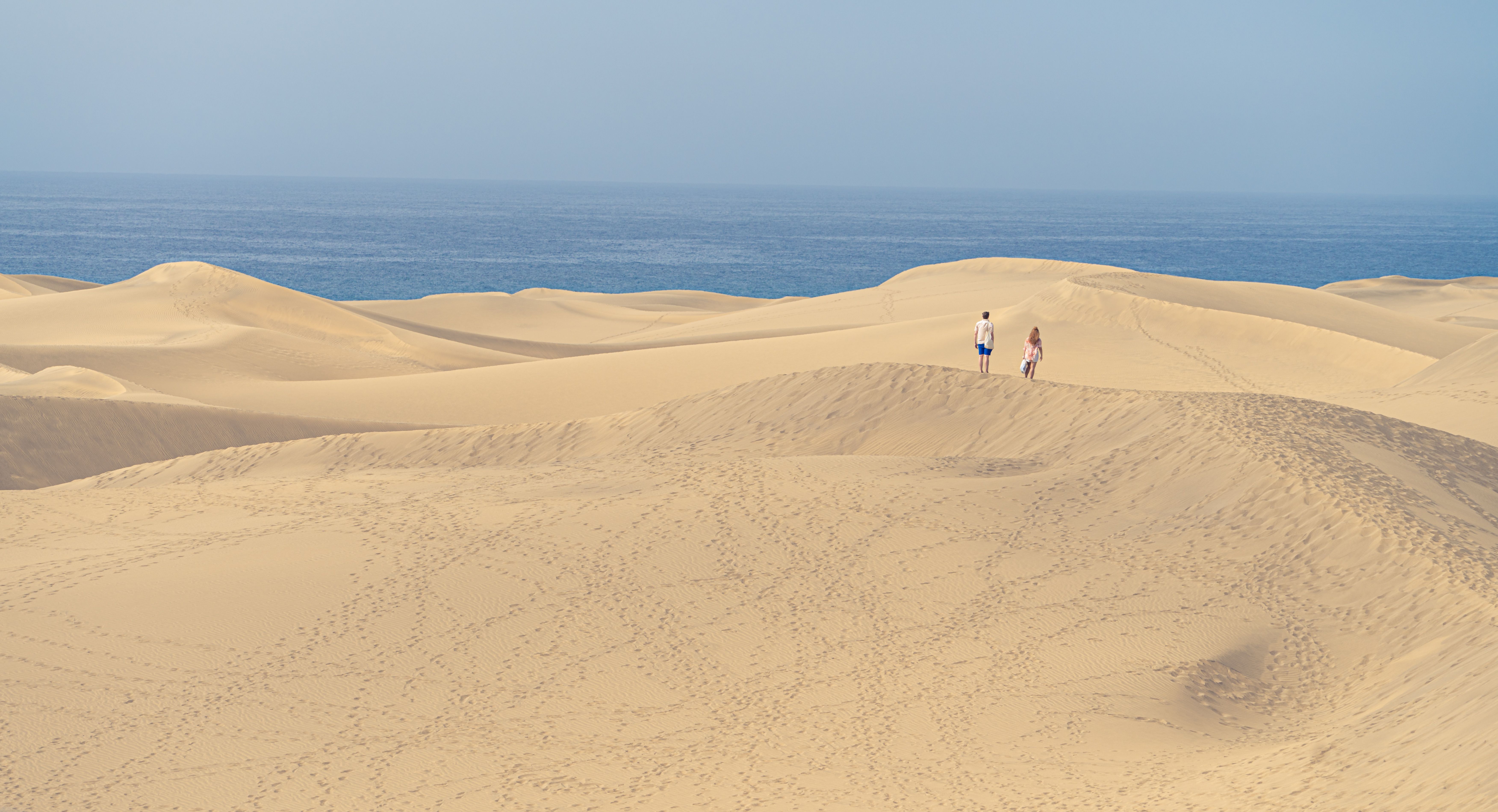

The reality: You land in the south, into wall-to-wall sun and a strip of resorts that could be anywhere. Then you rent a car, point it inland, and within forty minutes the road is climbing through pine forest, past a caldera, toward a 1,949-metre peak that catches snow some winters. The package coast is real. It's also a sliver.
That's Gran Canaria's trick — people call it a continent in miniature, and for once the cliché holds. Sand dunes in the south, a working Spanish city in the north, banana plantations and a coffee valley in the green northwest, pine mountains down the middle. You can drive from desert to forest in an hour.
Most visitors fly in for winter sun and never leave the south. The ones who rent a car find a different island — Tejeda under almond blossom, fish straight off the boat in Puerto de Mogán, a cortado in Agaete made from beans grown up the road. Cross the island once. You'll stop calling it a beach holiday.
Gran Canaria's coast runs from engineered resort sand in the south to wild black-sand coves in the north. The most famous beach is, oddly, a desert.
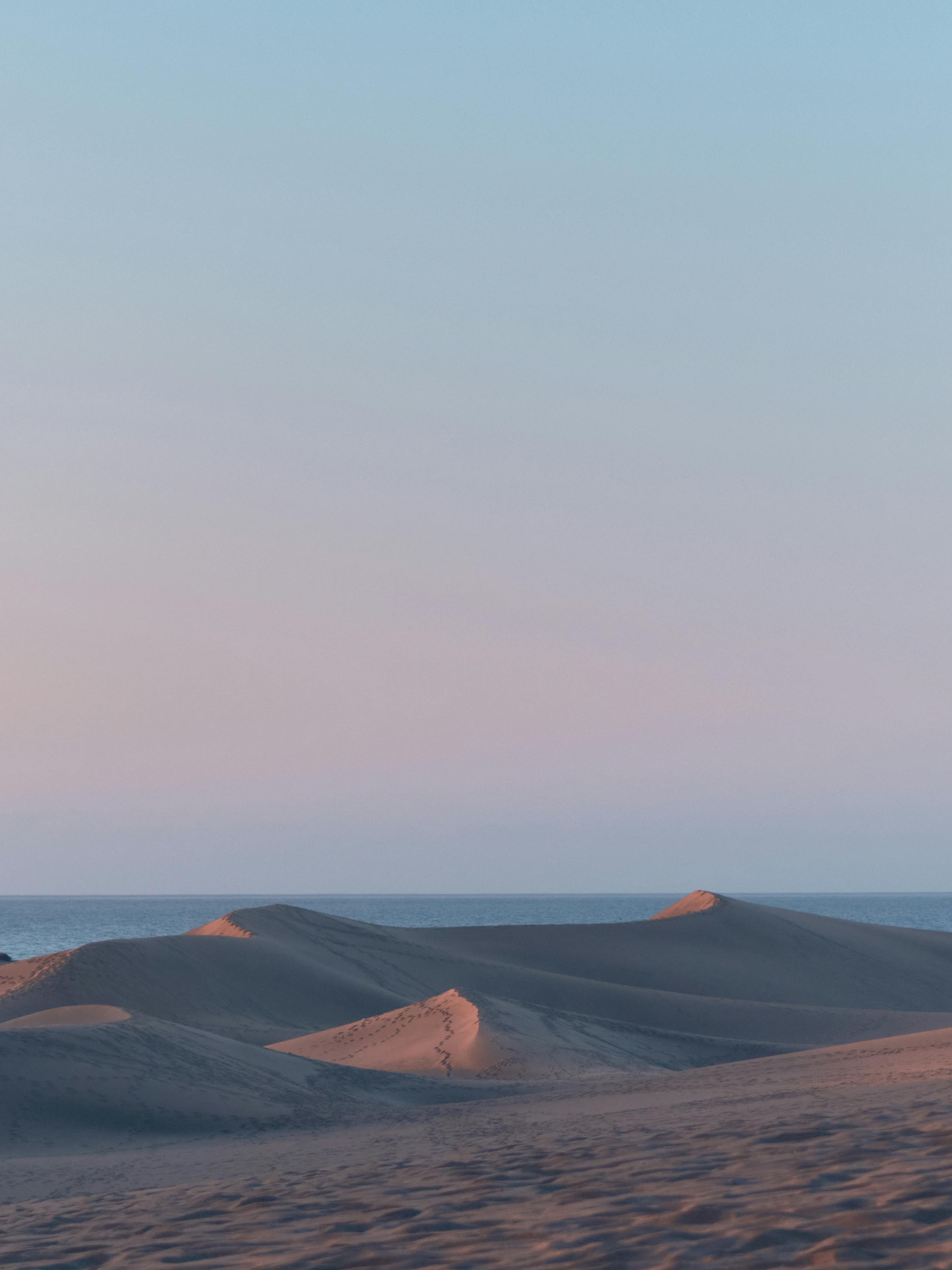
Maspalomas — the dunes. Square kilometres of Sahara-like sand running down to the sea, a protected reserve you walk for free. Go early or near sunset; midday it's a furnace. The beach below is long, golden, and busy.
Playa de las Canteras — three kilometres of city beach in Las Palmas, with a natural reef (La Barra) a few hundred metres out that flattens the swell into a calm lagoon. One of the best urban beaches in Spain. Walk the promenade at dusk.
Güigüí — no road. A two-hour hike over a mountain (or a boat from Puerto de Mogán) gets you to a remote black-sand beach with nothing on it. Bring everything you'll need.
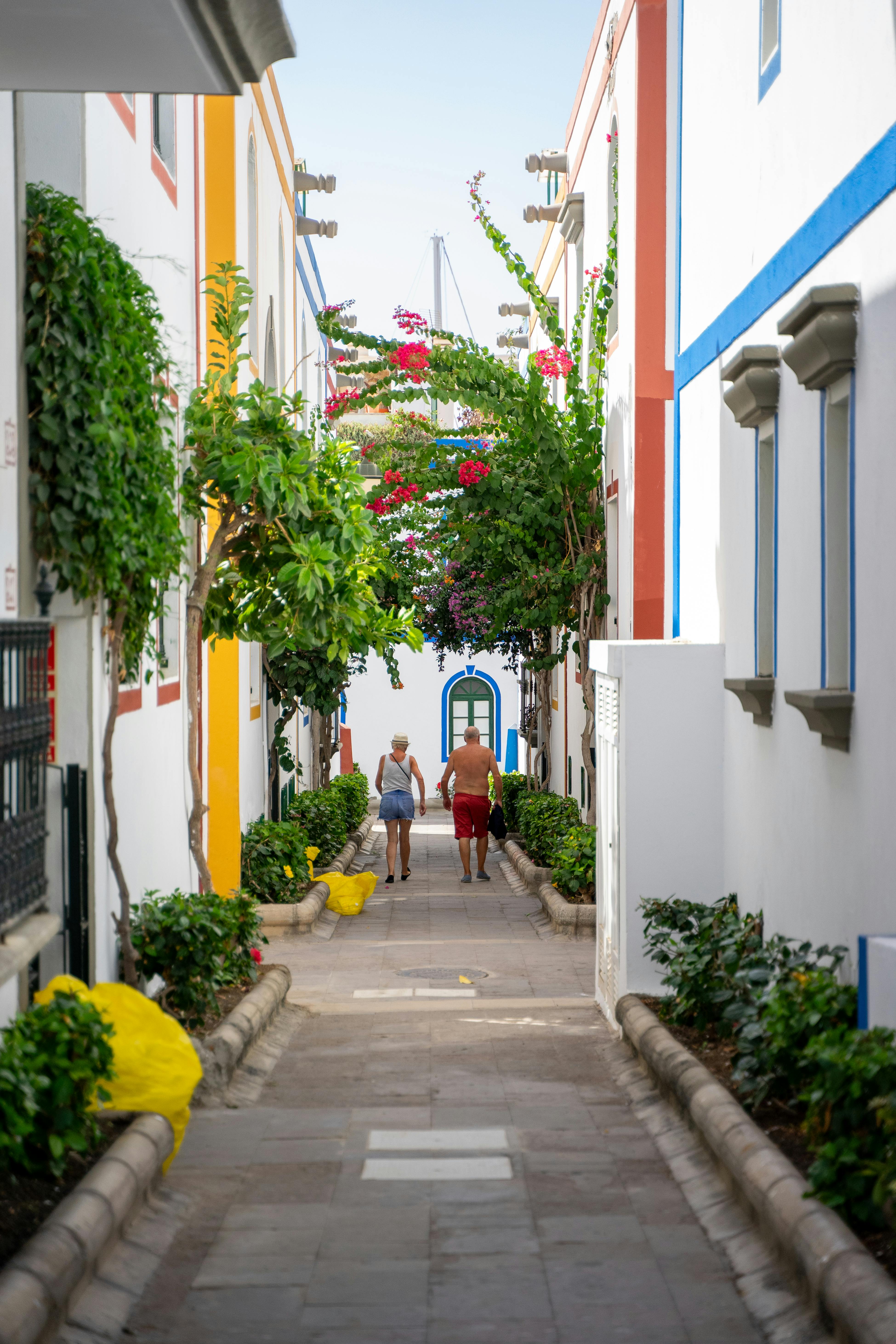
Puerto de Mogán — a small marina town threaded with canals, sometimes called "little Venice." Calm, family-friendly, and the prettiest spot on the south coast.
Sardina del Norte — a northern fishing village with a sheltered beach and some of the best fresh fish on the island, eaten looking at the boats.
Playa de Amadores — engineered, imported white sand, very calm, very busy. Honest about what it is: a sheltered crescent built for families who want no surprises.
The towns worth your time are mostly in the north and the interior — nothing like the resort strip. They each do something different.

Las Palmas — the capital, and a real city, not a resort. Vegueta (the old town) has a cathedral, cobbled lanes, and a Thursday-night tapas crawl (jueves de tapas) where locals actually go. Triana is the shopping street; Las Canteras the beach. Columbus stopped here on his way west — the Casa de Colón tells that story. Cloudier in summer than the south.
Tejeda — in the caldera at the island's heart, regularly voted one of Spain's prettiest villages. Stone houses, a sea of almond trees that blossom white and pink in January–February, and bienmesabe (almond-and-honey dessert) at its source.

Agaete & Puerto de las Nieves — a whitewashed northern town and its fishing port, with natural sea pools (charcos) and the coffee valley (Valle de Agaete) climbing inland behind it. Coffee tastings at the farms up the road.
Teror — the island's pilgrimage town: green-shuttered wooden balconies down the main street, a basilica, and a Sunday market famous for its soft chorizo de Teror (spread it on bread).
Arucas — built on bananas and rum. A neo-Gothic church that passes for a small cathedral, and the Arehucas distillery (founded 1884) you can tour.
For people who like moving without turning a holiday into a training camp.
The interior is a UNESCO Biosphere Reserve of pine forest, ravines, and old footpaths (caminos reales). Most are walkable by anyone with decent shoes and a half-day.
Canarian food is its own thing — African and Latin American echoes on a Spanish base, built on potatoes, fish, and toasted grain.

Papas arrugadas — small potatoes boiled in heavily salted water until the skins wrinkle, served with mojo: red (paprika and chili) or green (coriander). On every table. The point of the meal, not a side.
Gofio — toasted grain flour, the Canarian staple for centuries. Stirred into stews (gofio escaldado), kneaded into dough, even spooned into coffee. Acquired, then missed.
Queso de flor de Guía — a cheese from the Guía area curdled with wild thistle flower instead of rennet. Soft, faintly bitter, found nowhere else.
Bienmesabe — almond, egg, honey. Tejeda's dessert, and worth the drive.
Where to eat: cave restaurants in Barranco de Guayadeque (Tagoror is built into the rock) for Canarian classics; fresh fish off the boats in Sardina del Norte, Arguineguín, or Puerto de Mogán; in Las Palmas, the Vegueta tapas crawl on Thursday nights. Expect €15–25 a head for a full Canarian lunch with wine.
Wine & rum: Gran Canaria has its own DO wine — volcanic-soil reds from the Listán Negro grape, grown around the Bandama caldera near the capital. Small production, hard to find off-island, worth seeking. And Arucas makes rum: Arehucas, distilled here since 1884 — try the ron miel (honey rum).
The calendar runs backwards from the Mediterranean — winter is the headline.
Winter (Nov–Mar) — high season and the island's selling point: 20–24°C, reliable southern sun, the rest of Europe freezing. Book ahead; prices peak. Las Palmas Carnival (Feb) is one of Spain's biggest. Almond blossom fills Tejeda's caldera Jan–Feb.
Spring and autumn (Apr–Jun, Sep–Oct) — the sweet spot. Warm, fewer crowds, everything open, cheaper than winter.
Summer (Jul–Aug) — warm not scorching (26–28°C; the trade winds keep it bearable), but the north and the capital sit under the panza de burro, a low grey cloud cap, for long stretches. The south stays sunnier. A calima — hot, hazy Saharan dust — can grey out the sky for a few days any time of year.
Rent a car for the interior — the point is leaving the resort. The GC-1 motorway runs the east coast from the capital to the south, fast. Mountain roads (the GC-60 up to Tejeda) are slow, winding, and worth it.
Buses are called guaguas here. Global runs the intercity network — good along the coasts, thin into the mountains — while yellow municipal guaguas cover Las Palmas. The south strip is fine without a car.
Fast ferry to Tenerife — leaves from Agaete in about 80 minutes, if you want to island-hop for a day or two.
Pick a base for what you want. The island is small enough to day-trip from anywhere — but each base has a different feel.
Maspalomas & Meloneras — the south, for winter sun and the dunes. Meloneras is the calmer, more upmarket end; Playa del Inglés the louder, cheaper one. (Maspalomas, around the Yumbo Centre, is also one of Europe's biggest LGBTQ+ destinations.)
Las Palmas — for a real city and the best urban beach. Year-round life, restaurants, surf at the door. Cloudier in summer.
Puerto de Mogán or Amadores — for a calmer south base near the prettiest harbour.
Agaete or the north — green, local, fishing villages, surf, the coffee valley. Few big resorts.
Tejeda or an interior finca — mountains, almond groves, silence, stars. Car essential.
Gran Canaria is the cheap end of Spain's islands — noticeably cheaper than Mallorca or Ibiza, helped by the Canaries' low IGIC sales tax (around 7% instead of the mainland's 21%). And the price calendar runs backwards: winter is high season here, summer is the bargain.
Prices in 2026 euros. Note the reverse seasonality — the same room can cost twice as much in January as in July.
Go if you want a desert, a pine-forest mountain range, a coffee valley, and a real Atlantic city stacked onto one island you can cross in ninety minutes. Skip if your Gran Canaria starts and ends at the Playa del Inglés strip.
Found this useful? Share it.
Still planning?
We don't stop at "here's the country." Real places to stay, what to do, apps that matter, even how to find someone to travel with — plus guides for whatever vibe you're after, from beach days to wine country to slow weekends. All up top. Spin for somewhere new when you're done with this one.