This is your destination guide for Croatia.
This is your destination guide for Istria
📍 Part of CroatiaHilltop truffle towns, a Roman arena, and olive oil that out-scores Tuscany — Croatia that feels Italian.

The reality: You cross from Slovenia, or fly into Pula, and within twenty minutes you've stopped recognising which country you're in. The road signs are in two languages. The waiter switches from Croatian to Italian mid-sentence. There's a Venetian lion carved over the town gate, and the coffee comes the way it would in Trieste, an hour up the coast.
That's Istria. It spent five centuries under Venice and never quite let go — the dialect, the food, the olive oil, the unhurried lunches all lean Italian. The Croatian islands everyone photographs are four hours south. Up here it's hill country: vineyards, oak forest hiding truffles, and stone towns stacked on hilltops where artists outnumber tour groups. The coast is real, but it plays second fiddle to the interior.
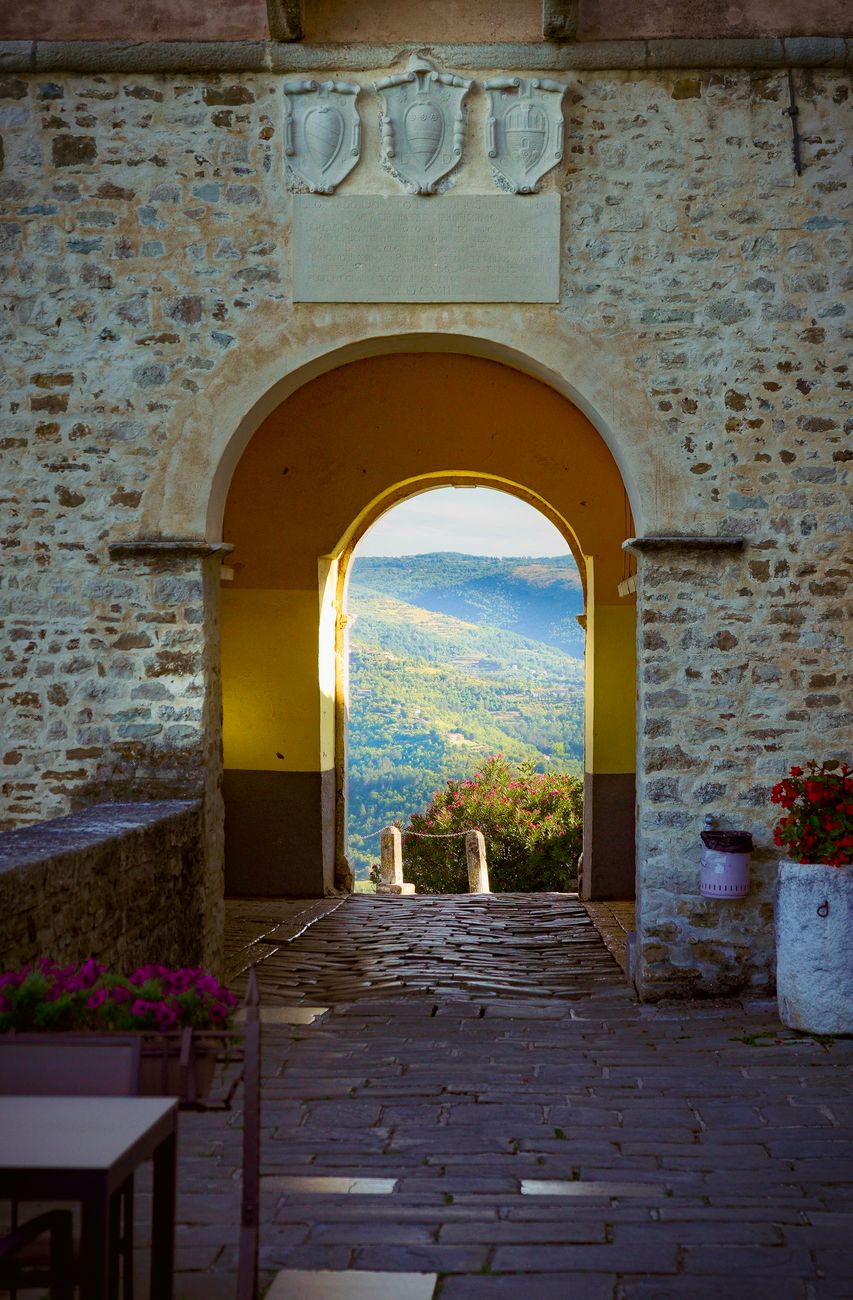
Most people come for the coast and leave talking about a lunch in Motovun. Rent a car — the buses won't get you to the wineries or the hill towns. Spend a morning in Rovinj, an afternoon tasting Malvazija, and one long autumn lunch with a truffle shaved over your pasta. You'll wonder why it took you this long.
Istria's pull is its inside. From the coast the peninsula rises into rolling hill country — vineyards, olive terraces, oak forest — with medieval towns balanced on the hilltops. This green interior, not the beach, is what people remember.
The Mirna valley & Motovun forest — the green heart of the peninsula, and where the truffles hide. The river runs through oak woodland on grey clay soil; the hill town of Motovun watches over it from above.
Buje & Buzet — the slopes around these two hill towns grow the Malvazija and the olives. "The Tuscany of Croatia" is a lazy line, but the back roads here earn it.
The drive itself — a back road through the hills in low autumn light, stone village to stone village, is the thing people come for without knowing it yet.
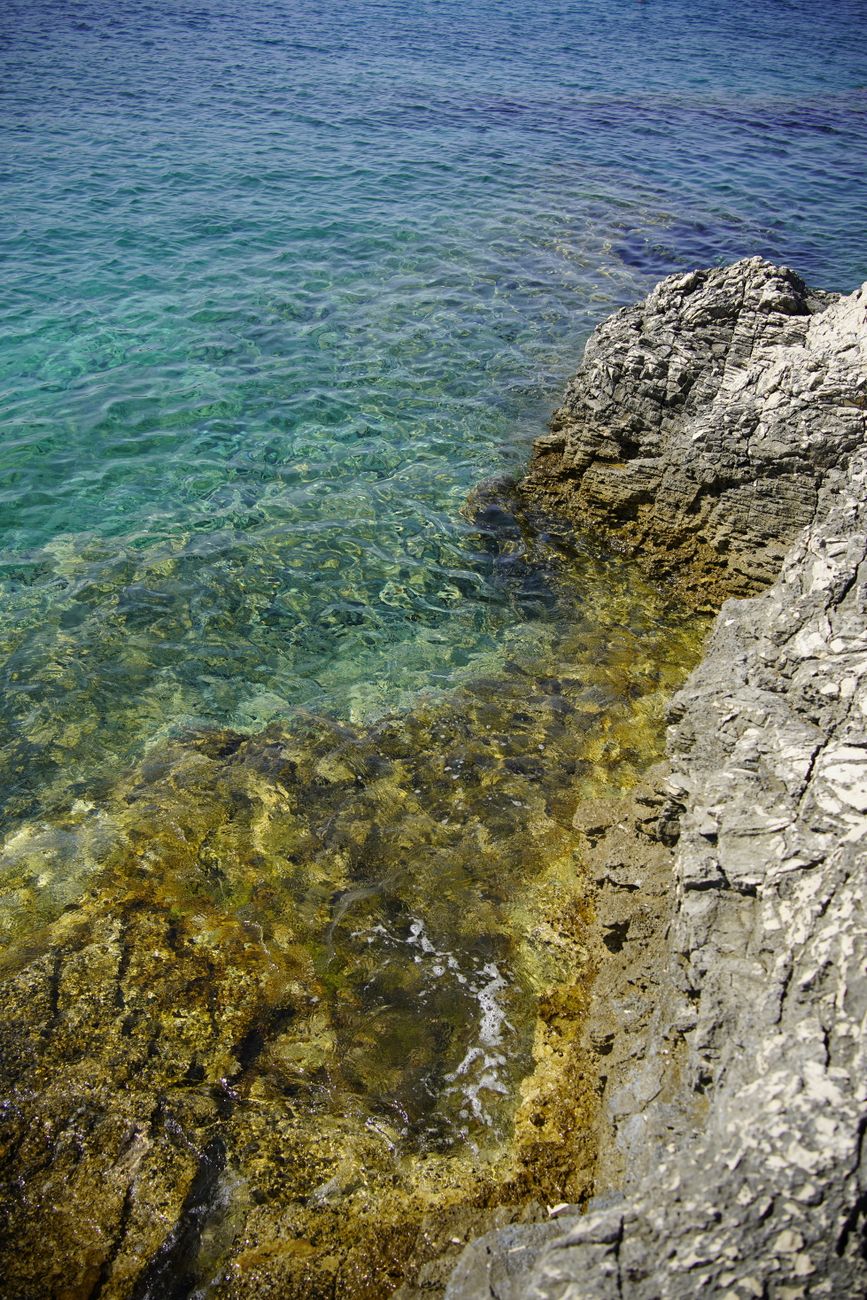
The coast plays second fiddle, and it's a different beach than you may be picturing. Istria is rock and pebble, not sand. The local move is a flat stone, a ladder bolted into the rock, and a swim in very clear water.
Cape Kamenjak — a wild, road-less nature park at the southern tip near Pula. Low cliffs, hidden coves, scrubland, one beach bar. Bring water shoes and shade; there's almost none.
Lim Bay (the "Lim fjord") — a green flooded canyon between Rovinj and Poreč, lined with oyster and mussel farms. Less a swimming spot than a place to eat shellfish straight off the boat.
Rovinj's coves & Medulin — Lone Bay and the Mulini area are pine-shaded pebble, walkable from Rovinj's old town. Medulin's Bijeca is one of the few genuinely sandy, shallow beaches, good for young kids.
You can see Istria's towns in a long weekend if you split them: two on the coast, two on the hills. Each does something the others don't.
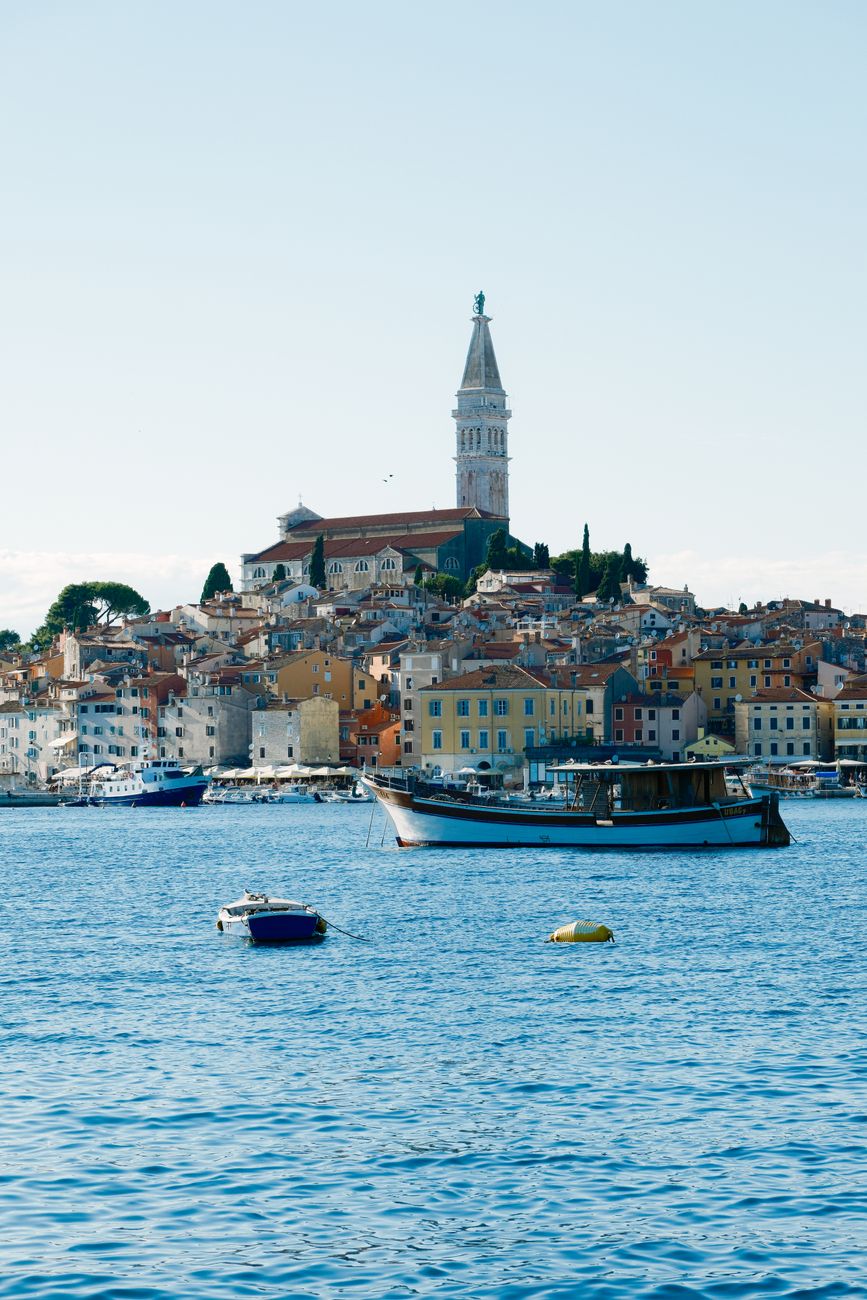
Rovinj — the prettiest, and it knows it. A Venetian fishing town on a peninsula, narrow lanes climbing to the church of St Euphemia, painters' easels along the Grisia gallery street. It gets cruise-day busy by late morning — sleep there and you get the empty 8 AM and the quiet evening.
Pula — the working city at the southern tip, and the one with the Roman arena: a 2,000-year-old amphitheatre, one of the six largest still standing, still used for summer concerts. Entry is about €10. The rest of Pula is unglamorous and real — a naval town with Roman bones, cheaper and less polished than Rovinj.
Poreč — the package-tourism end of the coast, busier and blockier, but the Euphrasian Basilica (UNESCO) has 6th-century gold mosaics worth an hour even if you skip the rest.
Motovun — the hilltop icon: walls you can walk, the Mirna valley spread below, truffle-tour traffic by midday. The Motovun Film Festival fills it in late July.
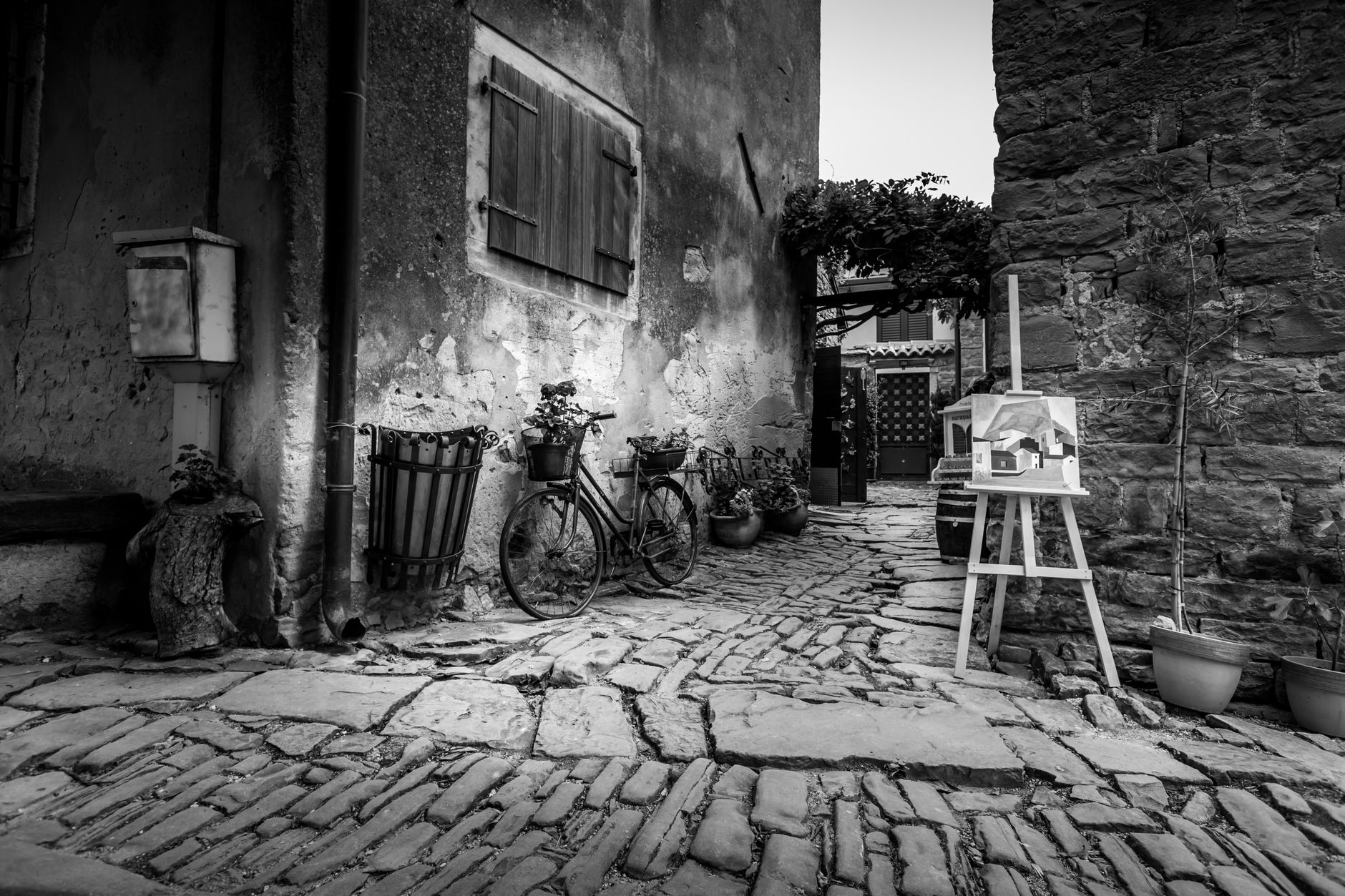
Grožnjan — the artists' town. Nearly abandoned in the 1960s, then empty houses were handed to artists; now almost every doorway down its single carless street is a studio or gallery, with a summer jazz programme.
Hum — billed as "the smallest town in the world," a couple of dozen residents and a konoba pouring biska, the local mistletoe brandy. More curiosity than destination, but a good detour off the truffle roads.
For people who like moving without turning a holiday into a training camp.
The headline is the Parenzana — a 123-kilometre former narrow-gauge railway from Trieste to Poreč, ripped up in the 1930s and reborn as a walking-and-cycling greenway through tunnels, viaducts, vineyards, and hill towns. You don't do the whole thing; you pick a stretch and a hill town for lunch.
Istria eats like a region that takes food seriously and charges less than Italy for it. The base is Italian — pasta, olive oil, prosciutto, slow lunches — with Croatian and Central European edges.
White truffles — the headline. The Motovun forest and Mirna valley are one of the few places on earth white truffles grow, alongside Alba in Italy. Season runs roughly September to January and peaks in October — that's when they're shaved raw and warm over fuži or fried eggs. Outside those months you'll get black truffle or preserved product: fine, but not the same event.
Fuži & pljukanci — the local hand-rolled pastas. Fuži are quill-shaped; pljukanci are little hand-twisted spindles. Both turn up under truffle, game, or boškarin ragù.
Boškarin — the Istrian long-horned ox, nearly extinct a generation ago, now back on menus as carpaccio and slow-cooked stew.
Maneštra — the everyday bean-and-vegetable soup, the Istrian cousin of minestrone, different in every konoba. And Istarski pršut — the local prosciutto, air-dried in the bora wind and never smoked (that's the Dalmatian one).
Where to eat: look for a konoba — the family tavern, stone walls, a short handwritten menu. The interior villages around Motovun, Buje, and Livade hold the truffle kitchens; Livade's Zigante is the famous, pricey one.
Wine: two grapes to know. Malvazija Istarska — a crisp, mineral, citrus-edged white that around 80% of the region plants, drunk young. Teran — the deep, tannic, slightly wild red; cheap Teran tastes of rusty nails, good Teran is excellent. Most wineries (Kozlović and Fakin near Motovun, Franc Arman near Poreč) do tastings by appointment, roughly €15–35 a head, often with olive oil and cheese.
Olive oil: the quiet superpower. The Flos Olei guide — the field's main reference — has named Istria the world's best olive oil region nine times, most recently for 2026, ahead of Tuscany and Puglia by number of top producers. Several mills (Ipša; Mate near Umag) do tastings. Buy a bottle — it travels better than wine.
September and October are the best of the year. Warm enough to swim, the hill towns busy but not jammed, the white-truffle season opening, the grape and olive harvests on. If you come once, come in autumn.
May and June — green, mild, quiet, the sea warming. Good for the coast and the trails before the July crush.
July and August — hot (30°C+), and the coast fills with Central European holidaymakers. Rovinj and Poreč get loud and pricey; parking and ferries strain. The interior stays cooler and saner. The Motovun Film Festival (late July) and Pula's arena concerts are the summer draws.
November to April — quiet and cool, many coastal places shut, but black-truffle season runs through winter and the hill-town konobas keep going. Cheap, low-key, ideal for a food-first long weekend.
Rent a car. The point of Istria is the interior, and the interior has no useful public transport. Buses link the coastal towns (Pula, Rovinj, Poreč) but won't get you to a hilltop winery or the Motovun forest. Roads are good and distances short — Pula to Motovun is under an hour.
The "Istrian Y" — the motorway connects the main towns fast, but the back roads through the hills are the nicer drive. Istria is small enough to base anywhere and day-trip the whole peninsula.
Flying in: Pula has the regional airport. Many visitors instead fly into Trieste (Italy), Ljubljana (Slovenia), Venice, or Zagreb and drive — all two to three hours, and the border crossings are quick now that Croatia is in Schengen.
Taxis and rideshare work in Pula and Rovinj and thin out everywhere else. Don't rely on them for the hill towns.
Pick a base by what you're there for — nothing is more than ninety minutes away.
Rovinj — for the prettiest coast and the best dinners. Most expensive; books out in summer.
Poreč or Vrsar — for resort beaches, families, and lower prices. Less charm, more pool.
Pula — for the Roman city, the airport, and a cheaper, more local base.
Motovun, Grožnjan, or an agritourism — for the hills, truffles, wine, and quiet. A converted stone farmhouse (agroturizam) with a pool inland is the Istrian classic — best with a car and a few nights.
Novigrad or Umag — for the north coast and the olive-oil and Malvazija country near the Slovenian border.
Istria sits a notch below Dalmatia. You'll pay less here than on Hvar or in Dubrovnik, where the famous coast charges famous prices. Croatia adopted the euro in 2023, so the "cheap Balkans" era is finished — but Istria is still the better-value half of the Croatian Adriatic, especially inland.
Prices in 2026 euros. Off-season knocks 30–40% off accommodation.
Go if you want northern Italy's flavour — Venetian hill towns, white truffles, Roman Pula, and olive oil that beats Tuscany's — on Croatia's quieter, cheaper side of the Adriatic. Skip if you came for soft sand, Dalmatian island drama, or truffles in July.
Found this useful? Share it.
Still planning?
We don't stop at "here's the country." Real places to stay, what to do, apps that matter, even how to find someone to travel with — plus guides for whatever vibe you're after, from beach days to wine country to slow weekends. All up top. Spin for somewhere new when you're done with this one.