This is your destination guide for Ibiza
📍 Part of SpainTwo islands sharing one name — hippie coves up north, clubs that don't quit down south.

The reality: You're driving north, away from the airport and the clubs, on a road that narrows through pine and red earth. You park above Cala Benirràs as the sun drops. There's a drum circle on the sand — there's a drum circle every Sunday — and one beach bar, and no one checking a guest list. This is also Ibiza.
The clubs are real, and they're the best in the world at what they do — Pacha, Amnesia, Hï, DC-10, the lot. But they're the south, and the south is maybe a tenth of the island. The rest is hippie markets in old farmhouses, whitewashed inland villages, a Phoenician old town behind 16th-century walls, and coves you reach on foot or not at all.
Most people pick a half before they arrive and never cross over. That's the mistake. The island is under an hour end to end. Rent a car, club in the south one night, swim off an empty northern cove the next morning. Both are the real Ibiza. You just have to drive.
Ibiza has over 80 beaches, and they split cleanly: big organised sand in the south, tiny pine-backed calas in the north and east. The north is where the island stops performing.
Cala Benirràs — north coast, sheltered by cliffs, one chiringuito. Famous for the Sunday-sunset drum circle, but quiet any other evening. Calm, shallow water.
Cala Xarraca & Cala Xuclar — two rustic northern coves minutes apart. Xuclar is barely more than a few fishermen's huts and a basic bar. Bring water shoes; the swimming is the point.
Es Portitxol — a near-deserted circular cove in the north, reached only on foot down a rough trail. Turquoise, ringed by pine, no facilities. The reward for the walk.

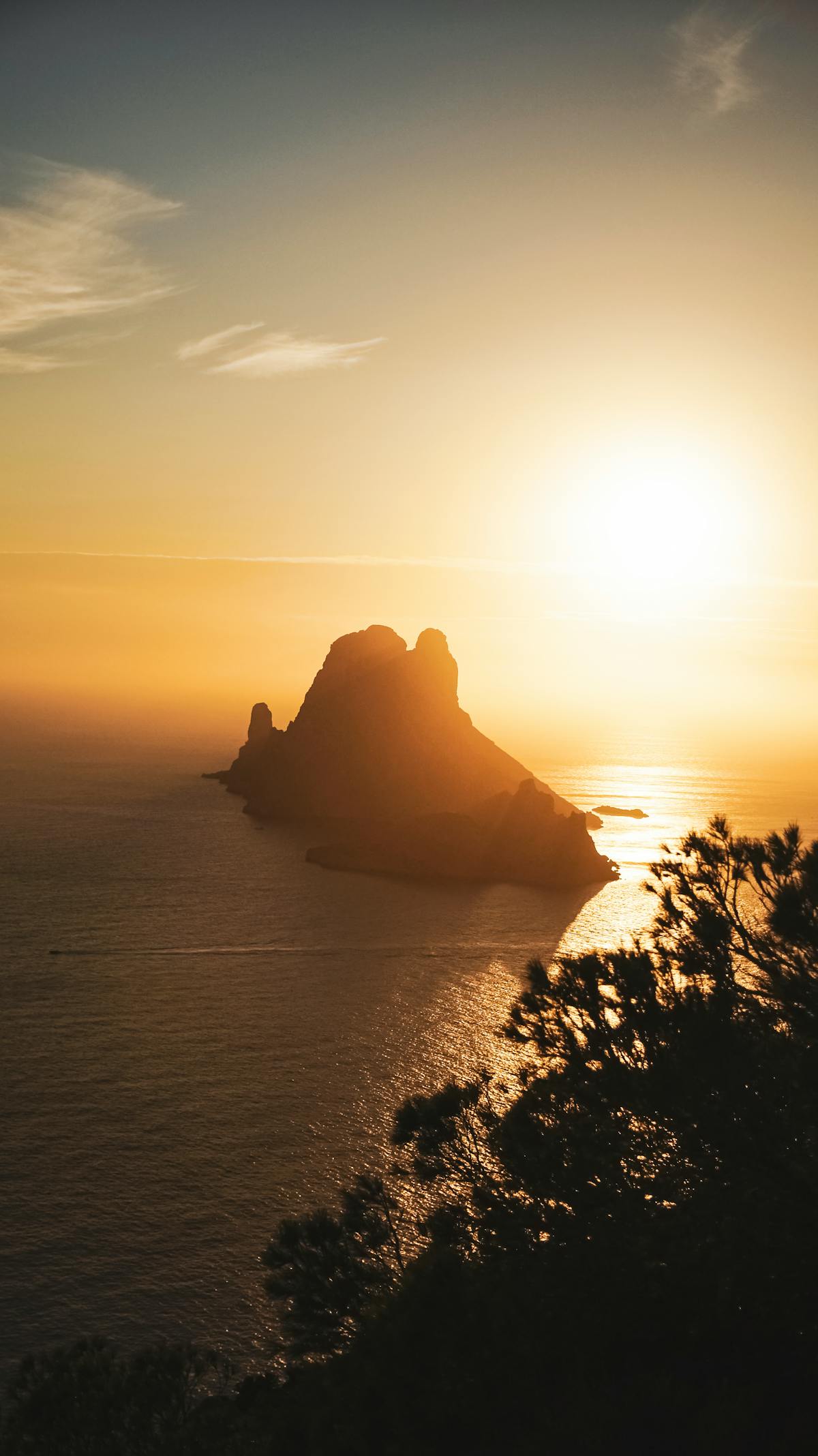
Cala d'Hort — south-west, and the only place to watch the sun set behind Es Vedrà, the limestone islet that launched a thousand legends. Come for the view, eat elsewhere.
Cala Comte (Cala Conta) — south-west, low rocks and shallow turquoise, the postcard sunset spot. Gorgeous and busy; arrive early.
Ses Salines — the beach by the salt flats near the airport. Beautiful, see-and-be-seen, expensive beach bars. This is the south's idea of a beach day.
You can read the whole island in its towns — pick three and you've understood it.

Ibiza Town (Eivissa) — the base for culture and the south. Dalt Vila, the UNESCO old town, climbs behind 16th-century walls to a cathedral and sea views; below it, the marina, tapas, and Pacha a short hop north. Walkable, alive year-round.
Santa Gertrudis — the inland village that quietly became the island's food town. Whitewashed, one square, galleries and good restaurants, no beach and no apology for it.

Sant Joan & Sant Miquel — the north's working villages. Fortified churches, slow Sundays, the agroturismo country around them. Sant Miquel's port has the best bullit on the island (see Food).
Santa Eulària des Riu — the calm family base on the east coast. A river (Ibiza's only one), a promenade, restaurants that aren't trying to sell you a table service. Returners book here.
Sant Antoni (San Antonio) — be honest about it: the West End is loud, young and proudly so, and the Sunset Strip (Café del Mar, Café Mambo) is a genuine ritual worth doing once. Cala Salada, a pine-backed cove, is 15 minutes north if you need to recover.
For people who want to move without it becoming the whole holiday.
Ibiza's other reputation — that it's only for clubbers — is as wrong as Mallorca's "only Lycra." The north is walking and water country, and most of it is gentle.
Ibiza eats far better than its club reputation suggests — a fisherman's coast on one side, a farming interior on the other, plus the Catalan-Balearic base and a Moorish streak in the sweets.

Bullit de peix — the island's signature, and a proper event: rockfish and potatoes poached in saffron broth, served first with aioli, then the broth comes back as rice (arròs a banda). Two courses, one pot, two hours.
Guisat de peix — the simpler fish stew, everything in one bowl, mopped up with bread.
Sofrit pagès — the inland counterpart: chicken, lamb, sobrassada and butifarra slow-cooked with potatoes. Winter-festival food, served year-round.
Flaó — the dessert: a soft cheese-and-mint tart, faintly aniseed, a leftover of the island's Moorish past.
Hierbas ibicencas — the local herb-and-anise digestif. One after lunch, not three.
Where to eat: for bullit, the locals' answer is Port Balansat in Port de Sant Miquel — a seafood kitchen right on the beach in the north, going since 1971. The Las Dalias market (Sant Carles) and the Wednesday Es Caná hippy market both feed you well between the stalls. For a long village lunch, Santa Gertrudis is wall-to-wall with good kitchens.
Wine: small but real. Bodega Sa Cova in Sant Mateu is the island's oldest (1990) — book ahead and the family pours you four wines with tapas for about €18. Bodegas Can Rich near Sant Antoni is the organic one, and makes the hierbas too; tours and tastings run weekday mornings, by appointment. Don't expect a Binissalem — expect a surprise.
May, June, September are the sweet spot. 24–28°C, sea swimmable, north quiet, south alive but not feral. September keeps the clubs open into the closing parties (mid-Sept to mid-Oct) without August's prices.
July and August — peak everything. 30–34°C, the south running flat out, hotel prices doubling, beach-club minimum spends, the West End at full volume. Come for this on purpose or not at all.
Opening and closing — the season opens late April and signs off in the mid-September-to-mid-October closing parties, the emotional, marathon nights the regulars actually rate. Cheaper, cooler, still buzzing.
November to April — the north is glorious and empty; the south is shuttered. Good for hiking, villages and a Dalt Vila base. Bad if you came to dance — most clubs simply aren't open.
Rent a car for the daytime. The whole point is the north, and buses skip the good coves entirely. Roads are short and easy.
But don't drive to the clubs. Drink-driving enforcement is strict, parking is grim, and the Disco Bus runs all night between the major clubs for €4–5. Use it.
Taxis are reliable by day and a genuine struggle after 3am — pre-book your late return or plan around the Disco Bus.
Ferry to Formentera leaves from Ibiza Town harbour, around 30 minutes, several daily.
Pick by which Ibiza you want — the island's small enough to day-trip the rest.
Ibiza Town — culture, dinners, Dalt Vila, Pacha a hop away. The all-rounder base.
Playa d'en Bossa — clubland HQ (Hï, Ushuaïa), by the airport. Stay here only if the clubs are the trip.
Sant Antoni — budget-friendliest, the Sunset Strip, younger crowd. Loud near the West End, calmer up by Cala Salada.
Santa Eulària — the calm, family east coast. Restaurants, promenade, no parties.
The north (Sant Joan / Sant Miquel) — agroturismo farmhouses, quiet, hiking and coves from the door. Needs a car and at least four nights.
Ibiza is the most expensive Balearic by some distance. The north and the shoulder season are reasonable — but the south in July and August runs on beach-club minimum spends and €25 cocktails. Where you stay decides which economy you're in.
Prices in 2026 euros. The north and shoulder season run 30–40% cheaper than the south in summer; off-season, the south barely operates.
Go if you want both Ibizas — drum circles and empty coves in the north, the clubs everyone else is copying in the south — on one island you can cross in under an hour. Skip if you only want one half and won't drive to find the other.
Found this useful? Share it.
Still planning?
We don't stop at "here's the country." Real places to stay, what to do, apps that matter, even how to find someone to travel with — plus guides for whatever vibe you're after, from beach days to wine country to slow weekends. All up top. Spin for somewhere new when you're done with this one.