This is your destination guide for Japan.
This is your destination guide for Hokkaido
📍 Part of JapanJapan's far north — powder winters, a six-week green summer, and the Ainu land Tokyo renamed in 1869.


The reality: It's February and you're on a boat out of Abashiri, watching the bow shove through a field of sea ice that drifted down from the Amur River in Russia. An hour earlier you ate miso ramen for breakfast because the wind chill outside was minus fifteen. This is still Japan — but it's a long way from the Japan on the posters.
Hokkaido is two destinations sharing one map. December to March it's snow country: Niseko powder, the Sapporo Snow Festival, drift ice on the Okhotsk coast, onsen steaming in the cold. Then the snow goes, and for a short green summer the island becomes national parks, lavender fields, and hiking trails where you carry a bell so the bears hear you coming. Almost nobody does both. Pick your season before you pick anything else.
It's also big — Japan's largest prefecture, a fifth of the country's land, with distances that surprise people who fly in expecting a tidy island. Sapporo to the Shiretoko bears is a full day's drive. This was Ezo until 1869, the homeland of the Ainu, whose words are still written into half the place-names you'll read; Upopoy, the national Ainu museum at Shiraoi, is the honest place to start. Give it more time than you think, and Hokkaido pays it back.
Hokkaido's headline isn't a town, it's the open country: six national parks, an active volcanic spine, and more brown bears than anywhere else in Japan. Most of it is a drive from the nearest train.

Daisetsuzan — Japan's largest national park, the rooftop of Hokkaido. The Asahidake ropeway lifts you to 1,600m in ten minutes (round trip about ¥2,200 off-season, ¥3,200 in the summer–autumn peak); from the top, a one-hour loop past steaming vents and Sugatami Pond, or a real climb to the 2,291m summit. This is where Japan's autumn colours start — mid-to-late September, weeks ahead of Honshu.
Shiretoko — a UNESCO peninsula at the north-east edge, so wild the only way up the coast is by boat. Brown bears on the shoreline, drift ice in winter, waterfalls straight into the sea. Sightseeing cruises run from Utoro roughly late April to late October. After the 2022 Kazu I sinking off this coast, oversight was tightened and that operator shut down — check conditions and the operator before you board. This is a serious sea.
Akan-Mashu — caldera-lake country. Lake Mashu is famous for water clarity and for being fogged in half the time you visit. Lake Akan grows marimo, the strange green algae balls found almost nowhere else on earth.

Shikotsu-Toya — the closest wild to Sapporo and New Chitose. Two caldera lakes, hot springs, and Mount Yotei (the "Ezo Fuji") presiding over the Niseko side. Easy to fold into the start or end of a trip.
Rishiri & Rebun — far-north flower islands, a ferry beyond the top of the map. A short summer window (June–July) when Rebun's wildflowers come out and Rishiri's cone rises straight from the sea. Niche, and a long way — but the people who go don't stop talking about it.
Drift ice (ryūhyō) — the Okhotsk coast freezes from roughly late January to March. Icebreakers out of Abashiri (the Aurora) and Monbetsu (the Garinko) push through it; at Utoro you can walk on it. The signature winter sight, and the one most worth planning dates around.
Hokkaido's towns are spread out and each does one thing well. Sapporo is the hub you'll pass through; the rest reward a detour.

Sapporo — the gateway and the only real city. Miso ramen was born here, so was soup curry; Susukino is the nightlife grid; the Sapporo Beer Museum pours the original. Early February it hosts the Snow Festival (Yuki Matsuri, 4–11 Feb 2027) — building-sized snow sculptures down Odori Park. Free to walk, brutally cold, worth a layer plan.
Hakodate — the southern port, first foreign-trade town in the north. Night view from Mount Hakodate, a morning market where you eat a seafood donburi before 8am, and the only town the Shinkansen actually reaches.
Otaru — a canal town half an hour from Sapporo. Lit warehouses, glassworks, and sushi counters that punch above the size of the place. Touristy, photogenic, easy.
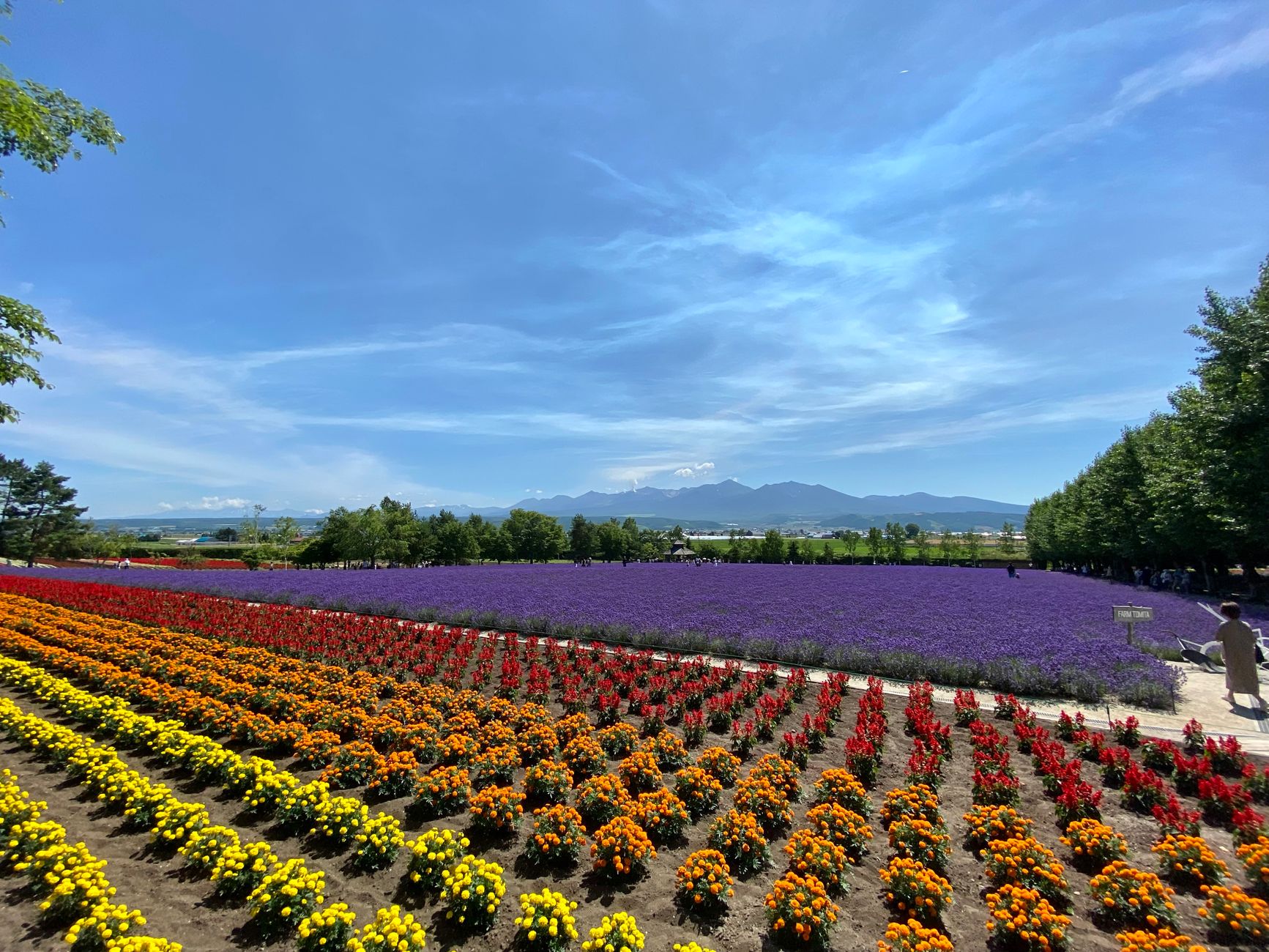
Furano & Biei — the patchwork-hills belt. Lavender and flower fields in July–August (Farm Tomita is the famous one), rolling farmland, and the much-photographed Blue Pond near Biei. In winter, Furano flips into a quieter, more local ski town.
Asahikawa — the inland second city and gateway to Daisetsuzan, with a ramen style of its own (soy, a lard cap to hold the heat) and a zoo that's oddly one of Japan's best.
Niseko — the powder capital, and the honest asterisk on this list. The snow is real and world-famous. It's also been internationalised and priced so far up that English is the working language and a January week costs Alps money. Brilliant skiing; barely feels like Japan.
Two seasons, two completely different islands — winter on the left, summer on the right.
There's no "all year" version of an active Hokkaido trip. The snow is gone by the time the trails open, and the trails are buried by the time the powder lands. Pick a season, then pick from its column.
Hokkaido eats like its own country: cold-climate dairy, mutton, and the best seafood in Japan. Nobody leaves hungry.
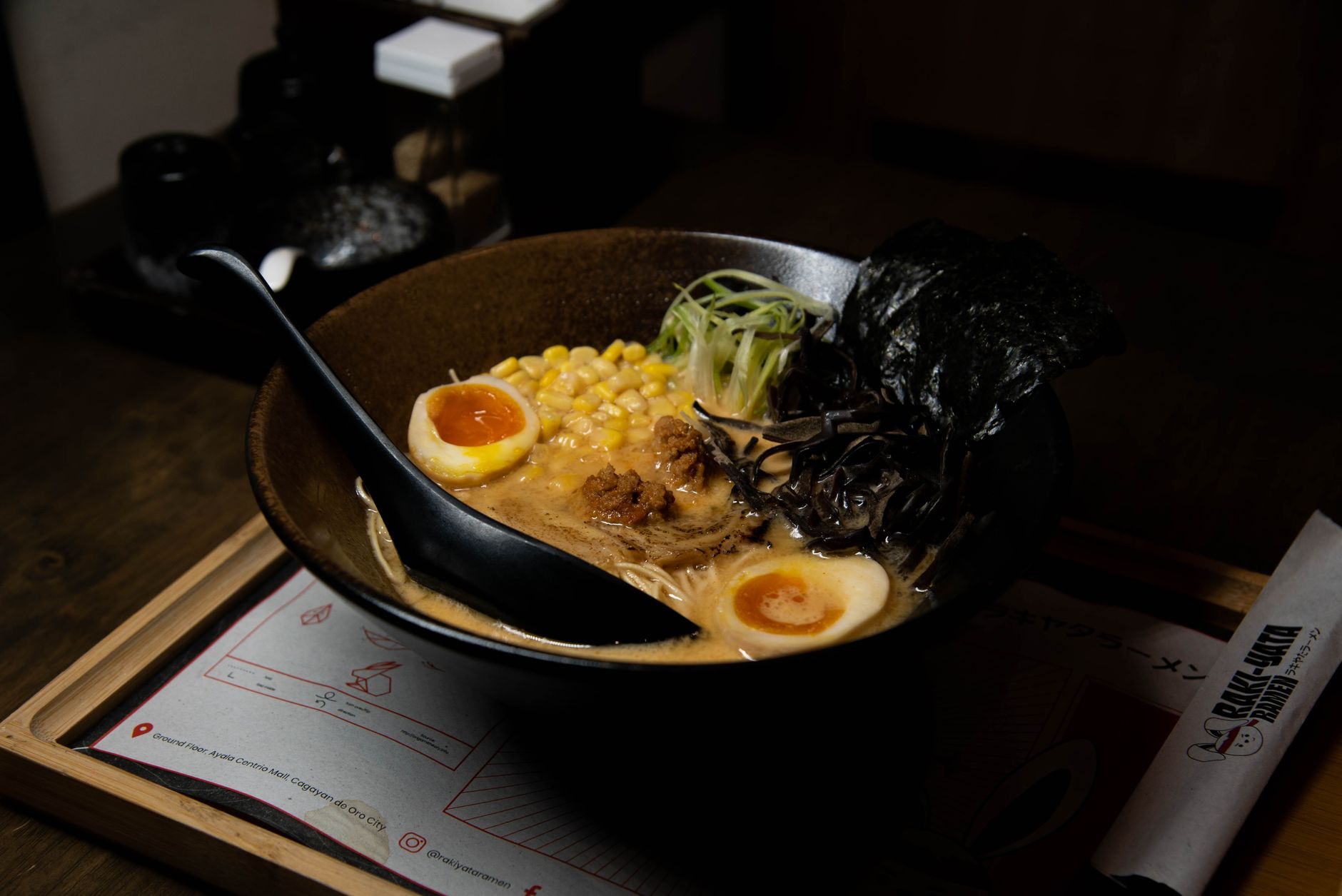
Sapporo miso ramen — the rich, butter-and-corn winter bowl that started here. Asahikawa does a soy version with a lard cap that keeps the broth scalding to the last sip.
Jingisukan — mutton and vegetables grilled over a dome-shaped skillet ("Genghis Khan"). Smoky, communal, beer-friendly.
Soup curry — a genuine Sapporo invention: spiced broth, whole vegetables, fall-apart chicken. Not a curry-house import — try it where it was born.
Seafood & dairy — uni, crab (kani), scallops, the Hakodate morning-market donburi; and milk, butter, cheese, and soft-serve people queue for. The dairy cliché is true.
To drink: Sapporo Beer — the original Japanese lager, brewed here since 1876, with a museum in town. Nikka whisky at the Yoichi distillery near Otaru, the spiritual home of Japanese whisky. Furano wine and haskap berry liqueurs round it out — a real cold-climate drinks story, not an afterthought.
January–February — deep winter, peak one. Powder at its best, drift ice on the Okhotsk coast (best mid-Feb to early March), the Sapporo Snow Festival (4–11 Feb 2027). Also the most expensive and the coldest — daytime well below freezing, Niseko booked out months ahead. This is the headline Hokkaido.
June–September — green summer, peak two. The only warm window, and a short one. Parks open, lavender out July–August, hiking comfortable, bears active (carry a bell). Sapporo sits in the low-to-mid 20s°C while Tokyo melts — Japanese travellers come north to escape the heat.
Late September–October — autumn. Daisetsuzan turns first and earliest in Japan (mid-to-late Sept up high). Cool, quiet, underrated. A good shoulder if you want parks without summer crowds.
April–May & November–December — the in-between. Snow gone or not yet reliable, parks closed or closing, drift ice not yet arrived. Cheapest, but you're between the two reasons to come. Skip unless you're passing through.
Rent a car for the parks and the farm belt — public transport thins out fast outside Sapporo, and several rural JR lines have been cut entirely. Winter driving is a real skill: snow tyres are standard, whiteouts and road closures happen, and if that's not for you, take guided tours or stick to the rail spine.
Trains cover the Sapporo–Hakodate–Asahikawa axis well; beyond that, service is sparse and slow. The Shinkansen only reaches Shin-Hakodate-Hokuto in the south — the extension to Sapporo is delayed to around 2038, so for now everything north of Hakodate is local rail, bus, car, or a flight.
Fly for the long hauls. New Chitose (Sapporo) is the main gateway; Memanbetsu serves the Shiretoko/drift-ice corner and saves you a day's drive. Tokyo (Haneda)–New Chitose is about 1h35m — LCC fares from roughly ¥7,000, full-service ANA/JAL around ¥15,000–20,000.
Compare rental cars →Pick your base around your season first, then your region — distances are too big to day-trip everything.
Sapporo — for the city, food, festival, and easy New Chitose access. Best winter hub if you're not skiing.
Niseko — for powder, and only if the budget's there. Ski-in convenience, international everything, peak prices Jan–Feb.
Furano or Biei — for lavender summers and quieter winter skiing, central enough to reach Daisetsuzan.
Hakodate — for the south, the morning market, and the one Shinkansen connection.
Utoro (Shiretoko) — for bears, drift-ice walks, and the wild north-east. Remote — plan the drive or fly to Memanbetsu.
A park onsen — Sounkyo, Noboribetsu, or Lake Akan — for hot springs with the wild on the doorstep.
Hokkaido sits mid-range for Japan — cheaper than Tokyo or Kyoto for food and hotels most of the year. The exception is Niseko in January and February, where ski-season rates run closer to the Alps than to the rest of Japan.
Prices in 2026 yen. A lodging tax now applies on top — ¥100–500/night prefectural, with Sapporo and ~20 municipalities stacking their own (a sub-¥20,000 Sapporo night runs ¥300 total). Niseko in deep winter is its own economy; the rest of the island is far gentler. Upopoy (Ainu museum) ¥1,200; Asahidake ropeway ¥2,200–3,200 round trip.
Go if you want a wilder, colder Japan — powder mornings, drift ice, brown-bear country, and a food scene built on dairy, mutton, and the sea — on an island big enough to need a plan. Skip if you came for cherry blossoms and bullet trains, or won't pick between winter and summer.
Found this useful? Share it.
Still planning?
We don’t stop at “here’s the country.” Real places to stay, what to do, apps that matter, even how to find someone to travel with — plus guides for whatever vibe you’re after, from beach days to wine country to slow weekends. All up top. Spin for somewhere new when you’re done with this one.
