
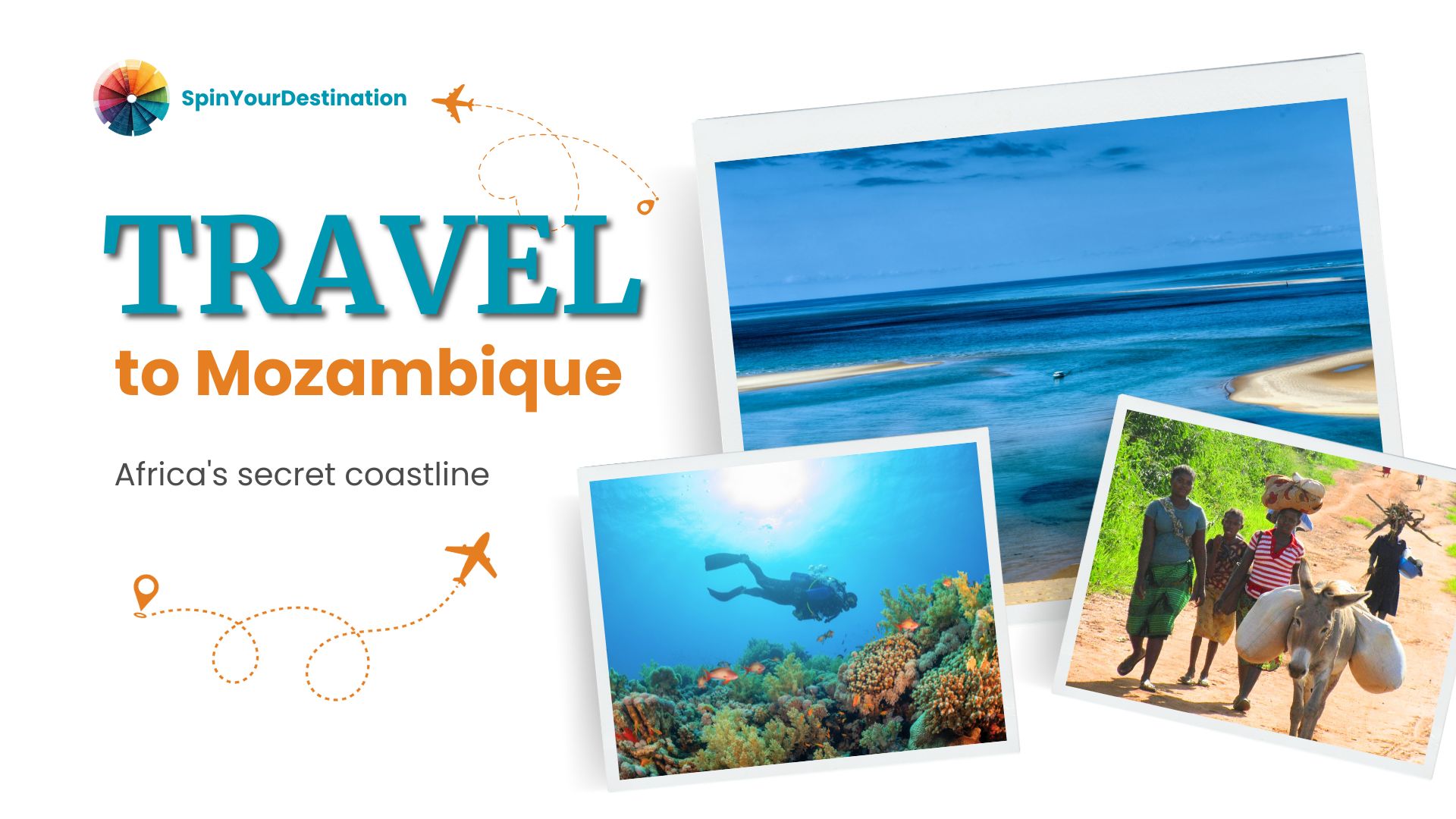
Beach & Sun Mozambique
Your complete guide to Mozambique's beaches, islands, and Indian Ocean coast
The water is the colour of shallow reef — green over sand, then turquoise, then the deep blue of the channel. A dhow moves past without sound. You're at Praia do Tofo, and the whale shark boats left an hour ago.
Mozambique's coast is 2,700 kilometres long. From the mangrove bays of the south to the remote archipelagos of the far north, the Indian Ocean here remains one of the least crowded coastlines on earth. The Bazaruto Archipelago protects the last viable population of dugong in the western Indian Ocean. Tofo has more whale sharks per dive than almost anywhere.
The beaches themselves range from the spectacular — Benguerra Island's powder-white sand — to the quietly remarkable: a sandbar emerging at low tide off Vilanculos, deserted except for the tracks of hermit crabs.
Peak season June–October. Water temperature 24–28√C year-round. Come early morning before the wind picks up.
The Bazaruto Archipelago — Mozambique's Crown
Five islands. Protected since 1971 as a national marine park. Bazaruto, Benguerra, Magaruque, Santa Carolina (Paradise Island), and Banguerê — each different in character, all extraordinary.
Benguerra is the social one: a lodge island with excellent coral and calm snorkelling in the lagoon. Bazaruto itself is larger, with freshwater lakes, sand dunes, and a lighthouse you can climb at sunset. Santa Carolina is the most remote — effectively abandoned, hauntingly beautiful.
Access from Vilanculos by speedboat (30 minutes) or light aircraft (10 minutes). The island lodges arrange all transfers. Day trips from Vilanculos allow non-lodge guests to snorkel the reef and walk the beaches — book through local operators in town.
Two Mile Reef, just off the coast, is the archipelago's primary dive site: wall dives, enormous grouper, potato bass, rays, and seasonal manta aggregations. Whale sharks visit year-round.
Tofo & Inhambane — The Dive Town
Tofo Beach is a 5km crescent of sand near Inhambane town. The vibe is relaxed and international — dive centre instructors, surf coaches, backpackers, and marine biologists share space at the same beach bars.
The offshore shelf drops steeply and attracts large pelagics year-round: whale sharks (peak June–September), manta rays (October–February), hammerhead sharks, and humpback whales (July–November). No other destination in Africa offers this density of big ocean wildlife so close to shore.
Surfable waves break at Tofinho Point (the headland at Tofo's south end). Consistent swell, right-hand point break, less crowded than better-known African surf spots. Rentals available.
Inhambane town itself — 20 minutes from Tofo — has a Portuguese colonial core, a dhow harbour, and some of Mozambique's best local restaurants. The journey across the bay by traditional dhow is an experience in itself.
Vilanculos & Barra — Gateway South
Vilanculos is the main land base for the archipelago — a beach town rather than a resort, with a working harbour, a mix of budget and mid-range accommodation, and kitesurfing schools on the tidal flats.
The beach at Vilanculos disappears at high tide — a vast tidal system that creates the sandbanks and channels the dhows navigate. At low tide you can walk far out onto the flats. Kitesurfing conditions are exceptional: warm water, consistent trade winds, shallow and forgiving.
Barra Peninsula, 30km south of Inhambane, has excellent beaches and a quieter atmosphere than Tofo. The Barra reef is accessible from shore at low tide. Sunset over the Inhambane Bay from Barra is spectacular.
Pemba & the Quirimbas — The Remote North
Pemba, in Cabo Delgado province, is the gateway to the far north. The Quirimbas Archipelago stretches for 250km — 32 islands, almost no tourism infrastructure outside a handful of private island lodges.
Ibo Island is the cultural jewel: a former Portuguese trading post with crumbling forts, silver craftsmen still working by hand, and a community that has lived here for centuries. Quilalea Island offers some of the most pristine snorkelling reef in the Indian Ocean.
The north is harder to reach (fly to Pemba, then boat or light aircraft) and the security situation in Cabo Delgado has affected travel in recent years — check current advisories before planning trips to the Quirimbas.
⭐ Top Beach & Sun Experiences
🏖️ Praia do Tofo — main beach
Five kilometres of Indian Ocean beach. Morning surf, midday lounging, evening dhows on the horizon. Unpretentious, beautiful, and genuinely alive. The benchmark for Mozambique beach life. Stay 3+ nights to absorb it properly. More info →
🌊 Bazaruto Marine Park snorkeling
Day trips from Vilanculos to the coral gardens around Bazaruto and Benguerra. Dugongs, turtles, and reef fish in glass-clear water. USD 80–120 per person. Book 24 hours ahead in peak season. More info →
🌎 Benguerra Island beach day
The island's beaches are among the finest in the Indian Ocean — white sand, no crowds, coral lagoon. Non-lodge guests can visit on day trips from Vilanculos. Ask operators at the harbour. More info →
🌴 Barra Beach & Ponta da Barra
The Barra Peninsula south of Inhambane: calm bay on one side, open ocean on the other. Snorkelling accessible from shore at low tide. Excellent sunsets over the bay. Quieter than Tofo. More info →
🧹 Whale shark snorkeling — Tofo
Swimming alongside the world's largest fish is the highlight of any Mozambique trip. Boats leave Tofo early morning. June–September peak season. Around USD 60–80. No experience needed — just the ability to snorkel. More info →
🏛 Pemba & northern beaches
Pemba's Wimbi Beach is a local favourite: calm, sheltered, fringed with casuarina trees. The gateway to the Quirimbas Archipelago for those seeking truly remote Indian Ocean coast. Check travel advisories for Cabo Delgado. More info →
💡 Insider Tips
- 🎶 Whale shark trips have no guarantees — they're wild animals. June–September gives the best odds at Tofo. If you don't see one on day one, book again the next morning.
- 🌌 The Bazaruto islands look different at high and low tide — the sandbanks emerge and disappear. Ask your dhow captain to time the trip for low tide.
- ☀️ Wind picks up by 10–11am most days. Plan snorkelling and beach activities for early morning. Afternoons are for shade, reading, and planning the next day.
- 🍓 Reef-safe sunscreen is not just recommended — it's essential. Standard sunscreens kill coral. A marine park this healthy deserves the care. Bring enough from home as reef-safe brands are hard to find in Mozambique.
- 🔦 Wet season (November–March) brings heavy rain, cyclone risk, and murky water. Some lodges close. June–October is when the ocean is at its clearest and calmest.