This is your destination guide for Mexico.
This is your destination guide for Yucatán
📍 Part of MexicoFlooded caves, Maya pyramids, and a cuisine locals will tell you isn't really "Mexican" — on a peninsula where the water runs underground.


The reality: You're floating in a cenote outside Valladolid. The water is colder than the Caribbean and clearer than glass, daylight drops through a hole in the cave roof, and a small fish noses past your foot. There's no sea in sight. This is the part of the Yucatán the brochures don't lead with — and it's the part people come back for.
Here's the trick of the peninsula: it has no rivers. The whole thing is a slab of porous limestone, and every drop of rain sinks straight through it into thousands of underground pools. So while everyone fights for a lounger on a sargassum-prone coast, the real swimming is inland, underground, and nearly empty.
Most travellers fly into Cancun, see the hotel zone and Tulum, and leave thinking they've seen the Yucatán. They've seen 5% of it. The rest is Maya pyramids you can still climb, a colonial city that throws a street party every Sunday, flamingo lagoons, a cuisine built on pork buried in the ground, and a lake with seven colours an hour from Belize. Rent a car, or take the new train, and go inland. That's where it opens up.
The cenotes are the reason to come — and almost nobody books the Yucatán for them first. There are thousands, sunk into the limestone: open swimming holes, half-collapsed caverns, pitch-black cave systems. Sac Actun, near Tulum, is the longest flooded cave on earth.

Gran Cenote (Tulum) — turtles, easy snorkelling, busy by 10 AM. Go at opening.
Cenote Dos Ojos — two linked caverns, the snorkel-and-cavern-dive classic. You don't need to dive to see it.
Cenote Oxman (Valladolid) — a hacienda cenote with a rope swing into deep green water.

Suytún — the famous one, with the stone platform and the beam of light. Be honest with yourself: the beam lands for about an hour a day, the photo queue is long, and it's the most over-shot cenote on the peninsula. Homún is the antidote — a village of dozens of small cenotes where you'll share the water with two other people, not two hundred.
The coast needs an asterisk. Playa del Carmen and Tulum face open water and catch the worst of the sargassum (see When to go). The clearer water is on the islands: Isla Mujeres' Playa Norte, Cozumel's west coast, and car-free Holbox up north, where the streets are sand and flamingos wade in the shallows. Inland, Bacalar's lagoon glows in seven shades of blue with no salt and no seaweed at all. Offshore, the Mesoamerican Reef — second-largest in the world — is best snorkelled from Puerto Morelos or dived off Cozumel.
The Yucatán holds the densest cluster of Maya cities anywhere. Most people see one of them, over a thousand other heads.

Chichén Itzá — one of the New Seven Wonders, and worth it. Around the spring and autumn equinox the afternoon sun throws a serpent of shadow down El Castillo's staircase. But you can't climb the pyramid (closed since 2008), and the Cancun buses land at 10 AM. Be at the gate when it opens at 8.
Ek Balam (near Valladolid) lets you still climb the main pyramid to a jaguar-mouth doorway, often with the top half to yourself. Uxmal, south of Mérida, is the finest architecture on the peninsula and a fraction as busy. Cobá sits deep in jungle — you cycle between its structures. Tulum's cliffside ruins (now entered through the new Parque del Jaguar) are smaller than their reputation, but no other Maya site has that sea behind it.
The inland towns are the surprise of the trip — and a third of the coast's prices.

Mérida — the capital, colonial, genuinely safe, walkable, and hot. Every Sunday the centre closes to traffic for Mérida en Domingo: markets, dancing in the square, food stalls. The grand Paseo de Montejo was built by henequen barons trying to be Paris. Best base for the west — Uxmal, the flamingos at Celestún, the yellow town of Izamal.
Valladolid — smaller and slower, with pastel streets, a cenote in the middle of town (Zací), and the Calzada de los Frailes to wander at dusk. The ideal base for Chichén Itzá, Ek Balam, and a cluster of cenotes.
Bacalar — a wooden-dock town on the seven-colour lagoon near the Belize border. Kayak at dawn before the wind picks up. Quiet in the way Tulum used to be.
Izamal — the "yellow city," its colonial centre painted ochre around a convent built on a flattened Maya pyramid. A half-day, easily. Tulum pueblo, inland of the beach strip, is where you sleep and eat if you're not paying beach-club rates.
For people who'd rather be in the water than beside it.
The peninsula's adventure is mostly wet, and a lot of it is wildlife. None of it needs a training camp.
Tell a Yucateco their food is "Mexican" and they'll politely correct you. This is its own cuisine — Maya roots, Spanish technique, a thread of Lebanese from 19th-century migration.
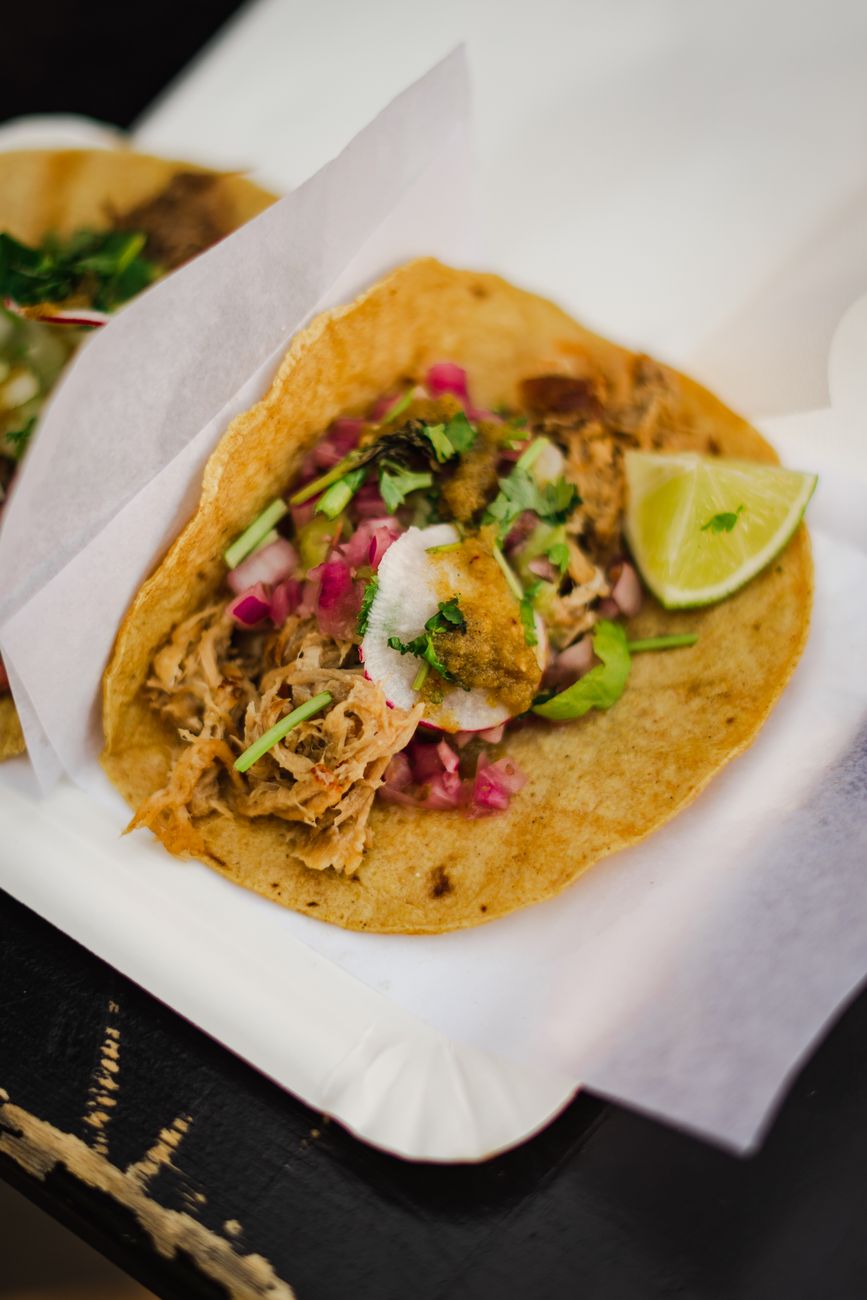
Cochinita pibil — pork marinated in achiote and bitter orange, wrapped in banana leaves and slow-cooked in a pit in the ground (pib). The dish that explains the place.
Sopa de lima — a clear lime-and-turkey soup with crisp tortilla. Papadzules — egg-stuffed tortillas under a green pumpkin-seed sauce, pre-Hispanic and still everywhere.
Panuchos and salbutes — the fried-tortilla snacks you eat standing up. Marquesitas — a street dessert that shouldn't work: a crisp rolled crepe filled with Dutch Edam cheese and Nutella. Order a second.
Where to eat: the markets in Mérida (Lucas de Gálvez, Santiago) for breakfast; Wayan'e for tacos; Valladolid's market for lechón. The heat arrives on the side — habanero and xnipec salsa, at your own risk. To drink, Xtabentún, a local anise-and-honey liqueur the Maya made with fermented honey, and a cold Montejo.
November to March is the window, and it's not close. Dry, less humid, 25–28°C, and crucially the water is clear: the sargassum is gone and the cenotes are at their best. December to February is peak — book early, pay more.
The sargassum is the real seasonal story. Brown seaweed washes onto the Caribbean coast roughly April to October, worst June to August, and 2026 is forecast to be one of the heaviest years on record. Tulum and Playa del Carmen, facing straight out to sea, get it worst. Travelling those months and still want beach? Base on Isla Mujeres, Cozumel's west coast, or Holbox — all far more protected — and treat cenotes and Bacalar as the main event, not the backup.
April–May is hot and building toward sargassum; inland Mérida hits 38°C+. June–October is wet season and hurricane season (peak risk August–October) — cheapest prices, real storm risk, heaviest seaweed.
One date for the calendar: the spring and autumn equinox (around 20 March / 22 September) at Chichén Itzá, when the shadow-serpent appears down the pyramid — spectacular, and mobbed. Decide if the crowd is worth it.
The Tren Maya changed this. The new train runs the coast — Cancun airport to Tulum via Puerto Morelos and Playa del Carmen, roughly three times a day — and the inland route, Cancun to Mérida via Valladolid and Chichén Itzá, up to six times a day. Modern, air-conditioned, a real alternative to the old bus slog. Two honest caveats: reliability is still settling after a rocky first couple of years, so check schedules, and you'll usually need a taxi or colectivo for the last stretch from the station.
Rent a car anyway if cenotes and smaller ruins are your plan — most sit off the train line. Roads are good; watch for topes (speed bumps that appear from nowhere). Colectivos (shared vans) run the Highway 307 corridor cheaply, and ADO buses are excellent between cities — reliable, comfortable, bookable ahead.
Airports: Cancun (CUN) is the gateway, and for European travellers effectively the only one. Tulum's airport (TQO) opened in 2023 but has cut routes in 2026 and mostly serves US and Canadian hubs — don't plan a trip around it from this side of the Atlantic. Mérida (MID) is handy for the west. There's no Uber at Tulum's airport, and station and airport taxis run on fixed, high zone rates.
Pick your base by what you're here for — the peninsula is too big to do from one spot.
Playa del Carmen — walkable, central on the coast, ferry to Cozumel. Mid-priced, lively.
Tulum — beach clubs and wellness on the strip (expensive, sargassum-exposed); the pueblo inland for real prices.
Mérida — colonial, cultural, safe, hot, superb value. The base for ruins and flamingos.
Valladolid — small and central for Chichén, Ek Balam, and cenotes. Cheap.
Bacalar — the seven-colour lagoon, slow and southern.
Holbox — car-free island, flamingos, whale sharks in season.
Isla Mujeres or Cozumel — your sargassum-safe beach bases in summer.
Yucatán is two price worlds in one. The Riviera Maya coast — Tulum above all — has crept up to Miami money in high season. Drive inland to Mérida, Valladolid, or Bacalar and the same peso goes three times as far.
Prices in 2026. The coast in December–February runs roughly double; inland stays cheap year-round.
Go if you want one peninsula that does flooded-cave swims, Maya pyramids you can still climb, a cuisine of its own, and colonial cities for a third of the coast's prices. Skip if all you want is a beach lounger — sargassum and Tulum's prices will find you there.
Found this useful? Share it.
Still planning?
We don't stop at "here's the country." Real places to stay, what to do, apps that matter, even how to find someone to travel with — plus guides for whatever vibe you're after, from beach days to wine country to slow weekends. All up top. Spin for somewhere new when you're done with this one.