This is your destination guide for Albania.
This is your destination guide for The Albanian Riviera
📍 Part of AlbaniaThe Mediterranean's last cheap turquoise water — pebble coves under bare mountains, four islets you can swim to, and a Roman city where the coast runs out.


The reality: the Albanian Riviera is the Ionian coast — the same sea that laps Corfu, twenty minutes across the strait — running roughly 100 kilometres from the Llogara Pass in the north down to Ksamil at the southern tip. The water really is that clear, saturated turquoise. But this is a coast of pebble coves under steep, bare mountains, not a soft-sand ribbon, and knowing that before you arrive changes the whole trip.
For a decade this was Europe's open secret; now it's the headline. Albania's tourism boom has a face, and this coast is it. Ksamil is both the postcard and the warning — dazzling shallow water, four little islands offshore, and a build-out of apartments and beach clubs that arrived faster than the plumbing did. Turn away from it and the coast still delivers: Dhërmi and Drymades under the pass, wild Gjipe, central Himarë, the long shingle at Borsh.
And it has layers most beach coasts don't. Butrint, an ancient city on a lagoon at the south end. Ali Pasha's castle on a bay at Porto Palermo. Concrete bunkers from Enver Hoxha's paranoid decades, thickest right along this border shore. Greek-speaking villages in the hills above Himarë. Come by the half-hour ferry from Corfu or the four-hour drive down from Tirana — Vlorë's new airport isn't flying yet — base in Himarë or Sarandë, and take the coast as a sequence, not a race.
The coast changes character as you drive it — decide what kind of beach you're actually after, then pick your stretch, because they're not interchangeable.
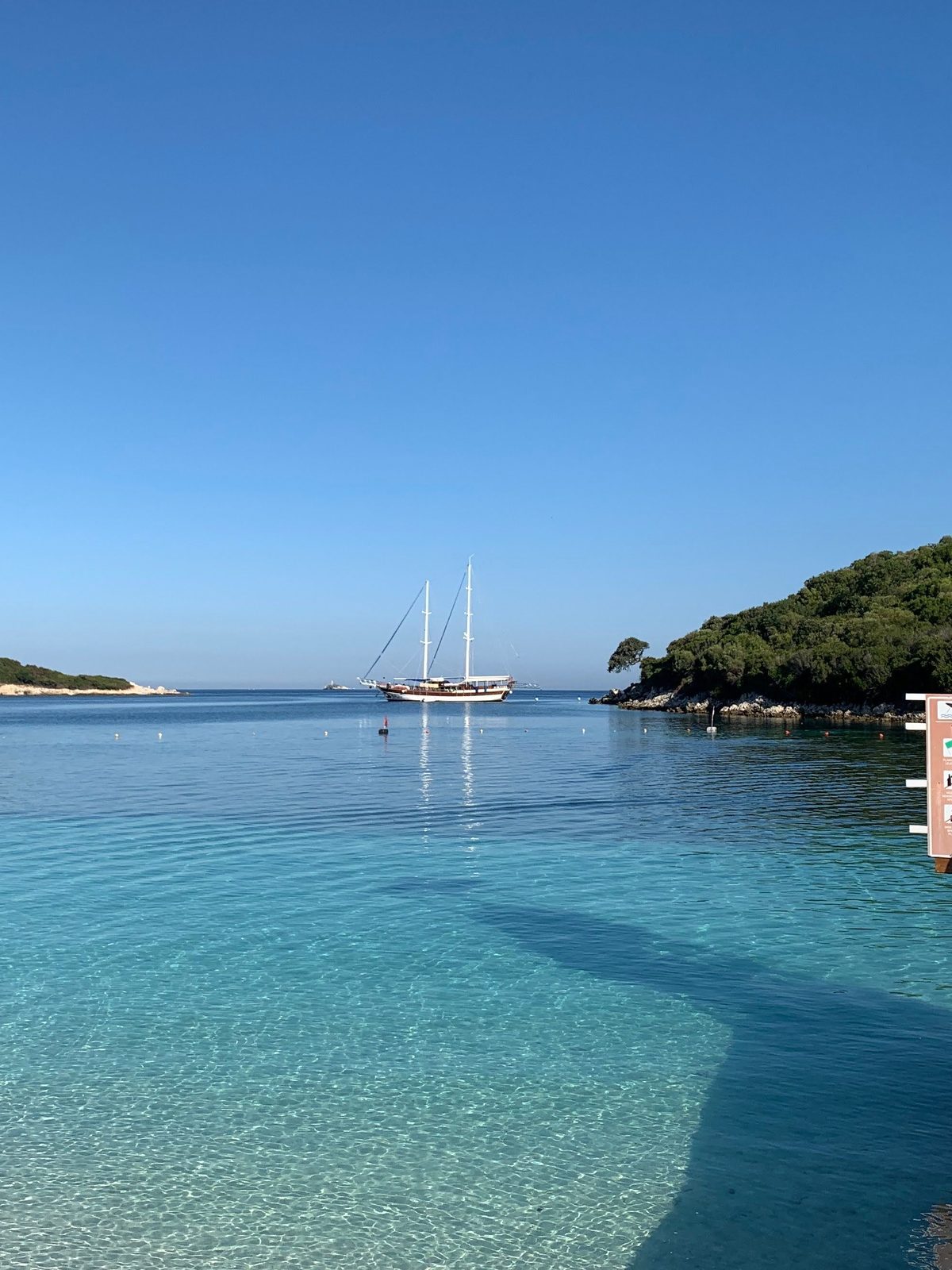
The far south is the postcard: Ksamil, where fine pale sand shelves into shallow, still turquoise, and four uninhabited islets sit a short swim or paddle offshore — the reason the town's name travels. Get there early and the nearest islet's little coves are yours; by mid-morning in season the water taxis are running a shuttle.
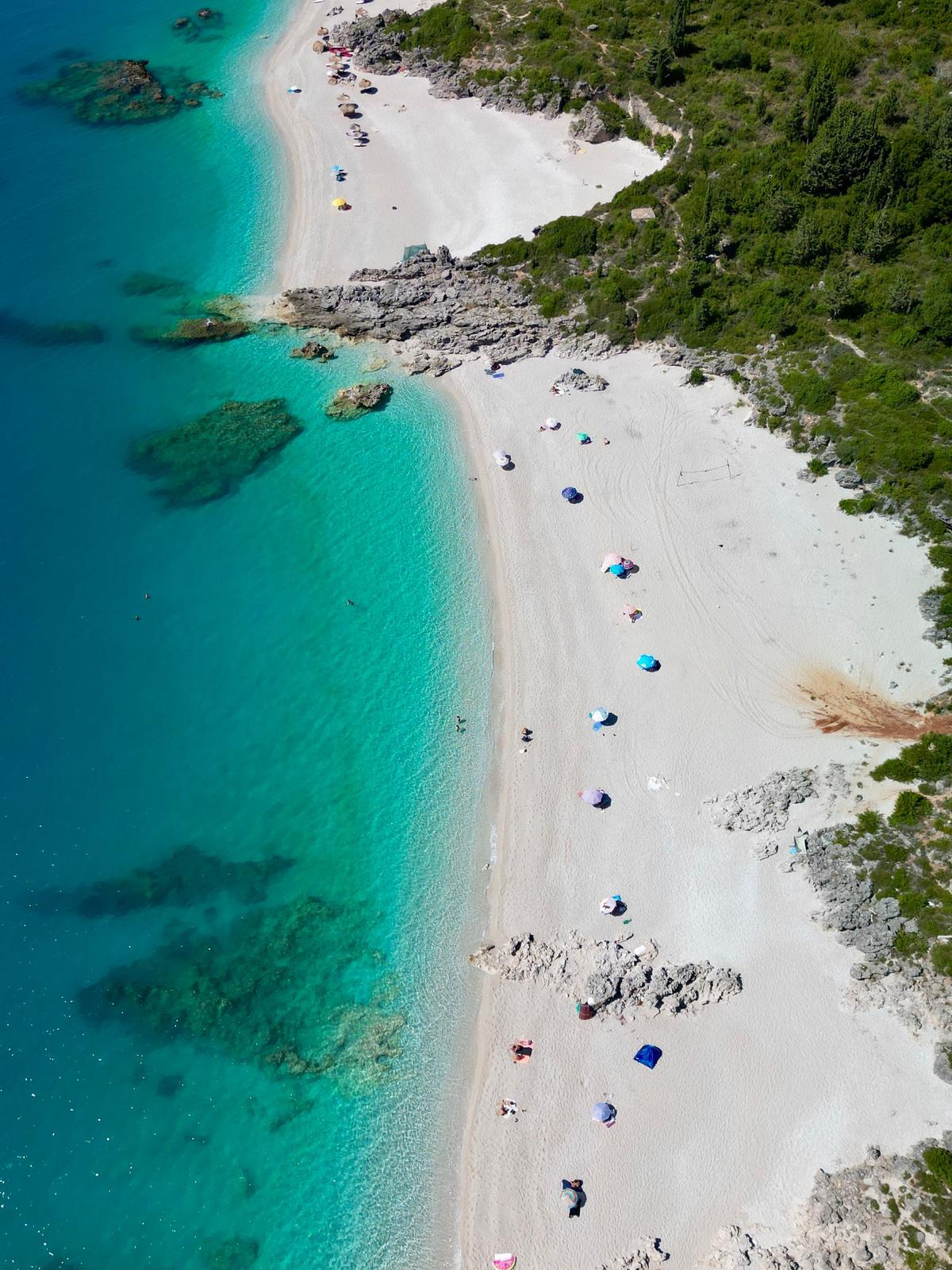
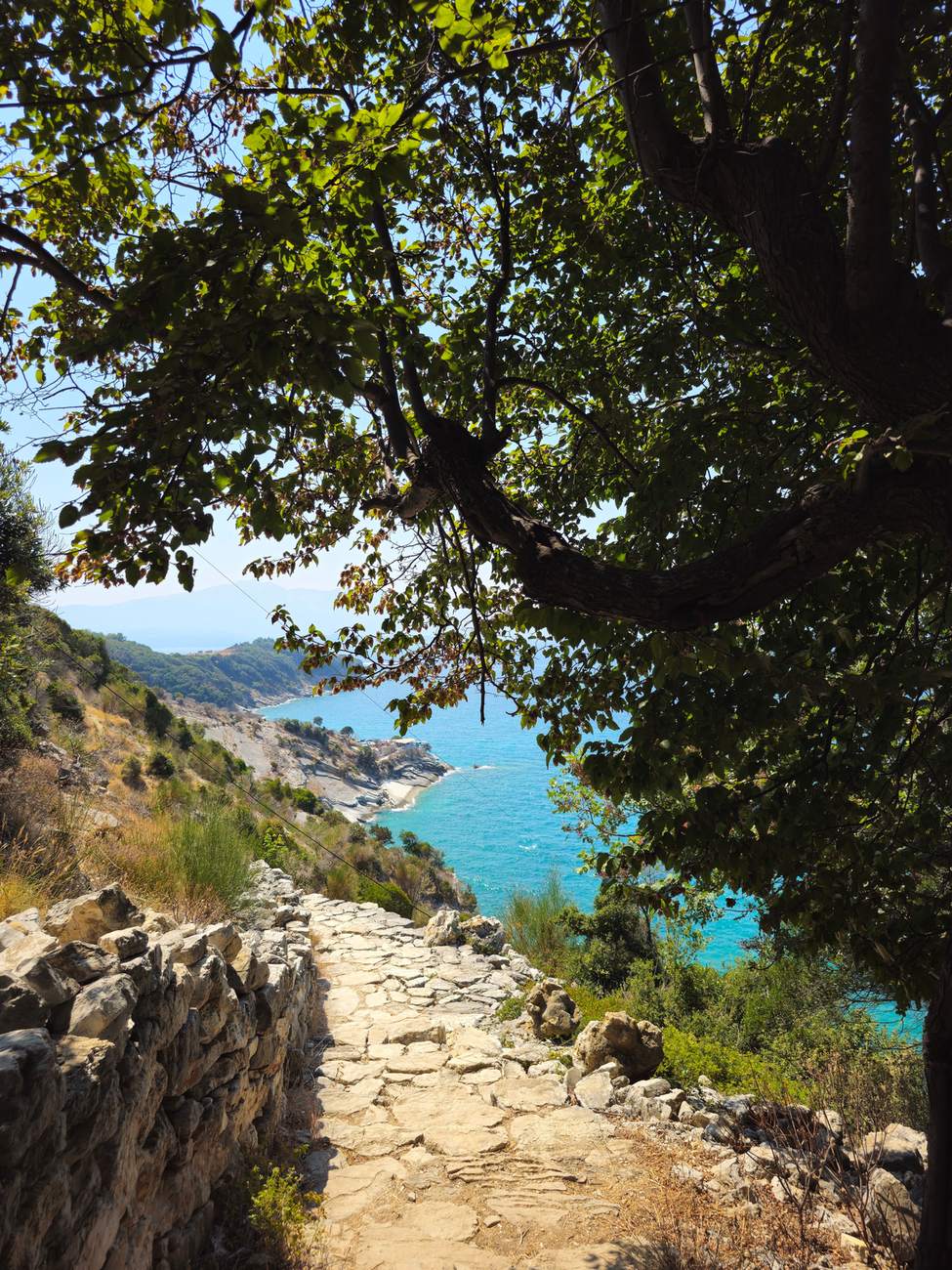
North of Himarë the mood turns dramatic — mountains drop straight to the sea. Dhërmi and Drymades are the rounded-pebble beach-club strip under the Llogara pines; between them and Himarë, Gjipe hides at the mouth of a canyon, a twenty-minute walk down and worth every step for a beach with no road to it. Further south, Borsh runs seven near-empty kilometres, and Himarë's own coves — Livadhi, Potam, Jale — sit within a walk or short drive of town.
Five very different bases share one coast — where you sleep decides what your trip actually feels like.
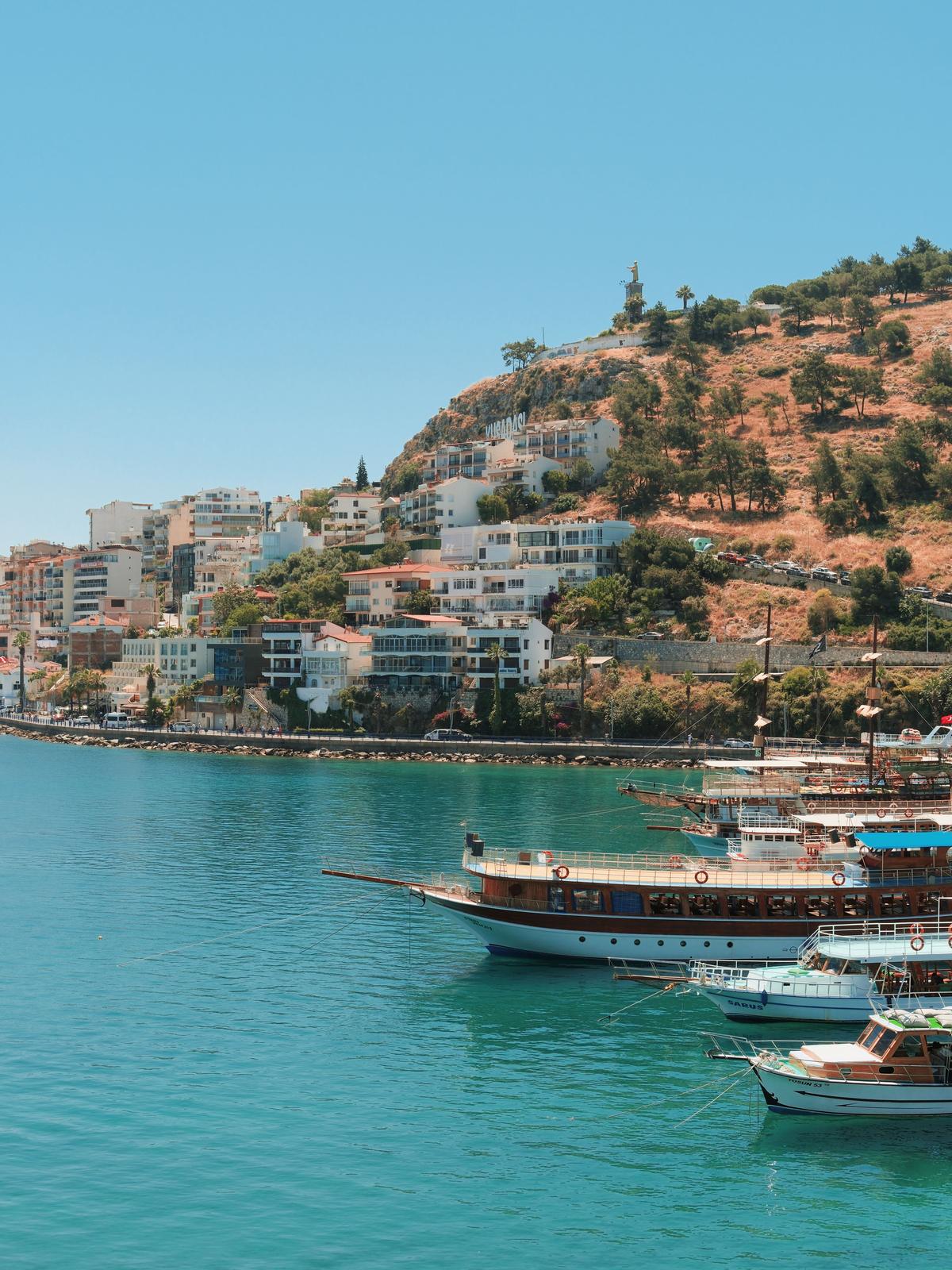
Sarandë is the practical hub — the ferry port opposite Corfu, the buses, the widest choice of food, and the cheapest beds; it's a wall of concrete along a curved bay, but the seafront promenade earns its keep at dusk. Himarë, halfway up the coast, is the best all-round base: walkable, coves on either side, and an old castle quarter of Greek-speaking families on the hill above the modern town.
Ksamil puts the famous beaches at your door and charges the most for the privilege. Dhërmi and Drymades are the northern beach-club end, with an old stone village and a hillside monastery above the sand. And up the slopes, Qeparo and Vuno are quiet old villages of stone houses for people who'd trade a beachfront for a view.
Boats, canyons, and the water you came for.
The Riviera runs from a lazy float off a sunbed to a full day on the water — here's how to actually get out into it.
This border coast has been fought over and built on for three thousand years, and the evidence is strung right along it.
Butrint, on a wooded peninsula between a lagoon and the sea at the far south, is the headline — a UNESCO city that ran from a Greek sanctuary through a Roman theatre and forum to a sixth-century baptistery whose mosaic floor is kept buried in sand to protect it, then a Venetian tower and a triangular fortress Ali Pasha added last. It's ruins and wetland birds in the same walk.
The same Ali Pasha of Tepelena left his mark up the coast at Porto Palermo, where a squat stone castle sits on a spit in a near-perfect round bay near Himarë; the headland beside it hides a Cold War submarine tunnel bored into the rock. And everywhere between, you'll pass the concrete domes of Hoxha's bunkers — the dictator poured hundreds of thousands across the country, and they cluster thickest along this exposed border shore. Inland from Sarandë, the Blue Eye (Syri i Kaltër) is a spring so deep divers have never touched its bottom, welling up an impossible blue.
Two kitchens meet on this coast — the sea's, and the mountain villages' behind it — and both are cheaper than the water suggests.
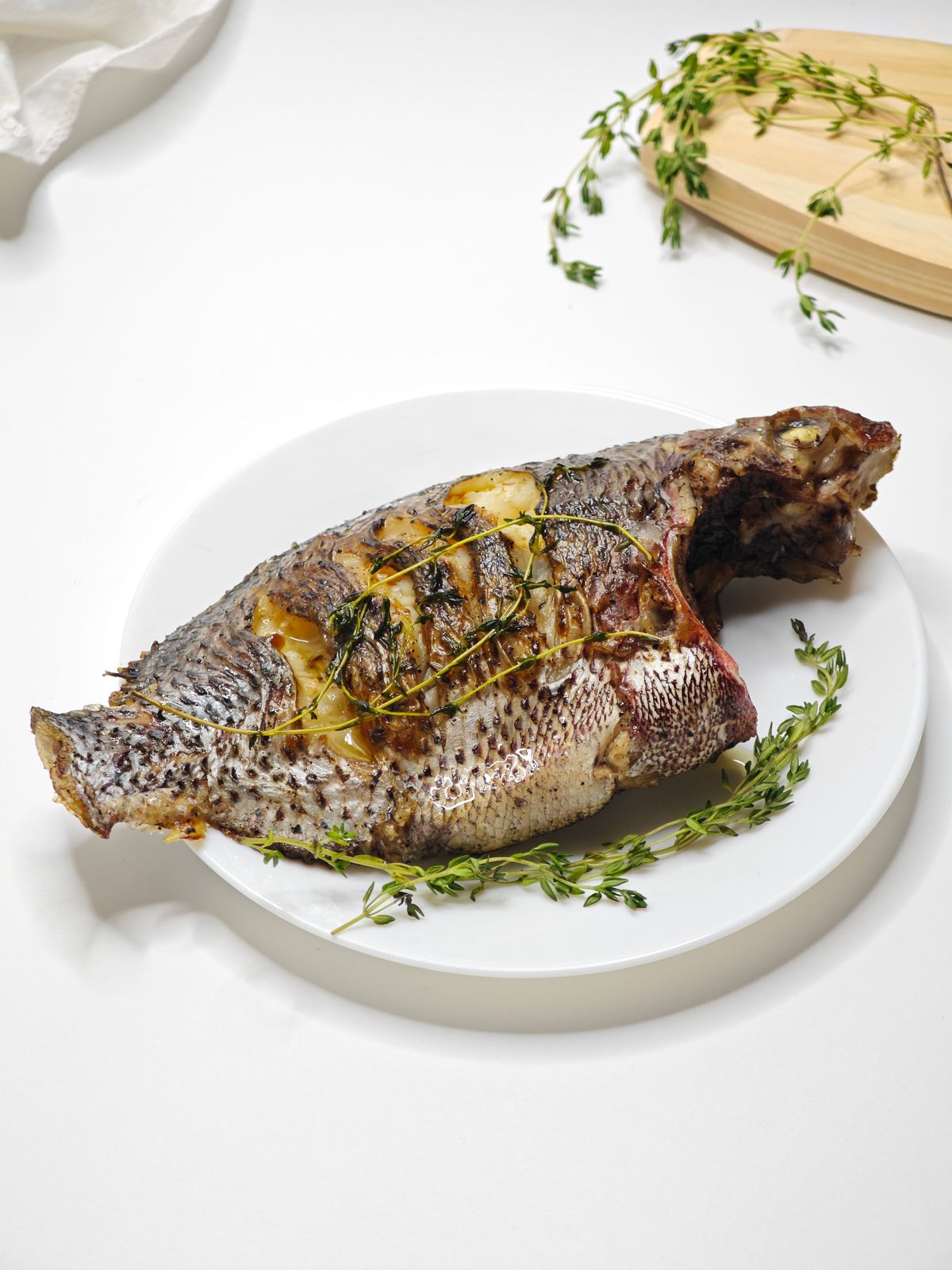
On the water it's grilled fish sold by weight, octopus, and the mussels and sea urchin raised in the Butrint lagoon that Sarandë tables treat as their own. Climb into the villages and it turns pastoral: byrek (the coiled cheese or spinach pie), lamb and wild greens, sheep's cheese, and the olives and olive oil off Borsh's groves, with the citrus around Ksamil going into everything in summer. Raki arrives whether you ordered it or not, and the wine to look for is Albanian — the red Kallmet and the white Shesh i Bardhë.
The sea's swimmable from late spring to mid-autumn, but the crowd and the price swing far harder than the weather does.
June and September are the coast at its best value — the water's warm, everything's open, and you can still find room on the sand. July and August bring the warmest, calmest sea and the whole machine at capacity: every cove full, the single coast road slow, beds booked out, and prices at their yearly peak.
May and October go quiet and cheap, the sea just about swims at the shoulders, but many beach clubs and some ferry runs wind down. Winter all but closes the coast — Sarandë keeps ticking as a working town, and the rest waits for spring.
A car is the honest answer here — the good beaches are spread down a long, winding shore and the buses don't reach most of them. The spine is the SH8 coastal road, all hairpins and sea views; the new Llogara Tunnel now punches under the pass, so the old Llogara climb has become a scenic detour rather than the only way through. From Tirana it's roughly four hours down.
The quick way in from Greece is the Corfu ferry — a half-hour fast boat to Sarandë, several a day in summer. Local furgon minibuses link the towns but run sparse and slow, and none of them reach Gjipe, the canyon paths or the quiet coves — the days you want those are the days you want your own wheels or a water taxi.
Compare rental cars →Pick your base by what you came for — the coast is short enough to range across from any of them.
Himarë — the best all-round base: central, walkable, coves either side, the old castle village on the hill above.
Sarandë — the practical hub: ferry, buses, food and the cheapest beds; daytrip to Ksamil and Butrint.
Ksamil — the famous beaches at the door, the busiest and priciest sand, and near-shut out of season.
Dhërmi / Drymades — the northern beach-club end, with an old village and a monastery up the slope.
Qeparo / Vuno — old stone hill villages for quiet and a view; a car helps.
A guesthouse or apart-hotel — the good-value standard the length of the coast.
The Riviera is the cheapest clear-water coast left in the Mediterranean — clearly under Greece across the strait or Croatia up the Adriatic — but it isn't the bargain it was a few years ago. Ksamil in high summer now prices like a mid-tier Greek island, while a village up the coast still costs a fraction of it.
Go if you want the Mediterranean's clearest cheap water while it lasts — pebble coves and swim-to islets, a Roman city and a castle on a bay, Greek-speaking villages up the hillsides, and Corfu a half-hour across the water. Skip if you need soft sand, an August without crowds, or a coast that's finished building.
Found this useful? Share it.
One new way to travel. Every Thursday.
Not deals or destinations — methods. House sitting, night trains, repositioning cruises, and what each one really costs.
Ever thought of travelling this way?
Repositioning Cruises
Twice a year cruise ships change oceans, and the crossing is sold cheap to fill the cabins. Two weeks across the Atlantic, six days of open sea, and a whole continent at the end of a one-way ticket.
Read article →Home Exchange
Live in someone’s home while they live in yours, and nobody pays rent. Your ordinary flat is somebody else’s month abroad — and points mean the dates don’t even have to match.
Read article →Monastery Stays
A room, a bell and dinner at a long table, in a working monastery that has taken in travellers since the sixth century. Around fifty euros a night, and nobody asks what you believe.
Read article →👇 Tap one, or just type