
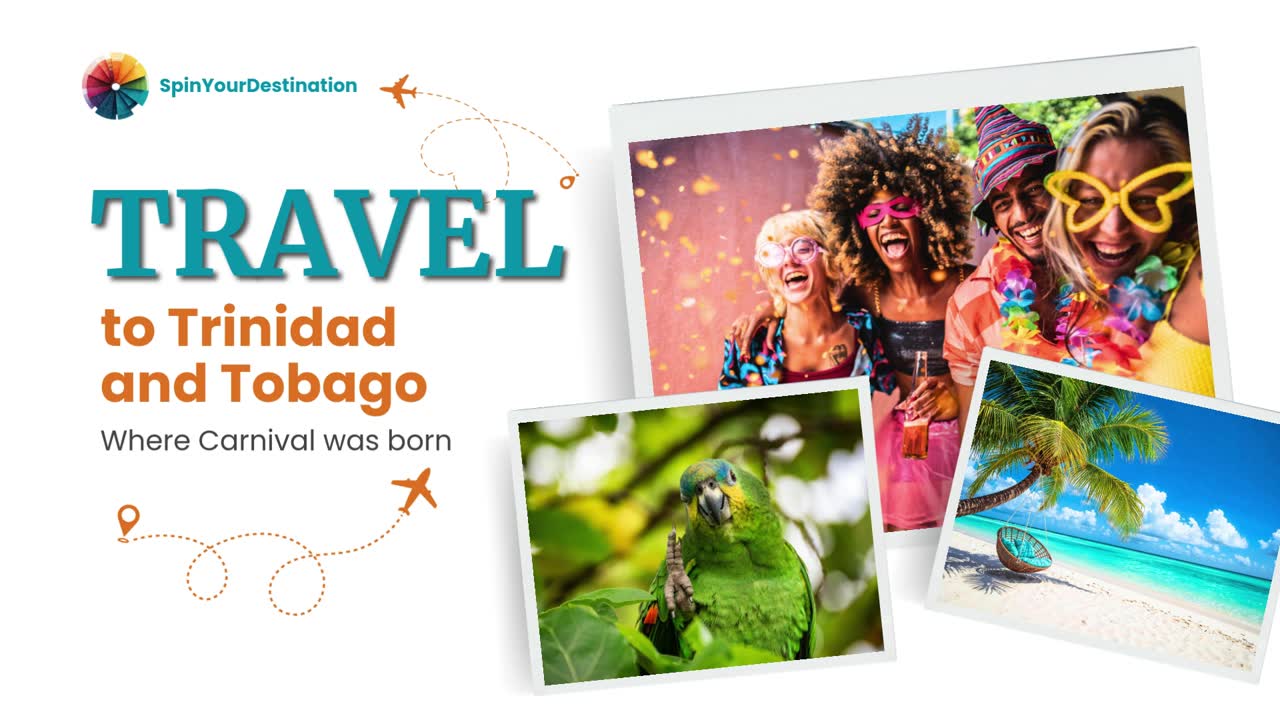
City Break — Trinidad & Tobago
Your complete guide to Port of Spain—the Magnificent Seven, Queen’s Park Savannah, Ariapita Avenue, Fort George, and the Caribbean’s most culturally dense capital
Port of Spain is not a typical Caribbean capital. It is a working city with a cultural output vastly disproportionate to its 40,000 residents—the city proper surrounded by a metropolitan area of over half a million—and a street life that runs from the doubles vendors at 6am to the bars on Ariapita Avenue at 2am. The steelpan was invented here. Calypso music was codified here. The Carnival that is the template for every other Caribbean carnival was built here over two centuries. The food market on Charlotte Street has been operating since the 1800s.
The built environment carries the history visibly. Seven colonial mansions from 1902–1910 line the western edge of Queen’s Park Savannah, each in a different European architectural style imported by the merchant families who built them. The Red House Parliament building on St Vincent Street (1907) was the site of the Black Power uprising of 1970 and the attempted coup of 1990. Independence Square—formerly Marine Square—is where Trinidad became a republic in 1976 and where the Cathedral of the Immaculate Conception has stood since 1851.
The Caroni Swamp, 9km south of the city, is the accessible wilderness day trip. The Northern Range begins effectively at the city’s northern boundary—the rainforest is less than 30 minutes from downtown by car.
Queen’s Park Savannah and the Magnificent Seven
Queen’s Park Savannah is the city’s largest open space: 260 acres of grass with a 2.2-mile perimeter circuit. The park functions simultaneously as a jogging track, an evening food market (corn soup, pholourie, coconut water from vendors stationed around the loop from around 17:00), and the primary venue for Panorama and Dimanche Gras during Carnival season. It is free, open 24 hours, and used by everyone from schoolchildren to government ministers on their evening walk.
The Magnificent Seven on the Savannah’s western edge are Port of Spain’s most photographed buildings: seven colonial mansions built between 1902 and 1910 by merchant families who hired architects from Europe and specified styles from their countries of origin. Stollmeyer’s Castle replicates Balmoral; Queen’s Royal College has a German clock tower with Westminster chimes; Archbishop’s House is French Baroque; White Hall (now the Prime Minister’s Office) is Moorish Renaissance. All seven are listed heritage buildings. Most are not open to the public but are seen from Maraval Road on the pavement.
The Botanical Gardens at the Savannah’s north end were established in 1818 and hold specimens of virtually every tree species native to Trinidad. The President’s House (1876), the official residence of the president of the republic, is accessible by guided tour on open days announced several weeks in advance.
Fort George and the historic city centre
Fort George was built in 1804 on a hilltop overlooking the Gulf of Paria and remains the best vantage point over Port of Spain. From the restored fort, the city spreads below to the waterfront, and across the Gulf the Venezuelan mountains are visible on clear mornings. The fort is reached by a steep, winding road from the St James neighbourhood—a 15-minute drive from downtown or a 45-minute walk up for the committed. Original cannons line the walls. The signal station was designed by Ashanti prince Kofi Nte in 1802. Free entry.
The historic city centre runs along Frederick Street from Independence Square to the Savannah. The National Museum and Art Gallery at 117 Frederick Street covers Trinidadian history from Amerindian settlement through the oil boom, with permanent collections on the history of Carnival, the development of the steelpan, and the natural history of the islands. Open Tuesday to Saturday. The Red House Parliament building opposite Woodford Square—a Renaissance revival structure completed in 1907—is the physical symbol of Trinidadian democratic history, having survived fires, a government minister’s attempted coup in 1990, and extensive restoration work.
Woodford Square—“the University of Woodford Square” as it was nicknamed during the 1970 Black Power movement, when daily public speeches were held here—is a park in the city centre flanked by the Red House, the Cathedral of the Holy Trinity (1823), and the public library. It is still used for public meetings and political demonstrations.
Maracas Bay and the Northern Range day trip
Port of Spain’s definitive day trip is the drive to Maracas Bay on the North Coast Road: 29km, 45 minutes, climbing through Northern Range rainforest on a road that crests at 365 metres before descending to the bay. The view from the Maracas Lookout—a lay-by on the descent to the beach—looks across the Gulf of Paria to Venezuela on one side and along the Atlantic coast to Blanchisseuse on the other.
Maracas Bay is 1.25km of sand in a sheltered cove. The beach is rated 4.3/5 on TripAdvisor with 1,827 reviews and ranked #2 of 37 things to do in Port of Spain. Richard’s Bake & Shark on the beach (4.5/5, 736 reviews) serves fried shark in fried bread with a condiment bar of 12 toppings—the North Coast institution since the 1980s. The drive, the lookout, the beach, and the bake-and-shark together constitute what every visitor from Port of Spain considers a proper day out.
🌟 Top City Break Experiences
🏙 Port of Spain & Fort George — private sightseeing
3-hour private tour covering the Magnificent Seven, Queen’s Park Savannah, the National Museum, and Fort George—the hilltop colonial fort with panoramic views of the Gulf of Paria. 4.9/5 on GetYourGuide with 35 reviews. The most efficient and comprehensive introduction to Port of Spain’s history, architecture, and geography. Book now →
🌿 Queen’s Park Savannah — colonial architecture & food
260 acres of open parkland flanked by the Magnificent Seven mansions and the Botanical Gardens. Evening food vendors from 17:00. Carnival season venue for Panorama and Dimanche Gras. 4.1/5 on TripAdvisor with 606 reviews, #3 of 37 things to do in Port of Spain. Free, 24 hours. The social and physical centre of the city. Reviews & info →
🌊 Maracas Beach Day Trip from Port of Spain
4-hour guided trip to Maracas Bay with hotel pickup, the mountain road drive with Maracas Lookout photo stop, 2 hours at the beach, and time for bake-and-shark. 4.6/5 on GetYourGuide with 13 reviews. The most popular day trip from Port of Spain for good reason: the drive and the beach together are the definitive Trinidad day out. Book now →
🐟 Caroni Swamp — scarlet ibis at sunset
9km from Port of Spain, the Caroni Swamp’s 5,611 hectares of mangrove hold the scarlet ibis, Trinidad’s national bird, returning to roost at sunset in thousands. 4.6/5 on TripAdvisor with 329 reviews. 4.7/5 on GetYourGuide with 9 reviews. The most dramatic natural event accessible on a day out from the city. Reviews & info →
🏠 Port of Spain — private walking tour
3-hour guided walk through the historic city centre: Frederick Street, Independence Square, the Red House Parliament, Woodford Square, and the colonial-era architecture of downtown Port of Spain. 5.0/5 on GetYourGuide with 3 reviews. The most intimate street-level way to understand the city’s layered political and architectural history. Book now →
🌿 Trinidad Half-Day Mini Island Tour
5-hour tour from Port of Spain combining Fort George, the Magnificent Seven, the Royal Botanical Gardens, and a scenic drive through the capital’s historic districts—the most complete architectural survey of Port of Spain available in a half day. 4.7/5 on GetYourGuide with 9 reviews. Hotel pickup included. Book now →
💦 La Brea Pitch Lake — Trinidad’s geological landmark
The world’s largest natural asphalt lake on Trinidad’s southwest coast—100 acres of living bitumen you can walk on, 75 metres deep. #11 of 120 things to do in Trinidad, 4.3/5 with 185 reviews. A 2.5-hour drive from Port of Spain, combining well with San Fernando and the country’s agricultural interior for a full day out of the capital. Reviews & info →
💡 Insider Tips
- 🏙 Port of Spain’s traffic is worst Monday–Friday 7:00–9:00 and 16:00–18:30. Most day tours from the city start at 8:00 specifically to get ahead of the traffic on the Northern Range road to Maracas. Schedule city walking for 9:00–13:00 when streets are active but not yet at peak congestion
- 🍼 The doubles vendors on Charlotte Street and around the Central Market are open from around 6:00. They are also the cheapest and most authentic option for a breakfast around TT$10–15. The market itself on Beetham Highway opens at 6:00 and is worth 30 minutes for the variety of local produce, spices, and the working-market atmosphere
- 🏟 Ariapita Avenue in Woodbrook is Port of Spain’s evening and nightlife corridor. The street closes to traffic on weekend evenings. Walk from the Woodbrook entrance at one end to the other and back over two hours and you will have seen most of what the city offers for evening entertainment without needing a plan
- 📅 The National Museum on Frederick Street closes on Sundays and Mondays. Admission is free. The Carnival and steelpan sections are the most substantial in the Caribbean for these subjects and worth 90 minutes if the exhibition is well maintained during your visit
- 🏜 Uber operates in Port of Spain and is generally the most reliable and fairly priced option for short journeys within the city. Taxis from the airport (Piarco International, 26km east of downtown) are metered; the standard rate to the city centre is TT$180–200. Agree the price before getting in if using a non-metered taxi