
Netherlands Drink Guide
From the 1679 jenever distillery in an Amsterdam alley to the windmills of Schiedam, the Limburg vineyards above Maastricht, the windmill brewery of Brouwerij ‘t IJ and the specialty coffee roastery of De Pijp — the Dutch drink small, but they drink seriously.
The glass is filled to the absolute brim. You cannot pick it up without spilling, so you lean forward, place both hands behind your back, and bow until your lips reach the rim. The bartender at Wynand Fockink — pouring jenever from the same Amsterdam alley since 1679 — gives a quiet nod. Buigen voor de borrel. Bowing for the shot. It is how this country has started a glass for three and a half centuries, and the easiest way to understand that the Dutch take drinking seriously, but not solemnly.
The Netherlands drinks wider than jenever, though. On the southern slopes of the Louwberg outside Maastricht, Apostelhoeve has been bottling Limburg Riesling and Auxerrois since 1970 — the first commercial vines back in Dutch soil since the medieval cooling. Two hours north in the Reest valley, a B-Corp-certified vineyard now harvests six grape varieties that ripen earlier every year. Heineken has been brewing in Amsterdam since 1864, and a new wave of breweries beneath the De Gooyer windmill and across Amsterdam Noord pours some of the most adventurous craft beer in northern Europe. In the Kinkerstraat and Bos en Lommer, a generation of specialty coffee roasters has made Amsterdam one of the strongest cup-quality cities in Europe.
A handful of places capture each of those sides — the world’s oldest cocktail brand on the Museumplein, the 17th-century tasting room where you still bow before the first sip, the Schiedam museum with a working malt-wine distillery from 1700, the Limburg estate that brought wine back to the Netherlands, and the Amsterdam coffee roastery that started in Sydney and made it home in the Kinkerstraat.
This guide contains information about alcoholic beverages and is intended for adults of legal drinking age in their country. The legal drinking age in the Netherlands is 18 for all alcohol; ID checks are normal in supermarkets and most bars.
Wine — Limburg & The Reest Valley
Dutch wine almost vanished after the medieval cooling. In 1970 the first new commercial vines went into the Louwberg slopes outside Maastricht. Today the country has over 400 hectares, around 200 professional estates, and a quietly serious reputation — especially for whites and sparkling.
South Limburg — The Heuvelland Heartland
South Limburg is the southernmost tip of the country and the only place where the Netherlands feels like France. Loess, marl and limestone soils, soft hills, a microclimate two or three degrees warmer than the rest of the country, and a wine tradition that goes back to the Romans at Maastricht. The two largest and most respected Dutch estates are both here, fifteen kilometres apart in the Heuvelland.
Key varieties: Riesling · Auxerrois · Müller-Thurgau · Pinot Gris · Chardonnay · Cabernet Cortis · Pinot Noir

Apostelhoeve
Louwberg, Maastricht
The first commercial vineyard in modern Dutch wine history. In 1970 the Hulst family planted the southern slopes of the Louwberg, above the Jeker valley a short drive from central Maastricht. Three generations later the estate is 20 hectares, family-run, and considered the benchmark for Dutch Riesling, Auxerrois and Müller-Thurgau — clean, low-alcohol whites with cool minerality and the kind of nervous acidity Mosel drinkers will recognise. The guided tour (1.5 hours, by appointment) walks the vineyard, the press house and the marl cellars, and ends with a tasting of three wines paired with Limburg rye bread, ham and cheese. The wine shop on the estate is open Monday to Saturday.
⏱ Mon–Sat · 🍷 Vineyard tour, cellar visit, 3-wine tasting + Limburg snacks · 📍 Susserweg 201, 6213 NE Maastricht · Wine shop daily, tours by appointment
More info →
Wijndomein St. Martinus
Vijlen, South Limburg
At 32 hectares, the largest wine estate in the Netherlands and the country’s first commercial producer of red wine. Hans Beurskens planted the first stocks in 1986 above Vijlen — the highest village in the country at 195 metres — and won the Stichting Wijn Instituut “Best Vineyard in the Netherlands and Belgium” title in the very first edition (2014) and almost every year since. The estate’s 2014 visitor centre is built 18 metres into the loess slope and powered by geothermal heat. Tours of vineyards and the four-floor cellar run Wednesday, Thursday, Friday and Saturday at 14:00; the proeflokaal (April–October) opens Tuesday to Sunday with a panoramic terrace over the Vijlenerbos. The on-site LÖSS Wine Hotel has five vineyard-themed rooms and a four-course Friday-to-Sunday tasting menu.
⏱ Tue–Sun · 🍷 Vineyard tour at 14:00 Wed/Thu/Fri/Sat + tasting · 📍 Rott 21a, 6294 NL Vijlen · LÖSS Wine Hotel & Smaaklokaal on site
More info →
Wijngoed de Reestlandhoeve
Balkbrug, Reest Valley
Tucked into the meandering Reest stream valley on the border of Overijssel and Drenthe, the Reestlandhoeve is proof Dutch wine isn’t just Limburg. Hans-Peter Smeets and Marieke ten Have planted the first vines here in 2003 in iron-rich sandy soil; today the 3.5-hectare estate produces around 45,000 bottles a year of award-winning Reestlander whites, rosés and a sparkling, all from disease-resistant hybrid grape varieties grown without synthetic pesticides. The Reestlandhoeve is also the first B-Corp certified wine-and-care-farm in the country — people with care needs join the daily winery work four days a week. The Wijnbarn opens Wednesday afternoons and Thursday to Saturday from June to September, with vineyard walks, audio tours, and a 6-cheese-6-drinks wine-and-cheese tasting on request.
⏱ Wed/Thu/Fri/Sat (Jun–Sep) · 🍷 Audio-tour + 5-wine tasting, 2 hours · 📍 Hoofdweg 21, 7707 RB Balkbrug · English audio guide on request
More info →Wine Bars — Where Amsterdam Drinks
Wine never had the cultural pull of jenever or beer in the Netherlands, but Amsterdam has quietly built one of the most interesting natural-wine and by-the-glass scenes in northern Europe over the last decade.

Glouglou
De Pijp, Amsterdam
The neighbourhood bar that put natural wine on the Amsterdam map. Opened in April 2015 on Tweede van der Helststraat, Glouglou took the Parisian bar à vins naturelles format — modelled on classics like Aux Deux Amis and Café de la Nouvelle Mairie — and translated it for De Pijp. The list is built around low-intervention producers from the Loire, Beaujolais and Jura, plus a wide rotation of European and Caucasian growers. No filtering, no industrial yeast, no — or barely any — sulphur, and prices that stay friendly. No reservations: walk in, ask the bartender for a glass based on what you usually drink, and trust them. Bottles available to take home at a 15€ discount on the bar price.
⏱ Open daily from 14:00 (15:00 Mon–Fri) · 🍷 By the glass, bottle-shop too · 📍 Tweede van der Helststraat 3, 1073 AE Amsterdam · Walk-in only, no reservations
More info →
Bubbles & Wines
Nes, Amsterdam Centre
A short walk from Dam Square down one of the oldest lanes in the city, Bubbles & Wines was one of the first bars in the Netherlands to install the Italian Enomatic preservation system — meaning open bottles stay perfect for weeks under argon gas, and the by-the-glass list can stretch to wines you’d normally only see by the bottle. Around 55 wines and Champagnes by the glass, more than 500 by the bottle, and seventeen pre-built tasting flights (three or four half-glasses, grouped by grape, region or style). The Gourmet Bites are short and precise. Sister-restaurant Envy is around the corner; for date-night, the wine-and-massage package with Rust Massage next door is the local trick.
⏱ Tue–Sun from 17:00 (Mon closed) · 🍷 17 flights, 500+ bottles, Champagne by the glass · 📍 Nes 37, 1012 KC Amsterdam · Reservations recommended for groups
More info →🍷 Dutch Wine Bar Tips
- 🍷 Most Amsterdam wine bars do not take reservations for fewer than six people. Walk in, sit at the bar, and ask — the staff almost always speak fluent English and are happy to build a flight around your palate
- 🍷 A glass of Dutch Riesling or Auxerrois from Limburg is genuinely hard to find on Amsterdam wine lists — most importers focus on French and German bottles. The exception is Reestlandhoeve, which is now stocked in a small number of independent wine shops in the capital
- 🍷 The natural-wine scene clusters in De Pijp and Oud-West. Beyond Glouglou: Lev (Maasstraat), Maris (Beethovenstraat), Buurman & Buurman (Reguliersgracht) and the Friedhats FUKU monthly wine night are all worth checking against the calendar for the night you’re in town
- 🍺 A “biertje” (small beer) is far more common than a glass of wine in most Dutch cafés. If you want wine in a brown café, ask for “rood” or “wit” (red or white) house wine and don’t expect a tasting note — that’s what wine bars are for
Know Your Dutch Wine
Dutch wine is small — about 0.05% of EU production — but climate change and disease-resistant grape varieties are quietly rewriting the rules. Here’s what to look for before you order.
Dutch wine production is small — around 4 million bottles a year — and almost entirely consumed domestically. Roughly 215 professional estates work just over 400 hectares of vines. The Stichting Wijn Instituut Nederland (WIN) runs the annual blind keuring; the top medal-winners (St. Martinus, Apostelhoeve, Reestlandhoeve, Domein Holset, Wijngoed Aldenborgh) are widely considered the country’s benchmarks.
Jenever — The Original Dutch Spirit
Jenever (or genever) is the grandfather of modern gin — a juniper-flavoured spirit distilled from malt wine, born in 16th-century Antwerp and brought to its industrial peak in 17th- and 18th-century Schiedam. This is the Dutch spirit, and three places tell the whole story.

Bols Cocktail & Genever Experience
Museumplein, Amsterdam
Lucas Bols founded his distillery in Amsterdam in 1575 — the year before Sir Francis Drake started his voyage around the world — making Bols the oldest continuously operating distillery brand on earth. The Cocktail & Genever Experience on the Museumplein, opposite the Van Gogh Museum, walks you through the 450-year history in eight rooms: the Hall of Taste (smell-and-guess botanicals), the Genever Room, the historic distillery hall and an extraction lab. The audio tour runs in eight languages and ends in the futuristic Mirror Bar — choose a cocktail from a touchscreen and the bartender builds it in front of you. Add a 30- or 60-minute cocktail workshop to actually shake your own.
⏱ Sun–Thu 13:00–18:30, Fri–Sat 13:00–21:00 · 🍸 Audio tour + Perfect Serve cocktail in Mirror Bar · 📍 Paulus Potterstraat 14, 1071 CZ Amsterdam · 18+ only, ID may be requested
More info →
Proeflokaal Wynand Fockink
Pijlsteeg, Amsterdam Centre
A 30-second walk off Dam Square, down a narrow alley laid out by Wynand Fockink himself, sits the Netherlands’ most atmospheric jenever bar. The proeflokaal opened in 1679, the wooden shelving behind the bar still holds antique labelled flasks, and the assortment on tap is an archive of 17th- and 18th-century Dutch spirits: 51 liqueurs, 9 fruit brandies, 8 genevers, 4 bitters, a korenwijn, an Amsterdam Dry Gin. Glasses are filled to the absolute brim — you cannot pick one up without spilling. So you bow forward, hands behind your back, and slurp the first sip directly from the rim. Buigen voor de borrel. The classic liqueurs to order: Volmaakt Geluk, Bruidstranen, Hansje in de Kelder, Boswandeling. The bottle shop next door sells everything to take home, plus the famous tulip-bowl tasting glasses.
⏱ Open daily, afternoons & evenings · 🍸 Genevers, fruit brandies, classic liqueurs & tap beer · 📍 Pijlsteeg 31, 1012 HH Amsterdam · Distillery tours by arrangement, bottle shop next door
More info →
Nationaal Jenevermuseum Schiedam
Lange Haven, Schiedam
Schiedam is the world capital of jenever — at its peak the town had 392 active distilleries, and grain for malt wine was ground in the tallest windmills ever built (over 33 metres, in a ring around the old town). The Nationaal Jenevermuseum sits along the Lange Haven canal in a former malt-wine distillery and tells the whole story over four floors: from the 16th-century invention through the colonial-era boom to the modern craft revival. The best bit is the still-working historic distillery, De Gekroonde Brandersketel, where Old Schiedam malt-wine jenever is distilled by hand from a 1700 recipe. The combi-ticket pairs the museum with Molen de Walvisch — one of the tallest windmills in the world — for an extra hour. Tasting bar on site.
⏱ Tue–Sun 12:00–17:00 · 🍸 Tasting bar, working distillery, combi-ticket with Walvisch windmill · 📍 Lange Haven 74–76, 3111 CH Schiedam · 25 min by train from Amsterdam Centraal, 8 min from Rotterdam
More info →Know Your Jenever
Jenever is older than gin, distilled differently, and bottled in three distinct styles you really do need to learn before you order. Get this right and the proeflokaal staff will take you seriously.
Jenever shares a protected origin status (PDO) with Belgium — only spirits produced in the Netherlands, Belgium, and small parts of France and Germany can call themselves “jenever” or “genever”. The Schiedam variant — moutwijnjenever — has its own GI for 100% malt-wine production, and is the only true historical jenever still distilled by traditional method today.
Beer — From Heineken to the Craft Wave
Heineken has been brewing in Amsterdam since 1864 and made Dutch lager a global commodity. The last fifteen years have brought a craft beer wave that now reaches every neighbourhood — small, sharp breweries beneath a windmill, in a former Red Light shop, and across the ferry in Noord.

Heineken Experience
De Pijp, Amsterdam
Gerard Adriaan Heineken bought the De Hooiberg brewery on the Stadhouderskade in 1864 — the building is now the Heineken Experience, the largest brewery-themed attraction in Europe. The 90-minute self-guided tour walks the original brew-house with its towering copper kettles, traces the green star and the family history, and ends with two well-poured Heinekens in the rooftop bar (over-18s only). Optional add-ons: a one-hour canal cruise back to Centraal Station from the Heineken Pier, a combi ticket with the Moco or Rijksmuseum, and a private VIP tour with behind-the-scenes access. Last admission an hour and a half before close.
⏱ Open daily 10:30–19:30 (21:00 Fri–Sun) · 🍺 1.5 hour self-guided tour + 2 Heinekens · 📍 Stadhouderskade 78, 1072 AE Amsterdam · Book a time slot online, 18+ only
More info →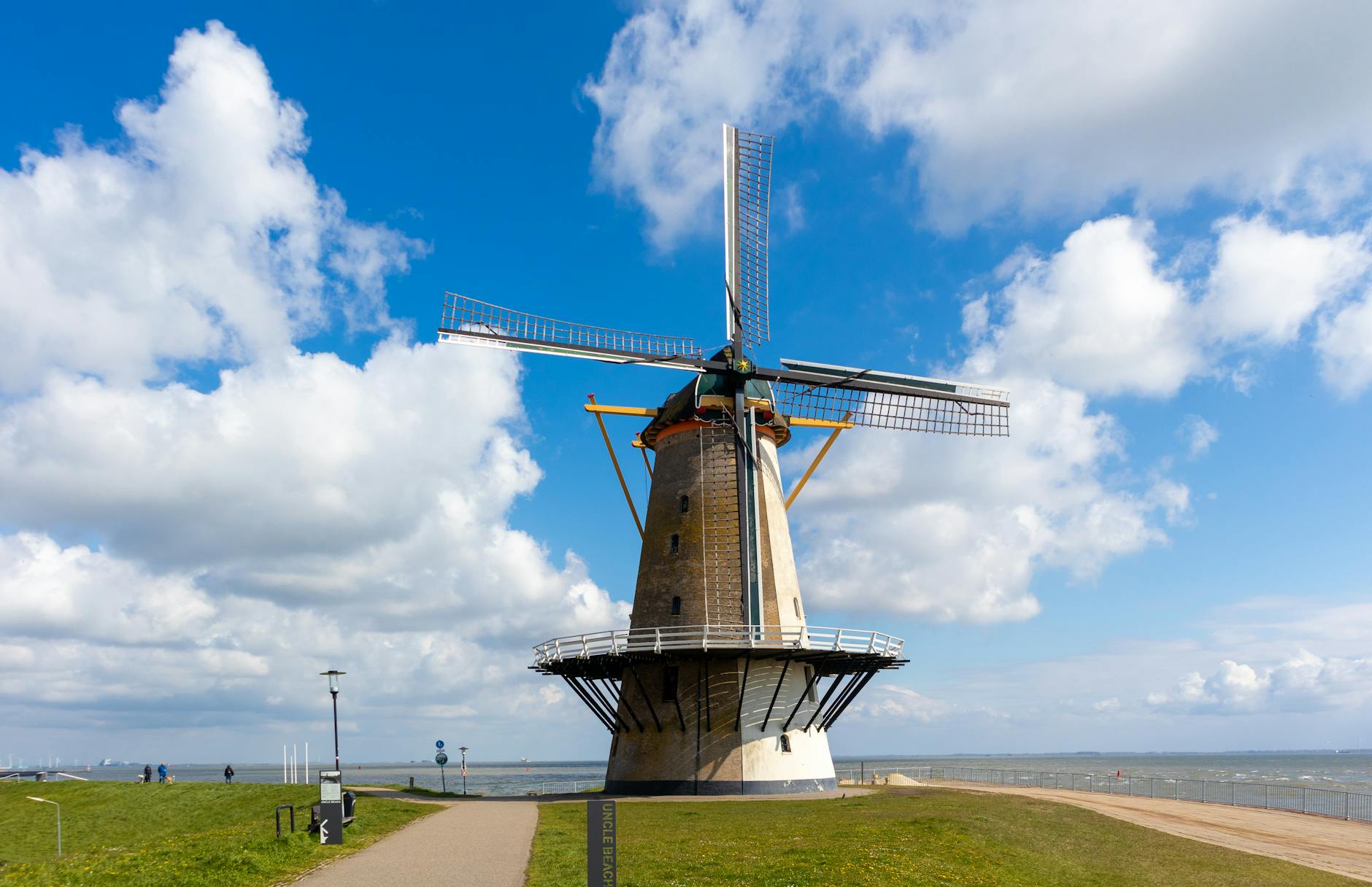
Brouwerij ‘t IJ — Proeflokaal De Molen
Funenkade, Amsterdam Oost
The Amsterdam beer-and-bicycle photo cliché — and worth it. The brewery sits in a former bathhouse at the base of De Gooyer, the wooden windmill built in 1725 on the eastern edge of the old city. The tasting room (Proeflokaal De Molen) is small, tiled, lined with long wooden tables, and pours almost the entire 't IJ range fresh from the brewery: the flagship Zatte tripel (the country’s benchmark Belgian-style tripel), the wheaty IJwit, the IPA, plus the rotating seasonal specials only available at the source. The garden terrace under the windmill is one of the best summer drinking spots in Amsterdam. Order at the bar, pay with card, take a small plate of peanuts or sausage from Slagerij de Wit, and stay for a second.
⏱ Open daily 10:00–22:00 · 🍺 Zatte tripel, IJwit, IPA + seasonals on tap · 📍 Funenkade 7, 1018 AL Amsterdam · Tours by appointment, group bookings via email
More info →
Oedipus Craft Space
Schaafstraat, Amsterdam Noord
The most adventurous craft brewery in the Netherlands, and one of the easier Amsterdam day trips: a free F1 ferry across the IJ from Centraal Station, ten minutes on a bike, and you’re at the Oedipus Craft Space. Four friends started brewing in kitchens and garages in 2011; today they run a full warehouse-style brewery, taproom, art space and live music venue in Schaafstraat with a colourful, queer-friendly identity that’s become a brand. The flagship beers — Mannenliefde (a hoppy IPA with Sorachi Ace), Swingers (a tangy sour), Thai Thai (a coriander-spiced tripel) — are joined by experimental specials brewed on site. Burgers from The Beef Chief, vinyl, candle-lit nooks, and a sunny terrace in summer.
⏱ Thu–Sun, check site · 🍺 Brewery taproom, rotating drafts, Beef Chief burgers · 📍 Schaafstraat 21, 1021 KD Amsterdam · Free F1 ferry from Centraal, 5 min bike from terminal
More info →Brown Cafés — Amsterdam’s Living Rooms
The bruine kroeg — nicotine-stained wood, low ceilings, candlelight, a long bar, regulars who’ve been on the same stool for thirty years. Amsterdam has hundreds. These two have been pouring beer and jenever since the 17th and 18th centuries respectively.
Café Hoppe
Spui, Amsterdam Centre
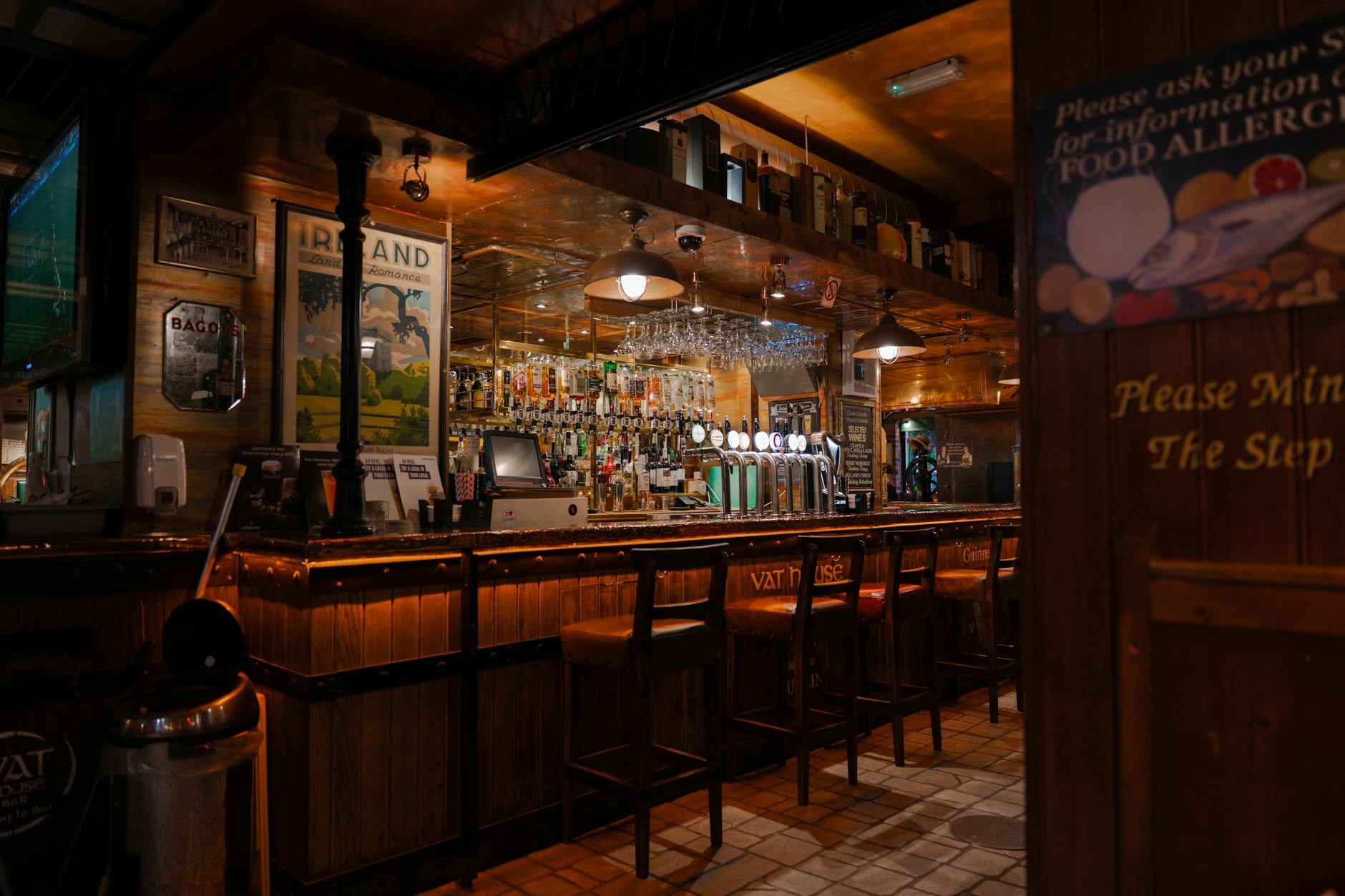
Three and a half centuries old, never closed, and routinely voted the best brown café in the Netherlands. Café Hoppe opened in 1670 as a distillery with a tasting room on the Spui; the antique jenever and liqueur barrels behind the bar were filled, refilled and tapped for two centuries before the building became a fully licensed pub. The interior of number 18 (Sta-Hoppe, “Standing Hoppe”) is a national monument and looks essentially the same as it did in the 19th century; number 20 (Zit-Hoppe, with chairs) was added in the 1930s. Bar staff with twenty-year tenures, the country’s most varied crowd, Hans van Mierlo founded D66 here, Princess Beatrix and Freddy Heineken both drank here. Bitterballen, well-poured Amsterdam ‘t IJ Limited Edition IPA on draught, an excellent jenever list.
⏱ Sun–Thu 09:00–01:00, Fri–Sat 09:00–02:00 · 🍺 Beer, jenever, classic Dutch bites · 📍 Spui 18–20, 1012 XA Amsterdam · Tram 2, 11, 12 stop ‘Spui’ at the door
More info →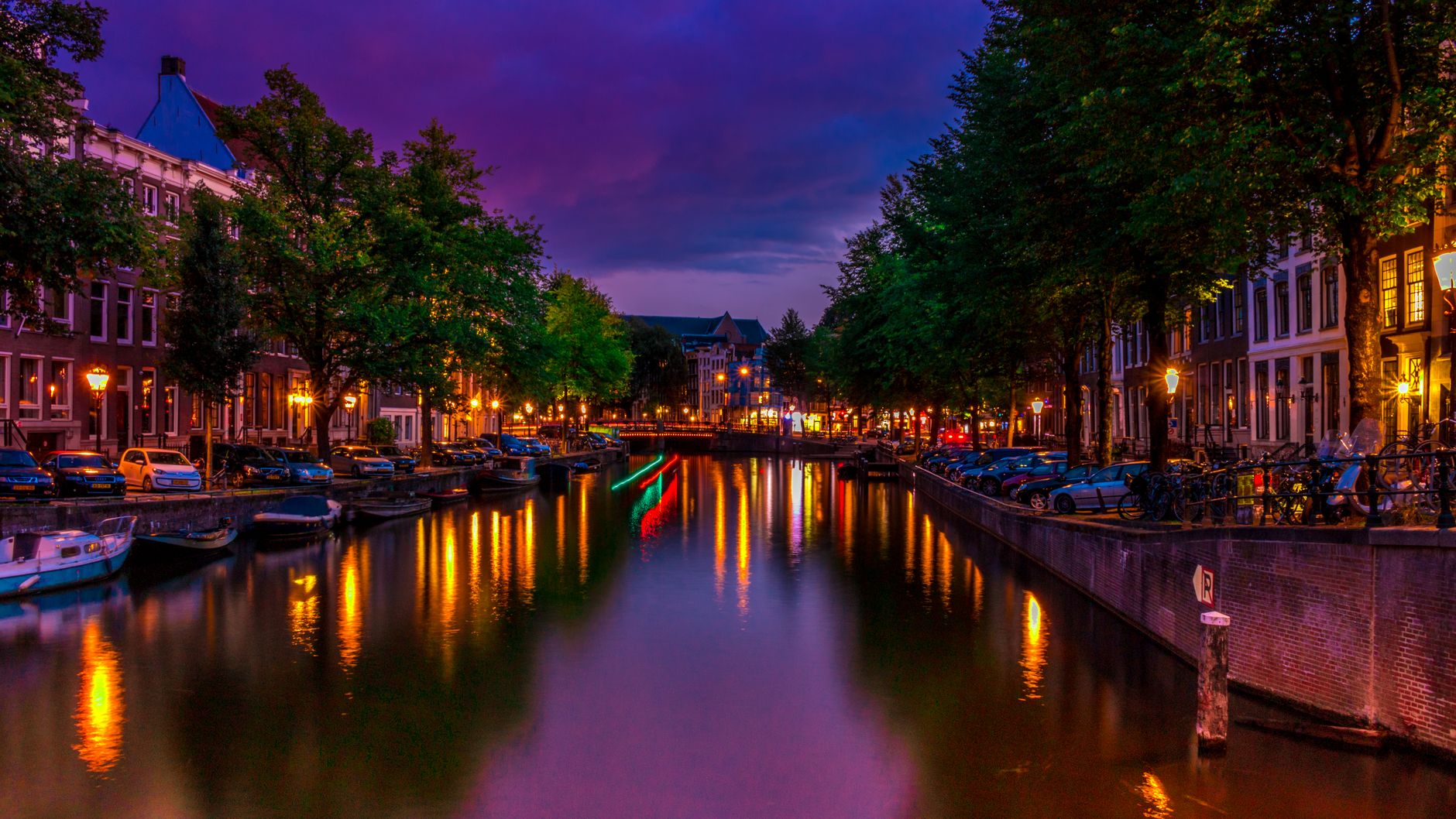
Café ‘t Smalle
Egelantiersgracht, Jordaan
The Jordaan’s most photogenic brown café, on a corner of the Egelantiersgracht canal where Pieter Hoppe — the German distiller whose jenever brand still bears his name — opened a liqueur distillery and tasting room in 1786. The Hoppe operation grew into a small empire here (his name still rings out at Café Hoppe on the Spui, three hundred metres south on the canal grid). The Egelantiersgracht site eventually closed, sat empty for decades, was squatted for a while, and reopened as Café ‘t Smalle on 30 November 1978. The original 18th-century interior was carefully preserved: dark wooden panelling, stained-glass windows, a tiny mezzanine, and a row of wooden jenever casks above the bar. In summer the floating canal-side terrace is one of the most romantic drinking spots in the city.
⏱ Mon–Thu 14:00–00:00, Fri 14:00–01:00, Sat 13:00–01:00, Sun 13:00–23:00 · 🍺 Beer, jenever, coffee, sandwiches · 📍 Egelantiersgracht 12, 1015 RL Amsterdam · Floating terrace in summer, mezzanine inside
More info →Specialty Coffee — Amsterdam’s Third Wave
Amsterdam is one of the strongest specialty coffee cities in Europe — built quietly over fifteen years by three or four small roasteries that source direct, roast locally and care about the cup. These are the three you’ll meet on every “best of” list.

LOT61 Coffee Roasters
Kinkerstraat, Amsterdam West
Australian friends Adam Craig and Paul Jenner ran New York coffee bars together (Variety Coffee, Culture Espresso) before they landed in Amsterdam in 2013 with a small Probat roaster and the now-famous tagline — Born in Sydney. Raised in Brooklyn. Roasting in Amsterdam. The original Kinkerstraat café doubles as the visible roastery; the production roastery is a few blocks east on the Archangelkade. The signature blends — Bombora and Nosegrind — pour as crisp espresso and clean filter across all five LOT61 cafes (Kinkerstraat, Hendrik Jacobszstraat, Centraal Station, Almere, Westfield). One of the very few specialty roasters with a B-Corp profile and a coherent voice across origin transparency, training and retail.
⏱ Daily 06:30–20:00 · ☕ Espresso, filter, cold brew capsules · 📍 Kinkerstraat 112, 1053 ED Amsterdam · Roastery: Archangelkade 17 (closed to public)
More info →
Friedhats FUKU
Bos en Lommer, Amsterdam West
The roastery most often poured at Dutch barista competitions and the home of some of the most adventurous coffee in the country. Lex Wenneker started Friedhats as a tiny one-man roastery in 2015; the FUKU café opened on Bos en Lommerweg in September 2018 and quickly became a pilgrimage. Almost every coffee on the green-bean shelf is available as filter or espresso, including the “Super Special” competition-grade lots: experimental anaerobic processes, Gesha varieties, the kind of funky-boozy fruit profiles that Friedhats specialises in. Direct trade, sustainable packaging, granola and croissants made on site, a small natural-wine list, and a monthly FUKU Wine Night that’s usually packed. Roastery itself is wholesale-only and not open to the public.
⏱ Mon–Fri 08:00–16:00, Sat–Sun 09:00–17:00 · ☕ Filter, espresso, Super Special competition lots · 📍 Bos en Lommerweg 136H, 1055 ED Amsterdam · Monthly natural-wine night, check Instagram
More info →
Back to Black
Weteringstraat, Amsterdam Centre
Noortje and Inge opened the first Back to Black in 2014 on a quiet canal corner south of the Rijksmuseum and the Heineken Experience — ten minutes’ walk from either. The Weteringstraat shop is small, calm, and built around home-roasted single origins, home-baked cake, and almost obsessive attention to extraction. They roast everything themselves at the production site on Nieuw-Zeelandweg, and pour the same beans at the second café on Van Hallstraat in the west. Reservations are not possible; arrive early and grab a window seat. No laptops on weekends — this is a coffee bar, not a co-working space, and it’s much better for it.
⏱ Mon–Fri 08:00–18:00, Sat–Sun 09:00–18:00 · ☕ Espresso, filter, home-baked cake · 📍 Weteringstraat 48, 1017 SP Amsterdam · No laptops weekends, no reservations, walk in
More info →🥃 Good to Know — Netherlands Drink Tips
- 🍸 The local order that says “I’ve done this before”: a kopstootje. A small tulip glass of jenever filled to the brim with a small beer on the side. Bow forward, slurp the first sip without lifting the glass, then sip the beer. The cheapest and most local thing you can do in any brown café
- 🍸 If you only drink one jenever, make it an oude jenever — richer, breadier, closer to cognac than gin. Bols Oude Genever is the standard reference; for the real connoisseur version, try a korenwijn (at least 51% malt wine) at Wynand Fockink — the closest thing the Netherlands makes to a single-malt whisky
- 🍇 If you only drink one Dutch wine, make it a Limburg Riesling from Apostelhoeve or a sparkling Reestlander from Reestlandhoeve. Both punch well above their reputation and are the country’s most awarded styles. Skip Dutch red unless you’re at St. Martinus — the country still does whites and bubbles best
- 🍺 In a Dutch café, the default beer order is a fluitje (small flute, ~200 ml) or a vaasje (regular tulip, ~250 ml). A pintje (pint, ~330 ml) is bigger. Heineken is everywhere; if you want a craft option, ask for a “speciaalbier” or scan the chalkboard above the bar
- 🍺 The free F1 ferry from Centraal Station to Amsterdam Noord runs every 5 minutes, 24 hours a day, and takes about 3 minutes. It’s how everyone gets to Oedipus, Brouwerij De Prael’s industrial location and the FC Hyena cinema beer scene — no ticket, just walk on with your bike
- ☕ In a Dutch coffee bar, koffie verkeerd (“wrong coffee”) is the local name for café au lait — half coffee, half hot milk, in a tall glass. An espresso means an espresso. A cappuccino is the milky version. The third-wave roasters (LOT61, Friedhats, Back to Black) all serve espresso, V60 filter, AeroPress and cold brew as a matter of course
- 🔔 Practical: legal drinking age is 18 for all alcohol; ID checks are normal in supermarkets and most bars. Tipping in cafés and bars: round up the bill or leave 5–10% if you’ve had a long sit-down meal. Many bars are cash-free (pin only); the smaller proeflokalen sometimes still take cash too
- 📍 Geography for a weekend: Amsterdam holds nearly all the bar culture — jenever, beer, coffee, brown cafés. Schiedam (25 min by train) is for the Jenevermuseum and the windmills. Maastricht (2h30 by train) is for the Limburg vineyards — pair Apostelhoeve and St. Martinus for a wine weekend with a base in Maastricht old town