

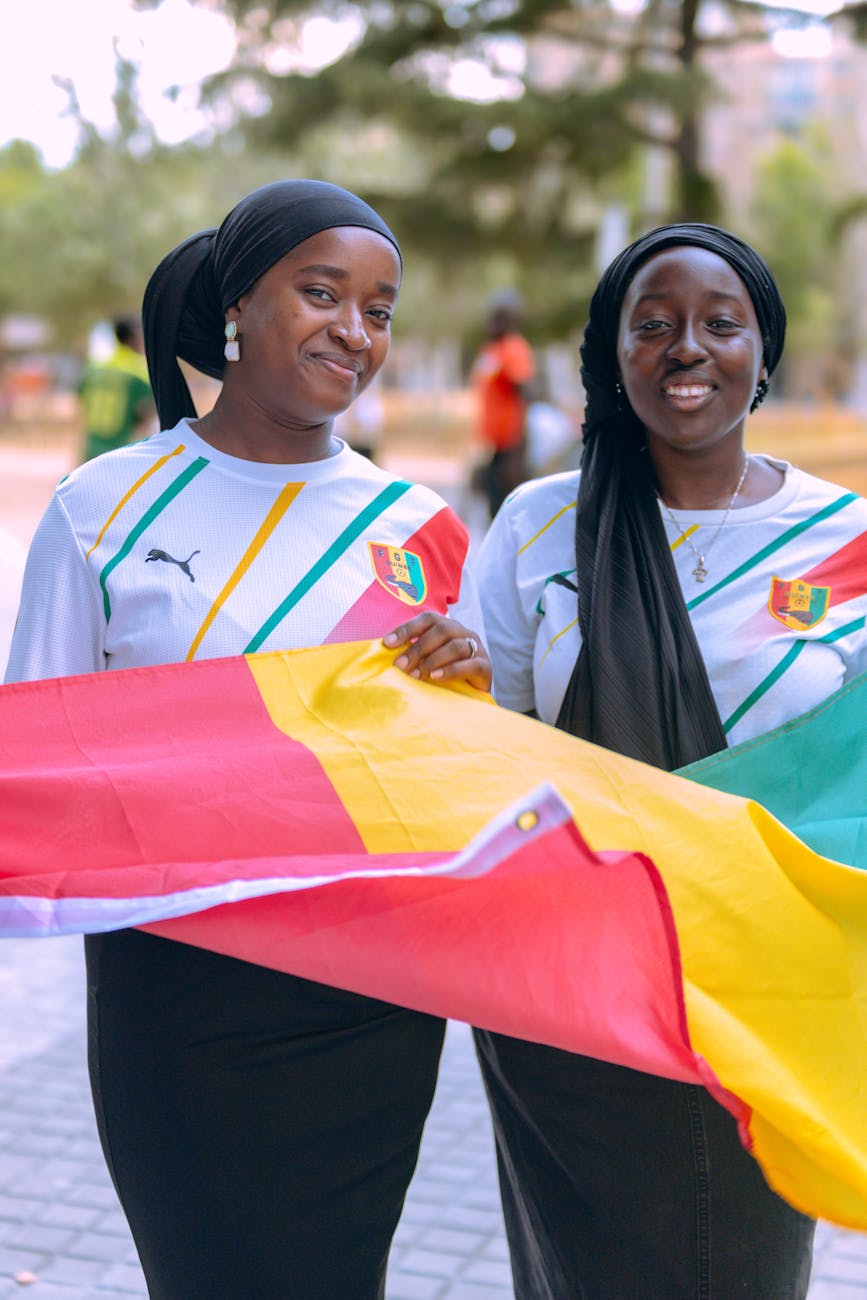
Dakar occupies the very tip of the Cape Verde Peninsula, surrounded on three sides by ocean. The city’s energy is relentless: minibuses called car rapides painted in vivid reds and yellows push through narrow streets, vendors move between cars selling phone credit and mangoes, and the smell of fish grilling over charcoal drifts from every alley. Yet it is also a city of real culture—galleries, music, food, and art that have made Dakar one of the creative capitals of Africa.
Gorée Island sits 30 minutes by ferry off the Dakar waterfront and is one of the most historically significant places in West Africa. A UNESCO World Heritage Site since 1978, its cobbled streets and pastel-painted colonial houses conceal a painful past: the island was a major transit point for enslaved people during the Atlantic slave trade. The House of Slaves (Maison des Esclaves) museum tells that story directly and without softening. Entry $5.3 for non-residents. The island is best visited early in the morning before the day-tour crowds arrive.
The African Renaissance Monument stands 49 meters tall on the Mamelles volcanic hills above the Ouakam neighborhood—the tallest statue in Africa. From the observation platform you can see the entire Cape Verde Peninsula, the Atlantic coastline, and on clear days as far as the horizon where the ocean meets the sky. Entry to the interior $5.3 for visitors. The views justify the climb even if you skip the inside.
Lac Rose (Lac Retba), about 35 kilometers northeast of central Dakar, is a salt lake with a naturally pink color caused by the cyanobacteria Dunaliella salinae, which produces a carotenoid pigment when salt concentrations are extreme. The lake’s salinity is ten times that of the ocean—higher than the Dead Sea at peak season. Salt collectors wade chest-deep to harvest the lake floor, their skin protected by shea butter. The color is most intense between November and June. Pirogues can be hired from the shoreline for $5.3 to $8.9 per person for a 30-minute circuit.
The Marché HLM and Marché Sandaga in central Dakar are the city’s two great markets. HLM specializes in fabric—floor to ceiling bolts of printed wax cloth, bazin riche, lace, and embroidered boubous—and is the place tailors from across West Africa come to source material. Sandaga is more chaotic, a general market spilling across several blocks with electronics, household goods, and street food. Bargaining is the norm at both; prices are not fixed and starting high is expected.
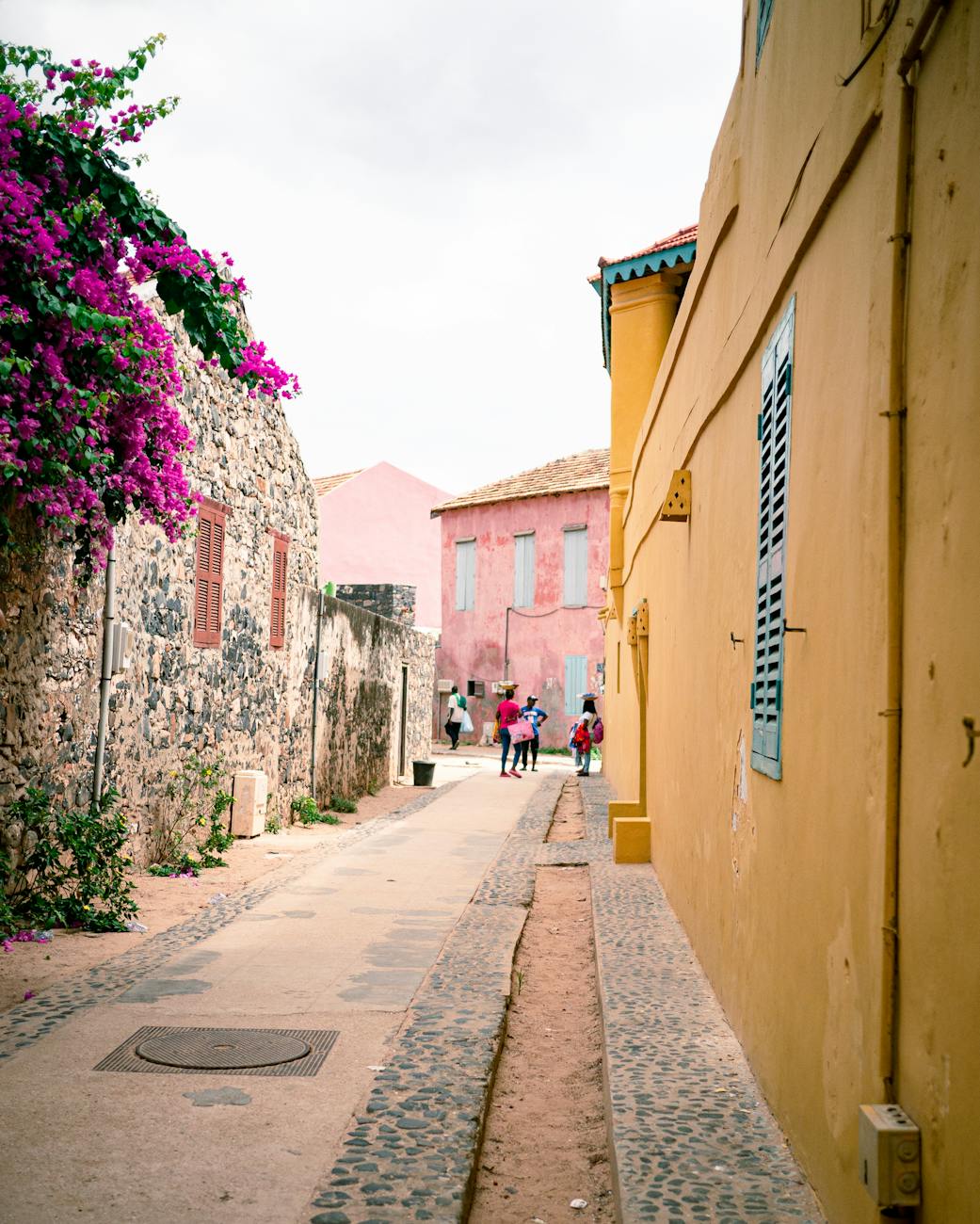
Saint-Louis occupies a narrow island in the mouth of the Senegal River, 268 kilometers north of Dakar along the coast road. It was the first French colonial capital of West Africa and served as capital of both Senegal and Mauritania before Dakar took over that role. The island’s architecture—faded pastel buildings with French shutters, wrought-iron balconies, and crumbling plaster—has earned UNESCO World Heritage status and gives the city a melancholy grandeur unlike anywhere else in the country.
The Faidherbe Bridge, built in 1897 and stretching 512 meters across the river, is the city’s most recognizable landmark. Horse-drawn carriage rides (calèches) are the traditional way to cross the bridge and tour the island—drivers wait at both bridge ends and charge around $5.3 per person for a circuit of the historic district. Walking the narrow streets of the Île de Saint-Louis in the early morning, when mist rises from the river and fishermen are pushing out their pirogues, is one of the quietest and most atmospheric experiences in Senegal.
The Djoudj National Bird Sanctuary, 60 kilometers north of Saint-Louis, is a UNESCO World Heritage Site and one of the most important bird sanctuaries in the world. Over 1.5 million birds from Europe and North Africa overwinter here between November and April—including the world’s third-largest pelican colony, great white egrets, flamingos, and an astonishing density of wading birds. Boat tours through the channels are the standard way to visit; most depart from the park entrance in the early morning when bird activity peaks.
La Langue de Barbarie, a slender sand spit extending south from Saint-Louis between the Atlantic and the Senegal River lagoon, is Senegal’s third ornithological reserve. Sea turtles nest here between June and October. The spit is also home to a community of fishing families whose brightly painted pirogues line the beach in rows—the daily fish landing at sunset is one of the most vivid scenes in the north. Guest houses and small lodges along the spit offer a quiet alternative to sleeping in the city itself.
Saint-Louis hosts its International Jazz Festival each May or June—one of Africa’s most celebrated music events, drawing musicians from across West Africa, France, the United States, and Brazil for four days of open-air concerts on the island’s main square and along the quays. Hotels fill up months in advance; if you are planning a trip around the festival, book accommodation in Dakar and take the day bus.
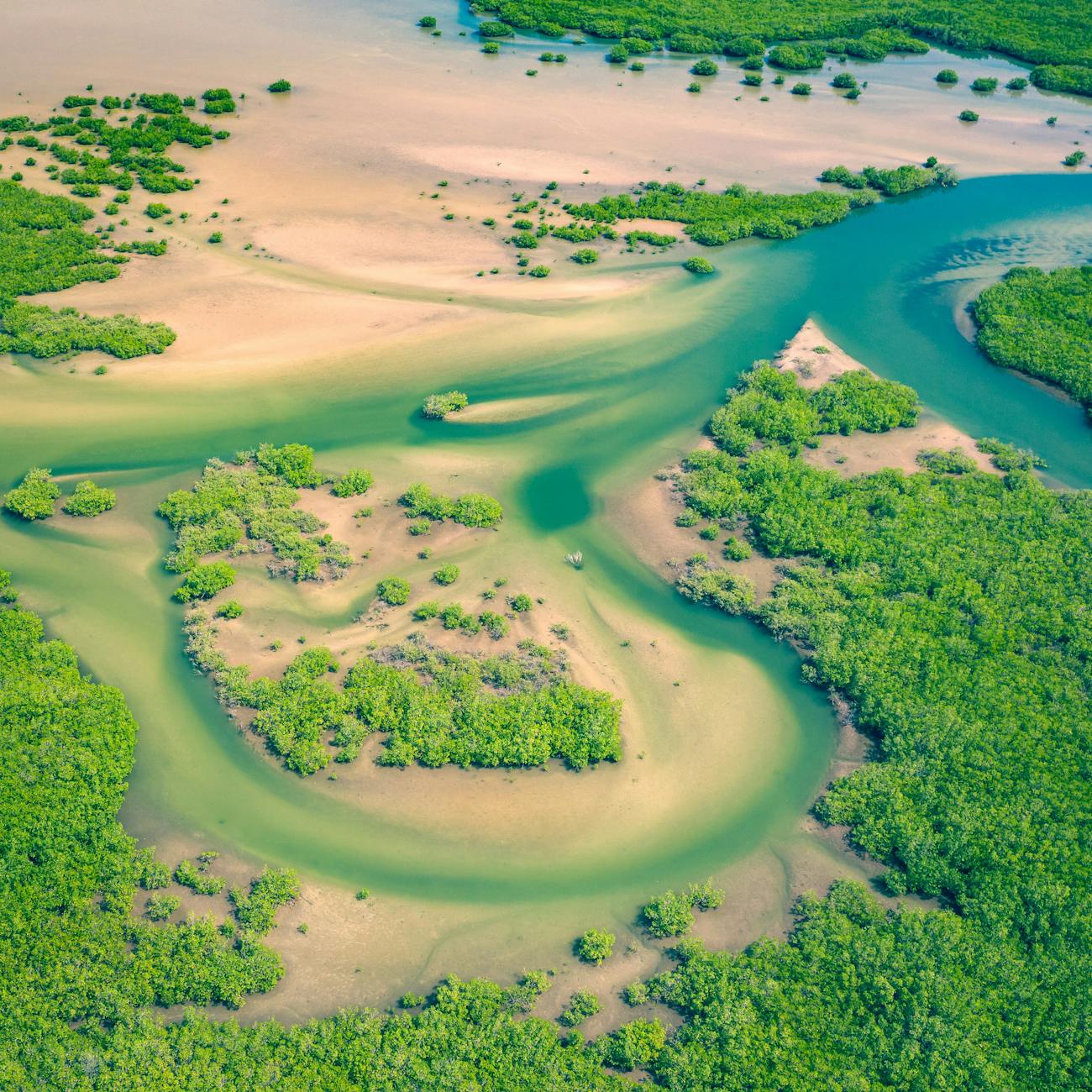
The Sine-Saloum Delta, roughly 150 kilometers south of Dakar, is a UNESCO World Heritage Site of extraordinary ecological richness. A labyrinth of tidal channels, mangrove forests, islands, and lagoons stretches across 180,000 hectares. Over 400 bird species have been recorded here, including the world’s largest colony of royal terns. Dolphins move through the deeper channels. Manatees surface in the quieter backwaters. Dugout canoes are the only practical way to explore the interior—local guides can be arranged from Toubacouta, Foundiougne, or the village of Palmarin on the outer coast.
The islands of the Sine-Saloum are inhabited by Niominka and Serer fishing communities whose way of life has changed slowly over centuries. Shell middens up to 25 meters high mark the remains of ancient settlements; some are 2,000 years old. Villages on islands like Dionewar and Niodor are reached only by pirogue, and the communities are used to visitors arriving by boat. An overnight stay at a small campement (eco-lodge) in the delta—eating grilled fish on a wooden deck above the mangroves, listening to frogs and nightjars in the dark—is one of the most memorable nights Senegal can give you.
Casamance is Senegal’s southernmost region and its most lush—separated from the rest of the country by the Gambia River and different in almost every way from the dry north. Here the landscape is green twelve months of the year: rice fields, palm groves, kapok trees, and rivers thick with papyrus. The Diola people, the majority here, have preserved animist traditions alongside Islam that give the region a different cultural texture from Dakar or Saint-Louis.
Cap Skirring, on the Atlantic coast of Casamance, is consistently rated among West Africa’s finest beaches: a long horseshoe of pale sand fringed by casuarina pines, with clear warm water and almost no development. The beach village has a handful of small hotels and campements within walking distance of the shore. From December to March the sea is calm and flat; April brings swell for surfing. Getting there requires either a 45-minute flight from Dakar on Air Sénégal or an all-day journey south through the Gambia—most travelers prefer to fly.
Ziguinchor, Casamance’s main city, sits on the Casamance River about 70 kilometers inland from Cap Skirring. It is a relaxed, Portuguese-inflected town with a good daily market, some of Senegal’s best street food, and easy access to river pirogue trips into the surrounding forests and mangrove channels. The weekly pirogue service from Dakar to Ziguinchor—an overnight ferry along the coast that runs two or three times per week—is one of the great slow travel experiences in West Africa.