

Asunción was founded by the Spanish in 1537—making it one of the oldest cities in South America. The historic centre clusters around Plaza de la Independencia, where the Palacio de los López—seat of the Paraguayan government—faces the Río Paraguay with its ornate 19th-century facade.
The Costanera waterfront park stretches for kilometres along the river’s edge. At sunset, families walk here. Vendors sell tereré—iced herbal mate tea drunk from a guampa (gourd) through a metal straw, Paraguay’s national drink—from thermos bottles carried everywhere. The sky turns orange over the flat Chaco across the water. It’s the best hour in Asunción.
The Mercado 4 is the city’s enormous central market—thousands of stalls selling fresh produce, electronics, clothing, and street food across several city blocks. It’s loud, chaotic, and an honest portrait of how the city actually works. Lunch at one of the comedores inside costs around Gs. 25,000–40,000 (USD 3–5): a full plate of churrasco, mandioca, and salad.
Loma San Jerónimo, the oldest barrio, sits on a hill above the bay. Colonial-era houses painted in faded blues and yellows line steep cobblestone streets. The neighbourhood is quiet, genuine, and largely overlooked by visitors—which is precisely why it’s worth the walk up from the centre.
The Museo del Barro on Grabadores del Kamba Cuá holds Paraguay’s finest collection of indigenous and colonial art—carved wooden santos, Guaraní ceramics, and contemporary Paraguayan painting. It’s small, well-curated, and free.

In the early 17th century, Jesuit missionaries built a network of self-governing communities across what is now southern Paraguay, northeastern Argentina, and southern Brazil. Each reduction housed thousands of indigenous Guaraní people in planned towns that combined European Baroque architecture with Guaraní craftsmanship—communities that had no equivalent anywhere in the colonial world.
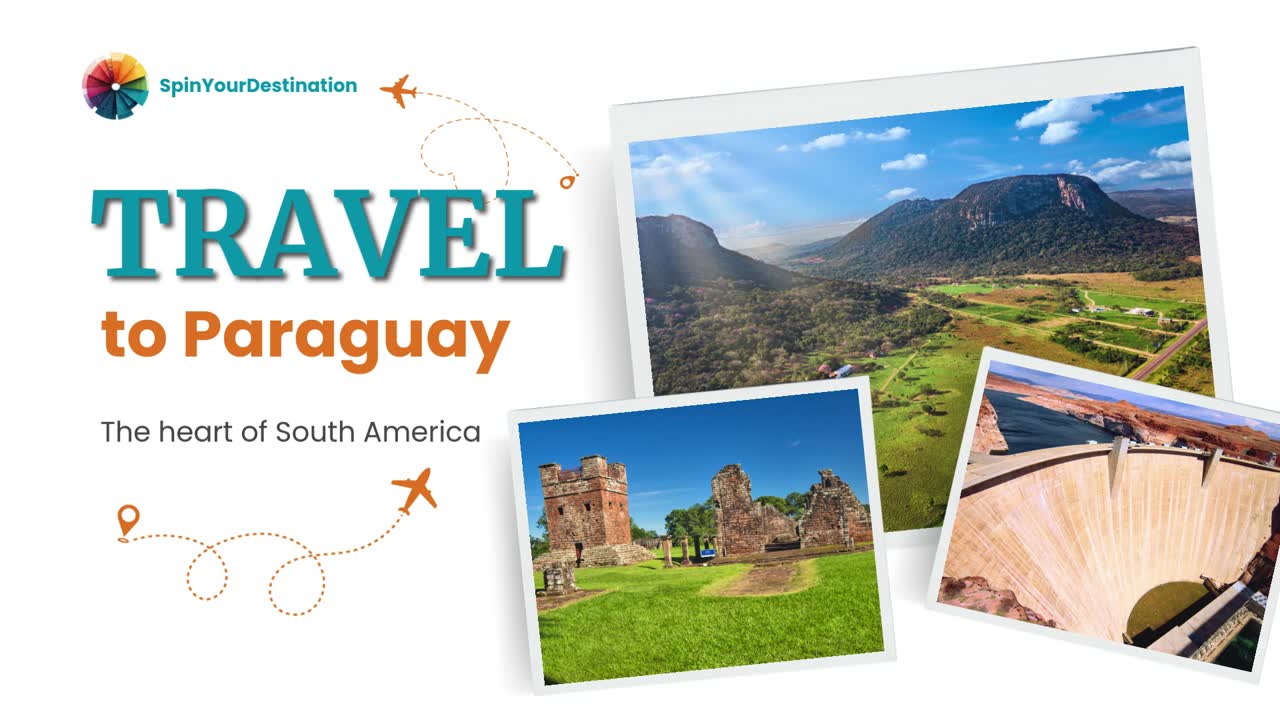
Trinidad del Paraná, 28 kilometres north of Encarnación, is the best-preserved mission in Paraguay. The ruins include a church, sacristy, bell tower, and residential quarters. Stone reliefs of extraordinary quality cover the walls—faces, angels, and botanical motifs that blend European and Guaraní aesthetics in ways that don’t exist anywhere else. UNESCO listed Trinidad in 1993.
Jesús de Tavarangue, 12 kilometres further, was never completed—the Jesuits were expelled from Spanish territories in 1767 before the church could be finished. Three enormous stone doorways stand in open farmland. The scale of what was planned is entirely visible from what was abandoned. Entry to both sites costs around Gs. 60,000 (USD 8).
Encarnación, the city that serves as the base for mission visits, rebuilt its Costanera along the Río Paraná into one of South America’s finest urban waterfronts after flooding from the Yacyretá Dam submerged its old centre. Beaches, restaurants, and promenades replaced what the water took. The result is unexpectedly polished.
The Encarnación Carnival each February is Paraguay’s largest festival—costumes, samba-influenced music, and elaborate floats that rival smaller Brazilian carnivals. If your timing allows it, the missions and carnival together make a compelling reason to head south from Asunción.
The Itaipu Dam straddles the Paraná River on the Brazil–Paraguay border. For 15 consecutive years it was the world’s largest electricity generator. In 2016 it set a world record: 103.1 terawatt-hours in a single year. Paraguay uses 10% of its share; the remaining 90% is sold to Brazil—a transaction that makes up a significant portion of Paraguay’s national budget.
Tours run daily from the Visitor Centre in Hernandarias, 12 kilometres north of Ciudad del Este. The Panoramic Tour (around USD 25) takes you along the dam crest with views down the 196-metre spillway. The Ecological Refuge alongside the reservoir protects Itaipu giant otters, marsh deer, and over 400 bird species including harpy eagle.
The Lago de Itaipu reservoir stretches 170 kilometres north through the Paraguayan interior. Fishing villages, camping grounds, and weekend resorts line the eastern shore. The lake is calm, the fishing is excellent, and it receives almost no international tourism—which makes it feel like a genuine discovery.
Ciudad del Este, the border city adjacent to the dam, is one of the world’s largest free-trade zones—electronics, perfumes, and imported goods sold at prices that draw shoppers from across South America by the busload. The city is raw, loud, and genuinely unlike anywhere else in Paraguay. The contrast with the quiet interior is startling.
Iguazú Falls lie 20 kilometres east across the Brazilian border—among the most spectacular waterfalls on Earth. Day trips from Ciudad del Este to the Brazilian or Argentine sides are straightforward, and using Paraguay as a cheaper base for Iguazú visits is a well-kept secret among budget travellers.

The Gran Chaco covers 60% of Paraguay’s territory but holds only 3% of its population. West of the Río Paraguay, the land flattens into a vast lowland of thorny forests, grasslands, and salt pans stretching to Bolivia and Argentina. Roads are long, straight, and empty.
Jaguar, giant anteater, tapir, giant armadillo, and maned wolf live here. Conservation researchers identify the Paraguayan Chaco as having one of the highest remaining jaguar densities in South America. The Chaco biome is one of the world’s most important wilderness areas—and one of the least visited.
Mennonite colonies established in the 1920s and 1930s dot the central Chaco. German-speaking communities—remarkably productive dairy farmers—transformed sections of thorny scrubland into working farms. The towns of Filadelfia, Loma Plata, and Neu-Halbstadt are orderly, German-signposted, and entirely surreal in the middle of South American wilderness.
The Trans-Chaco Highway runs 750 kilometres from Asunción to the Bolivian border—mostly paved through one of the least-populated regions in the hemisphere. Wildlife is visible from the road, particularly at dawn and dusk. Carry water and extra fuel. Distances between petrol stations are real.
The indigenous Ayoreo people of the northern Chaco include some of the last groups living in voluntary isolation in South America outside the Amazon Basin. Large sections of the northern Chaco are protected territory. This is one of the few places on Earth where genuine wilderness—no roads, no signal, no services—still exists within reach of a country’s capital.