

Canada Drink Guide
From the sun-baked slopes of the Okanagan Valley to the frozen Niagara vineyards where icewine is harvested at −10°C, Canada produces wines that few people expect — and spirits, beer, and coffee that reward the curious traveller.
The road into the Okanagan drops suddenly from a pine plateau and the valley opens: sage, heat, and row upon row of vines on terraced hillsides above a deep blue lake. British Columbia's wine country looks like nothing else in Canada — and tastes like nothing else either. A thousand kilometres east, Niagara's Escarpment traps the warmth of Lake Ontario long enough to ripen Riesling, Chardonnay, and Cabernet Franc through autumn, then lets the cold arrive to freeze the remaining grapes into icewine, one of the world's most distinctive dessert wines and Canada's most famous wine export.
Beyond wine: Canadian whisky — once dismissed as light and inoffensive, now rediscovered through a generation of craft distillers working with 100% rye and grain-forward blends of real character. Quebec's craft beer scene, modelled on Belgian monastic traditions, producing ales of international quality. And in Vancouver, one of North America's most serious specialty coffee cultures, built by independent roasters who have been sourcing direct-trade beans since before that practice had a name. Canada's drinking culture is underestimated. Here is where to find the best of it.
This guide contains information about alcoholic beverages and is intended for adults of legal drinking age in their country.
Wine — Okanagan Valley & Niagara Peninsula
Canada produces wine in four provinces — British Columbia, Ontario, Quebec, and Nova Scotia — but two regions define Canadian viticulture: the Okanagan Valley in BC and the Niagara Peninsula in Ontario. Both are VQA-regulated, both are misunderstood internationally, and both reward a visit in person.
Okanagan Valley, British Columbia
The Okanagan Valley runs 200 kilometres through the interior of British Columbia, from Vernon in the north to Osoyoos at the US border — a semi-arid landscape of lake, sage, and volcanic rock that receives less annual rainfall than parts of the Sahara. The result is concentrated fruit, structured tannins, and wines of genuine elegance from Pinot Noir, Chardonnay, Merlot, and Syrah. The South Okanagan, centred on Oliver and Osoyoos, produces Canada's boldest reds from the country's warmest growing conditions. The Central Okanagan, around Kelowna, is cooler and excels in Pinot Noir and aromatic whites. Over 200 wineries operate in the valley — many with tasting rooms, restaurants, and accommodation.
Key varieties: Pinot Noir · Chardonnay · Merlot · Syrah · Riesling · Pinot Gris · Cabernet Franc

Mission Hill Family Estate
West Kelowna, Okanagan Valley, BC
Named Canada's Winery of the Year at the 2025 WineAlign National Wine Awards — for a record sixth time — Mission Hill Family Estate sits on a promontory above Okanagan Lake with views of mountains, vineyards, and water that justify the drive from Kelowna alone. Founded in 1981 and rebuilt from scratch in 2002 as a grand architectural statement (bell tower, amphitheatre, barrel cellar cut into bedrock), Mission Hill was instrumental in establishing the Okanagan's international reputation. The wine portfolio spans four tiers, from the approachable Terroir Collection through to Five Vineyards and the flagship Oculus — a Bordeaux-blend red from the estate's oldest vines. The outdoor amphitheatre hosts a summer concert series, with performers announced annually. As of May 2026, reservations are required to access the winery.
⏱ Daily 11:00–18:00 · 📍 1730 Mission Hill Rd, West Kelowna, BC · 🎟 Reserve tastings in advance · 🎶 Summer concert series July–August
Visit Mission Hill → Reviews and book →
Quails' Gate Estate Winery
West Kelowna, Okanagan Valley, BC
Quails' Gate has been growing grapes on the western bench above Okanagan Lake since 1989, farming a mix of estate-owned and family-owned parcels that form one of the valley's most consistently impressive portfolios. The speciality is Pinot Noir — the estate produces four distinct expressions of it, including an Old Vines Foch from plantings that date back to the 1960s — alongside a Chardonnay and a dry Riesling that rank among the best in the country. The on-site Old Vines Restaurant is one of the most respected wine-country restaurants in BC, with a seasonal menu designed around the estate's harvest rhythms. The tasting room overlooks the vineyard and lake; seatings are available throughout the day and can be booked in advance. The estate also offers vineyard tours, a wine club, and seasonal harvest experiences in September and October.
⏱ Daily from 10:00 · 📍 3303 Boucherie Rd, West Kelowna, BC · 🍽 Old Vines Restaurant open for lunch and dinner · 🍷 Wine club offers early access to new releases
Visit Quails' Gate → Reviews and book →
Burrowing Owl Estate Winery
Oliver, South Okanagan, BC
In the South Okanagan, where summer temperatures routinely exceed 38°C and the Black Sage Bench receives less than 200mm of rain per year, Burrowing Owl makes some of Canada's most powerful reds. The family-owned estate, established in 1993 and named for the endangered burrowing owls it has worked to protect on its property, farms 150 acres of Merlot, Syrah, Cabernet Franc, Cabernet Sauvignon, Pinot Gris, and Chardonnay across two vineyard blocks. The winery is known for structured, age-worthy reds of genuine complexity — the Syrah, in particular, is consistently cited as one of the best examples from BC. The Sonora Room restaurant offers seasonal farm-to-table cooking paired with the estate portfolio, and the guest house provides overnight accommodation in the vineyard. Oliver is 1 hour south of Kelowna on Highway 97.
⏱ Tasting room open seasonally (confirm current hours) · 📍 500 Burrowing Owl Pl, Oliver, BC · 🏨 Guest house with vineyard views · 🦉 Active burrowing owl conservation program
Visit Burrowing Owl → Reviews and book →Niagara Peninsula, Ontario
The Niagara Peninsula produces over 80% of Ontario's wine and is home to Canada's most celebrated wine export: Icewine. The region's unique microclimate — moderated by Lake Ontario to the north and the Niagara Escarpment to the south — creates conditions that support late-season grape growing through November, when temperatures plunge to −8°C or below and the remaining frozen grapes are harvested by hand for Icewine production. Beyond Icewine, the Peninsula produces excellent Riesling, Chardonnay, Pinot Noir, and Cabernet Franc, and Niagara-on-the-Lake is the hub of the region's wine tourism, with over 20 wineries within a 30-minute drive of the town centre.
Key varieties: Vidal (Icewine) · Riesling · Chardonnay · Pinot Noir · Cabernet Franc · Gewürztraminer

Inniskillin Niagara Estate
Niagara-on-the-Lake, Ontario
Inniskillin is where Canadian Icewine became a global category. Founded in 1975 as one of Ontario's first estate wineries, Inniskillin put Canada on the international wine map when its 1989 Vidal Icewine won the Grand Prix d'Honneur at Vinexpo Bordeaux in 1991 — a win that triggered international demand for a wine that only Canada could produce in commercial quantities. The flagship experience is the Icewine Experience: a 75-minute guided tasting of three Icewines using different stemware designed to emphasise their differences in structure and sweetness ($240 flat for up to four guests, or $60 per person for five or more). Public tours — vineyard to cellar, finishing with a tasting of three VQA wines — run several times daily (from $35/person, no reservation needed). The estate also offers a Grill with casual wine-country cooking on Friday–Sunday. Icewine harvest takes place December–February when temperatures drop below −8°C.
⏱ Open daily — spring/fall 11:00–17:00, summer 11:00–19:00 Sat · 📍 1499 Line 3, Niagara-on-the-Lake, ON · 🧊 Icewine Experience: $240/4 guests or $60/person (book 10 days ahead) · 🍷 Public tours: $35/person, no reservation needed
Visit Inniskillin → Reviews and book →
Peller Estates Winery
Niagara-on-the-Lake, Ontario
Peller Estates operates the most unusual tasting experience in Canadian wine: the 10Below Icewine Lounge, an underground space maintained at −10°C where guests taste Icewine in the same conditions the grapes are harvested. Access is through the Greatest Winery Tour — a guided experience that includes the barrel cellar and culminates in the frozen lounge, with parkas provided. The tour is bookable through the winery directly or through myWineCountry.ca. Beyond the spectacle, Peller makes a serious portfolio of VQA wines from estate Niagara fruit, including a well-regarded Chardonnay, Pinot Noir, and a range of Icewines in Vidal, Riesling, and Cabernet Franc. The estate also operates one of the best winery restaurants in the region, open for dinner service. During the annual Niagara Icewine Festival (January), Peller is a central venue.
⏱ Open daily — confirm seasonal hours · 📍 290 John St E, Niagara-on-the-Lake, ON · 🧊 10Below Lounge via Greatest Winery Tour (book in advance) · 🍽 Restaurant open for dinner Thurs–Sun
Visit Peller Estates → Reviews and book →
Château des Charmes
Niagara-on-the-Lake, Ontario
Château des Charmes is one of the oldest and most respected estate wineries in Canada, founded in 1978 by Paul Bosc — a Burgundy-trained viticulturalist who was among the first to advocate for Vitis vinifera plantings in Ontario at a time when most believed it was impossible. The château, a French-style manor house built on the estate in 1994, is one of the most photographed winery buildings in Canada. The portfolio is estate-grown across 260 acres and covers the full spectrum of Niagara varieties — a complex Chardonnay, structured Cabernet Franc, Riesling, Gamay Noir, and Icewine — with particular strength in wines that express the Escarpment terroir. The tasting room offers a Discovery Tasting Flight and a Signature Tour and Tasting with cellar access. The estate organises an annual Bosc Family open house in the autumn harvest season, which is the best time to visit.
⏱ Open daily — check seasonal hours · 📍 1025 York Rd, Niagara-on-the-Lake, ON · 🏰 The château is a landmark — worth the visit for the architecture alone · 🍷 Discovery Tasting Flight available walk-in
Visit Château des Charmes → Reviews and book →VQA — Canada's Wine Standard
Vintners Quality Alliance (VQA) is Canada's appellation system — the equivalent of France's AOC or Italy's DOC. VQA wines are made 100% from grapes grown in a designated viticultural area and must pass a tasting panel before release.
VQA Ontario
Covers four appellations: Niagara Peninsula, Lake Erie North Shore, Prince Edward County, and Georgian Peach & Wine Coast. The Niagara sub-appellations include Niagara-on-the-Lake, Lincoln Lakeshore, and Short Hills Bench, each with distinct terroir characteristics.
BC Wine (BCWI)
British Columbia has its own appellation system under BC Wine Institute. The main Designated Viticultural Areas include Okanagan Valley, Similkameen Valley, Fraser Valley, Vancouver Island, and Gulf Islands. All VQA BC wines are made entirely from BC-grown grapes.
Icewine
Canadian Icewine is one of the world's most regulated wine styles. Grapes must freeze naturally on the vine at −8°C or below after November 15, pressed while still frozen. Finished wine must reach minimum 35° Brix (residual sugar), with alcohol between 7% and 14.9%. Canada is the world's largest producer of Icewine.
Tip: Look for the VQA oval on the label — it guarantees Canadian origin and quality standards. Wines labelled "Product of Canada" without VQA may use imported bulk wine blended with Canadian grapes.
🍇 Canadian Wine — What to Know
- 🍇 Icewine is best experienced at the winery — the freshest pours come straight from temperature-controlled tasting rooms where you can try multiple expressions side by side. A single 375ml bottle of Vidal Icewine costs CAD 40–80 at the winery, significantly less than in duty-free or international retail
- 🍷 The Okanagan Wine Festival is held twice annually — the main harvest festival in early October (10 days) is the largest wine and food event in Western Canada, with events at over 100 wineries. Many limited releases are available only during festival week
- 🚗 Driving between wineries in the Okanagan requires a designated driver or a booked wine tour — the RCMP enforces impaired driving strictly on the valley highways, and zero-tolerance applies at many of the border crossings near Osoyoos
- 🏷 Price ranges to expect: Okanagan entry-level VQA bottles CAD 18–30; Niagara mid-range VQA CAD 20–35; Icewine (375ml) CAD 40–80; premium single-vineyard bottles CAD 50–150+
- 🌡 The Niagara Icewine harvest happens December–February and depends entirely on the weather. Producers announce harvest dates via social media and email lists; joining a winery's mailing list is the only reliable way to participate in a harvest experience
Wine Bars & Tasting Rooms
Canada's urban wine bars reflect the country's wine maturity — natural wine, small-producers, and well-curated lists that put Canadian VQA alongside European classics. In wine country, the best tasting rooms go far beyond poured samples: they are destinations in themselves.
From Wine Country to the City
The most satisfying way to experience Canadian wine is at the source — tasting rooms where the winemaker or sommelier can explain the specific vineyard block behind each pour. In the cities, a new generation of independent wine bars is championing VQA alongside natural producers from around the world, with rotating by-the-glass lists and none of the formality that used to surround Canadian wine culture.

Tantalus Vineyards
Kelowna, Okanagan Valley, BC
Tantalus occupies one of the oldest continuously producing vineyard sites in British Columbia — first planted to table grapes in 1927 and continuously farmed since — and makes wines that are among the most quietly assured in the Okanagan. The speciality is Riesling: dry, focused, and built for ageing from old vines whose roots have found their way deep into the bench soils above Lake Okanagan. The gallery-style tasting room looks directly across the lake toward the city of Kelowna, and tastings are seated and guided. The Small Lot Tasting (from $25/person, rebate on purchase) features limited-production bottlings not available elsewhere — single-vineyard Pinot Noir, old-vine Chardonnay, and occasional experimental releases. The Bees & Barrels Tour ($45/person) adds a LEED-certified winery tour with a look at the estate's working beehives. Tantalus also runs one of the most coherent wine clubs in the Okanagan, with three allocations per year.
⏱ Open seasonally (reopen April 2026) · 📍 1670 DeHart Rd, Kelowna, BC · 🍷 Small Lot Tasting $25/person (rebate on wine purchase) · 🐝 Bees & Barrels Tour $45/person
Visit Tantalus Vineyards → Reviews and book →
Archive Wine Bar
Dundas West, Toronto, Ontario
Archive is the wine bar that shaped Toronto's natural wine scene. Opened in 2012 on Dundas Street West — before the neighbourhood became fashionable — it has maintained an exceptionally well-curated list of small-production wines from Europe, South America, and Canada, with an emphasis on minimal-intervention producers and a rotating by-the-glass selection that changes weekly. The room is comfortable and lived-in: exposed brick, low lighting, a long bar, and the kind of atmosphere where staying for a second bottle feels inevitable. Archive also operates a late-night kitchen serving simple, well-made bar food until close. The bottle selection is equally strong for off-premises purchase. Among the best places in Canada to drink Ontario VQA alongside European naturals in an unpretentious setting — the staff know every producer on the list and are genuinely interested in helping you discover something new. Open Tuesday to Sunday from 17:00.
⏱ Tue–Sun from 17:00 · 📍 909 Dundas St W, Toronto, ON · 🍽 Late-night kitchen · 🛍 Bottle retail available · 💳 Accepts credit cards
Visit Archive Wine Bar → Reviews and book →🥂 Wine Bar Tips for Canada
- Ontario VQA wines are increasingly well-represented on Toronto and Ottawa wine lists — ask specifically for local pours; many bars now feature 5–8 Ontario producers by the glass alongside their imported selection
- In the Okanagan, most wineries require or recommend reservations for seated tastings, especially on weekends from May to October. Walk-in is usually possible at the retail counter but not for guided flights
- Canadian wine culture is informal by European standards — dress codes are rare, and arriving in hiking clothes at a Okanagan tasting room is completely normal
- The Okanagan's best value tasting experiences are usually at the medium-sized family estates (30,000–80,000 cases) rather than the largest producers or the smallest boutique wineries — they have the resources to staff the room well and the intimacy to be memorable
Spirits — Canadian Whisky & Craft Distilling
Canadian whisky was once shorthand for light, innocuous blends — the mixer that bartenders poured without thinking. That era is over. A generation of craft distillers, working with 100% rye and grain-forward mash bills, has rebuilt the category's reputation from the ground up, while established distilleries have rediscovered what made Canadian rye whisky distinctive in the first place.
The Canadian Rye Tradition
Canadian whisky is produced from a cereal grain mash (typically corn, rye, wheat, or barley) aged for a minimum of three years in small wood vessels. The defining characteristic is the use of flavouring rye whisky — high-rye mash bills distilled separately and blended with base grain spirits to create complexity. The best expressions are grain-specific, barrel-forward, and built for slow sipping rather than mixing. The craft revival has made 100% rye — previously considered too intense for commercial Canadian whisky — the defining bottle of the modern category.
Styles to know: 100% Rye · Blended Canadian Whisky · Single Malt (BC) · Corn Whisky · Barrel-Finished

Forty Creek Distillery
Grimsby, Niagara Region, Ontario
Forty Creek is Canada's original craft whisky distillery — founded by John Hall in Grimsby, Ontario in 1992, in a century-old winery building on the Niagara Escarpment. Hall was one of the first distillers to treat Canadian whisky as a premium product, ageing each grain component (corn, rye, barley) separately in its own barrel type before blending, rather than blending first and ageing after — a process closer to Scotch malt production than conventional Canadian blending. The result is whisky of real character: Barrel Select (the original expression) is built on honey, vanilla, and black walnut; Double Barrel adds an extra ageing period in bourbon barrels for further complexity; Copper Bold delivers a higher-ABV rye expression designed for cocktails and straight sipping. The distillery tasting bar in Grimsby offers guided whisky flights led by spirits staff — walk-ins accepted for groups under ten, but booking is recommended. The annual Whisky Weekend (September) is the most popular event in the Niagara whisky calendar.
⏱ Mon–Sat 10:00–17:00, Sun 11:00–17:00 · 📍 297 S Service Rd, Grimsby, ON · 🥃 Whisky tasting flight guided by distillery staff · 📅 Annual Whisky Weekend in September
Visit Forty Creek Distillery → Reviews and book →
Hiram Walker & Sons Distillery
Windsor, Ontario
The Hiram Walker & Sons distillery in Windsor, Ontario is the largest distillery in Canada and one of the largest in North America — a complex of 50 buildings on the south shore of the Detroit River that has been producing Canadian whisky since 1858. Walker, an American entrepreneur, built his distillery in Ontario specifically to use Canadian grain and take advantage of Canadian tax law, and his legacy includes Canadian Club, one of the most internationally recognisable Canadian whisky brands in history. The distillery complex is a National Historic Site. Guided tours (the J.P. Wiser's Experience) take visitors through the production process — grain milling, fermentation, distillation, and ageing warehouses — finishing with a tasting of J.P. Wiser's expressions including the benchmark Deluxe blend and the 18-year-old single barrel. Windsor is 3.5 hours from Toronto via Highway 401.
⏱ Book guided tours in advance · 📍 2072 Riverside Dr E, Windsor, ON · 🏛 National Historic Site of Canada · 🥃 J.P. Wiser's Experience with tasting
Visit J.P. Wiser's → Reviews and book →
What to Drink: Canadian Whisky
Available Across Canada
The bottles worth knowing: Lot 40 (Corby's) is the benchmark for 100% rye — made from a 100% rye mash bill, double pot-distilled, and aged 8 years in new charred oak. It has more in common with a high-rye American bourbon than a conventional Canadian blend. Pike Creek (Corby's) is aged in rum and port casks for a sweeter, fruit-forward expression. Whistler (from Alberta Distillers) is the most widely distributed quality expression from western Canada. Shelter Point (BC) and Macaloney's (BC) are the leading single malts from British Columbia — both peated and unpeated expressions, made in the Scotch tradition from British Columbia barley. For cocktails: Canadian whisky mixes particularly well in Old Fashioneds and whisky sours — its lower ABV baseline (typically 40%) and lighter grain profile means it supports citrus and bitters without overpowering them.
💰 Lot 40: CAD 40–55 · Shelter Point Single Malt: CAD 65–90 · Macaloney's Invermallie: CAD 80–110 · 🛒 LCBO (Ontario), BC Liquor Stores, or direct from distillery
Shop Canadian Whisky at LCBO →🥃 Canadian Whisky — What to Know
- Canadian law allows up to 9.09% of a foreign spirit (including American bourbon) in Canadian whisky — this historical rule created a reputation for blends that taste of everything and nothing. Modern craft producers ignore it entirely; Lot 40, Shelter Point, and Forty Creek's flagship expressions contain no foreign spirit
- "Rye whisky" in a Canadian context does not legally require any rye in the mash bill — it is a historical category name. Check the label or search the producer for the actual grain content if rye character is what you want
- The LCBO (Liquor Control Board of Ontario) carries the widest selection of Canadian whisky in the country — the flagship store at Bay & Bloor in Toronto has a dedicated spirits section with rare and allocated expressions not available in smaller branches
- "Cheers" in Canadian English is universally understood. In Quebec, "Santé!" is the standard toast in French. Eye contact when clinking glasses is customary but not obligatory
- BC produces both whisky and gin of international quality — Sheringham Distillery and Long Table Distillery (Vancouver) are among the most awarded gin producers in North America
Beer — The Craft Revolution
Canada's craft beer industry grew from 10 breweries in 1985 to over 1,200 by 2020. British Columbia leads in production volume and innovation; Quebec leads in Belgian-inspired brewing tradition; Ontario has the most breweries per capita. The result is a national beer landscape of genuine depth — regional, seasonal, and increasingly exportable.
Vancouver to Quebec City
Canada's craft beer culture divides naturally along the country's cultural geography: BC's breweries are West Coast in character (hoppy, clean, Pacific-influenced), Ontario's are eclectic and food-focused, and Quebec's are modelled on Belgian monastic tradition — bottle-conditioned, yeast-forward, and designed to age. The best way to experience Canadian craft beer is in the brewery taprooms, where unreleased batches and one-off collaborations are poured before they reach retail.
Styles to know: West Coast IPA · BC Pale Ale · Quebec Tripel · Belgian-Style Blonde · Sour & Barrel-Aged · Craft Lager

Steamworks Brewing
Gastown, Vancouver, BC
Steamworks opened its Gastown brewpub in 1995 in a historic building that still contains the original steam pipes from Vancouver's 19th-century district heating system — hence the name and the steam-brewed brewing method, which uses hot water rather than direct fire. The Gastown location is the starting point: a multi-level space in a character building on Water Street, with copper kettles visible from the bar and a menu built for serious eating. The flagship beers — Pilsner, Lions Gate Lager, and the Flagship IPA — are the ones that built Steamworks' reputation; the rotating seasonal programme adds hazy pales, wheat ales, and experimental batches. Beyond Gastown, Steamworks operates a newer brewery and taproom in Burnaby and a pub in Mount Pleasant, each with their own exclusive tap list. The BC Ale Trail — a self-guided tour of 200+ BC craft breweries — includes Steamworks as one of its anchor stops.
⏱ Daily from 11:00 · 📍 375 Water St, Gastown, Vancouver, BC · 🍺 Full kitchen and multiple levels · 🚶 Walking distance from all central Vancouver hotels
Visit Steamworks → Reviews and book →
Strange Fellows Brewing
East Vancouver, BC
Strange Fellows is the most interesting brewery in Vancouver — a producer that bridges West Coast American craft (clean, hoppy, technically precise) and Old World European tradition (Belgian farmhouse, barrel-aged sours, bottle-conditioned ales) with consistent success at both. Founded by Iain Hill, a brewer with a background in Belgian-style ales, Strange Fellows operates from a tasting room and art gallery space at 1345 Clark Drive in East Vancouver, where the Charles Clark Gallery shows rotating exhibitions alongside the pour list. The beer programme includes permanent standards (Jongleur Amber, Talisman Pale) and a rotating release of limited barrel-aged and sour beers available only at the tasting room. Strange Fellows has won multiple BC Beer Awards and Canadian Brewing Awards — the Arcadia Golden Strong Ale and the Trickster IPA are among the most consistently awarded beers in BC. Cans, growler fills, and kegs are available to go.
⏱ Wed–Thu 14:00–21:00, Fri 12:00–22:00, Sat 11:00–22:00, Sun 11:00–20:00 · 📍 1345 Clark Dr, Vancouver, BC · 🎨 Art gallery attached · 🍺 Barrel-aged and sour releases tasting room-only
Visit Strange Fellows → Reviews and book →
Unibroue
Chambly, Québec
Unibroue is Quebec's most internationally celebrated brewery — founded in Chambly in 1992 and built entirely on Belgian Trappist brewing methods, including bottle refermentation with live yeast, which gives the beers their characteristic carbonation, complexity, and ageing potential. The brewery is the most awarded in Canada and among the most awarded in North America. The core range has become canonical: Blanche de Chambly (witbier, one of the best white ales in the world), Maudite (strong amber, 8%), La Fin du Monde (triple blonde, 9%, which celebrated its 30th anniversary in 2025 — it remains the standard by which Canadian craft beer is judged internationally), and Trois Pistoles (strong dark, 9%). All are bottle-conditioned and benefit from ageing — a 2-year-old La Fin du Monde develops honey and dried fruit notes that the fresh bottle barely hints at. Unibroue's beers are available across Canada; the Chambly brewery offers visits by appointment.
⏱ Brewery visits by appointment · 📍 80 Rue des Carriéres, Chambly, QC (40 min from Montréal) · 🍺 Available at most SAQ locations in Quebec and LCBO in Ontario · 🏆 Canada's most internationally awarded brewery
Visit Unibroue → Reviews and book →🍺 Canadian Beer — What to Know
- The BC Ale Trail (bcaletrail.ca) maps over 200 craft breweries across British Columbia and is the most useful resource for planning a brewery route — it includes tasting room hours, locations, and descriptions of each brewery's specialities
- Quebec's "dépanneur" (corner store) culture means craft beer is sold in neighbourhood convenience stores in glass bottles — a system that encourages trying local breweries on impulse without having to locate a speciality bottle shop
- Unibroue's beers are best drunk from a tulip glass with a thick foam head — pour leaving 2–3 cm in the bottle to avoid disturbing the yeast sediment, unless you want the cloudy, more robust character of the full bottle pour
- Ontario craft beer is available at select grocery stores as well as LCBO locations and The Beer Store — the grocery option (Beer & Cider in Ontario grocery stores) often has the most current local craft releases
- The Mondial de la Bière in Montréal (held annually in June) is the largest beer festival in Canada, featuring over 100 international and domestic producers with hundreds of beers available for sampling over five days
Coffee Culture — Vancouver & Beyond
Vancouver is one of North America's most serious specialty coffee cities — a claim that is not marketing. The third-wave movement took root here earlier than in most North American cities, driven by a culture of direct-trade sourcing, precise roasting, and baristas who treat coffee with the same seriousness that sommeliers apply to wine. The result is an independent café scene of international quality.
Vancouver's Specialty Coffee Scene
Vancouver's coffee culture was built by independent roasters who sourced beans directly from farms before direct trade became a standard practice, and by a barista culture that trains to competition level. The city's geography — close to Asia, with a large population that expects quality coffee — created demand that drove the scene forward long before third-wave coffee became a category in most North American cities. The best cafés in Vancouver are genuinely world-class.

Revolver Coffee
Gastown, Vancouver, BC
Revolver is arguably the most influential independent coffee bar in Canada — a small, focused space on Cambie Street in Gastown that opened in 2010 and established a standard for specialty coffee that the city has been trying to match ever since. The model is strict: a rotating guest roaster programme that changes the espresso offering regularly, sourcing beans from some of the world's most respected roasters (Square Mile, Tim Wendelboe, Heart, Intelligentsia). The bar is minimalist — white tiles, a long counter, focused service — and the coffee is served without compromise. Revolver roasts its own beans under the Revolver label for retail (available online and in-café), and ships Canada-wide. The Gastown location is open Monday–Saturday 7:30–17:00, closed Sundays. It is a mandatory stop for anyone who takes coffee seriously, and one of the few cafés in Canada where the international coffee world pays attention.
⏱ Mon–Sat 7:30–17:00, Sun closed · 📍 325 Cambie St, Gastown, Vancouver, BC · ☕ Rotating guest espresso programme · 📦 Beans available for online purchase, ships Canada-wide
Visit Revolver Coffee → Reviews and book →
49th Parallel Coffee Roasters
Multiple Locations, Vancouver, BC
49th Parallel is the roastery that proved Vancouver could compete with the world's best coffee cities. Founded by Vince Piccolo, 49th has been sourcing direct-trade coffees from Ethiopia, Kenya, Colombia, and Guatemala since 2004 — building producer relationships that deliver coffees of genuine distinction. The in-house roastery produces single-origin espresso, filter, and seasonal limited releases available at the cafés and online. The flagship café on 4th Avenue pairs the coffee programme with Lucky's Doughnuts — a collaboration that has become one of Vancouver's most popular breakfast destinations. The Kitsilano location, with floor-to-ceiling windows and a strong filter coffee offering, is the quieter spot for serious coffee work. 49th's espresso blend is one of the most consistently excellent in Canada: sweet, structured, and calibrated to work equally well as black espresso and in milk drinks. Multiple Vancouver locations; beans ship Canada-wide and to the United States.
⏱ Daily from 7:00–8:00 · 📍 Multiple Vancouver locations — 4th Ave, Commercial Dr, and others · 🍩 Lucky's Doughnuts on-site at 4th Ave flagship · 📦 Direct-trade beans online
Visit 49th Parallel → Reviews and book →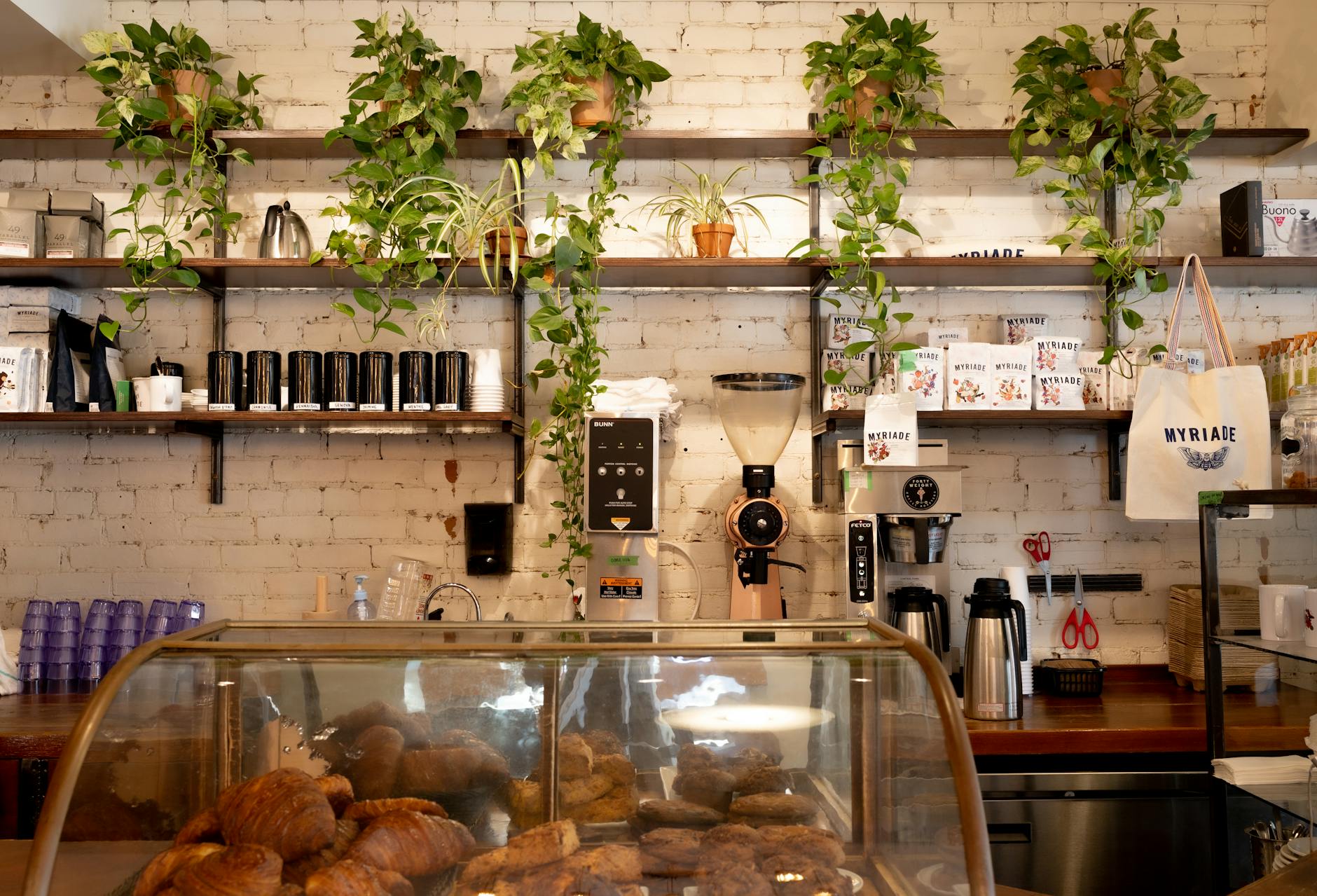
Pallet Coffee Roasters
Multiple Locations, Vancouver, BC
Pallet Coffee Roasters is the neighbourhood roastery that Vancouver's coffee scene coalesces around — not the most talked-about, not the most experimental, but consistently the most reliable. Founded in 2013 with a focus on in-house roasting and accessibility, Pallet has expanded to five Vancouver locations (Railtown, Hastings-Sunrise, Olympic Village, Kitsilano, and Gastown) without losing the small-roastery character of its early years. The house espresso blend is calibrated for both black drinking and milk drinks, and the filter programme rotates single-origin coffees from direct-trade relationships in Ethiopia, Colombia, and Burundi. The Railtown café — the original — is the largest and retains the warehouse-style character of the neighbourhood. Pallet is where Vancouver residents drink coffee every day, which is the most reliable recommendation any café can earn. Beans available for online purchase and subscription delivery.
⏱ Daily from 7:00 · 📍 5 locations across Vancouver — Railtown, Kitsilano, Olympic Village, Hastings, Gastown · ☕ In-house roasted beans · 📦 Subscription and online delivery available
Visit Pallet Coffee → Reviews and book →☕ Canadian Coffee — What to Know
- Tim Hortons is a national institution — nearly half of all coffee consumed outside the home in Canada passes through a Tim Hortons — but it is a fast-food chain, not a café. Treat it as context, not a destination: the "double-double" (coffee with two creams and two sugars) is a cultural reference point that Canadians invoke with genuine affection
- Vancouver's specialty coffee scene is concentrated in Gastown, Kitsilano, Main Street, and Mount Pleasant — all walkable from the city centre. The best single afternoon route: Revolver (Gastown, espresso), Pallet Railtown (filter), then east along Main Street through the Main Street corridor's independent café strip
- Montréal has its own strong café culture, led by Café St-Henri, Dispatch Coffee, and Chez Toi — expect excellent espresso and a French-inflected attitude toward sitting for long periods without being rushed
- Tipping at coffee bars in Canada: 15–18% is standard if you're seated and served; at counter-service cafés, a smaller tip (10% or rounding up) is appreciated but not obligatory
- The specialty coffee shops listed here ship beans Canada-wide — 49th Parallel and Revolver are the two most recommended for purchasing beans to take home, with consistent quality and strong packaging for travel