

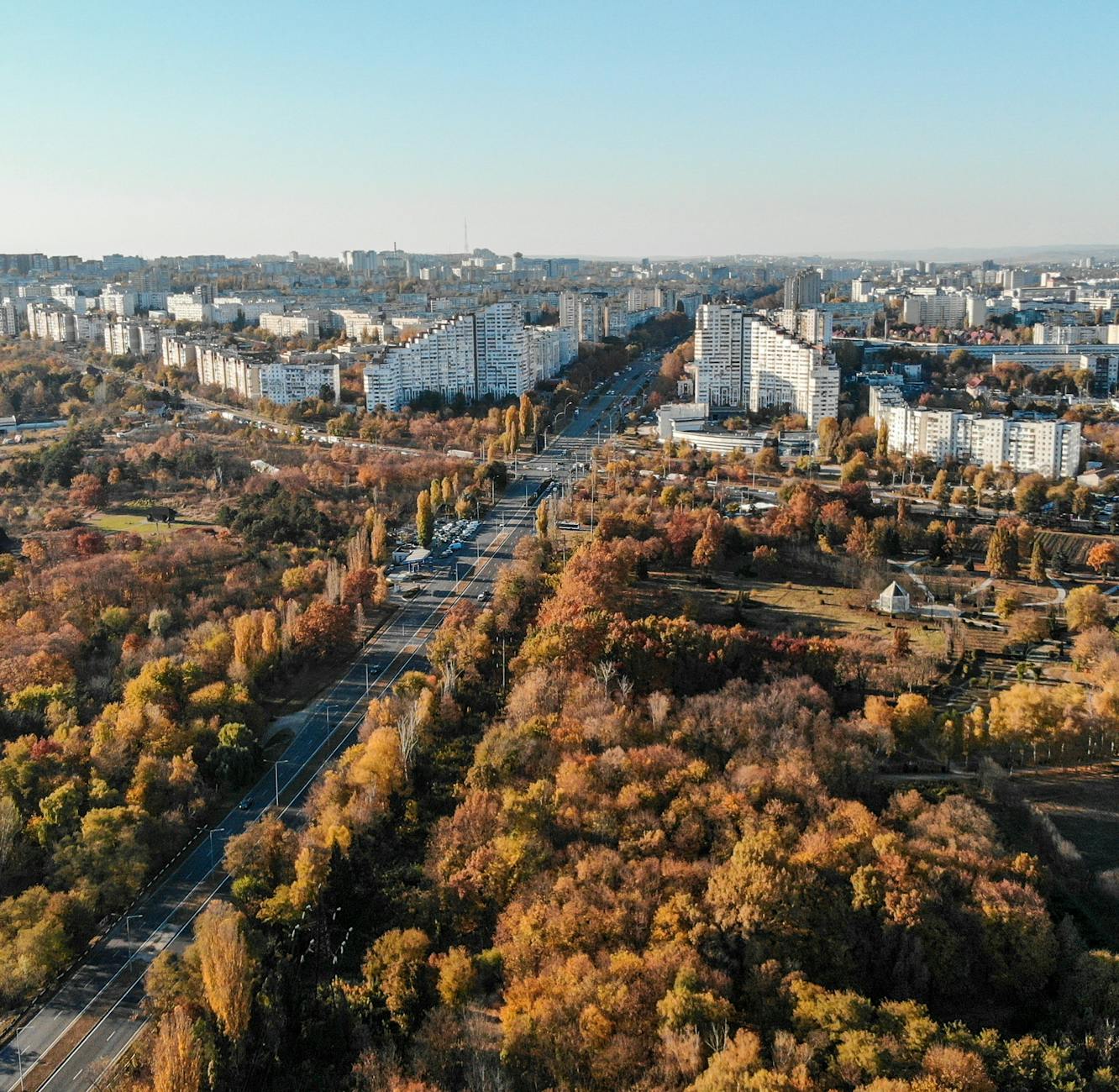
Moldova's capital spreads across low hills, its wide Soviet-era avenues shaded by chestnut trees. It's greener than you expect, calmer than most European capitals, and genuinely welcoming.
Stefan cel Mare Central Park is the city's living room — locals stroll here morning to evening. The Metropolitan Cathedral and its Triumphal Arch anchor the city centre. The National History Museum holds 265,000 artefacts, including a replica of Stefan the Great's sword.
Evenings surprise visitors most. Invino, Carpe Diem, and a growing constellation of wine bars pour the country's finest Feteasca Neagra, Rara Neagra, and Viorica. The food scene is equally good — LUME Neobistro and La Taifas serve dishes that feel both rooted and modern.
Budget further than you expect. Dinner for two with wine costs around 400–600 MDL (€20–30). Hotels run €30–80 per night. Taxis are inexpensive. Moldova is one of Europe's best-value destinations.

Thirty minutes north of Chişinău, beneath a quiet market town, lies one of Europe's strangest wonders. Cricova's wine cellar tunnels run for 120 kilometres, maintained at a constant 12°C, holding over a million bottles. Visitors tour by electric vehicle — past streets named after grape varieties, past the private cellar of Hermann Goering's wine collection, confiscated after World War II.
Mileştii Mici holds the Guinness record for the world's largest wine collection — 1.5 million bottles stored in 200 kilometres of tunnels. The state winery was founded in 1969. Tours depart by car through cathedral-like limestone galleries.
Above ground, Castel Mimi, Château Purcari, and Chateau Vartely offer world-class tastings with the kind of personalised attention that would cost ten times as much in France.

An hour northeast of Chişinău, the Răut River makes a sweeping bend through limestone bluffs. This is Orheiul Vechi — Old Orhei — a complex of cave monasteries, Dacian fortifications, and medieval ruins carved into and built above a dramatic gorge.
Monks still live in the cave church, hollowed from the cliff face in the 13th century. From the hilltop above the river loop, the view is one of the most striking in Eastern Europe. The village of Trebujeni below offers guesthouses, homemade wine, and total quiet.
Combine it with Saharna Monastery to the north — a complex of churches, waterfalls, and cliff paths above the Nistru River. This is rural Moldova at its most beautiful and most authentic.
Beyond the wine routes, Moldova's countryside holds something rarer: an unbroken connection to traditional agricultural life. Villages in the Codru region — forested hills in the country's centre — still observe centuries-old customs. Farmstays offer homemade brânză (cheese), fresh mămăligă cooked over an open fire, and evenings where the only light comes from stars.
The north is Soroca — a circular medieval fortress on the Nistru River, used to guard the principality's border with the Ottoman Empire. Nearby, the Roma palace neighbourhood known as Romistan features ornate mansions that look like a collision between a fairground and a Baroque villa.
Moldova rewards visitors who slow down. It doesn't dazzle on arrival. It grows on you — over a glass of Divin brandy, a long countryside drive, a conversation with a winemaker who's waited decades for the world to notice what he's been making.