


Luang Prabang sits where the Mekong meets the Nam Khan River. UNESCO-listed. Over 33 temples. French colonial villas. Mountains all around.
Wat Xieng Thong is the most important monastery. Built 1559-1560. Golden roofs sweep low in classic Lao style. Intricate mosaics cover the walls.
Every morning at 6am, monks walk through town collecting alms. Locals kneel with sticky rice. Tourists watch (respectfully). It's been happening for centuries.
The night market fills Sisavangvong Road with handicrafts, textiles, and food stalls. Prices are fair. Haggling is gentle.
Kuang Si Falls is 29km south—turquoise multi-tiered waterfalls with swimming pools. The color comes from limestone minerals. Go early to avoid crowds.
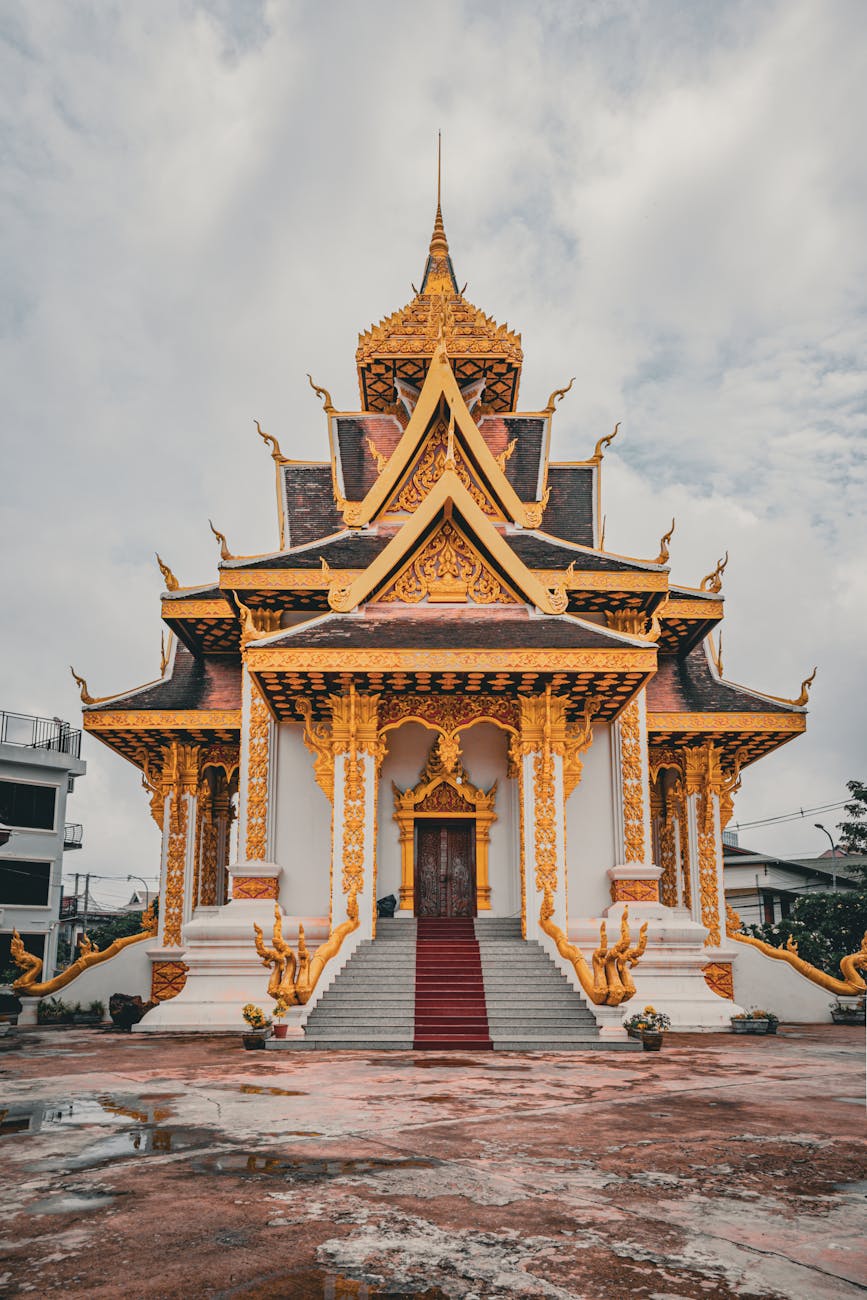
Vientiane is one of Southeast Asia's smallest, quietest capitals. Population around 200,000. The Mekong flows past. You can cycle everywhere.
Pha That Luang is the national symbol—a 45-meter golden stupa dating to the 1560s. It appears on Lao currency. Legend says it houses a piece of Buddha's breastbone.
Patuxai (Victory Gate) is Vientiane's Arc de Triomphe. Built in 1957 with American cement meant for an airport. Locals call it the "vertical runway."
Wat Si Saket is the oldest surviving temple, built 1819-1824. Thousands of tiny Buddha images line the walls.
The riverfront comes alive at sunset. Food stalls, beer gardens, and locals exercising. It's relaxed. Very Lao.
Vang Vieng used to be a backpacker party town. It's calmed down. Now it's adventure sports with stunning scenery.
Limestone karst mountains tower over rice paddies and the Nam Song River. The landscape looks unreal—vertical cliffs, caves, lagoons.
Rock climbing on limestone cliffs attracts serious climbers. Routes range from beginner to expert. The rock is sharp but solid.
Kong Lor Cave is 7.5km long. You take a boat through complete darkness with a headlamp. The cave is massive—up to 90 meters high.
Kayaking, tubing, and hot air ballooning are all popular. Tubing is tamer than it used to be. Kayaking is more peaceful.

The slow boat from Huay Xai (Thai border) to Luang Prabang takes two days. It's slow. It's scenic. It's an experience.
The boat holds about 70 people. Basic seats, bathroom, food station. You watch mountains, villages, and river life drift past.
Overnight in Pakbeng—a simple guesthouse village halfway. It exists for the boat travelers. Nothing fancy. That's fine.
Pak Ou Caves along the Mekong house thousands of Buddha statues. You reach them by boat from Luang Prabang. The upper cave requires climbing 300 steps.
The Mekong defines Laos. It's transport, livelihood, and cultural center. Taking the slow boat means understanding that.