This is your destination guide for Philippines.
Limestone islands, hidden lagoons you kayak into, and a scruffy town that's only the launchpad.


The reality: Your boat pushes off the beach and within ten minutes the town is gone and you're under a wall of black limestone rising straight out of jade water. You swap to a kayak, paddle through a gap barely wider than the boat, and the Big Lagoon opens up — a flooded amphitheatre of cliffs with the sea gone perfectly still and green. This is the photo that sold you El Nido, and it delivers.
Then you come back to town. El Nido town is a cramped grid of tricycles, overhead cables and half-poured concrete, wedged between the cliffs and the water. First-timers are thrown by it — this is the most famous beach name in the Philippines and the streets look like a building site. Here's the thing: nobody comes to El Nido for the town. The town is the launchpad. Everything worth the airfare is a boat ride away.
Most people book two nights, do one island-hopping tour, get slightly deflated by the crowds, and leave. Give it four. Run the tours early, take a beach day out at Nacpan, climb Taraw for the sunrise, and sleep in quieter Corong-Corong where the sunsets are. El Nido rewards the people who treat it as a base camp and quietly punishes the ones who booked it as a resort.
El Nido's landscape isn't a beach — it's Bacuit Bay, forty-odd limestone islands standing in green water, and you see it from a boat or not at all. The whole thing runs on four fixed day-tours, sensibly lettered so nobody has to remember island names.
Tour A is the one everyone does first: the Big Lagoon (kayak in — don't just swim the mouth), the Small Lagoon's squeeze-through gap, Secret Lagoon, and lunch on Seven Commandos Beach. Tour C is the keeper for strong swimmers — Hidden Beach, Secret Beach, Matinloc Shrine, the best snorkelling and the most open water.
Tour B trades lagoons for caves and quieter coves (Snake Island's tidal sandbar, Cudugnon Cave); Tour D is billed as the least popular, which is exactly why the Cadlao Lagoon on it can be near-empty.

Two things nobody tells you cleanly. First, the ₱400 eco fee is valid ten days and the receipt is reusable — pay it once, photograph it, and it covers every tour that week.
Second, the lagoons now charge small separate entry fees and cap combinations, so you can't do Big and Small Lagoon on the same day any more. Book A and D on different days if both lagoons matter to you.
The bay gets the fame, but the mainland beaches are where you spend the day you're not on a boat — and where the crowds thin right out.
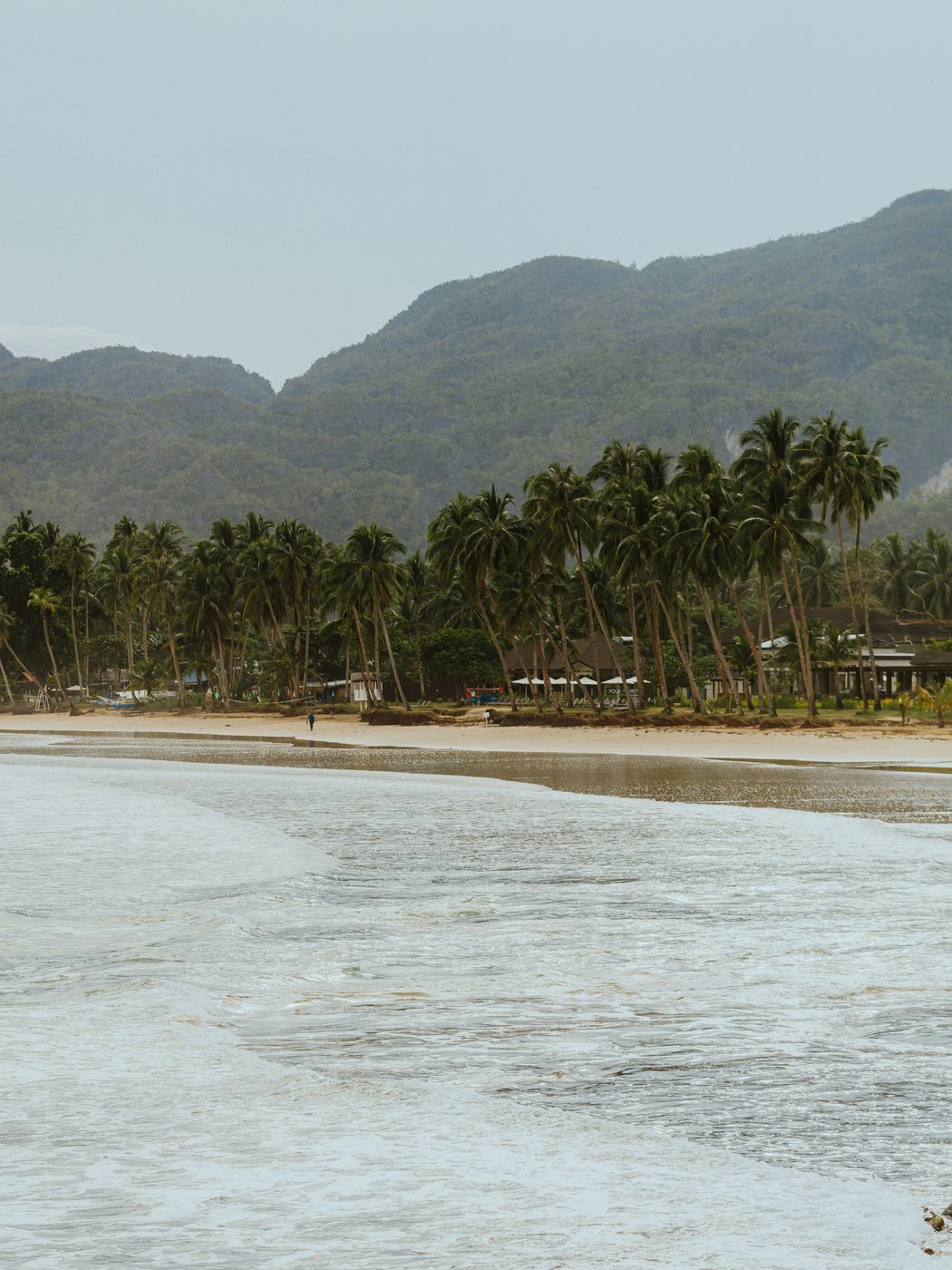
Nacpan Beach, 45 minutes north by tricycle or van, is the one worth the trip: four kilometres of golden sand, a couple of shacks, room to breathe even in March. Duli Beach, further north, is the surfers' quiet corner from roughly November to March.
Back in El Nido town itself, the "beach" is really the boat harbour — working, not swimming. Walk it at dawn when the bangkas are lined up and the cliffs go pink, then get off it.

Las Cabanas (Marimegmeg), ten minutes south of town, is the sunset beach — a strip of bars, a zipline out to a little island if you must, and the sky doing the work for free.
Corong-Corong, the next bay south, isn't much of a swimming beach but it's the best sunset seat in El Nido and a calmer place to sleep than town.
For people who'd rather earn the view than photograph it from a lounger.
You can fill the non-boat hours easily here — climb the cliff over town, dive the reefs, paddle the near lagoons yourself. It's a move-your-body destination once you're off the day-tours.
El Nido isn't a food destination the way Hoi An or Cebu are — you come for the bay and eat around it — but the seafood is fresh, the calamansi is everywhere, and a couple of places are genuinely good.
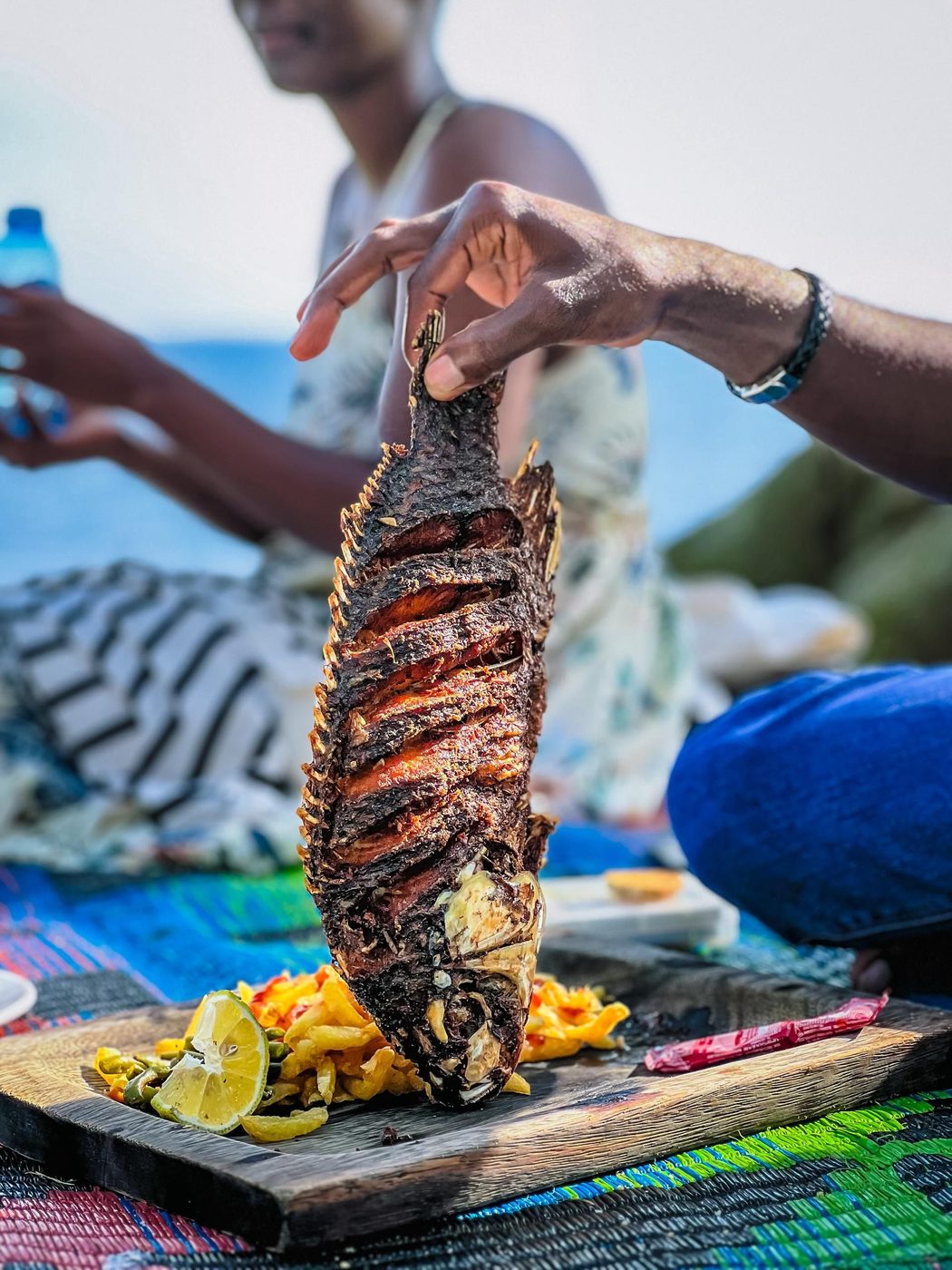
Start on the water: the grilled-seafood lunches on the island tours (tuna, squid, chicken, laid out on a beach) are better than they have any right to be, and they're included. In town, Art Café is the long-running institution — decent breakfasts, and the noticeboard where half the town's tours get booked.
Trattoria Altrove does wood-fired pizza worth the queue, and the little BBQ stalls behind the market are where you eat cheapest and best: grilled fish, rice and calamansi for a few euros.
Two local habits worth picking up: kinilaw (Filipino ceviche — raw fish "cooked" in vinegar and calamansi, with chilli and ginger) and, if you've a sweet tooth, halo-halo — shaved ice, beans, jellies, ube and leche flan piled in a glass, which sounds like a mistake and isn't. Drinks are San Miguel and Red Horse at the beach bars; the "sunset cocktails" on Las Cabanas are priced for the view.
Palawan has two seasons, and they change El Nido completely.
December to April is the window: dry, calm seas, the clearest water of the year, every tour running. It's also the crowd-and-price peak — December to Chinese New Year and Holy Week are the worst for both. November and May are the smart shoulders: still mostly dry, water still good, noticeably fewer boats.
June to October is the southwest monsoon (habagat). It doesn't rain all day every day, but the bay turns grey and choppy, visibility drops, and Tour C is the first to be cancelled or rerouted when the wind's up. Prices fall 30–40% and you'll sometimes have a lagoon to yourself between squalls — a real trade if you're flexible and unlucky-weather-tolerant. Typhoons are possible, but Palawan sits west of the usual tracks and is hit less than the rest of the country.
Getting to El Nido is the hard part; getting around is easy.
There's no cheap way in. Either fly straight to El Nido (Lio) airport on AirSwift from Manila, Cebu or Boracay — quick, scenic and expensive — or fly into Puerto Princesa (more flights, lower fares) and take a 5–6 hour van north (about ₱600–900, booked through any agency). The van is long but paved the whole way now.
In town you walk — it's tiny. Everything else is a tricycle: ₱50-ish around town, more like ₱150–300 out to Las Cabanas or Corong-Corong, and ₱1,500–2,000 to hire one for a Nacpan day. You do not need a car — nothing here is more than a short trike ride or a boat away. Scooters rent for around ₱500/day if you want the northern beaches on your own clock.
Compare rental cars →El Nido is small, but where you sleep sets the tone of the trip.
El Nido town — a two-minute walk from the tour boats and the bars; convenient, and noisy until late.
Corong-Corong — the next bay south and the quiet pick: the best sunsets, a short trike from town, calmer nights.
Las Cabanas / Marimegmeg — a middle ground, with the sunset strip on your doorstep.
Nacpan — for people who want to disappear: a handful of low-key places on an empty beach, 45 minutes from everything.
Lio Estate — the polished master-planned enclave up by the airport (boutique hotels, a clean beach) if you want comfort over character.
The island resorts — Miniloc, Lagen and Pangulasian out in the bay: a different holiday altogether, all-in, boat-access only, and priced accordingly.
El Nido isn't the bargain the Philippines used to be. It costs more than Coron next door, and far more than a scruffy town suggests — but it's the flights and the fixed-price tours that bite, not daily life. Once you're here, food and beer stay cheap; the boats and the getting-in are where the money goes.
Prices in 2026 pesos (≈ 62 to €1). Tours are fixed-price year-round; hotels swing hardest between the monsoon and the Dec–Apr peak, when the best rooms double.
Go if you want the most spectacular seascape in the Philippines and you'll work a little for it — early boats, a scruffy town, four days to do the bay justice. Skip if you need a polished resort at your door, or you've booked the August monsoon.
Found this useful? Share it.
One new way to travel. Every Thursday.
Not deals or destinations — methods. House sitting, night trains, repositioning cruises, and what each one really costs.
Ever thought of travelling this way?
House Sitting
A whole house and no rent, for looking after someone’s home while they are away. We spent the whole of covid on an estate in Portugal this way.
Read article →Overnight Ferries
Sleep on a ship that has to cross anyway. A two-berth cabin with a shower for less than a hotel room — and you wake up in another country.
Read article →Campervan Relocations
Rental companies need their vans driven back. Four berths, a kitchen and a shower for about a euro a night — and a country you would never have picked.
Read article →👇 Tap one, or just type