This is your destination guide for Austria.
This is your destination guide for Zell am See – Kaprun
📍 Part of AustriaSwim a warm mountain lake in the morning and stand on a 3,000-metre glacier by lunch, with Austria's highest road in between.


The reality: Zell am See sits on a small, deep, startlingly blue lake, ringed by mountains, with a walkable old town on the shore — and five kilometres up the valley in Kaprun, a glacier, the Kitzsteinhorn, keeps snow at 3,000 metres all year. That's the whole proposition, and it's a rare one: you can be swimming in a warm lake in the morning and standing in snow on a glacier the same afternoon, and back down for dinner by the water.
Around that lake-and-glacier core runs some of the biggest alpine scenery in Austria. This is the edge of the Hohe Tauern, Austria's largest national park, home to the country's highest peak (the Grossglockner, 3,798 m) and its highest waterfall (the Krimml Falls). And threading through it is the Grossglockner High Alpine Road, a 48-km toll route of 36 hairpins climbing to 2,500 metres and a viewing terrace facing the Pasterze glacier — one of the great drives in the Alps.
The catch is that these are three separate experiences in three directions — the lake, the glacier, the road — so this rewards a car and a few days more than a single fixed base. Do the lake days easy and the mountain days big, time the Grossglockner for clear weather (and remember it's shut all winter), and you get a summer that most people don't know Austria has.
The region's landscape is a two-part act — a warm lake at the bottom, a cold glacier at the top — and the short distance between them is the point.
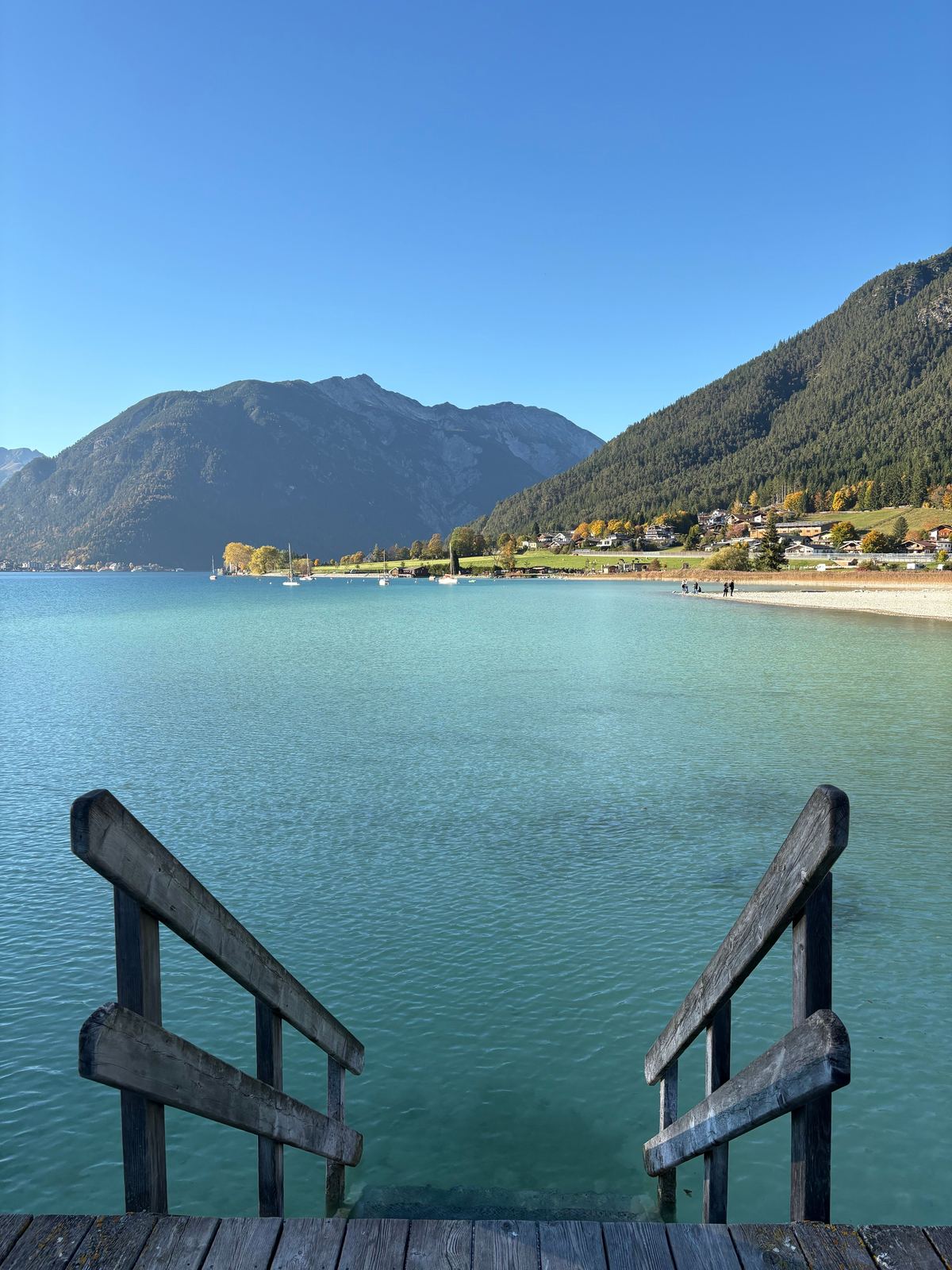
The Zeller See is small, deep and a clear blue-green, warm enough to swim from June to September, ringed by a flat lakeside path and looked over by the Schmittenhöhe, the town's own 2,000 m viewpoint mountain (cable car up, trails and a panorama café at the top).
Up the valley at Kaprun, the Kitzsteinhorn is the glacier: a funicular and cable cars climb to the "Top of Salzburg" platform at 3,029 m, a glacier "Ice Arena," a gallery tunnel through the rock, and year-round snow.
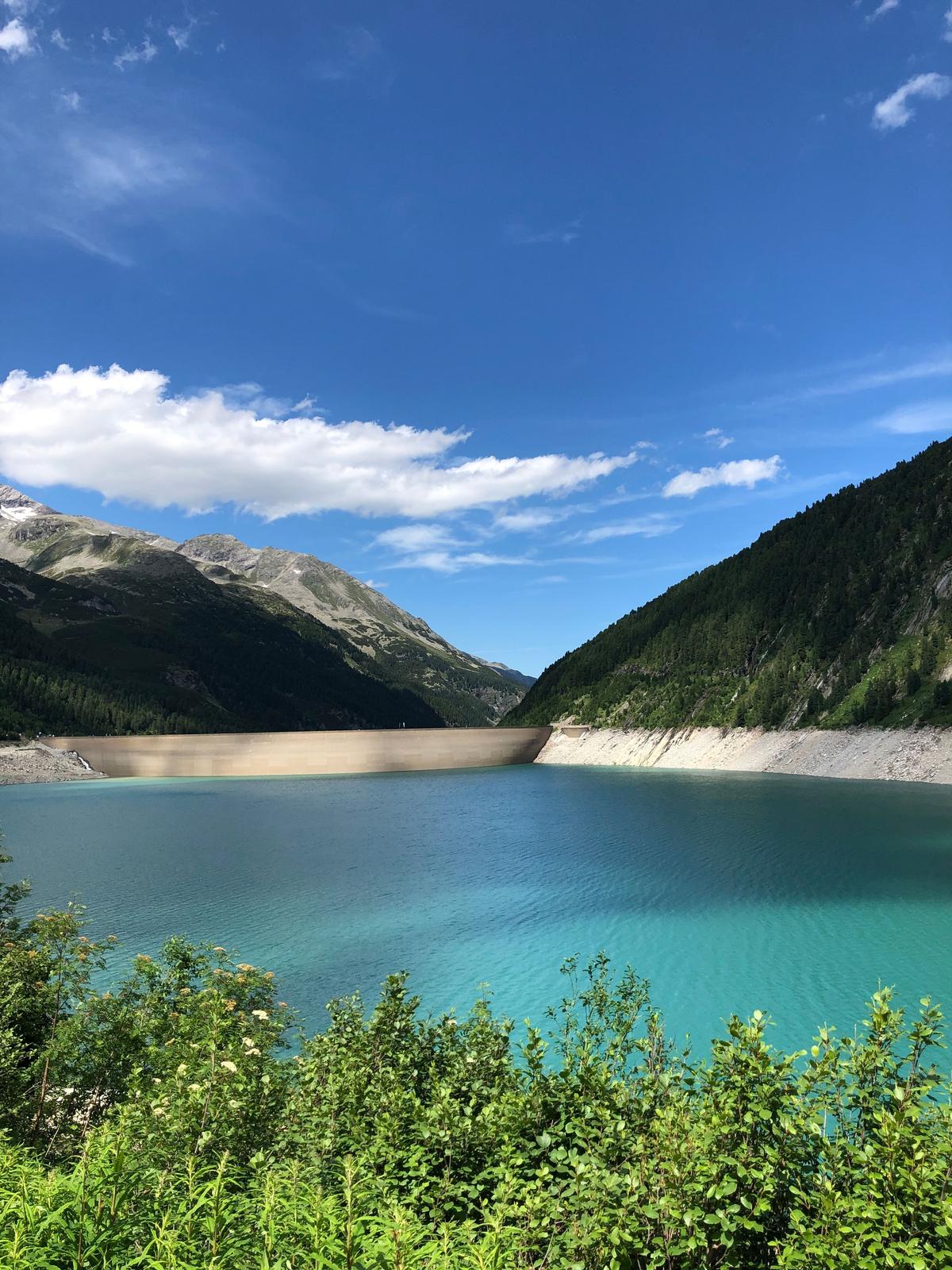
Between the two, Kaprun also hides an oddity worth the trip — the high mountain reservoirs (Stauseen) above town, reached by a lift and bus, with dam walls in a hanging valley and turquoise water at 2,000 m.
The bigger scenery is a short drive out, and the headline is a road.

The Grossglockner High Alpine Road is the region's great set-piece: a 48-km toll road of 36 numbered hairpins climbing to the Edelweißspitze and the Kaiser-Franz-Josefs-Höhe terrace at 2,369 m, staring straight across at the Grossglockner (3,798 m, Austria's highest peak) and the Pasterze glacier below it. Marmots, alpine ibex, and a proper sense of altitude; it's a half-day drive and one of the best in Europe.
Nearby, the Krimml Falls — Austria's highest waterfall, dropping 380 m in three tiers — has a switchback path climbing alongside the spray. The valley towns give the range its bases: Kaprun for the glacier, Uttendorf and Mittersill deeper into the national park, and Saalbach-Hinterglemm over the ridge for the region's biggest ski circus.
Lake sports at the bottom, glacier and national park at the top.
The range runs from a gentle lake loop to 3,000 m glacier terrain and a national park full of trails — pick your altitude.
This is Pinzgau, the mountain-farming corner of Salzburgerland, and the food is hearty alpine — dumplings, dark bread, fried sweets — with lake fish on the side.

Look for Kasnocken (the local cheese spätzle, buttery and fried-crisp at the edges), Pinzgauer Kaspressknödel (fried cheese dumplings) and Bauernkrapfen (a farmhouse fried dough). Off the lake come Reinanke and Saibling, grilled simply at a shore restaurant.
Finish with Kaiserschmarrn — unbeatable at a mountain hut after a walk — or a Topfenstrudel. Drink a Zell am See or Salzburg beer, a Pinzgauer Schnaps, and, in the huts, a warming Jagatee in ski season.
The region runs a full summer and a full winter, and the Grossglockner road decides a lot of it.

June to September is the summer window: the lake warm enough to swim (peaking July–August at 22–24°C water), the Grossglockner road open, the Krimml Falls at full melt, hut season in the Hohe Tauern. July–August is warmest and busiest; June and September are quieter with the road still open and the trails clear.
December to April is the ski season, the Kitzsteinhorn glacier snow-sure and the Saalbach circuit in full swing. The catch is the shoulders — May and late October–November — when the glacier still turns but the lake's cold, many valley lifts are between seasons, and the Grossglockner road is shut. If the road is on your list, you need summer, and a clear day.
You can reach the region by train, but you'll want a car once you're here.
Zell am See has its own station on the main Salzburg–Innsbruck line (about 90 minutes from Salzburg), and it's also the terminus of the scenic narrow-gauge Pinzgaubahn up the valley toward Krimml. The lake town itself is walkable, and the Kitzsteinhorn and Schmittenhöhe lifts are reachable by local bus with the guest card.
But the region's three big draws point in different directions, and the showpiece Grossglockner High Alpine Road has no public transport — so a car turns three fiddly bus days into easy ones and is close to essential for the road and the deeper national-park valleys. Many stays include a guest card (Zell am See-Kaprun Sommercard) that bundles cable cars, boats and buses in summer — check before you buy tickets separately.
The choice is lakeside versus valley, and how close you want to be to the glacier.
Zell am See town — on the lake, the all-rounder base: the old town, the promenade, the Schmittenhöhe lift and easy swims, with the widest choice of hotels.
Thumersbach — across the water, the postcard view back to town and a quieter shore.
Kaprun — five kilometres up the valley, closest to the Kitzsteinhorn glacier and the reservoirs; the pick if the mountain is the main event.
Mittersill / Uttendorf — inside the Hohe Tauern for hikers who want the national park at the door.
This is mid-range Austrian and well under Swiss-Alps money — a lake-and-glacier week here costs a fraction of a Zermatt equivalent for a comparable spread of scenery. The glacier lift and the Grossglockner toll are the notable lines; the lake, the town and the food are ordinary Austrian prices.
Prices in 2026 euros. A Zell am See-Kaprun Sommercard (often included with a stay) covers the cable cars and boats and changes the maths — check before buying lift tickets separately.
Go if you want a lake and a glacier in the same day, Austria's highest road looping between them, and a national park full of trails and marmots — and you'll bring a car and a few clear days. Skip if you need one compact walkable base, or you came for the Grossglockner drive in winter, when it's closed.
Found this useful? Share it.
Still planning?
We don’t stop at “here’s the country.” Real places to stay, what to do, apps that matter, even how to find someone to travel with — plus guides for whatever vibe you’re after, from beach days to wine country to slow weekends. All up top. Spin for somewhere new when you’re done with this one.
