

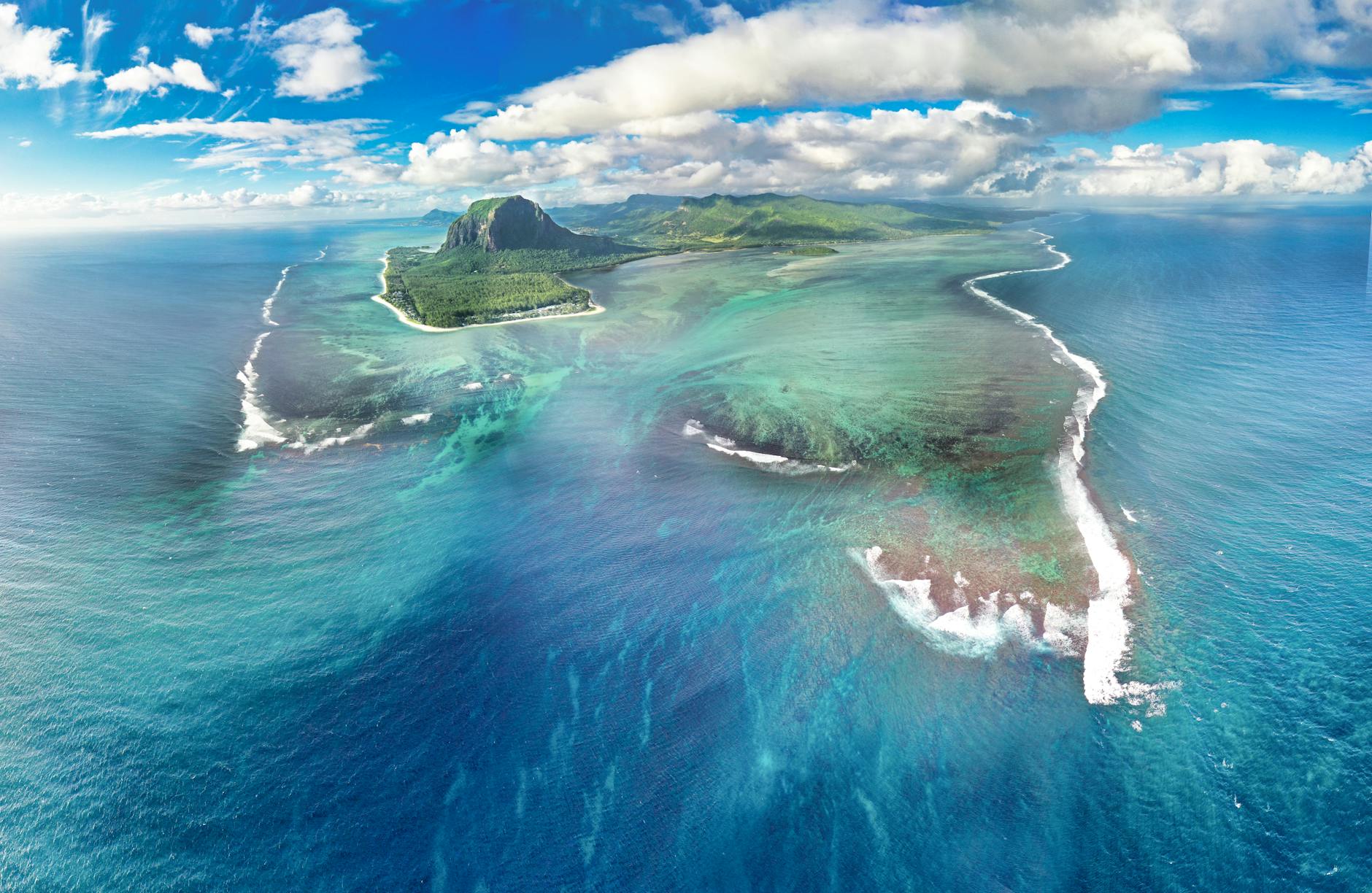
Port Louis sits between mountains and sea. Busy. Humid. Authentic. Very Mauritian.
The Central Market brings spices, tropical fruits, and local crafts. Chaotic, colorful, essential. The waterfront Caudan area offers a calmer contrast—shops, restaurants, harbor views.
Aapravasi Ghat is UNESCO-listed. The immigration depot where indentured laborers arrived after slavery's abolition. Important history, often overlooked.
Most tourists skip Port Louis for the beaches. That's a mistake. One day here reveals the real Mauritius—beyond the resorts.
Port Louis works well as a cultural introduction. But the beaches and mountains are calling.
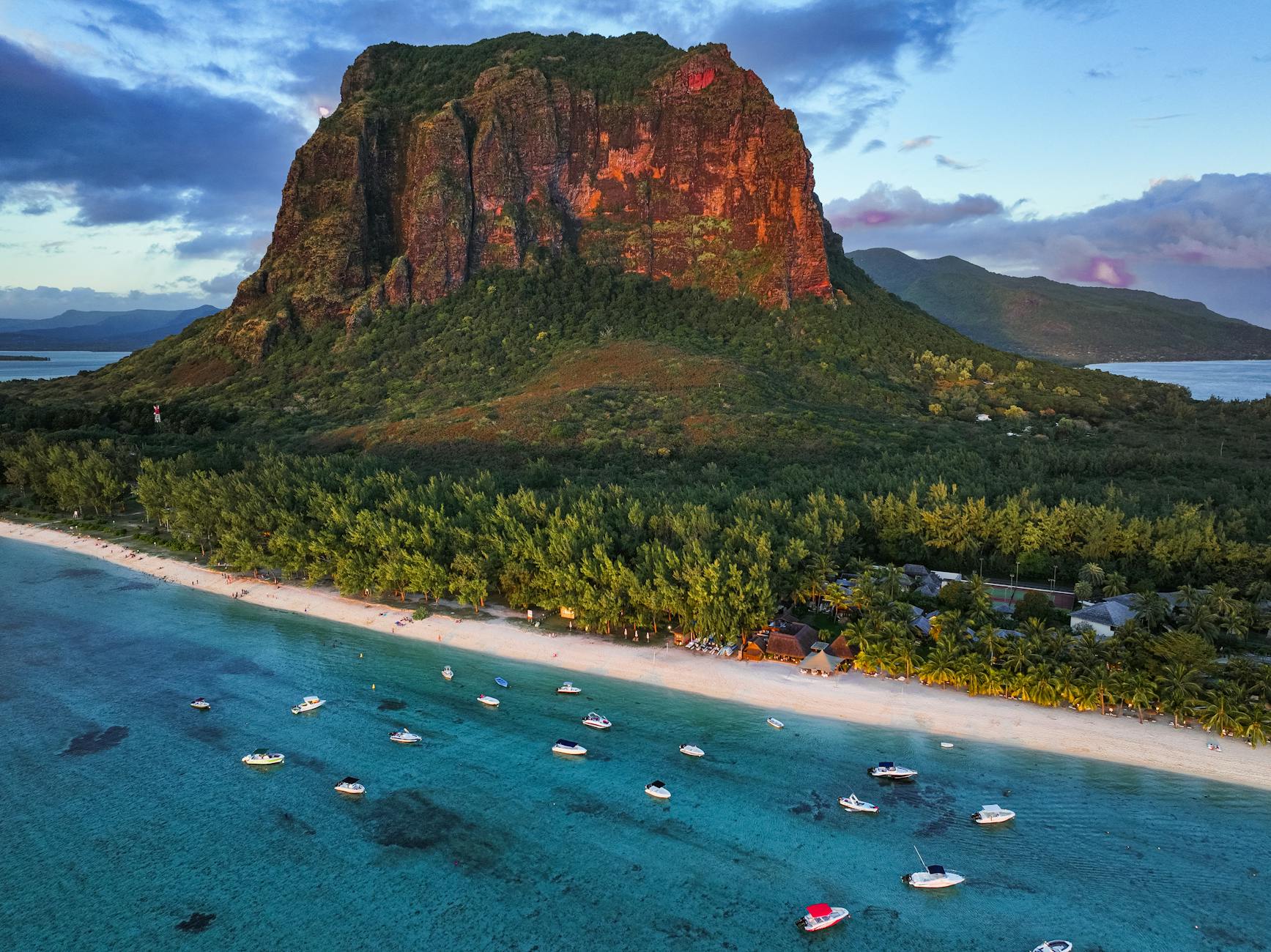
Mauritius is ringed by coral reefs creating calm, turquoise lagoons. The water is warm year-round. Snorkeling is excellent everywhere.
The west coast (Flic en Flac, Le Morne) offers the best sunsets and calmer waters. Perfect for swimming, paddleboarding, lazy days.
The east coast (Belle Mare, Trou d'Eau Douce) is windier—ideal for kitesurfing and sailing. Ile aux Cerfs island sits offshore, accessible by boat.
The north (Grand Baie) is livelier. Restaurants, nightlife, catamaran trips. More developed but still beautiful.
Every beach has warm, crystal-clear water. The main difference is vibe—choose based on whether you want activity or tranquility.
Le Morne Brabant rises 500 meters from the southwest peninsula. UNESCO World Heritage for its history—escaped slaves found refuge on its cliffs.
The hike to the summit takes 3–4 hours round trip. Challenging but not technical. The views across the lagoon are spectacular.
Black River Gorges National Park covers the island's interior. Waterfalls, endemic birds (the pink pigeon survives here), hiking trails through native forest.
Chamarel's Seven Coloured Earth is an oddity—volcanic sand dunes in stripes of red, brown, violet. Nearby, the Chamarel Waterfall drops 100 meters.
The mountains offer a different Mauritius. Cooler, greener, wilder. Essential for understanding the island beyond the beaches.
Mauritius blends Hindu, Muslim, Chinese, and French Creole influences. The result is unique—temples next to mosques, fusion cuisine, mixed festivals.
Grand Bassin (Ganga Talao) is Mauritius's most sacred Hindu site. A crater lake with temples and a massive Shiva statue. Pilgrims come from across the island.
Mauritian food reflects the blend. Dholl puri (Indian flatbread), mine frit (Chinese noodles), rougaille (Creole tomato sauce), French pastries. Everything is delicious.
The rum distilleries tell the sugar plantation story. Chamarel and Saint Aubin offer tours and tastings. Mauritian rum is underrated.
Mauritians are genuinely friendly. English and French work everywhere. Creole is the heart language. The island feels welcoming regardless of background.