
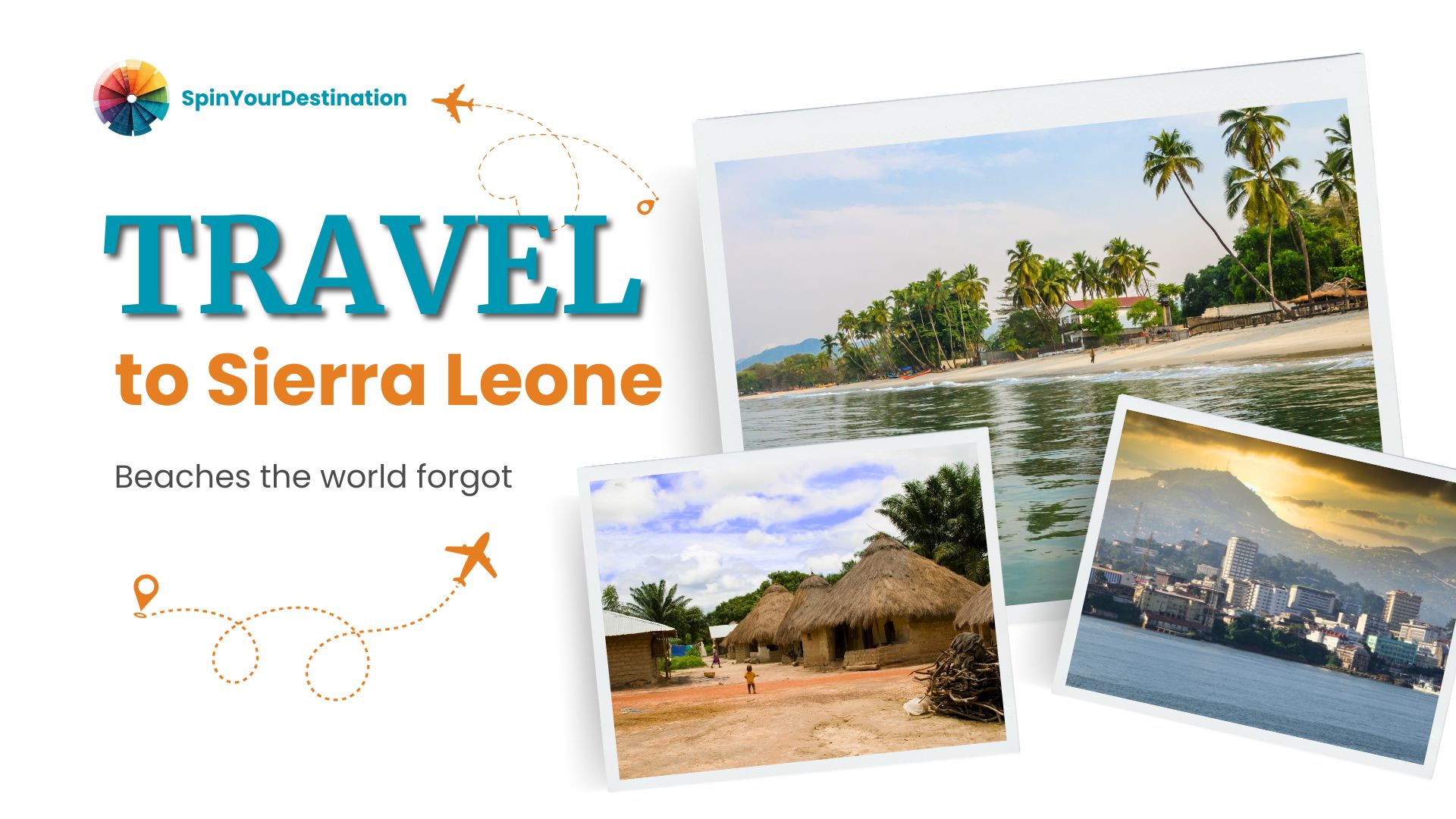
Countryside Sierra Leone
Your complete guide to rainforest reserves, riverine villages and community lodges
The taxi turns off the main road at Bo and the asphalt ends. Red laterite dust rises behind the wheels. Three hours later you stop at a clearing on the bank of the Moa River where a thatched roof rises above the palm fronds — Tiwai Island reception. A boy guides you down the slope to a hand-paddled wooden canoe. He pushes off and the rainforest on the far bank closes in around you. You realise you have not seen another vehicle since you left Bo, half a country ago.
This is upcountry Sierra Leone — the long brown rivers, the rice paddies, the Mende villages where chickens cross the path and an elder asks you to sit before he asks where you have come from. The interior holds three quarters of the country's population on ninety percent of its land but tourism is small and the experience is genuinely off the well-travelled circuits of West Africa. The Upper Guinea rainforest belt runs across the south and east, lapping onto Tiwai and onward into Gola. The northern third is savanna and dry forest, ringed by the Wara Wara escarpments and the Loma highlands. The Sierra Leone River Estuary — a vast wetland of mangrove channels and forgotten islands — begins half an hour from the airport.
Dry season (November to April) is the only practical window for the rural interior. The roads to Tiwai, Gola, Outamba-Kilimi and Kabala turn to thick mud once the heavy rains start in late May, and most community lodges close from June to early November. Distances are short on the map but long on the road; a 200 km drive can take six hours. Community-run camps are the backbone of countryside tourism: Tiwai (run by the Environmental Foundation for Africa), Tasso (the Tasso Ecotourism Project), Gola's three village lodges, the Tacugama eco-lodges and the Wara Wara mountain camps. Cash leones in small denominations, modest dress in villages and patience for the chief's greetings are the three things you bring with you.
The Mende East — Tiwai Island and the rainforest interior
The Mende are Sierra Leone's largest ethnic group, settled across the south and east in chiefdoms that have governed villages for centuries. The countryside here is palm trees and rice paddies, palm-oil presses and small mud-brick compounds, and every visitor is greeted by the village chief first — sit, accept water, exchange a few words about home before any other business.
Tiwai sits in the Moa River in the Pujehun District, four to five hours by 4x4 from Freetown via Bo. Mende for "big island," it is twelve square kilometres of rainforest and one of the largest inland islands in the country. The Environmental Foundation for Africa runs the eco-camp with the support of the eight host communities of the Barri and Koya chiefdoms; all tourism revenue flows back through a Community Development Fund.
The fifty-kilometre Tiwai Island Heritage Trail, set up in 2013 in partnership with Karma Cola (a kola-nut drink company that buys from the local communities), links all eight Mende villages around the island. Four to five days, partly on foot and partly by dugout canoe, sleeping in village guesthouses or rainforest camps. It is the deepest immersion in rural Mende life on offer anywhere in the country.
Bo and Kenema are the gateway towns. Bo, the second city, has the largest upcountry market with stalls of palm oil, dried fish, peppers, cassava and the country's famous gara tie-dye cloth. Kenema is the entry to Gola and the centre of the cocoa, coffee and kola-nut trade. Both have power, ATMs and small hotels; both are reachable in about four hours from Freetown along the country's main paved highway.
Gola Rainforest — the country's great forest reserve
Gola is the largest remaining block of lowland rainforest in West Africa west of Liberia. 710 square kilometres of intact Upper Guinea forest in the country's eastern hills, designated a National Park in 2010 and inscribed onto the UNESCO World Heritage List in 2025 as part of the Gola–Tiwai Complex.
Three village-based lodges run by Gola Rainforest Conservation handle visitors. The Conservation Centre at Lalehun (Gola Central, ninety minutes from Kenema) is the easiest entry from Freetown or Bo — a three-bedroom visitors' lodge and two ten-bedroom dormitory blocks, surrounded by trails into the heart of the park. Belebu Community Guesthouse south of Lalehun is owned and managed by the villagers, sleeps eight, and is the best base for traditional Mende games and cultural dancing in the evening. The Diana Monkey Lodge at Sileti in Gola South is the most convenient base for travellers crossing to or from Liberia and the best place to spot Diana Monkeys, Red Colobus and the Black-and-White Colobus.
The forest holds over 330 bird species and the rare White-necked Picathartes — the rock-nesting bird that birdwatchers fly halfway around the world to see. Your guide will lead you to one of the nesting colonies around sunset, or before daybreak for those who want an early start. Forest elephants, chimpanzees, the elusive pygmy hippo, ten species of duiker antelope and bongo all live within the park boundaries.
Camping inside Gola can be added to any lodge stay; tents are provided, food is shared with the guides, and a member of Park Staff and a Community Guide accompany every trip. A two-day camping trip along the Mahoi River and a three-day trek from Gola South finishing at Tiwai Island are the two most popular extensions. Park entry, community fee, basic guesthouse beds and village guides are all modest and paid in cash directly to the villages.
The Northern wilderness — Kabala, Wara Wara and Outamba-Kilimi
The Northern Province is Sierra Leone's drier, cooler upcountry — savanna, low forest, and the country's highest mountains. Limba and Mandingo culture dominates; less rainforest, more open grassland; less rice, more groundnuts and yams. Roads run from Makeni north to Kabala and Kamakwie.
Kabala (six hours from Freetown) is the highland town under the Wara Wara Mountains, a wilderness of broad valleys and rocky escarpments ideal for hiking, camping and small-village stays. Cooler nights, sometimes down to 15°C in December. The town has a small market with northern crafts, palm wine bars and a quiet pace that feels half a country away from the Freetown peninsula.
Mount Bintumani, 1,945 metres high in the Loma Mountains, is Sierra Leone's highest peak and one of the highest summits in West Africa. The rainforest-covered lower slopes hold pygmy hippos, dwarf crocodiles, rufous fishing-owls and several primate species. The standard climb takes two days of camped trekking from the village of Sinikoro, the final morning summit walk timed to reach the top at sunrise.
Outamba-Kilimi National Park is in the north-west near the Guinea border, accessible via the unique Kabba Ferry that takes vehicles across the river. Sierra Leone's first national park (gazetted 1986), 1,109 square kilometres of savanna, rivers and patches of forest. Dawn and dusk hippo-canoe trips from the main camp at Dubaia are the highlight — sightings are near-guaranteed in dry season. Chimpanzees and forest elephants live in the deeper forest; over a hundred bird species have been recorded. Karangia Hill above the camp is a 2–2.5 hour climb at daybreak with sweeping views over the park.
The estuary villages — Tasso and the Sierra Leone River
You do not have to drive eight hours upcountry to find Sierra Leone's countryside. The Sierra Leone River Estuary — one of the most precious wetlands in Africa, an Important Bird Area and a RAMSAR-protected site — begins thirty minutes from Lungi Airport and runs all the way past Freetown.
Tasso, eight miles east of Freetown on the southern shore of the estuary, has four villages: Tasso Town, Sangbalima, Oku Town and Allan Town. Five thousand islanders, all of them fishing communities. The Tasso Ecotourism Project, registered with Freetown City Council, runs a community business with five timber chalets, a wooden restaurant built around the trunk of a Baobab tree, and a network of paths and tracks linking the four villages. Tasso also runs a rescue programme for Timneh Grey Parrots, once common throughout the area and now almost entirely vanished.
The Freetown Peninsula has its own quiet country — the old Krio villages where freed slaves settled from the 1790s onwards. York, founded by liberated Africans returning from England in 1819, has a 200-year-old church, stone houses and a small Sunday-morning church culture that has barely changed. Kent at the southern tip is the launching point for boats to Banana Islands. Tombo and Goderich remain working fishing villages with dawn markets on the beach, the night's catch laid out in the sand by 6am.
The mangrove channels at the mouth of the estuary and the bird life along Mahera Lagoon make excellent half-day excursions for travellers who do not have time for the long upcountry drives. Tasso is reachable by purpose-built canoe from Lungi (50 minutes), from Kissy Ferry Terminal in eastern Freetown, from the Aqua Club in Aberdeen, or by the bridge to Pepel and a one-mile boat crossing. It is the only spot in the country where you can sleep on the estuary in a wooden chalet a few steps from the sand.
🌟 Top Countryside Experiences
🌴 Tiwai Island Wildlife Sanctuary
Twelve square kilometres of community-run rainforest island on the Moa River in the south — a UNESCO Biosphere Reserve and one of West Africa's most primate-rich forests. Three-day guided package from Freetown: road transfer south via Bo, river crossing into the sanctuary, sleeping in basic visitor-centre lodging among the Mende host villages. Diana monkeys, red colobus and the elusive pygmy hippo on guided forest walks; over 135 bird species including hornbills and the endangered white-necked rockfowl; boat trips on the Moa, river swims off sandy beaches in dry season, optional kayaking and camping under the stars. All tourism revenue supports the eight host communities. Three-day package with Coast and Country Tours-SL including transport, meals and accommodation. Free cancellation up to 24 hours. More info →
🌲 Gola Rainforest Community Lodges
Three village-based lodges inside the UNESCO Gola–Tiwai Complex. Lalehun Conservation Centre (Gola Central, three-bedroom lodge plus dormitories, masked devil dance on request), Belebu Community Guesthouse (community-owned, sleeps eight, fire-pit and hammocks), and Diana Monkey Lodge at Sileti (Gola South, two cottages, best for primate spotting). Forest treks, Picathartes nesting visits at dusk, multi-day camping into the park. Modest nightly rate at the guesthouse plus a small park entry and community fee paid in cash on arrival. More info →
🛵 Outamba-Kilimi Hippo Canoes — Yeama Leone Tours
Sierra Leone's first national park in the far north-west, accessed via the Kabba Ferry near the Guinea border. Dawn and dusk hippo-canoe excursions from the main camp at Dubaia, climbing of Karangia Hill for park views, and bird walks at first light. Hippo sightings near-guaranteed in dry season. Three-day package from Freetown including transfer, park fees, guide and overnight at camp; vehicle and accommodation add-ons available. Booked direct with Yeama Leone Tours. More info →
🐧 Tacugama Forest Birdwatching
Private guided birdwatching in the forest surrounding the Tacugama Chimpanzee Sanctuary above Freetown. Tours begin at 7:15am to catch the best sightings; expect turacos, hammerkops, palm-nut vultures, honeyeaters and forest songbirds. Three hours on foot along forest paths, breakfast included; cheaper add-on rate if combined with an eco-lodge stay. Daily Monday to Saturday. Reserve in advance by phone or email; all proceeds go to chimpanzee conservation. More info →
🏝️ Tasso Island Eco-Camp
Community-run eco-camp in the Sierra Leone River Estuary, 50 minutes from Lungi Airport by boat. Five wooden beachside chalets with private bathroom and a restaurant built around a Baobab tree. Mangrove canoe trips with experienced fishermen, walks between the four island villages, birdwatching in an Important Bird Area, masked-devil storytelling around the fire. The Tasso Ecotourism Project is a not-for-profit registered with Freetown City Council; profits support twenty staff and the wider island. Open September to May; restricted services in the June–August rainy season. More info →
⛰️ 10-Day Northern Wilderness Circuit
The country's most ambitious upcountry itinerary, combining Outamba-Kilimi, Gola Rainforest, the Wara Wara Mountains and the climb of Mount Bintumani (1,945 m) in a single ten-day expedition. Hippo canoes at OKNP, rainforest trekking at Gola, hiking and camping in the cool Wara Wara highlands, and a two-day summit climb of Bintumani from Sinikoro. Ten-day package including park fees, guide and city tour, plus vehicle, fuel and accommodation. Booked direct through Yeama Leone Tours. Dry season only. More info →
💡 Insider Tips
- 🌤 Dry-season only: most upcountry community lodges (Tiwai, Gola, OKNP, Wara Wara) close from June to October. November to April is the practical window; January and February the most reliable for road conditions.
- 🪓 Greet the chief first: when arriving at a Mende village, the chief or town head is greeted before any other business. Sit, accept water, exchange a few words about your home and family. A packet of kola nuts from any roadside market is a small gift that opens doors faster than money.
- 💵 Cash, mid-denomination leones: village fees, boatmen, porters and guesthouse bills are cash only. Bring small to medium notes — NLe 50 and NLe 100 in particular. Mid-denomination US dollars (USD 10 and USD 20) are also accepted at most community camps but harder to break in villages.
- 🚚 4x4 essential off the main highway: the access roads to Tiwai (via Kambama), Gola (via Lalehun or Sileti), Outamba-Kilimi (via Kamakwie) and Kabala all turn to mud in even moderate rain. Do not attempt ordinary cars on these routes between May and November. Most lodges and operators arrange transport from Freetown.
- 💡 Headlamp and power bank: most community lodges have solar lighting only, switched off after 10pm in many cases. Charge phones and cameras before you arrive and bring a USB power bank for multi-day stays where there is no grid.
- 👔 Modest dress and shoes off: shoulders and knees covered in villages and in any home you are invited into. Shoes off before entering the chief's parlour or a mosque. Always ask before photographing people; your guide or the chief will help you ask the right way.