
Adventure & Active Micronesia
Your complete guide to wreck diving, surfing, manta ray encounters, and outdoor adventure
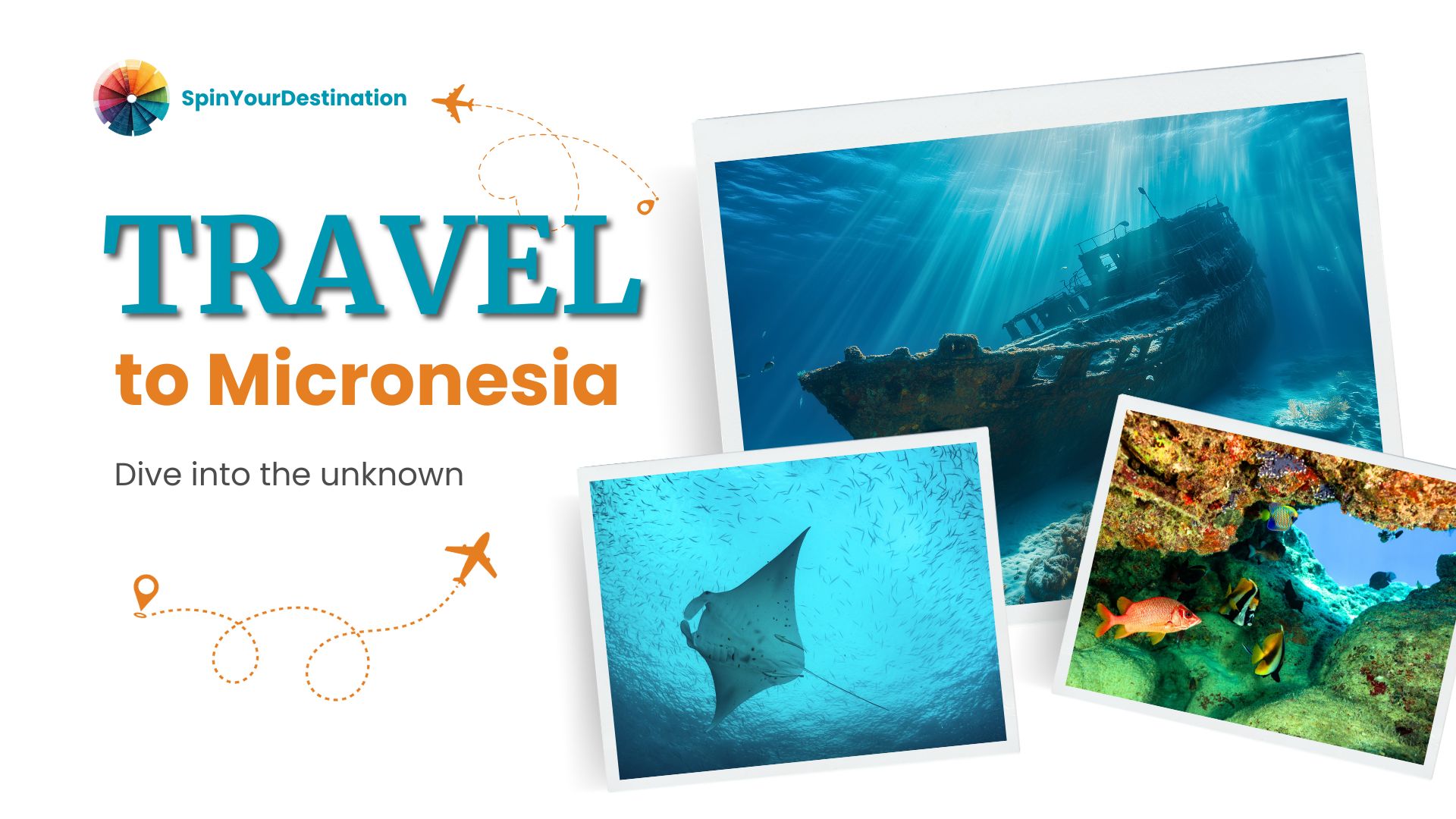
The descent takes three minutes. At 30 metres, a shape emerges from the blue—not a reef, not rock. A ship. Japanese markings still visible on the hull. Zero Fighter planes in the hold, still in the crates they were shipped in. Lionfish hang in the passageways. This is the Fujikawa Maru in Chuuk Lagoon, and this moment is why serious divers cross oceans to get here.
Micronesia’s adventure is almost entirely water-based—and almost entirely extraordinary. Chuuk Lagoon holds more diveable WWII shipwrecks than anywhere on earth. Yap’s manta ray channels produce year-round encounters that rival anything in the Indo-Pacific. P-Pass off Pohnpei delivers a wave that surfers describe in terms usually reserved for J-Bay or Teahupoo.
Above water, Pohnpei’s Sokehs Ridge offers jungle hiking with lagoon panoramas. Deep-sea fishing in these waters produces wahoo, mahi-mahi, and yellowfin tuna at rates that veteran anglers find hard to believe. Micronesia does not do adventure by half measures.
Chuuk Lagoon—wreck diving on a historic scale
Operation Hailstone in February 1944 sank over 60 Japanese ships in 48 hours. Today, more than 50 of them are diveable. The Fujikawa Maru at 18–33m depth is the flagship wreck—Zero fighters in the hold, gun turrets still armed, the bridge draped in soft coral. The Nippo Maru at 40m carries tanks, artillery shells, gas masks, and human remains. The Sankisan Maru is a diver’s multi-dive project: an enormous freighter at 24–40m with trucks, tractors, and ammunition in the holds.
Water temperature is 28–30°C year-round. Visibility averages 20–30m. All certifications are welcome—most flagship wrecks are accessible to Open Water divers at their shallower sections. Advanced divers and technical divers can penetrate engine rooms and cargo holds at depth.
Dive operators run multiple two-tank trips daily from Weno. Most dive resorts are all-inclusive: accommodation, meals, tanks, weights, and daily dives in one package. USD 100–180 per person per day all-in.
Night diving transforms the wrecks. Lionfish emerge. Moray eels hunt. Bioluminescence traces the shapes of hulls in the dark. Some of the most atmospheric night dives on earth. Most operators offer this for an additional USD 50–80 per dive.
Plan a minimum of 7–10 days in Chuuk. Serious wreck divers stay longer. There is genuinely not enough time to see everything.
Yap—manta rays and drift diving
Yap’s manta ray encounters are among the most reliable on the planet. Mil Channel and Goofnuw Channel funnel plankton-rich water from the deep ocean, and mantas arrive to feed and be cleaned. Dives are drift dives at 5–20m depth—comfortable, warm, and gentle. The water does the work.
Resident mantas have been studied and named by researchers for decades. Many individuals return to the same cleaning stations repeatedly—you may encounter a manta that has been diving with humans for twenty years. They are not habituated in a concerning sense; they are simply comfortable. Encounters are close.
Peak season for mantas in Yap is November–May, though year-round encounters are common. Manta Ray Bay Hotel & Yap Divers is the leading dive operation—experienced guides, excellent boat access, and genuine knowledge of individual animals.
Beyond mantas, Yap offers wall dives, reef dives with grey reef sharks and whitetip sharks, and exceptional soft coral growth. The diving is diverse despite the island’s small size.
Colonia is compact. Stay at the Manta Ray Bay Hotel for full dive logistics. Most guests stay 5–7 days and structure their trip around manta sightings, which are almost guaranteed.
P-Pass—world-class surf in Pohnpei
Palikir Pass (P-Pass) is a left-hand reef break off Pohnpei’s northern coast. It is fast, hollow, and consistent—a wave that surfers from Hawaii, Australia, and Europe have quietly known about for decades. The swell is generated by North Pacific storms and arrives with enough power and period to produce barrels that stand comparison with Bali’s Padang Padang or Western Australia’s Margaret River.
The crowd is minimal. Even during peak swell season (October–March), you may share the break with fewer than ten people. The lineup is respectful—a mix of local Pohnpeians and visiting international surfers. Priority in the water is settled in the traditional way.
Boat transfers from Kolonia take 20–30 minutes and cost around USD 30–60 for the round trip. Surf season peaks October–March. A 3mm wetsuit is optional—the water is 28–30°C. The reef is shallow on some sections at low tide; reef booties are recommended.
Pohnpei Surf Club and local operators in Kolonia run boat transfers. Board hire is available but bring your own if you can—the variety of rental boards is limited.
There is a second break at Mwand Pass on the eastern side—a right-hander that fires less frequently but can be extraordinary when it does. Ask locally about current conditions.
Deep-sea fishing and jungle adventure
The waters around Micronesia are extraordinarily productive. Pohnpei’s deep water is within easy reach of charter boats—wahoo, mahi-mahi, yellowfin tuna, and blue marlin are targeted species. Half-day charters cost around USD 250–400 depending on vessel and group size. Catch-and-release is the norm for large pelagics; smaller fish go home for dinner.
Sokehs Ridge on Pohnpei is a basalt ridge rising sharply from the lagoon to 200 metres. The hike to the summit takes 1.5–2 hours one way—steep, jungle-covered, rewarding. Panoramic views over the entire Pohnpei lagoon and Nan Madol visible below. Bring water, solid shoes, and a local guide who knows the trail.
Kayaking around Pohnpei’s outer reef and into the Nan Madol canals is increasingly popular. The canals are accessible by kayak at high tide—approaching the ancient stone city from the water, through mangroves, is genuinely memorable. Half-day trips from around USD 60 with guide.
Night snorkeling off Kosrae’s house reef reveals nocturnal marine life—octopus, lobster, sleeping parrotfish in their mucus cocoons. Kosrae Village Resort offers guided night snorkel sessions. A very different experience from daytime, and easier than diving.
Underwater photography is worth serious consideration in Micronesia. Wrecks with soft coral and artificial reef biodiversity, manta rays at close range, and large pelagics at P-Pass create a range of subjects unmatched in the Pacific.
🌟 Top Adventure & Active Experiences
🤯 Chuuk Lagoon wreck diving
Fujikawa Maru, Nippo Maru, Sankisan Maru and 50+ more. Warm water (28–30°C), 20–30m visibility, all cert levels welcome. Multiple daily dives from Weno. USD 100–180/day all-inclusive. Plan 7+ days minimum. The benchmark of wreck diving globally. More info →
🐌 Manta ray diving — Yap
Mil Channel and Goofnuw Channel. Drift dives at 5–20m. Year-round encounters, peak November–May. Named resident mantas. Close, comfortable, unforgettable. Guided by Manta Ray Bay Hotel & Yap Divers. USD 100–150/guided dive. The world’s most reliable manta encounter. More info →
🏄 P-Pass surfing — Pohnpei
World-class left-hander at Palikir Pass. Fast, hollow, consistent. North Pacific swells October–March. Minimal crowd. Boat transfer from Kolonia USD 30–60. Water 28–30°C. One of the Pacific’s great unknown waves. Reef booties recommended. More info →
🏃 Sokehs Ridge hike — Pohnpei
Steep jungle ridge rising 200m above the lagoon. 1.5–2hrs each way. Panoramic views over all of Pohnpei. Nan Madol visible below. Local guide essential—unmarked trails, fast-changing conditions after rain. USD 50–80 for a guide. Start early morning. More info →
🎣 Deep-sea fishing — Pohnpei
Target wahoo, mahi-mahi, yellowfin tuna in rich Pacific waters. Half-day charters USD 250–400. Deep water within 30 minutes of Kolonia. Catch-and-release for large pelagics; smaller fish for dinner. Arrange through your accommodation or local operators. More info →
🚣 Nan Madol kayak approach
Paddle through mangrove channels to approach the ancient stone city by water at high tide. The most atmospheric way to experience Nan Madol. Half-day with guide. USD 60–80 including boat and guide. Combines physical activity with one of the Pacific’s great historical sites. More info →
💡 Insider Tips
- 🤯 DAN dive insurance is non-negotiable. The nearest hyperbaric chamber to Chuuk is in Guam—an emergency evacuation is a serious logistical operation. Get DAN coverage before you book your flights.
- 🏄 P-Pass breaks best on a rising tide mid-morning. The reef is sharply shallow at low tide on some sections. Wear reef booties and give sets their space—the wave moves fast and the lip is heavy.
- 🤯 On Chuuk, log every dive. Multiple dives per day across many days accumulates nitrogen fast. Use a personal dive computer—rental ones at operators may not match your dive profile from previous days.
- 📅 Book Chuuk dive packages 6–12 months in advance for December–May. Blue Lagoon Resort and Truk Stop fill quickly. Shoulder season (June–Nov) has better availability but typhoon risk.
- 🐌 On Yap, do not chase mantas. Stay still on the reef at cleaning stations and let the animals approach. Divers who hover in the water column disrupt the cleaning behavior and ruin the experience for everyone. Let them come to you.