
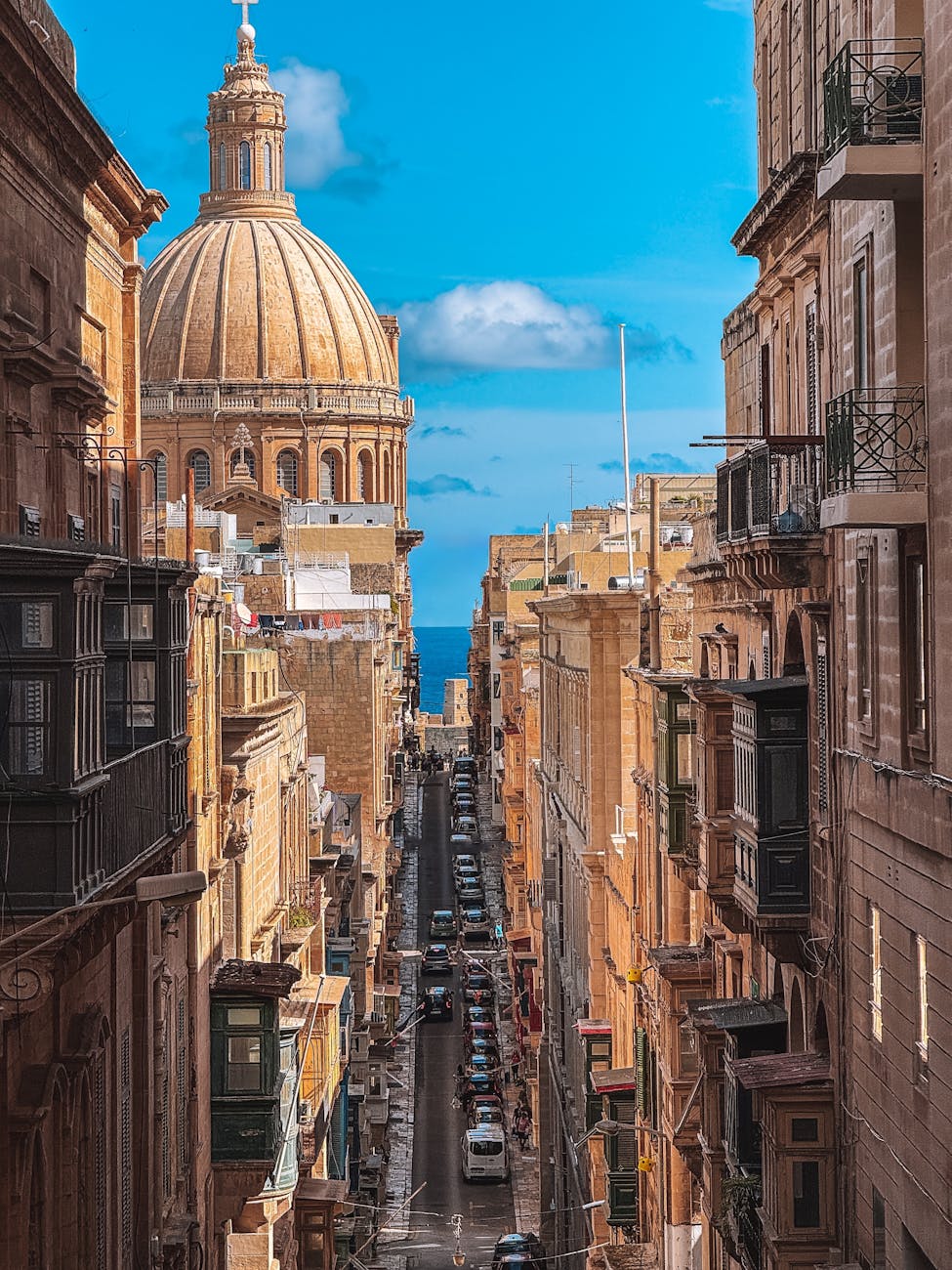
Valletta occupies just 0.3 square miles on a peninsula. It's a UNESCO World Heritage site, described as one of the most concentrated historic areas in the world.
St John's Co-Cathedral sits at the heart. The exterior is plain baroque. The interior is breathtaking—ornate chapels, gilded decorations, and two Caravaggio paintings including "The Beheading of Saint John the Baptist."
The Grandmaster's Palace now houses Parliament and the President's Office. You can tour the State Rooms and Armoury. Fort St Elmo guards the harbor entrance with its National War Museum documenting Malta's intense WWII history.
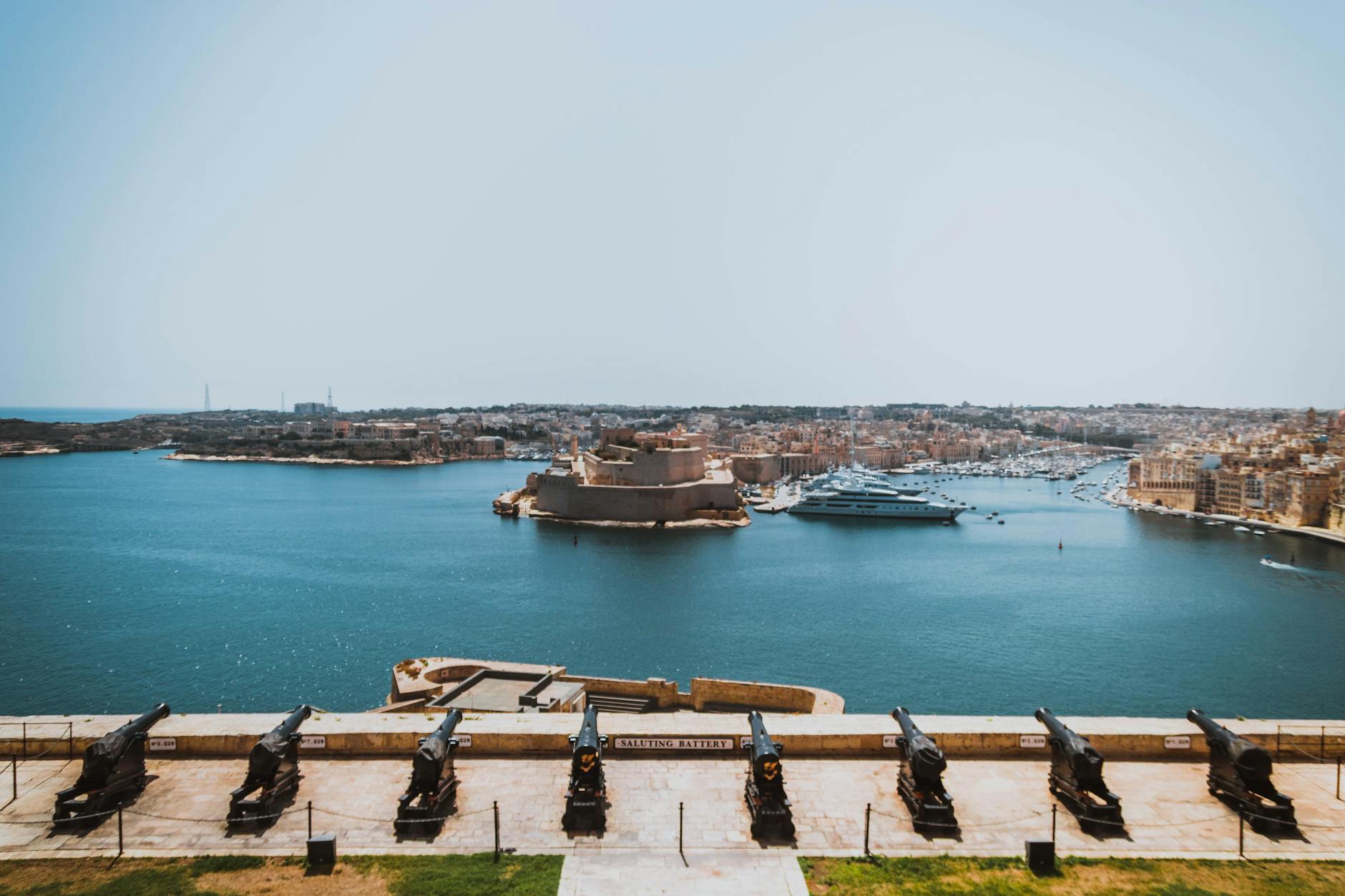
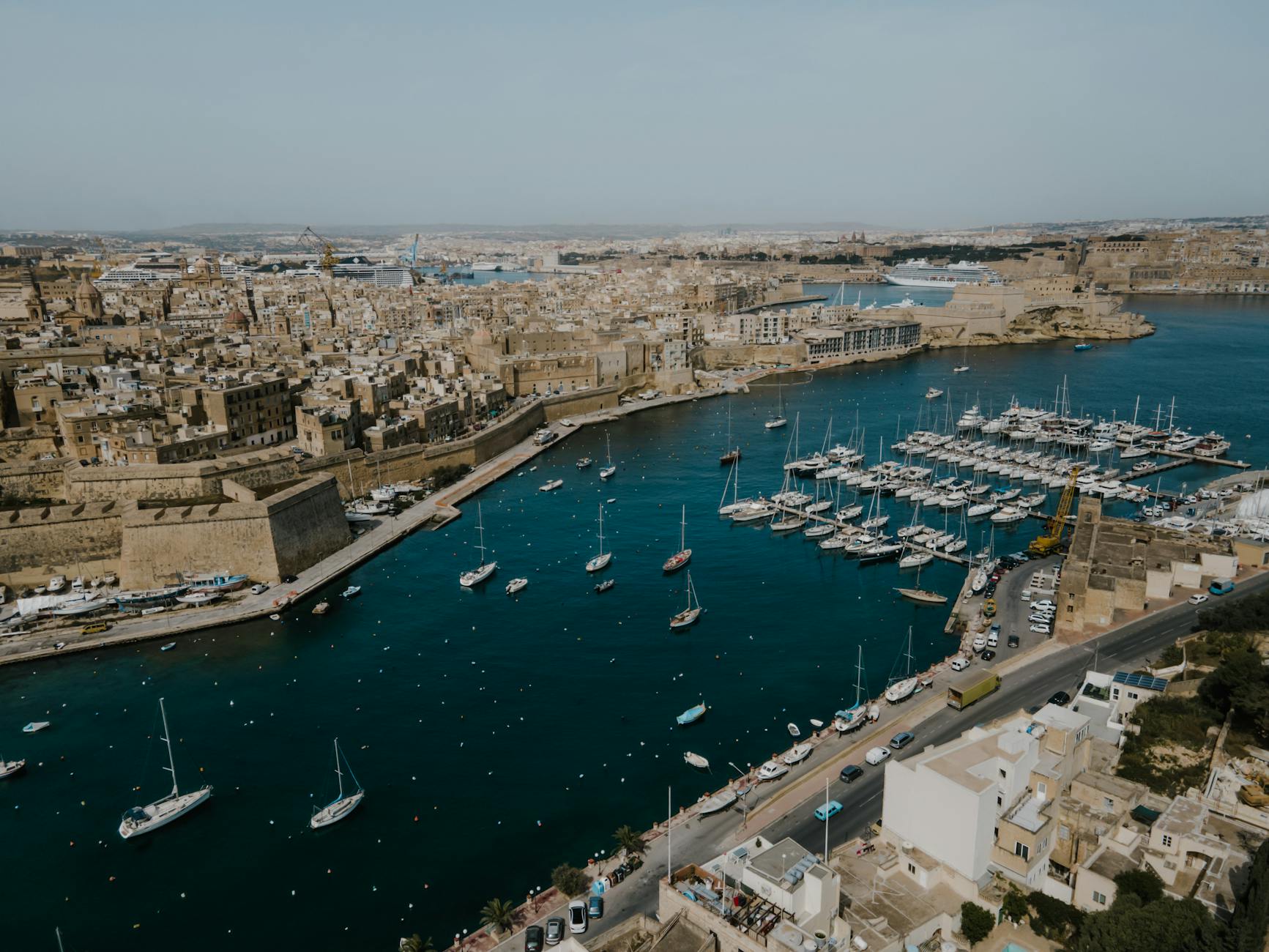
Upper Barrakka Gardens offer panoramic views of the Grand Harbour. The Saluting Battery fires at noon and 4 PM daily. Water taxis (dgħajsa) connect Valletta to the Three Cities across the harbor for about €2.
Valletta is walkable in a day. But you'll want more time. The side streets, cafes, and Teatru Manoel (one of Europe's oldest working theaters from 1732) deserve exploration.
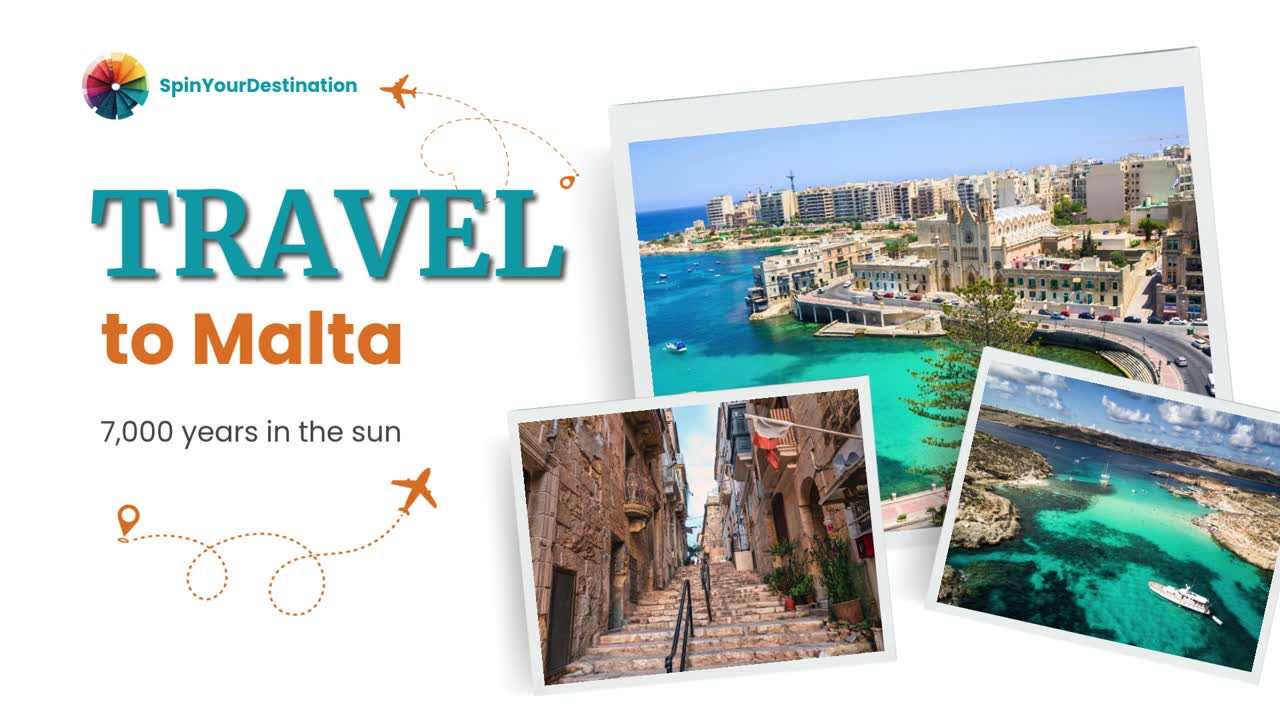
Malta is an archipelago. The main island, Gozo (the quieter sister island), and tiny Comino between them.
The Blue Lagoon on Comino is Malta's #1 attraction. Crystal clear turquoise water in a natural pool. It gets crowded in summer but arrive early and you'll have space. Boats leave from Ċirkewwa and Sliema.
Gozo offers rugged coastal cliffs, the ancient Ġgantija Temples (older than Stonehenge), and quieter beaches like San Blas Bay with rust-colored sand. Ferries run regularly from Ċirkewwa to Mġarr Harbor (€4.65 return).
On Malta's main island, Golden Bay is the most beautiful sandy beach—a wide curve of orange-gold sand on the northwestern coast. Mellieħa Bay is the largest, best for water sports with reliable wind for kitesurfing and windsurfing.
Malta's beaches tend to be rocky and sculpted by the sea. But the diving and snorkeling are world-class—clear waters and historic wrecks everywhere.
Malta's megalithic temples date from 3600 BCE. They're UNESCO-listed and among the world's oldest freestanding structures.
Ħaġar Qim and Mnajdra temples sit on cliffs overlooking the sea. The stonework is massive. How they moved these blocks 5,600 years ago remains mysterious.
The Hypogeum of Ħal-Saflieni is an underground temple complex carved from rock. Only 80 visitors per day are allowed. Book weeks ahead at heritagemalta.org.
Mdina, the old capital, is a walled medieval city in the center of Malta. Silent City they call it—no cars allowed. Walk the narrow streets at sunset when the day-trippers leave.
Malta has layers of history—Phoenician, Roman, Arab, Norman, and the Knights. Every invader left their mark. It's a small island with a huge past.
Malta gets 300+ days of sun per year and 3,000 hours of sunshine annually. It's one of Europe's sunniest destinations.
Summer (June-August) brings 30-38°C heat and crowds. Peak season. Beaches are busy. Prices are highest. But festivals and evening music events are everywhere.
Spring (March-May) is ideal for sightseeing and hiking. Comfortable temperatures (18-24°C), sunny days, no excessive heat. May is particularly good—warm but fewer crowds.
Autumn (September-November) offers warm sea temperatures (still 23-26°C in September) with fewer tourists. Winter (December-February) is mild (12-20°C) but brings rain between dry spells.
Malta is small enough to explore in a week. But the combination of beaches, history, diving, and Mediterranean food makes it easy to stay longer. The locals speak English (it's an official language). Getting around is straightforward. It's accessible Mediterranean sunshine.