This is your destination guide for Australia.
This is your destination guide for Ningaloo Reef
📍 Part of AustraliaA World Heritage reef you snorkel straight off the sand — plus whale sharks in season and red gorges behind the turquoise.
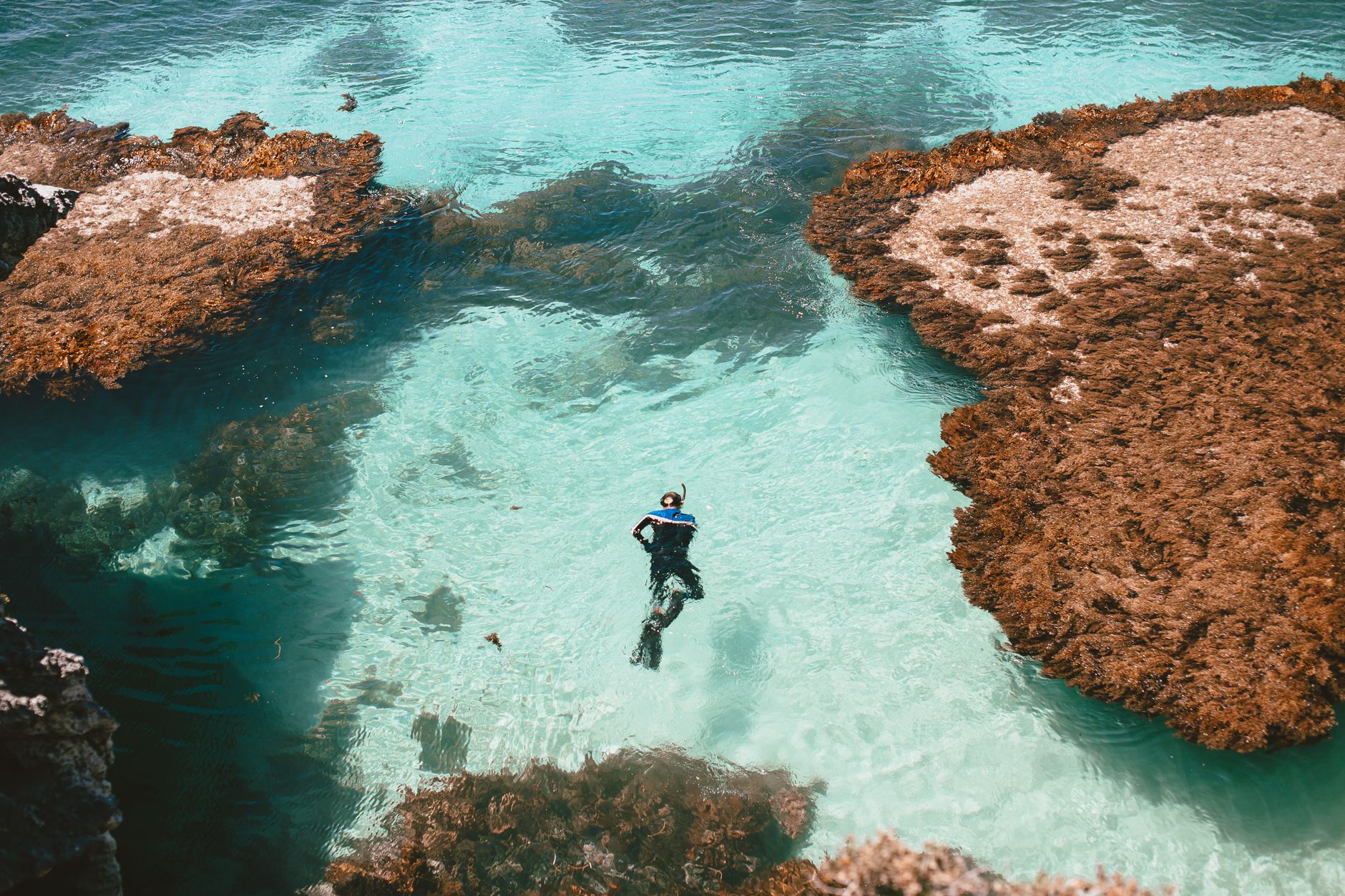

The reality: You park at Turquoise Bay, walk a hundred metres south along the sand, wade in to your waist, and inside a minute you're drifting over coral and fish. No boat. No booking. No catamaran an hour offshore. The current does the work and floats you north along the reef — you just remember to get out before the sandbar, where it turns and pulls toward open sea. That's Ningaloo's whole trick, and almost nowhere else on earth does it.
The Great Barrier Reef makes you board a vessel and motor out to a pontoon. Ningaloo is a fringing reef — it hugs the shore for 260 kilometres, so the coral starts where the beach ends. Then there's the cast that arrives on a calendar: whale sharks through autumn, manta rays all year, humpbacks in spring, turtles nesting in summer. The biggest fish in the sea, reachable from a beach you can park a car on.
The catch is honest. You're 1,200 kilometres north of Perth, in heat that hits 40°C in summer with a cyclone season to match, and the 2024–25 ocean heatwave hit the coral hard — more on that below, because it matters. Come April to October, fuel up, book what needs booking months ahead, and you get a World Heritage reef with hardly anyone on it.
Ningaloo's beaches aren't the point on their own — what's offshore is. The reef sits so close that several of the best snorkels start from the sand, no operator required.
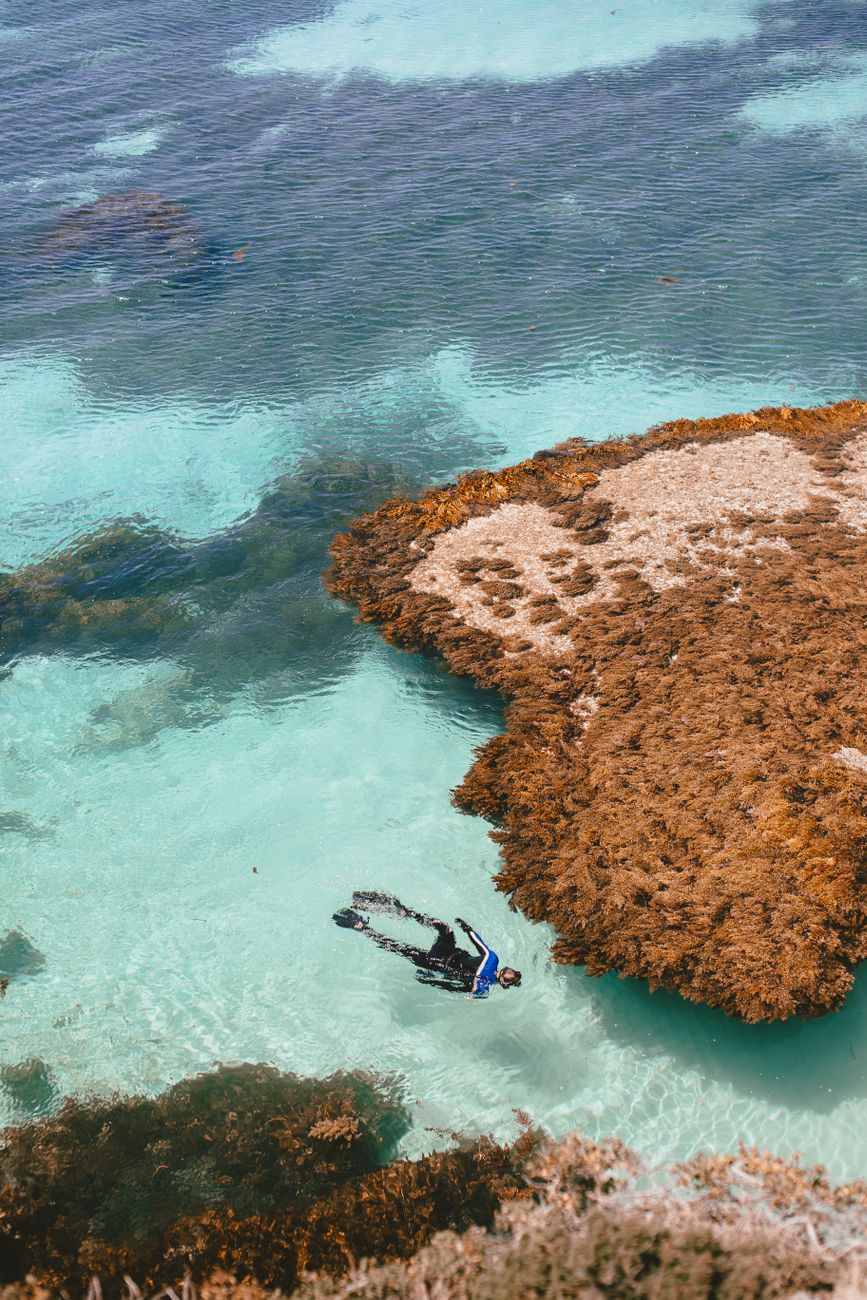
Turquoise Bay — the famous one, and rightly. Two car parks: the drift-snorkel lot to the south, the sheltered bay to the north. Walk south down the beach, swim out, and the current carries you over coral back toward the sandbar. Get out before the bar — the outflow there has pulled strong swimmers toward the open reef. Signed everywhere; people ignore the signs anyway.
Oyster Stacks — high tide only (1.2m minimum), or you're scraping fragile coral and yourself on the rocks. The reward is the narrowest lagoon on the whole coast: the outer reef sits about 300 metres out, so the marine life is packed in tight. Check the tide board at Milyering before you drive.
Lakeside — gentler, all-tide, good when the others are too shallow or too wild. Walk a bit south, swim out, drift back. The reliable backup.

Coral Bay's Bill's Bay — the easy one, 150 km south. Calm, shallow, coral 10 metres from shore. The beach to bring kids and first-timers to, with no transport and no tide-timing needed.
On the bleaching, straight: the 2024–25 marine heatwave was the worst coral-bleaching event ever recorded in WA, and the first big one at Ningaloo since 2011–13. Surveys six months on found roughly 61% of lagoon coral died. The reef is still alive, still extraordinary, still full of fish and turtles — but it's recovering, not recovered, and some stretches look bleached and grey.
The animals you fly here for — whale sharks, mantas, humpbacks — feed on plankton and krill, not coral, so they're unaffected. Go with eyes open and you won't be disappointed; go expecting a 2010 documentary and you might be.
There are two, and that's the whole list. Pick by what you're here for.
Exmouth — the main base, on the eastern side of the cape (the reef's on the west, 40 minutes' drive over the top). A working town: one big IGA supermarket, a marina, dive shops, the whale-shark fleet, and most of the accommodation. Not pretty in a postcard way — it's a base, not a destination in itself — but it's where the tours, the fuel, and the groceries are. Stock up here.

Coral Bay — 150 km south, and tiny: a couple of streets, a handful of caravan parks and resorts, a beach with coral off the end of it. Quieter, more relaxed, better for a do-nothing few days. Manta rays are reachable year-round from here, and the snorkelling off Bill's Bay needs no transport at all. The trade-off is less choice and higher prices on a smaller range — bring supplies from Exmouth if you're driving through.
Most people base in one and day-trip to the reef; a few split the trip between both. There's no third option, and that's part of the appeal.
For people who came for the water and will happily get out of it for a gorge walk.
This is the engine room of a Ningaloo trip. Most of it is marine, and most of the marine stuff runs on a season — so check the calendar before you book flights, not after.
Be honest about this: Ningaloo is a reef and a fishing coast, not a dining destination. You're here to be in the water, and you'll eat well enough between dips — but nobody flies to Exmouth for the restaurants.

The catch — this is prime fishing country, and the seafood is local and fresh rather than fancy: prawns, snapper, emperor, the odd crayfish in season. Grilled, with a cold beer, looking at the marina. That's the format.
Where to eat — the marina pubs and resort kitchens in Exmouth do the reliable evening. Whalers at Exmouth Escape Resort and the restaurant at Mantarays Ningaloo Beach Resort are the steady choices. Coral Bay's options are fewer and pricier — a bakery, a tavern, a couple of resort kitchens.
Self-catering is the smart play. The big IGA in Exmouth is where everyone stocks up — groceries get more expensive and more limited the further from town you go, Coral Bay especially. Buy for the trip in Exmouth, fill a cooler, and you'll eat better and cheaper out at the campgrounds than anywhere with a menu. No wine region to point you to here — this stretch of coast is about what comes out of the sea, not the cellar.
April to October is the answer. Days in the mid-20s to low-30s, water around 22–24°C, calm mornings, and the whole marine calendar overlapping: whale sharks (to July), humpbacks (from August), mantas and turtles throughout. This is the season — and it's also when Cape Range campsites get fought over, so book those the day the window opens.
The whale-shark window specifically is mid-March to late July, peaking April to June. If swimming with them is the reason you're coming, those are your dates — outside them it's luck, not likelihood.
December to February is the one to think hard about. It's 40°C and humid, it's cyclone season (the coast takes direct hits), the whale sharks are gone, and some operators shut. Green turtles are nesting and the lagoon's still swimmable, but it's a tough sell as a beach holiday.
The shoulder edges — March and September/October — are quieter and cheaper, with a real (if lower) chance of the big animals. Good if you'd rather have the reef to yourself than a guarantee.
You need a car, full stop. Exmouth town is one thing; the reef, the gorges, and the snorkel beaches are 40 minutes away over the cape and spread along Yardie Creek Road. There's no useful public transport once you're here. Hire in Perth if you're driving up, or at Learmonth airport — book the airport car ahead, stock is thin in peak season.
Flying is how most people come: Qantas, Perth to Learmonth, about 1 hour 55 minutes, around a dozen flights a week, from roughly A$136 one way if you book early. Learmonth is 36 km from Exmouth; arrange the shuttle or your hire car in advance, as the airport is tiny and not staffed for walk-ups.
Driving from Perth is about 1,250 km and 13 hours, sealed the whole way. Almost nobody does it in one go — most split it overnight at Carnarvon or Coral Bay. Fuel up at every town; the gaps between them are long and empty. A conventional car is fine for the sealed roads and Cape Range up to Yardie Creek; you only need a 4WD to cross the creek itself or reach the southern free camps.
Two bases, a clear split by style — plus the campgrounds, which are the best-located beds on the coast.
Exmouth town — the practical choice. Self-contained units, holiday parks, and a couple of resorts (Exmouth Escape Resort, Mantarays Ningaloo Beach Resort on the marina). Restaurants, fuel, the supermarket, and the tour fleet on the doorstep.
Coral Bay — for slowing down. A few caravan parks and resorts steps from the lagoon, less choice, higher prices, quieter nights. Snorkelling and mantas off the beach.
Sal Salis — luxury wilderness glamping in the dunes inside Cape Range National Park, reef on the doorstep. Eye-watering price, genuinely special, books out far ahead.
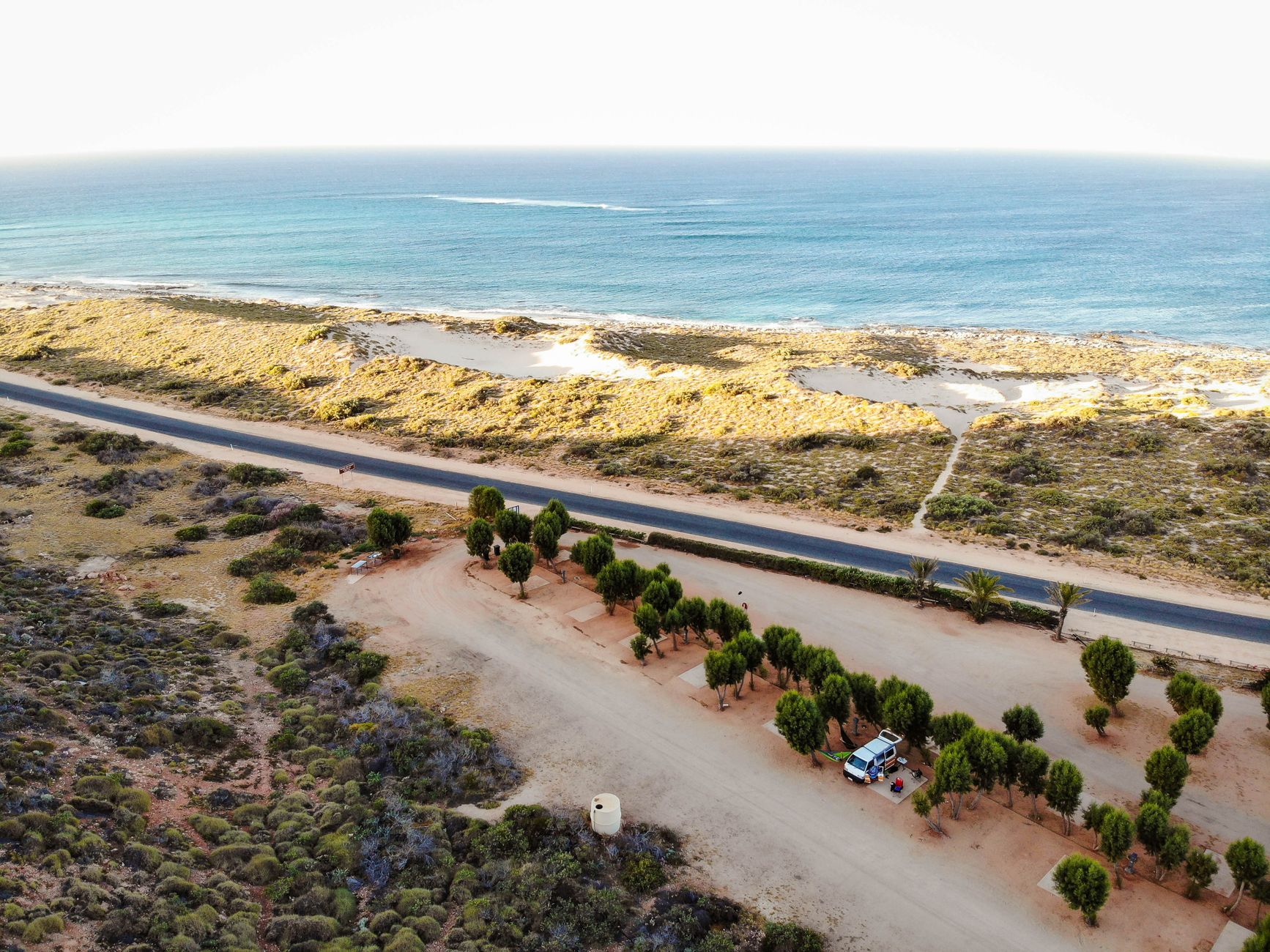
Cape Range campgrounds — Osprey Bay, Kurrajong, Mesa, Yardie Creek, all metres from the water. No power, no water, drop toilets — bring everything. Booking opens 180 days ahead via Parks WA and the best sites vanish within minutes. Set an alarm.
Ningaloo isn't cheap, and remoteness — not value — is why. Everything's trucked 1,200 km from Perth, the short flights are priced like short flights anywhere isolated, and a whale-shark swim alone runs A$565–625. The simple main street fools people: this is closer to Whitsundays money than the easygoing beach-town prices it looks like.
Prices in 2026 AUD. The whale-shark swim is the budget line that matters — everything else bends around it.
Go if you want the rarest thing in reef travel — a World Heritage fringing reef you snorkel straight off the beach, whale sharks from March to July, mantas year-round, and red gorges standing behind the turquoise. Skip if you came for guaranteed January sun, can't face the drive or the airfares, or expected the coral exactly as it looked before the 2024–25 heatwave.
Found this useful? Share it.
Still planning?
We don't stop at "here's the country." Real places to stay, what to do, apps that matter, even how to find someone to travel with — plus guides for whatever vibe you're after, from beach days to wine country to slow weekends. All up top. Spin for somewhere new when you're done with this one.
