
Food & Culture Uruguay
Your complete guide to Uruguay's cuisine, wine, markets, and culinary traditions
The fire has been burning since noon. At 3pm, the ribs are almost ready. The wine is open — a 2021 Tannat from the Maldonado hills, dark and full. Someone passes the mate. Outside the window, the grass runs to the horizon. This is Sunday lunch in Uruguay.
Uruguayan food culture is built around three things: beef, fire, and time. The asado is not a meal — it's a ritual, a social institution, the weekly answer to the question of what to do with a Sunday. The country eats more beef per capita than anywhere else on earth, and it shows in the quality, the preparation, and the absolute seriousness with which the parrillero (grill master) tends his fire.
Beyond the grill: a wine industry producing extraordinary Tannat; a market culture anchored by the Mercado del Puerto; street food from the Italian immigrant tradition; and a mate culture that permeates every aspect of daily life. Uruguay's food is honest, generous, and consistently better than the country's international culinary reputation suggests.
Asado — Uruguay's national ritual
The parrilla (grill) is the centre of Uruguayan social life. Uruguay has more cattle than people (3.5 million versus 12 million head) and the national relationship with beef is reflected in both the quality and the ceremony of its preparation. Uruguayan beef is pasture-raised, marbled differently from grain-finished Argentine beef, and highly regarded internationally.
The classic asado cuts: tira de asado (short ribs, the most popular cut), vacío (flank), entraña (skirt steak), and the whole-animal approach that includes chorizo, morcilla (blood sausage), mollejas (sweetbreads), and chinchulines (intestines). The fire is wood or charcoal, lit well in advance, cooked slowly over moderate heat. Uruguayan asado is slower and less hot than Argentine; the results are characteristically tender.
The Mercado del Puerto in Montevideo's Old Town is the most accessible asado experience for visitors — a Victorian cast-iron market hall where a dozen parrilla restaurants operate under one roof. Arrive between 1pm and 2pm on a weekday, sit at a table near the fire, and order the mix. Share a bottle. Take your time. Around UYU 1,500–2,000 per person for a proper meal with wine.
Chivito is Uruguay's national sandwich: thin steak, mozzarella, ham, bacon, egg, lettuce, tomato, mayonnaise, and olives, served in a bun. Found at every parrilla, bar, and kiosk. More substantial than it sounds. The chivito al plato (same ingredients served on a plate with chips) is the full version. Essential tasting at least once.
Tannat wine — Uruguay's signature grape
Uruguay's wine industry centres on Tannat — a thick-skinned, full-bodied red grape brought from the Basque country of France in the 1870s. While Tannat is a minor variety in its French homeland (Madiran), in Uruguay it found ideal conditions: the rolling hills of Maldonado, Canelones, and Colonia produce a version that is distinctly more approachable than the French original — still dark and structured, but with enough fruit to drink with the asado it was born to accompany.
Bodega Garzón in the Maldonado hills is Uruguay's most internationally recognised producer — single-vineyard Tannat, Albariño, and Pinot Noir at a world-class facility. Tours from USD 30 include tastings and cellar visits. The restaurant is one of Uruguay's best (book well ahead). The Garzon 2022 Single Vineyard Tannat costs around USD 50 at the winery.
Pisano Family Wines near Progreso (Canelones) and Establecimiento Juanicó (also Canelones) are family estates with strong local reputations and more accessible cellar door experiences. Juanicó is particularly friendly to visiting international travelers and offers tours without advance notice during the week.
Uruguay also produces excellent Albariño (brought from Galicia) — the lighter white wine that pairs better with Uruguay's coastal fish dishes than Tannat. Look for it on wine lists in Colonia and along the coast. Prices for good Uruguayan wine at restaurants range from UYU 500–1,500 per bottle.
Markets & street food
Montevideo's market culture is one of the most lively aspects of the city's food scene. The Mercado del Puerto (Ciudad Vieja) is the most famous — a Victorian iron structure from 1868 now operating as a parrilla hall. Weekdays at lunch, the hall fills with Montevideans from all walks of life under clouds of wood smoke. One of South America's great food experiences.
The Mercado Agrícola de Montevideo (MAM, Villa Española) is the modern counterpart — a restored 1913 art nouveau market hall housing artisan cheese producers, craft beer bars, specialty coffee, pastry makers, and prepared food stalls. Particularly good on Sunday mornings when the building fills and a small farmers' market operates outside.
The Feria de Tristán Narvaja (Sunday, Cordón neighbourhood) is Montevideo's great street fair — books, antiques, vinyl, plants, and food stalls spreading across several blocks. The surrounding streets also hold food vendors: freshly made empanadas, buñuelos (fried dough), and the seasonal produce from rural producers who drive in weekly.
Italian immigrant food has left a permanent mark on Uruguayan cuisine — pasta (fideos), pizza (Uruguayan style, thicker than Argentine, with more cheese), and especially the pasta-making traditions of Montevideo's Barrio Sur. The Wednesday and Sunday pasta ritual (it's genuinely considered lucky to eat pasta on these days) is a real cultural practice.
Mate & food culture
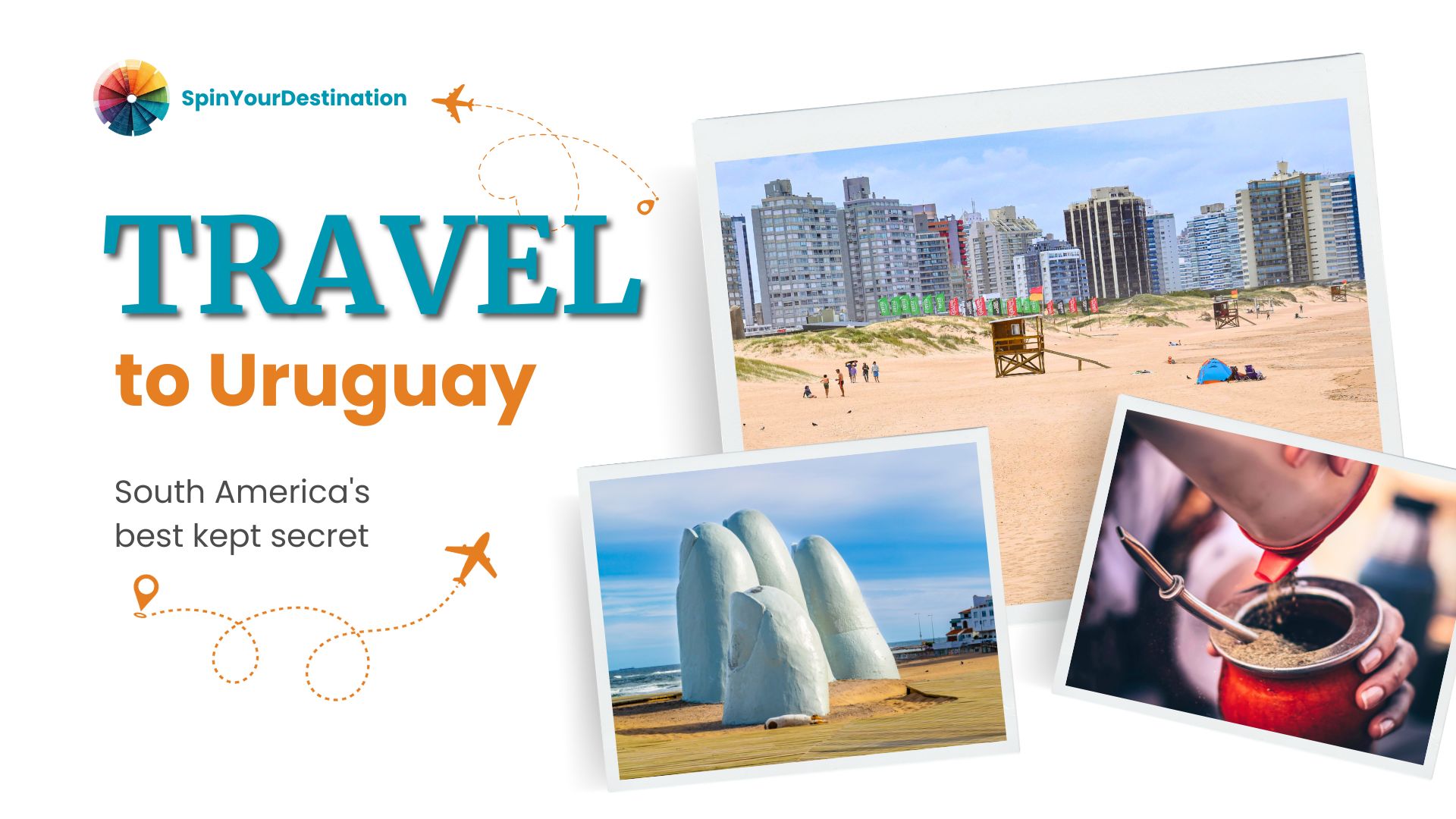
Mate is Uruguay's defining cultural practice. A gourd filled with dried yerba mate (a herb of the holly family), through which hot water is poured repeatedly and the infusion drunk through a metal straw (bombilla) — shared among friends, carried everywhere, and offered to strangers as a gesture of welcome. Uruguayans carry thermoses of hot water and their mate gourd as naturally as Europeans carry phones.
The etiquette: when offered mate, accept (unless you genuinely cannot drink it). You drink until it runs dry (a slurping sound), then hand the gourd back to the cebador (server), who refills it. Do not stir the bombilla. Do not say "gracias" until you want no more. The cebador manages the temperature, the yerba ratio, and the distribution. This is social choreography.
Coffee culture in Montevideo is developing — several specialty coffee shops now operate in Palermo and Ciudad Vieja, with quality comparable to any European city. Café Brasilero (Ciudad Vieja) is Uruguay's oldest café, open since 1877, worth a visit as a cultural artefact as much as for the coffee.
Uruguayan pastry tradition draws on Italian, French, and Spanish influences — medialunas (croissants, slightly sweeter than Argentine), bizcochos (flaky pastries), and the churro con dulce de leche found at every bakery and street stall. Dulce de leche is Uruguay's signature sweet ingredient — thicker and more caramel-like than elsewhere in South America.
🌟 Top Food & Culture Experiences
🔥 Neighborhood parrilla — La Parrilla de Williman
Punta Carretas is home to some of Montevideo's best neighborhood parrillas — family-run, unpretentious, and serving grass-fed beef that puts many tourist spots to shame. La Parrilla de Williman is the local benchmark: wood-fired grill, classic cuts (vacío, entraña, bife de chorizo), simple sides, and a wine list that does its job. No theatre, no tourist menus — just the food Uruguayans actually eat on weekends. Around UYU 800–1,200 per person. More info →
🍷 Bodega Garzón wine tour
Uruguay's most celebrated winery in the Maldonado hills — gravity-fed cellar, single-vineyard Tannat and Albariño, and an estate restaurant. Tours from USD 30 with tastings. Restaurant lunch (book months ahead in summer) pairs wines with estate-grown ingredients. One of South America's best wine experiences. More info →
☕ Café Brasilero — Uruguay's oldest café
Open since 1877 in Montevideo's Ciudad Vieja — dark wood panelling, tiled floors, marble counters, and coffee that has been served here for nearly 150 years. An essential piece of Montevideo's cultural landscape. Cortado or café con leche. Read the newspaper. Take your time. More info →
🍟 Chivito — Uruguay's national sandwich
Thin steak, mozzarella, ham, bacon, egg, lettuce, tomato, mayonnaise, and olives in a soft bun — Uruguay's definitive street food and bar snack. Found everywhere. El Charrúa in Montevideo is among the most celebrated — but any neighbourhood parrilla will make a good one. Try it once. UYU 400–700. More info →
🍽️ Mercado Ferrando — modern food hall
Montevideo's newest food hall in a repurposed warehouse — a modern counterpoint to the traditional markets. Gourmet burgers, pasta, poke bowls, empanadas, craft beer on tap, and rotating food stalls under one roof. Popular with Montevideo's younger crowd and the best option for a diverse, casual lunch away from the tourist circuit. Free to enter, open daily. More info →
🌍 Mate sharing ceremony
If a Uruguayan offers you their mate gourd, accept — it's the most genuine gesture of welcome in the country. Learn the etiquette: don't stir the bombilla, drink until empty, hand it back, don't say gracias until finished. Tours of Montevideo's Old Town often include a mate tasting with explanation. More info →
💡 Insider Tips
- 📅 Sunday lunch in Uruguay means asado — restaurants in the Mercado del Puerto and across Montevideo are busiest noon–3pm. Weekday lunch is more relaxed and less expensive.
- 🍶 Tannat needs air — ask the waiter to open the bottle 30 minutes before you plan to drink it. A good Uruguayan Tannat opened too young and without air will taste closed and harsh. Opened and given time, it's extraordinary.
- 🏧 Bodega Garzón's winery restaurant books out in December–February. Outside these months, reserve a week ahead. Lunch only (no dinner service). Arrive hungry.
- 🤐 Pasta Wednesday/Sunday: Uruguayans genuinely believe eating pasta on these days brings good luck. Many restaurants offer specials. Join the tradition — the Italian pasta heritage in Montevideo is real and the quality is high.
- 🚫 Uruguay's tourist card VAT discount applies to restaurant bills — always pay by foreign credit card. The 18% discount makes a meaningful difference over a week of eating well.