

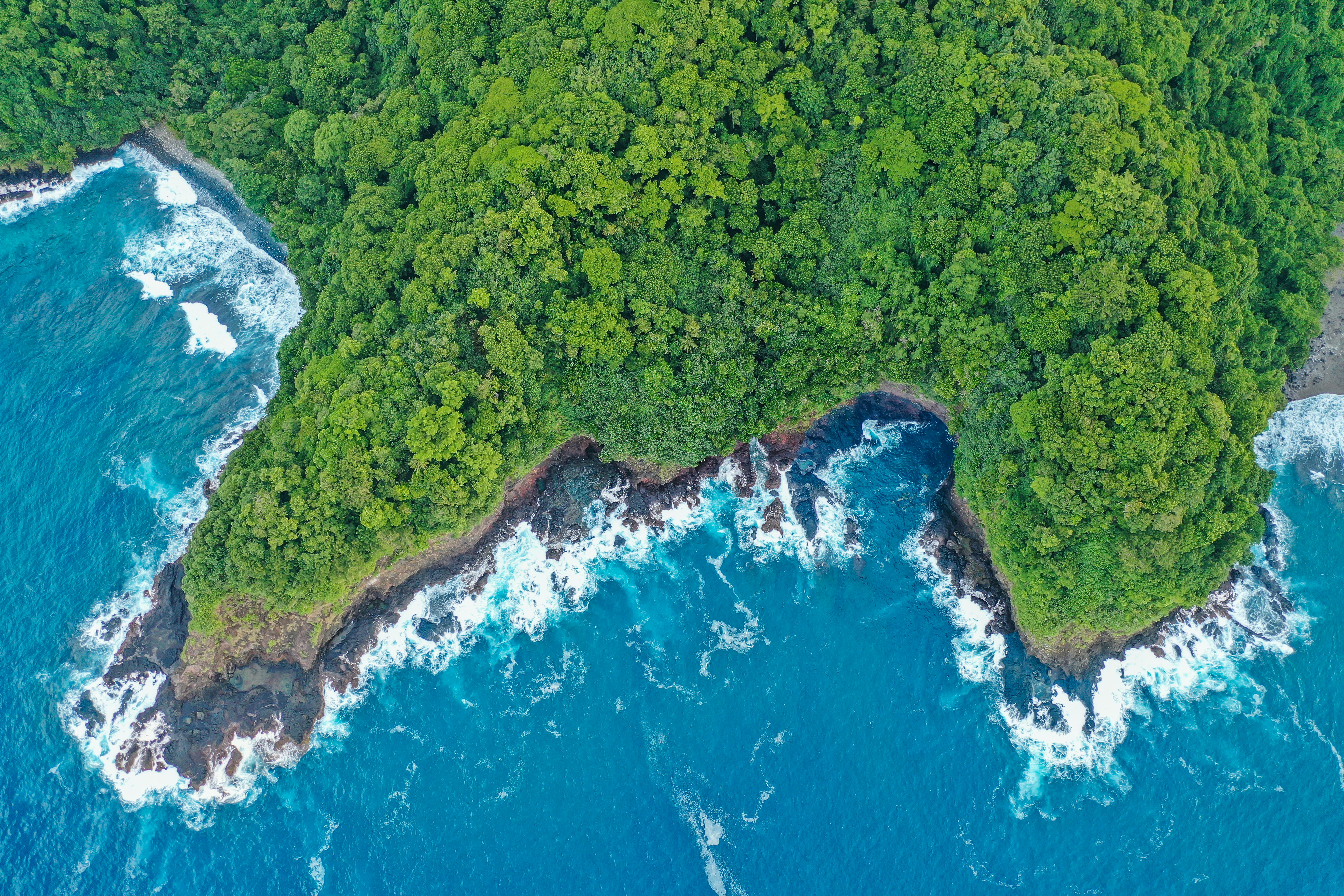
Apia, the capital, is a compact harbor town of around 40,000 people on the north coast of Upolu. It’s the arrival point for most visitors and an easy base for exploring the island.
The Maketi Fou central market is the pulse of the city—stalls loaded with taro, breadfruit, coconuts, and fresh fish. Nearby, the crafts market sells siapo (hand-painted tapa cloth), wooden bowls, and woven baskets. Most vendors speak English and appreciate a genuine look around before any purchase.
Robert Louis Stevenson lived his final years here. His home, Vailima, now the Robert Louis Stevenson Museum, sits in the hills above Apia. The Victorian mansion is beautifully preserved, surrounded by tropical gardens. He is buried on Mt Vaea, a short but steep hike above the house.
Fifteen minutes south of Apia, Papase‘ea Sliding Rocks are a local institution. Natural rock slides worn smooth by thousands of years of running water drop into deep freshwater pools. Entry costs WST 5 for adults, WST 2 for children. Bring a swimsuit and go early.
The Clock Tower at the center of Beach Road marks Apia’s colonial heart. The waterfront is pleasant in the early morning before the heat builds. Buses leave from the market—colorful aiga buses painted in bold patterns, WST 1–3 for most routes across Upolu.
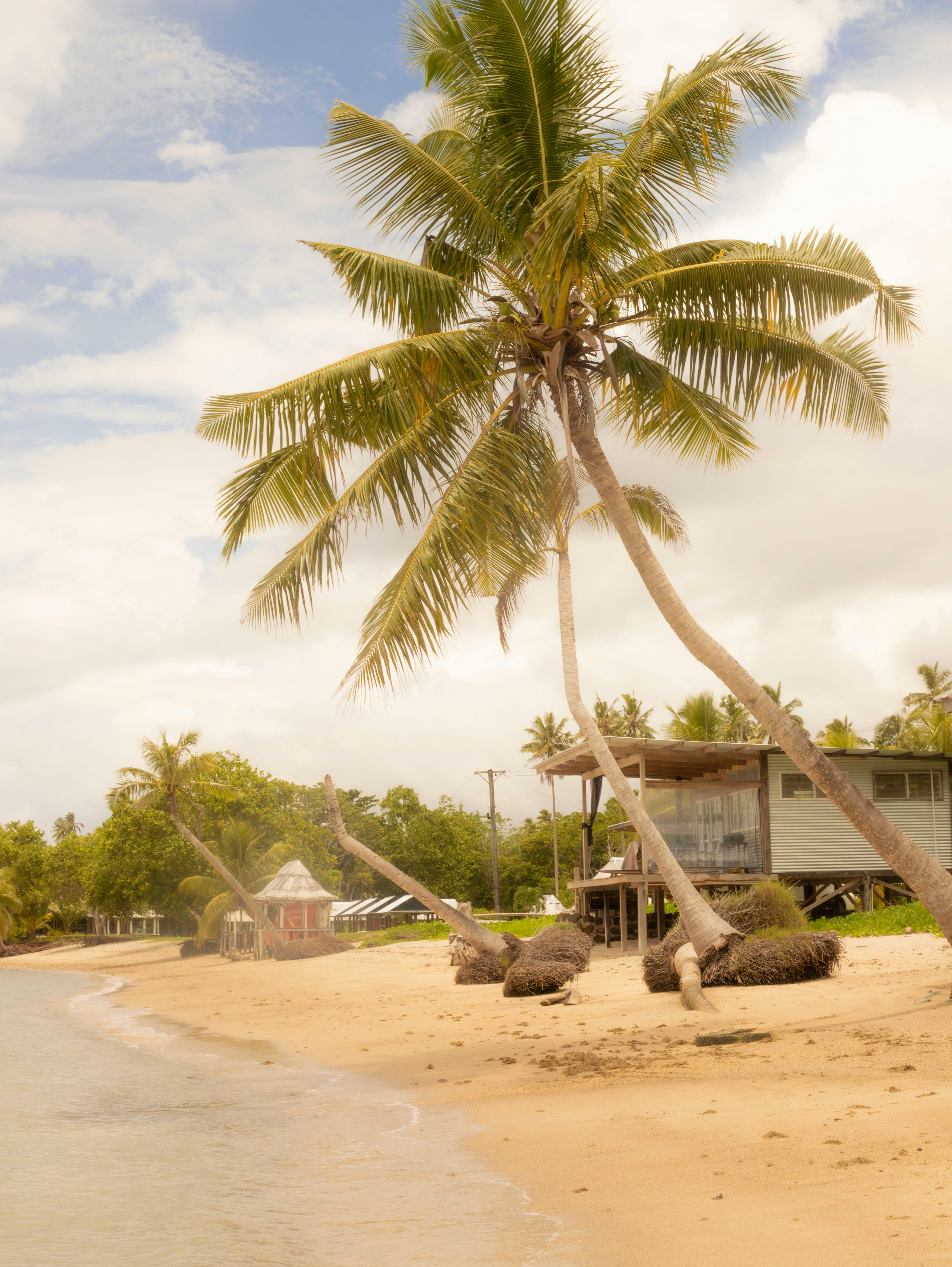
Upolu’s south coast is where Samoa’s most dramatic landscapes concentrate. The road from Apia winds through villages and coconut groves before reaching a string of natural wonders that feel almost impossible.
To Sua Ocean Trench, in the village of Lotofaga, is the standout. This 30-meter-deep flooded volcanic pit connects to the ocean through an underground lava tube. The water at the bottom is an almost surreal shade of blue-green. A long wooden ladder is the only way down. Entry WST 15 for adults, WST 5 for children. Open Monday to Saturday 8:30am–5pm, Sundays from 12:30pm. Arrive at opening time for the best light and fewest people.
Lalomanu Beach, further east along the south coast, consistently appears on lists of the Pacific’s most beautiful beaches. A long arc of white sand fringed with palm trees, fringing reef close to shore, and fale beach huts for overnight stays. The snorkeling directly off the beach is excellent—coral gardens visible from the surface.
Sopo‘aga Falls cascade 54 meters through dense rainforest near Lotofaga. A short walk from the road leads to a viewing platform. The pool at the base is not accessible, but the view from above is spectacular, especially in the morning light.
The entire south coast road can be driven in three to four hours, but the stops deserve a full day. Rent a car or join a guided tour from Apia to cover everything without rushing.
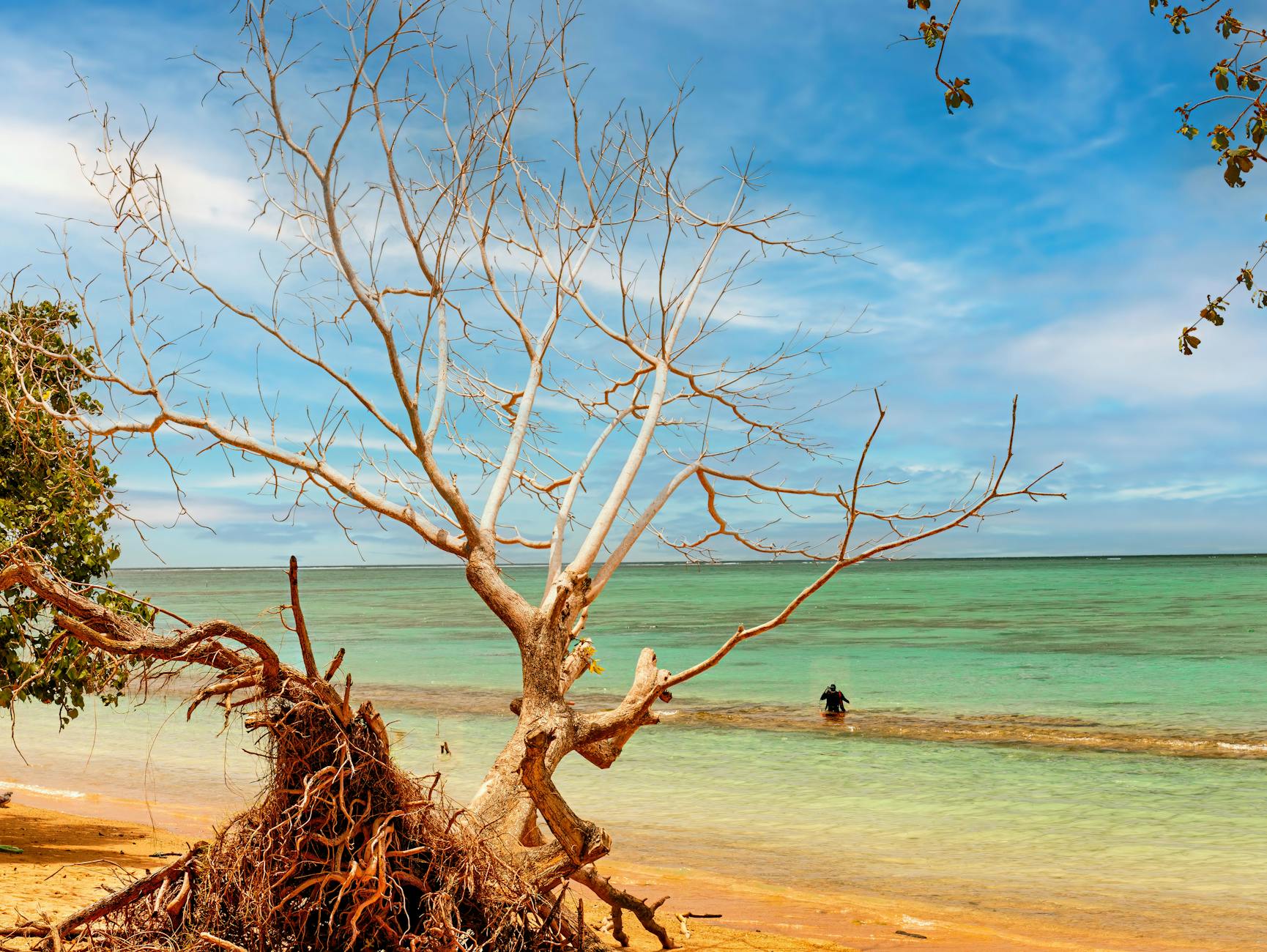
A one-hour ferry from Mulifanua on Upolu’s west coast crosses to Savai‘i—Samoa’s largest island and, many would argue, its most rewarding. The pace slows. The roads empty. The villages are quieter and the landscape more dramatic.
The Saleaula Lava Fields on the north coast preserve the aftermath of a 1905–1911 volcanic eruption that buried two villages under hardened black lava. The ruins of an LMS church emerge from the rock—walls intact, roof gone, lava frozen mid-flow through the doors. It’s one of the most striking sights in the entire Pacific.
The Alofaaga Blowholes on the southwest coast are among the most powerful in the world. Ocean swells surge through lava tubes and shoot columns of water up to 20 meters into the air. Locals stuff coconuts into the holes and launch them skyward for photographs. Stand well back when the surf is big.
The Falealupo Rainforest Reserve in the far northwest contains ancient canopy walkways through the treetops. The forest is some of the most intact in Samoa—flying foxes roost in the high branches, and birdsong replaces every other sound.
Mt Silisili, Samoa’s highest peak at 1,858 meters, rises from Savai‘i’s interior. Multi-day treks to the summit require a local guide—the terrain is serious but the experience is exceptional. The island rewards those who slow down and explore on its own terms.
Samoa is often called the purest version of Polynesia, and daily life here backs that claim. The Fa‘a Samoa—literally “the Samoan way”—is a living system built on family (aiga), community, mutual obligation, and respect for elders. It is not a performance or a tourist attraction. It is how people live.
The traditional fale is the center of home life—an open-sided oval structure with a thatched or corrugated roof supported by wooden pillars, no walls, mats that roll down against wind and rain. Villages cluster their fale around a central green, with a church and a meetinghouse (fono fale) where community decisions are made. Many villages still hold the Sa—a daily period of silence and prayer at dusk, marked by a conch shell or bell. Visitors who happen to be passing through should stop and wait quietly until it is over.
Food centers on the umu—an earth oven fired with volcanic stones. Taro, breadfruit, palusami (taro leaves baked in coconut cream), and whole fish cook slowly inside. Sunday umu is a weekly ritual in most villages. The smell drifting across a Samoan village on a Sunday morning is one of the most evocative in the Pacific.
The pe‘a—the traditional full-body tattoo worn by men—is one of the most demanding tattoo traditions in the world. Applied with a comb of bone and tusk, the process takes weeks and is completed without anaesthetic. It signifies commitment, maturity, and service to the community. Women receive a lighter version called the malu. Visitors will see both frequently; asking respectfully about the meaning is always welcome.
Siapo, tapa cloth made from pounded mulberry bark and decorated with geometric patterns in natural dyes, is Samoa’s most distinctive craft. The Maketi Fou in Apia is the best place to find authentic pieces. Fine mats woven from pandanus leaves are used in ceremonies and represent real wealth in the Samoan gift economy.